

🔍 Read the full analysis: 2026 AI Tech: 15 Best Solutions For Forward-Thinking Buyers on ThorstenMeyerAI.com
Prime for Young Adults — start your free trial
Fast free delivery, streaming and member deals for eligible 18–24 year olds.
Try it freeAs an affiliate, we earn on qualifying purchases.
TL;DR
This article highlights 15 leading AI solutions for 2026, focusing on innovative features, scalability, and usability. It aims to guide buyers in choosing the best AI tools for their needs.
Fifteen advanced AI solutions are set to debut in 2026, targeting diverse industries from healthcare to finance. These offerings aim to combine cutting-edge performance with scalability and ease of use, reflecting industry demands for smarter, more adaptable AI tools. While details are still emerging, industry insiders confirm that these solutions will significantly influence enterprise AI adoption in the coming year.
Leading the lineup are solutions from major players like Google, Microsoft, and emerging startups, each emphasizing unique strengths such as enhanced natural language understanding, automated machine learning, and edge AI capabilities. For example, Google’s new AI platform promises improved integration with cloud services, while Microsoft’s latest offerings focus on enterprise-grade security and comprehensive automation. Smaller firms are also entering the scene with specialized tools aimed at industry-specific challenges.
Confirmed features include advanced multi-modal capabilities, enabling AI to process text, images, and video simultaneously, and scalable architectures designed to support large datasets and complex workflows. Several solutions are also expected to incorporate privacy-preserving techniques like federated learning, addressing increasing data security concerns. Industry analysts suggest that these innovations will drive AI’s integration into daily business operations and consumer products alike.
The 15 picks
- 1
 NIMO 6-Bay AI NAS, Agentic Computer for Local AI & LLM Workloads, Private Clo…View on Amazon →
 - 2
 6-Bay Desktop NAS with Intel i5-1235U, 16GB DDR5, 256GB NVMe, Dual PCIe 4.0View on Amazon →
 - 3
 UGREEN NAS DXP4800 GT 4-Bay for Creators, Tech Enthusiasts, and Office TeamsView on Amazon →
 - 4
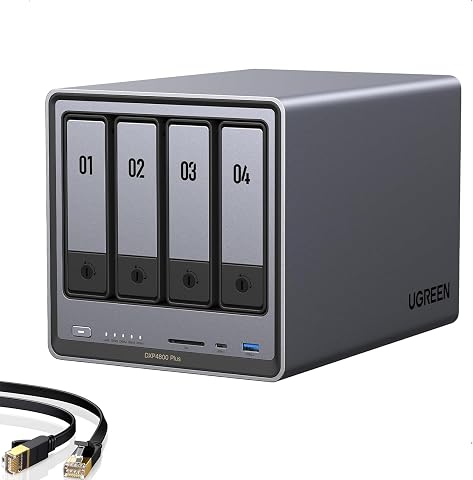 UGREEN DXP4800 Plus 4-Bay NAS for Families, Creators & Small TeamsView on Amazon →
 - 5
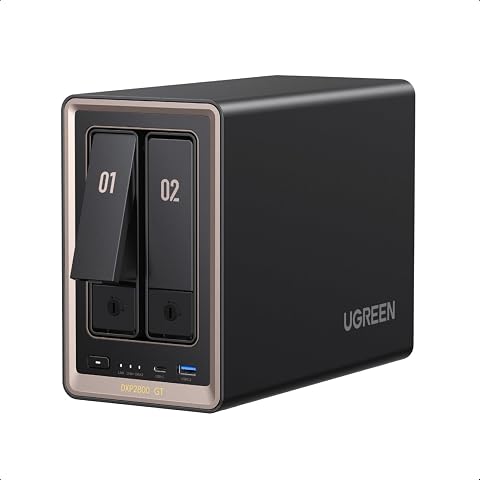 UGREEN DXP2800 GT NAS for Smart Home Enthusiasts, Creators & FreelancersView on Amazon →
 - 6
 UGREEN NAS DH4300 Plus 4-Bay Desktop NAS (Diskless) Bundle with Cat 8 Etherne…View on Amazon →
 - 7
 UGREEN NAS DXP2800 2-Bay for Advanced Home Users, Remote Workers & CreatorsView on Amazon →
 - 8
 Synology DS225+ Private Cloud Media Server – 2-Bay NAS with Intel CPU for Har…View on Amazon →
 - 9
 Synology DS223 Home & Office Backup Hub – 2-Bay Diskless NASView on Amazon →
 - 10
 UGREEN NAS DH2300 2-Bay Desktop NASync, Support Capacity 64TB (Diskless), Rem…View on Amazon →
 - 11
 BUFFALO LinkStation 210 6TB 1-Bay NAS Network Attached Storage with Hard Driv…View on Amazon →
 - 12
 Synology 2-Bay DiskStation DS223j (Diskless)View on Amazon →
 - 13BUFFALO LinkStation 210 4TB 1-Bay NAS Network Attached Storage with HDD IncludedView on Amazon →
- 14Buffalo LinkStation 210 2TB 1-Bay NAS Network Attached Storage with HDD IncludedView on Amazon →
- 15
 Yxk Zero1 2-Bay Desktop NAS for Home & Personal Storage (Diskless)View on Amazon →
Impacts of 2026 AI Solutions on Industry Adoption
The introduction of these 15 AI solutions in 2026 is poised to accelerate industry adoption of artificial intelligence, enabling businesses to automate complex processes, enhance decision-making, and improve customer experiences. These tools are expected to lower barriers for smaller organizations through more accessible, scalable AI platforms. As a result, AI integration will become more widespread across sectors such as healthcare, finance, manufacturing, and retail, potentially transforming competitive landscapes and operational models.
2026 AI Development Timeline and Industry Trends
Over the past few years, AI technology has rapidly advanced, driven by breakthroughs in deep learning, increased computing power, and expanding data availability. Major tech firms announced their 2026 AI roadmaps in late 2025, emphasizing enhanced performance, safety, and user-centric features. Industry analysts predict that these upcoming solutions will build on existing platforms, introducing more robust, flexible, and secure AI tools tailored to enterprise needs. The market trend indicates a shift from experimental AI deployments to mainstream integration, with a focus on real-world impact and compliance with evolving regulations.
Unconfirmed Features and Market Reception
While details about the specific features and performance benchmarks of these 15 solutions are still emerging, industry insiders suggest that some offerings may face challenges related to integration complexity, cost, or regulatory compliance. The actual market reception will depend on how well these solutions meet enterprise needs and whether they can deliver promised benefits at scale. It is also unclear how quickly smaller firms and startups will adopt these new tools amid ongoing competitive pressures.
Upcoming Launches and Industry Adoption Milestones
Over the coming months, key vendors are expected to unveil detailed product specifications, demos, and pilot programs. Industry conferences and tech expos scheduled for late 2025 and early 2026 will serve as platforms for showcasing these solutions. Adoption will likely accelerate as organizations evaluate the new offerings, with initial deployments providing insights into real-world performance. Regulatory developments and user feedback will shape further enhancements and broader deployment strategies.
Key Questions
What are the main features of the top AI solutions in 2026?
The leading solutions will focus on multi-modal processing, scalability, security, and ease of integration. They aim to support complex workflows, real-time data analysis, and privacy-preserving techniques, tailored to enterprise needs.
How will these solutions impact small businesses?
Many solutions are designed to be scalable and accessible, potentially lowering barriers for small and medium-sized enterprises to adopt advanced AI tools, thus democratizing AI benefits across industries.
Are there any risks associated with these new AI solutions?
Potential risks include integration challenges, high costs, and compliance issues. Additionally, ethical concerns around AI decision-making and data privacy remain important considerations for deployment.
When will these AI solutions be available on the market?
Most of the solutions are expected to be launched or announced throughout 2026, with initial deployments likely starting in early to mid-year, depending on vendor readiness and industry adoption pace.
Source: ThorstenMeyerAI.com
NFL season / tailgating Picks
team gear
As an affiliate, we earn on qualifying purchases.