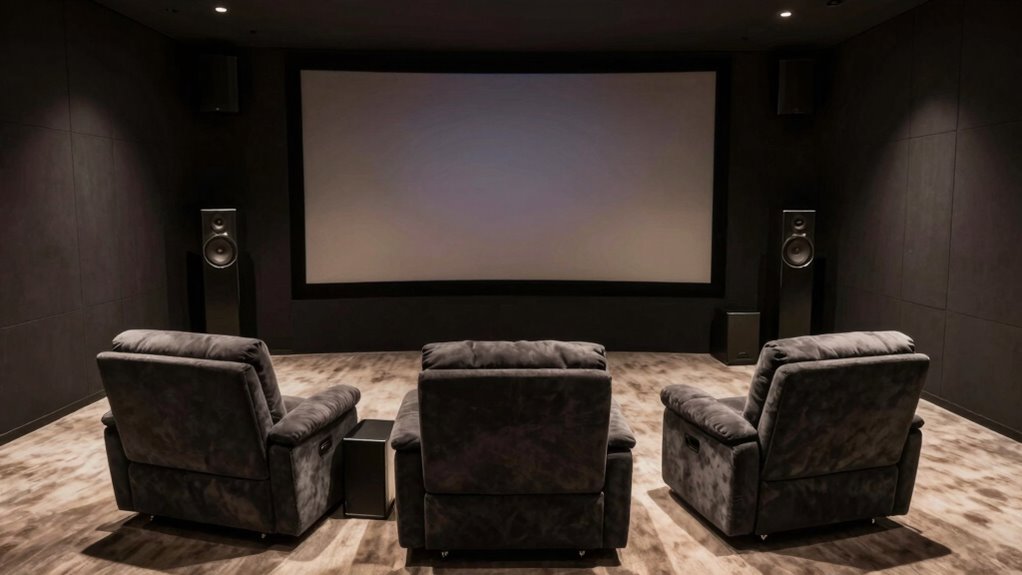

For an affordable yet premium sound, place your front left and right speakers at ear level, equidistant, and angling toward your seating area to create a wide stereo image. Position the center channel directly above or below the TV at ear level for clear dialogue. surround speakers should sit slightly behind and to the sides, angled toward you. Proper placement boosts realism, and with some fine-tuning, you’ll achieve a setup that sounds much more expensive—keep exploring for all the tips.
Key Takeaways
- Position front left and right speakers at ear level, equidistant from seating, forming an arc toward the listening area.
- Place the center channel directly above or below the TV, aligned with the main seating for clear dialogue.
- Position surround speakers slightly behind and to the sides of seating, angled toward the listener at ear level or above.
- Use calibration tools and manual adjustments to balance volumes, distances, and tones for a cohesive soundstage.
- Avoid obstructions near speakers and optimize placement to fill the room with ambient sounds and enhance realism.
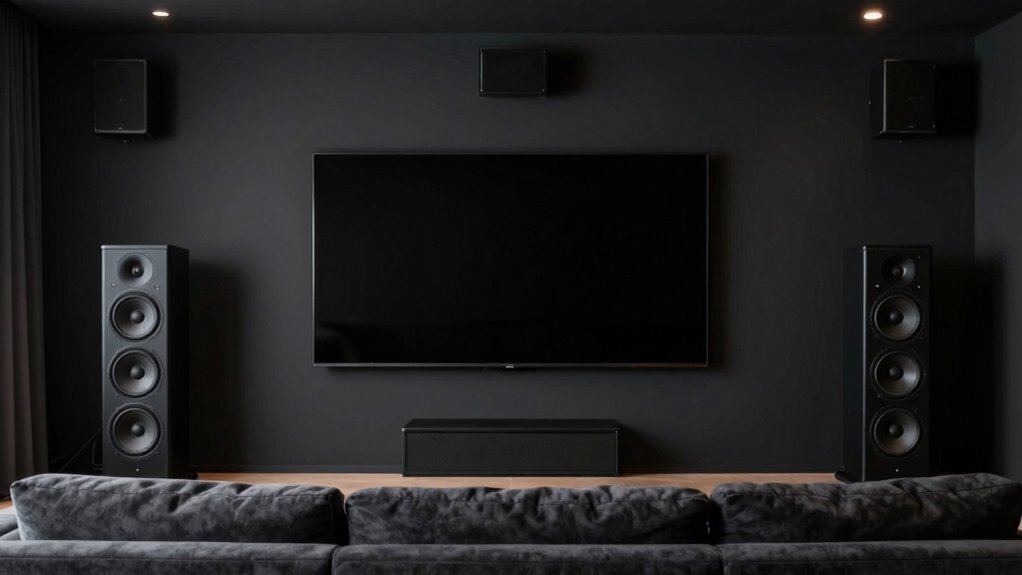
Creating an immersive home theater experience depends heavily on proper speaker placement. When you position your speakers correctly, you unlock the full potential of surround sound, making every movie, game, or music session feel as if you’re right there in the action. The key to achieving this isn’t just about choosing the right speakers; it’s about placing them strategically and ensuring they’re calibrated properly. Good speaker placement forms the foundation for a balanced, dynamic soundstage that rivals commercial theaters without breaking the bank.
Start by placing your front left and right speakers at ear level, roughly equidistant from your seating area. These are your primary sound sources and set the stage for the entire audio experience. Keep them a few feet apart, forming an arc that points toward your listening position. This setup helps create a cohesive stereo image and prevents sound from feeling disjointed. For the center channel speaker, position it directly above or below your TV, aligned with your main seating. This speaker anchors dialogue and makes sure spoken words stay clear and centered, avoiding muddiness or distraction.
Place front speakers at ear level, equidistant from seating, forming an arc toward your listening position.
Surround sound speakers should be placed slightly behind and to the sides of your seating area, ideally at ear level or slightly above. These speakers fill the room with ambient sounds, making effects like rain, footsteps, or distant voices feel natural and enveloping. To maximize their impact, angle them towards your listening position, and keep their distance consistent. If you’re using ceiling or upward-firing speakers for height effects, position them accordingly to produce accurate overhead sounds, enhancing the realism of scenes with flying objects or thunderstorms. Additionally, proper speaker placement is essential for optimizing audio clarity and immersive quality.
Once your speakers are in place, speaker calibration becomes vital. This process involves adjusting each speaker’s volume, distance, and tone to create a harmonious soundscape. Many home theater receivers come with automatic calibration tools—use these to simplify the process, but don’t rely solely on them. Manually fine-tune levels if needed, listening for balance and clarity. Proper calibration ensures that surround sound is immersive without overwhelming certain channels or drowning out others. It also prevents audio inconsistencies that can distract from the experience.
home theater speaker placement kit
As an affiliate, we earn on qualifying purchases.
As an affiliate, we earn on qualifying purchases.
Frequently Asked Questions
How Do Room Acoustics Affect Speaker Placement?
Room acoustics greatly influence your speaker placement because sound absorption and echo reduction play key roles. You should position speakers where sound waves can travel clearly without bouncing excessively, which causes echo. Using soft furnishings or acoustic panels helps absorb sound, reducing echo and improving clarity. Adjusting speaker angles and distances also guarantees ideal sound absorption and echo reduction, creating a more immersive and high-quality listening experience.
What Is the Ideal Distance Between Speakers?
Think of your speakers as members of an orchestra, needing proper spacing to create harmony. Ideally, keep your front left and right speakers about 8-10 feet apart, aligning their height with your ear level for clarity. Make sure cables are well-managed to avoid clutter and maintain consistent sound quality. This setup helps your system deliver a balanced, immersive experience, making your home theater feel like a cinematic masterpiece.
How Should I Position Subwoofers for Best Sound?
Position your subwoofer near a wall or corner to enhance bass response, but avoid placing it directly in a corner to prevent boomy sound. Use subwoofer calibration tools to fine-tune the level and crossover settings for balanced bass. Experiment with placement, moving it slightly until you achieve smooth, even bass throughout the room. Proper positioning and calibration make certain your subwoofer delivers the best sound experience.
Can Furniture Placement Impact Sound Quality?
Did you know that furniture placement can alter sound quality by up to 50%? You should consider how decorative elements and lighting arrangements impact acoustics, as they can reflect or absorb sound waves. Keep furniture away from walls to avoid muffling audio, and choose pieces that complement your room’s layout. Thoughtful placement enhances clarity, making your home theater experience immersive without costly equipment upgrades.
Are There Differences in Placement for Different Speaker Types?
Yes, different speaker types require specific placement for ideal sound. For surround sound, you should position the speakers at ear level and slightly behind your seating area to create an immersive experience. For speakers like subwoofers, placement near walls enhances bass. Adjust speaker height based on their type; for instance, surround sound speakers are best at ear level, ensuring clear, balanced audio that fills the room evenly.
Conclusion
Now that you know the basics of home theater speaker placement, you’re well on your way to creating a sound setup that delivers big performance without breaking the bank. Remember, the devil’s in the details, so take your time to fine-tune your speakers for the best possible experience. With a little patience and attention, you’ll turn your space into an audio paradise — proving that sometimes, simple is truly the best way to go.