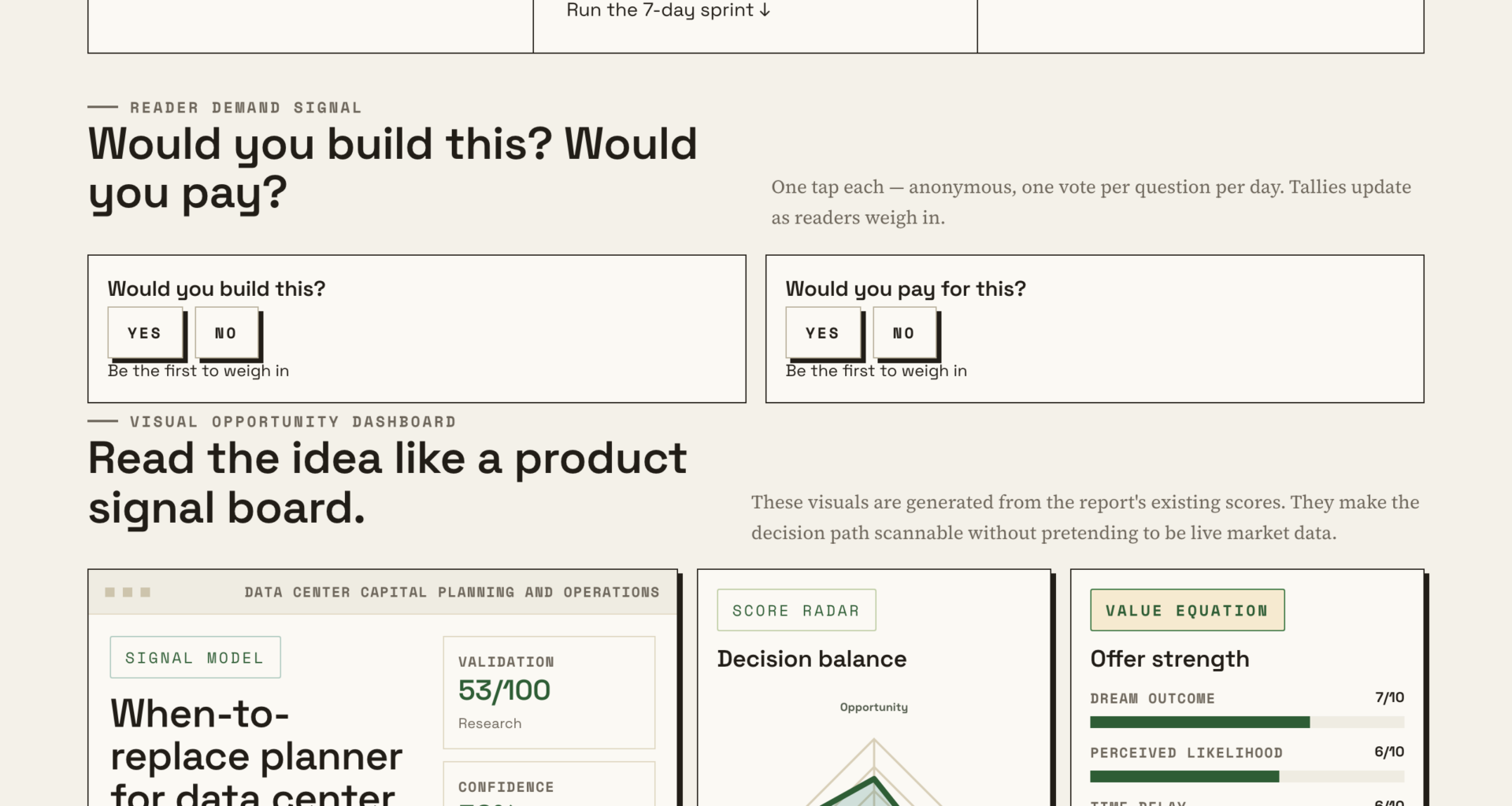

📊 Full opportunity report: Essential Guide To Replacing Data Center Equipment For Better TCO on IdeaNavigator AI — validation score, market gap, and execution plan.

Get the latest gadgets delivered free with Prime
- Fast, free delivery on millions of items
- Prime Video, Amazon Music and more included
- Member-only deals all year
TL;DR
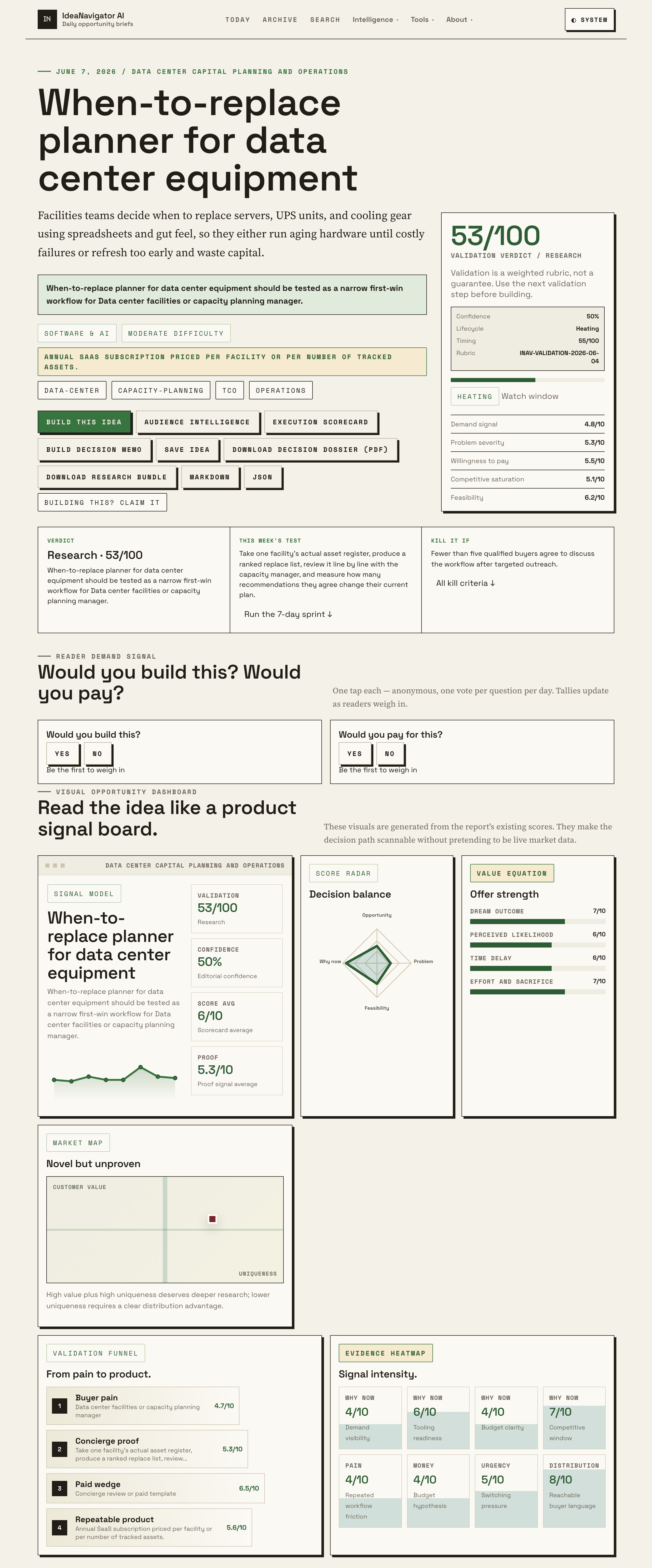
A new software tool is being tested to help data center managers determine optimal times to replace aging equipment. This development aims to improve total cost of ownership (TCO) by providing data-driven replacement recommendations, moving away from reliance on spreadsheets and gut feeling.
A new planning tool for data center equipment replacement is being tested to help facilities managers make data-driven decisions about when to replace servers, UPS units, and cooling systems. This development aims to improve total cost of ownership (TCO) by reducing unnecessary hardware refreshes and preventing costly failures. The tool, developed by IdeaNavigator AI, ingests asset data and ranks equipment based on age, energy consumption, and failure risk, offering actionable recommendations.
The proposed ‘when-to-replace’ planner is designed for data center facilities and capacity planning managers who currently rely on spreadsheets or intuition to decide when to upgrade or replace hardware. Rising energy costs and increasing hardware density have made these decisions more complex and economically significant. The tool works by analyzing an asset list that includes age, power draw, and maintenance costs, then generates a ranked list of equipment that should be replaced immediately versus those that can be kept longer.
Validation involves applying the tool to an actual facility’s asset register, reviewing the recommended replacement list with the capacity manager, and comparing it with current plans. Early testing indicates that the tool can produce actionable insights that may lead to more cost-effective hardware refresh cycles, potentially saving facilities capital and operational expenses. The service is offered as a SaaS subscription, priced per facility or per number of tracked assets.
How the Replacement Planner Could Transform Data Center Cost Management
This new planning tool addresses a key challenge for data centers: balancing hardware reliability, energy efficiency, and capital expenditure. By providing data-driven recommendations, it could help facilities reduce unnecessary upgrades, prevent failures, and optimize operational costs. As energy costs continue to rise and hardware becomes more efficient, such tools could become essential for modern data center management, improving overall TCO and sustainability.
data center server replacement hardware
As an affiliate, we earn on qualifying purchases.
As an affiliate, we earn on qualifying purchases.
Growing Pressure on Data Center Equipment Replacement Strategies
Traditionally, data center facilities teams decide when to replace equipment based on spreadsheets, maintenance schedules, and experience. However, rising energy costs and increasing hardware density have made these decisions more complex and economically impactful. Hardware is now more efficient, but aging equipment can lead to higher failure rates and energy consumption, creating a need for better decision-making tools. The development of a data-driven replacement planner reflects an industry shift toward automation and analytics in capacity planning.
“The replacement decision is becoming more nuanced as hardware becomes more efficient but also more critical to operations.”
— an anonymous researcher
Unconfirmed Aspects of the Replacement Planning Tool’s Effectiveness
It is not yet clear how widely the tool will be adopted after pilot testing or how accurately it will predict failure risks in diverse operational environments. The initial validation involves a single facility, and broader testing across different data centers is still pending. Additionally, the long-term impact on total cost savings remains to be demonstrated through real-world deployments.
Next Steps for Validation and Industry Adoption
The next phase involves applying the replacement planner to multiple facilities to validate its recommendations and measure cost savings. Feedback from facilities will inform further refinements. If successful, the tool could see broader adoption, with many data centers integrating it into their capacity planning workflows. Industry stakeholders will be watching for results from ongoing pilot programs and early adopters.
Key Questions
How does the replacement planner determine which equipment should be replaced?
The tool analyzes asset data including age, power consumption, and maintenance costs, then ranks equipment based on the risk of failure and efficiency improvements from replacement.
Is this replacement planning tool suitable for all types of data center hardware?
The initial focus is on servers, UPS units, and cooling systems, but the underlying methodology could be adapted for other equipment types as the tool develops.
What are the benefits of using this planning tool over traditional methods?
It provides data-driven, objective recommendations that can reduce unnecessary hardware refreshes, lower energy costs, and prevent failures, ultimately improving total cost of ownership.
When will the tool be generally available for industry-wide use?
The tool is currently in pilot testing; broader availability depends on validation outcomes, which are expected over the next few months.
How is the pricing model structured for this service?
The service is offered as a SaaS subscription, priced per facility or based on the number of assets tracked.
Source: IdeaNavigator AI
Halloween Picks
halloween
As an affiliate, we earn on qualifying purchases.