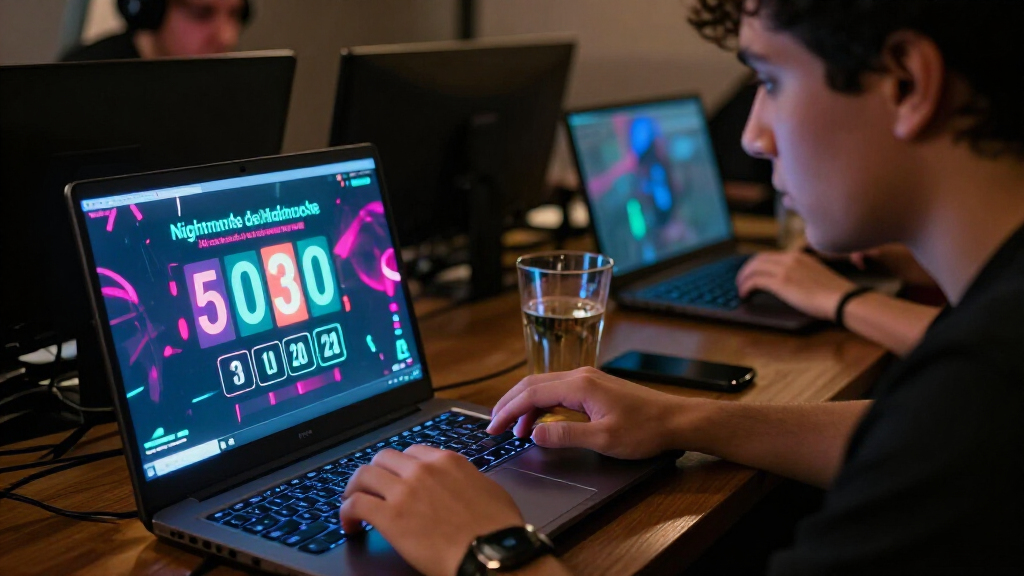

🔍 Read the full analysis: The Art Of Timing The Close In “Nightmarket — Mercado De Medianoche” on ThorstenMeyerAI.com

Get the latest gadgets delivered free with Prime
- Fast, free delivery on millions of items
- Prime Video, Amazon Music and more included
- Member-only deals all year
TL;DR
ThorstenMeyerAI.com has published a design guide to “Nightmarket — Mercado de Medianoche,” a digital market scene whose atmosphere shifts over time toward closing. The guide describes time as a design mechanism, but the available details do not specify the implementation, schedule, or whether the live room is interactive.
ThorstenMeyerAI.com has published a design guide to Nightmarket — Mercado de Medianoche, a digital market scene that changes over time to suggest a market winding down. The project puts time and gradual visual change at the center of its design, rather than treating atmosphere as a static background; the guide also points readers to a live room, though its operating details are not given.
According to the ThorstenMeyerAI.com guide, a sequence of visual cues moves the scene from a busy market toward near-empty night. It names lantern-like warmth, imperfect neon and rising steam among the details intended to make the digital space feel lived in. The guide describes the changes as accumulating until the market appears to be closing, rather than switching abruptly between finished looks.
The guide frames pacing as the central design idea: the clock acts as part of the scene’s machinery. Presented as a field guide and design teardown, it examines how visual details work together. The page does not provide technical specifications such as code, timing intervals, tools, or whether a visitor can affect the sequence.
The project is presented for readers interested in AI tools and automation, with the guide suggesting that generative environments and interfaces could use time to communicate change. That is an application proposed by the guide, not evidence that Nightmarket itself is an AI system or that the approach has been tested in other products.
Why a Digital Market Needs a Closing Time
As the ThorstenMeyerAI.com guide describes it, Nightmarket offers a different way to make a digital space feel active: small, time-linked changes carry the story. A market that gradually grows quieter can imply activity, duration and departure without relying only on a written status or a single visual update. For visitors, the effect may make the scene feel less like a fixed illustration and more like a place passing through an evening.
The concept could interest designers of generative environments and responsive interfaces, where timed changes may give context to a space or interaction. However, the guide establishes a design concept, not a measured result. It provides no user research, engagement figures, or comparison with static designs, so claims about how convincing or effective the approach is remain interpretive.
As an affiliate, we earn on qualifying purchases.
From Static Backdrop to Timed Scene
The project’s title pairs “Nightmarket” with the Spanish phrase “Mercado de Medianoche.” The ThorstenMeyerAI.com page invites readers to see the room live and read a design teardown. Its description of a progression from a warm, active scene toward one with fewer visible stalls provides the context for the guide’s focus on timing.
The page presents the work as a practical design exploration rather than a reported product launch, research paper, or formal evaluation. It connects the visual sequence to possible uses in AI-related creative work and automation, but does not identify a specific model, benchmark, technical platform, or deployment. The confirmed development is the publication of a guide and the description of a live scene, not a verified advance in AI capability.
Live Room and Timing Details
The available guide description does not say how the room’s clock works, whether the scene follows real-world time or a fixed playback, or how long it takes to reach closing. It also does not explain whether visitors can interact with the stalls, alter the sequence, or return the market to its earlier state.
Other details remain unreported, including the software and code used, accessibility features, and whether the live room is available continuously. The description’s language about making a market feel alive is a design intention; it provides no independent assessment or user feedback establishing how viewers respond.
What the Design Teardown Can Clarify
The full design teardown and the live room, both referenced by the ThorstenMeyerAI.com page, could clarify whether the sequence is automated, what triggers each visual change, and how lighting, neon, steam and disappearing stalls are coordinated.
The page specifies no release date, technical follow-up, or evaluation. Until further details are available, readers can treat Nightmarket as a described design experiment in time-based digital atmosphere, while distinguishing its stated creative aim from claims about performance or wider adoption.
Source: ThorstenMeyerAI.com
Key Questions
What is Nightmarket — Mercado de Medianoche?
According to the ThorstenMeyerAI.com design guide, it is a digital market scene whose visuals change over time to suggest the market is moving toward closing.
What changes as the market winds down?
The guide describes lantern-like warmth, imperfect neon, rising steam and stalls beginning to disappear. It does not provide a complete technical account of the sequence.
Is Nightmarket an AI system?
The project is presented to readers interested in AI tools and automation, but the ThorstenMeyerAI.com description does not confirm that the room itself uses AI. It provides no model or implementation details.
Can visitors control the live room?
The guide’s description does not specify this. It points to a live room but does not explain whether visitors can interact with it or change its timing.
Has the design been tested with users?
The available ThorstenMeyerAI.com description includes no user study, engagement data, or comparative evaluation. The claim that timed changes make the scene feel lived in is presented as a design aim, not a measured finding.
Source: ThorstenMeyerAI.com
Halloween Picks
halloween
As an affiliate, we earn on qualifying purchases.