

To design effective energy-harvesting wearables, focus on integrating flexible, lightweight solar cells that maximize exposure without sacrificing comfort. Use durable materials that perform well under different lighting and environmental conditions, and guarantee proper placement for ideal energy collection. Incorporate efficient power storage options like compact batteries or supercapacitors, along with smart energy management circuits to balance harvesting and consumption. By understanding these principles, you’ll create wearables that are more self-sufficient and environmentally friendly—if you continue, you’ll discover more about their innovative features.
Key Takeaways
- Select flexible, lightweight solar materials that maximize surface area without compromising wearer comfort.
- Optimize solar cell placement for maximum exposure while maintaining device ergonomics and aesthetics.
- Incorporate compact, high-capacity energy storage to ensure continuous device operation during low-light conditions.
- Use efficient energy management systems to balance harvesting, storage, and device power needs seamlessly.
- Ensure durability and environmental resistance to sustain performance against moisture, sweat, and temperature variations.
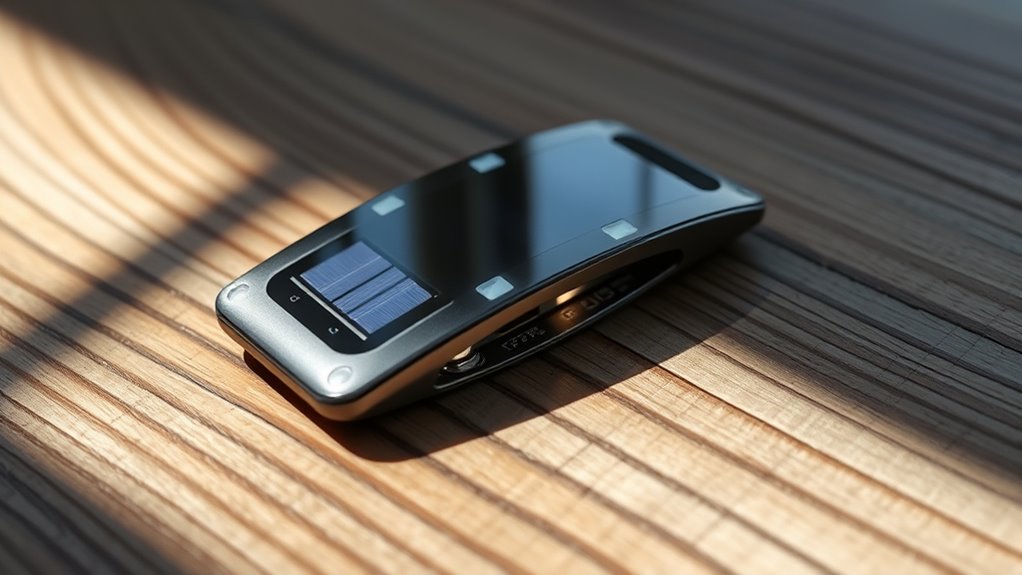
Have you ever wondered how wearable devices could become truly self-sufficient? The answer lies in energy-harvesting design principles that focus on seamlessly integrating renewable sources and efficient power management. One of the most promising strategies is solar integration, where tiny photovoltaic cells are embedded into the device’s surface. These solar cells capture ambient sunlight or indoor light, converting it into usable electrical energy. By harnessing solar power, your wearable can recharge throughout the day, reducing reliance on external charging sources. The key challenge is ensuring that these solar panels are flexible and lightweight enough not to compromise comfort while maintaining ideal energy conversion efficiency. Proper placement and surface area are vital—maximize exposure without sacrificing wearability, and select materials that perform well under various lighting conditions.
Alongside solar integration, effective power storage becomes essential. Since energy harvesting is often intermittent—think cloudy days or indoor environments—your wearable needs a reliable way to store excess energy generated during peak times. Compact, high-capacity batteries or supercapacitors are typically used to hold this energy, enabling continuous operation even when sunlight isn’t available. The design must consider the balance between storage capacity, size, and weight, so the device remains comfortable and unobtrusive. Additionally, integrating smart energy management circuits ensures that the harvested energy is efficiently allocated, preventing wastage and prolonging battery life. These circuits can prioritize energy use, switch seamlessly between power sources, and optimize charging cycles, making the device more autonomous.
Effective energy storage ensures continuous wearable operation amid variable harvesting conditions, balancing capacity, size, and smart power management.
When combining solar integration with power storage, you create a harmonious system that maximizes energy independence. For example, during daylight, solar cells continuously charge the storage units, which then power sensors, displays, and communication modules. In low-light conditions, the stored energy sustains device functions. This synergy minimizes external power needs and allows the wearable to operate longer between charges, making it more sustainable and user-friendly. Good design also involves choosing durable materials that withstand environmental factors like moisture, sweat, and temperature variations, ensuring longevity and consistent performance. Incorporating efficient energy conversion techniques further enhances the overall performance by reducing energy loss during transfer and storage.
Ultimately, successful energy-harvesting wearables rely on thoughtful integration of solar power and robust storage solutions. This approach not only extends device lifespan but also pushes the boundary toward truly self-sufficient wearables that actively generate, store, and use energy from their surroundings. By focusing on these core principles, you can develop wearable technology that’s more sustainable, convenient, and aligned with the future of personal electronics.
Frequently Asked Questions
What Materials Are Most Effective for Energy Harvesting in Wearables?
When choosing materials for energy harvesting in wearables, you should focus on flexible substrates and piezoelectric composites. Flexible substrates allow devices to bend comfortably with your movements, while piezoelectric composites generate electricity from mechanical stress. Combining these materials makes your wearable more efficient and comfortable, ensuring consistent energy conversion. These choices help create lightweight, adaptable wearables that harness your body’s movements to power their functions effectively.
How Do Environmental Factors Impact Energy Harvesting Efficiency?
Imagine you’re in 1984, and environmental factors still impact your device. Ambient temperature affects energy harvesting efficiency—extreme heat or cold can reduce power output. Electromagnetic interference from nearby electronics can disrupt energy transfer, lowering overall performance. You need to contemplate these factors when designing wearables, as stable environmental conditions ensure your device captures and converts energy effectively, keeping it powered and functional in real-world scenarios.
What Are the Long-Term Durability Considerations for Energy-Harvesting Wearables?
You need to take into account long-term durability for energy-harvesting wearables by addressing biocompatibility challenges that could cause skin irritation or material degradation. Regular maintenance and repair are essential to ensure consistent performance and prevent device failure over time. Choosing durable materials, designing for easy repairs, and monitoring for wear and tear help extend the wearable’s lifespan, ensuring it remains safe and effective for prolonged use.
How Do Energy-Harvesting Wearables Compare Cost-Wise to Traditional Devices?
Imagine saving money while staying innovative—that’s the promise of energy-harvesting wearables. Their cost comparison to traditional devices initially seems higher due to manufacturing expenses, but over time, they cut costs by eliminating the need for batteries and replacements. You’ll find that, although upfront investments are steeper, the long-term savings and sustainability make energy-harvesting wearables a smarter choice, transforming how you think about device costs.
What Are the Safety Concerns Associated With Energy Harvesting Technologies?
You should be aware that safety concerns with energy harvesting technologies include battery safety, as improper design can lead to overheating or leaks. Electromagnetic interference is another issue, potentially disrupting nearby electronic devices or affecting user health. Ensuring proper insulation, shielding, and adherence to safety standards helps mitigate these risks, making energy-harvesting wearables safer for everyday use and reducing potential health or device malfunctions.
Conclusion
By embracing energy-harvesting wearables, you can enjoy longer-lasting devices that reduce the need for frequent charging. Some might worry about reliability, but advances in materials and design guarantee consistent power supply. So, don’t let concerns hold you back—these wearables are built to seamlessly integrate into your daily life, offering convenience and sustainability. With continued innovation, energy-harvesting wearables will become your reliable, eco-friendly companion, making technology easier and greener to use every day.