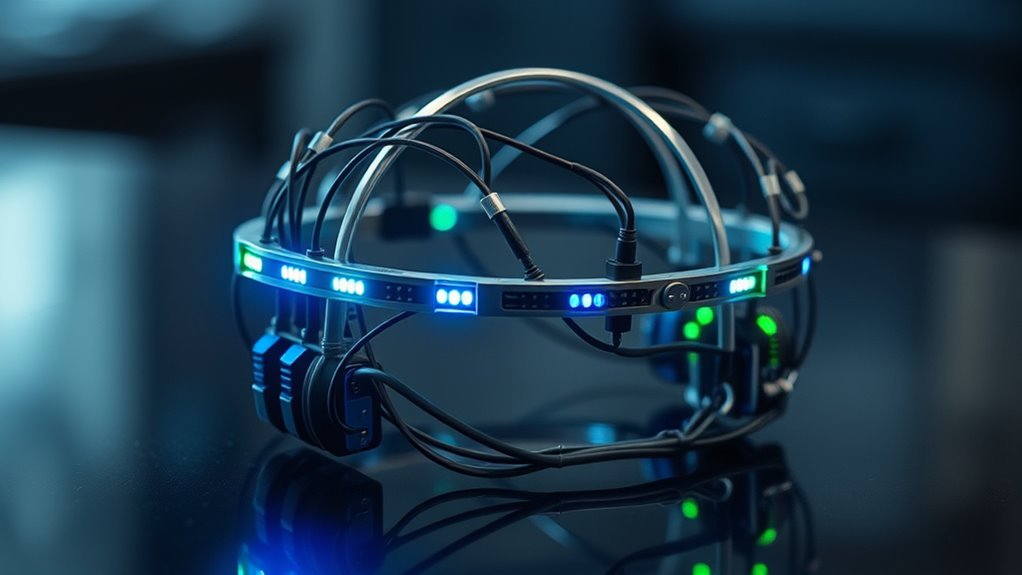

Brain-computer interface protocols are advancing rapidly with sophisticated neural decoding algorithms that improve communication and control. You’ll find increased device responsiveness, better noise filtering, and personalized adjustments making BCIs more intuitive. Ethical considerations about privacy and security are also shaping developments, ensuring responsible growth. As technology progresses, protocols become more reliable and adaptable. To discover how these innovations shape the future of neurotechnology, keep exploring the latest breakthroughs and ongoing challenges.
Key Takeaways
- Current BCI protocols integrate advanced neural signal decoding algorithms to enhance accuracy and real-time responsiveness.
- Protocols emphasize secure data handling, privacy, and ethical standards due to sensitive neural information.
- Adaptive protocols are being developed to personalize BCI performance based on individual neural changes.
- Regulatory frameworks are evolving to address safety, informed consent, and long-term risks of brain-implant technologies.
- Ongoing research focuses on making BCI protocols more intuitive, reliable, and accessible for diverse applications.

Brain-Computer Interface (BCI) protocols are rapidly evolving as researchers work to improve communication between the brain and external devices. At the heart of these advancements lies neural signal processing, which involves decoding electrical signals generated by your brain. This process is vital because it determines how accurately and efficiently your neural activity can be translated into commands for computers, prosthetics, or other assistive devices. As technology advances, scientists develop more sophisticated algorithms capable of filtering out noise, identifying relevant neural patterns, and improving real-time responsiveness. These improvements make BCIs more reliable and accessible, especially for individuals with neurological conditions or motor impairments. However, along with technical progress, ethical considerations come into sharper focus. As you might imagine, manipulating neural signals raises questions about privacy, consent, and potential misuse. Researchers and policymakers are actively debating how to establish guidelines that protect individuals from unauthorized access or data exploitation. For example, neural data could reveal sensitive information about your thoughts, emotions, or health status, making it essential to guarantee secure storage and transfer protocols. Additionally, there’s concern about the long-term effects of implanting devices into the brain, including possible physical or psychological risks. These ethical issues are compounded by the fact that BCIs could someday enable direct mind-to-mind communication, raising questions about mental privacy and autonomy. As you consider these factors, it becomes clear that responsible development of BCI technology must include transparent practices, robust security measures, and informed consent processes. Researchers are also exploring ways to make neural signal processing more adaptable, so BCIs can learn and evolve with your neural activity over time. This personalization enhances the user experience and guarantees the device remains effective even as your brain changes. Nonetheless, balancing innovation with ethical responsibility remains a challenge. You should be aware that ongoing discussions involve not only scientists and engineers but also ethicists, legal experts, and the public. Their goal is to guarantee that BCI protocols respect human rights and promote beneficial applications without infringing on individual freedoms. As the field progresses, you’ll see that neural signal processing will continue to improve, making BCIs more intuitive and reliable. Simultaneously, ethical considerations will guide the responsible deployment of these technologies, safeguarding your rights and well-being as we navigate this exciting frontier. Additionally, understanding the AI Security landscape is crucial to prevent vulnerabilities and ensure data integrity in BCI systems.

As an affiliate, we earn on qualifying purchases.
Frequently Asked Questions
How Do Brain-Computer Interfaces Differ Between Invasive and Non-Invasive Methods?
You should know that invasive brain-computer interfaces directly implant electrodes into your brain, offering precise neural signal transmission but requiring device miniaturization for safety. Non-invasive methods use external sensors to pick up neural signals, making them safer and easier to use, though they often lack the accuracy of invasive options. Your choice depends on balancing the need for detailed neural data against risks and convenience.
What Are the Main Challenges in Standardizing BCI Protocols Globally?
You face challenges in standardizing BCI protocols globally due to cultural differences and diverse regulatory landscapes. Different countries have varying safety standards, ethical guidelines, and acceptance levels, making it hard to create universal protocols. You need to navigate these complexities, fostering international collaboration and adaptable frameworks. Addressing these issues guarantees BCI technology can be safely and effectively implemented worldwide, benefiting all users regardless of location.
How Secure Are Brain-Computer Interfaces Against Hacking or Data Breaches?
A chain is only as strong as its weakest link, and with BCIs, security is no exception. You should be concerned about hacking or data breaches, but robust data encryption and privacy safeguards help defend your information. While no system is completely invulnerable, ongoing advancements make BCIs increasingly secure. Staying informed and cautious ensures your neural data stays private, giving you peace of mind in this rapidly evolving technology.
What Ethical Considerations Are Associated With BCI Development and Use?
When considering BCI development and use, you face ethical issues like privacy concerns and consent challenges. You need to guarantee that users truly understand how their brain data is collected and used, respecting their autonomy. Protecting sensitive information from misuse is critical, and transparent communication helps address consent challenges. By prioritizing these ethical aspects, you help build trust and promote responsible BCI innovation.
How Might Future Advancements Impact Everyday BCI Applications?
They say, “change is the only constant,” and future BCI advancements will prove this true. You’ll see improved neural decoding, making devices more intuitive. As user adaptability grows, everyday BCI applications will become seamless, allowing you to control technology with your thoughts. These innovations could transform communication, gaming, and healthcare, making interactions more natural. Embracing this progress means staying flexible and open to new possibilities.
Conclusion
You now see that brain-computer interface protocols are evolving rapidly, but challenges remain. Staying ahead requires adapting quickly and embracing new technologies. Remember, when it comes to breakthroughs, you can’t afford to rest on your laurels. Keep pushing boundaries, because innovation doesn’t wait, and the future of BCIs depends on your ability to stay in the game. In the end, it’s all about turning the tide in your favor before opportunities slip through your fingers.