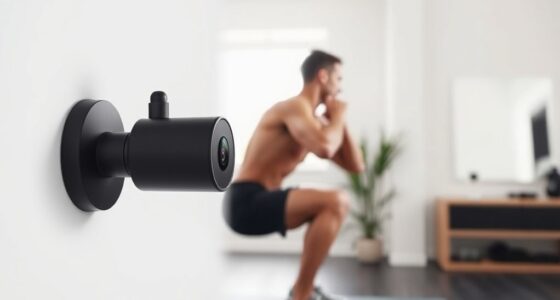
Advances in volumetric video capture now let you create realistic 3D representations of people using tools that range from professional studios to smartphones. By combining motion capture, 3D reconstruction, and multiple sensors or cameras, you can record detailed, immersive videos from any angle. Improvements in camera tech, processing power, and user-friendly software make this technology more accessible than ever. If you’re curious, there’s much more to discover about how these innovations are changing the way we capture and share moments.

Get the latest gadgets delivered free with Prime
- Fast, free delivery on millions of items
- Prime Video, Amazon Music and more included
- Member-only deals all year
Key Takeaways
- Advances in camera technology and processing power enable smartphones to perform volumetric capture traditionally limited to studios.
- Consumer devices now incorporate multiple lenses and depth sensors, facilitating detailed 3D reconstruction at home.
- Software improvements allow real-time processing and editing of volumetric videos on accessible, everyday devices.
- Democratization of technology empowers individuals to create, share, and experience immersive 3D content without professional setups.
- This shift bridges professional-grade digital capture with consumer-level convenience, expanding volumetric video applications across industries.

Have you ever wondered how immersive experiences like virtual reality and augmented reality bring real people to life? The secret lies in advanced techniques like volumetric video capture, which transforms real-world movements into digital 3D models that viewers can explore from any angle. At the heart of this process are technologies like motion capture and 3D reconstruction, which work together to create incredibly realistic representations of people and objects. When you step into a virtual environment, it’s this seamless integration that makes everything feel authentic and engaging.
Motion capture plays a essential role in volumetric video capture. It tracks the movements of performers with high precision, translating their gestures, facial expressions, and body language into digital data. This data is then used to drive the 3D reconstruction process, where multiple cameras and sensors capture the performer from various angles. These multiple viewpoints are processed to produce a detailed and accurate 3D model of the person. Unlike traditional video, which flattens a scene into a single perspective, volumetric video preserves depth, allowing you to walk around and view the subject from any direction. This creates a truly immersive experience that feels almost tangible.
As the technology has evolved, the gap between professional studios and smartphones has narrowed. Thanks to improvements in camera quality, processing power, and software algorithms, volumetric capture is becoming accessible to everyday users. Now, with just a smartphone equipped with multiple lenses and depth sensors, you can capture your own 3D videos of friends, family, or even yourself. These devices utilize sophisticated 3D reconstruction techniques to piece together multiple images into a coherent, realistic model. The result is a volumetric clip that can be shared, viewed from different angles, or integrated into AR and VR experiences. This democratization means you no longer need expensive studio setups to create immersive content; instead, you can produce high-quality 3D captures right from your pocket.
In essence, volumetric video capture bridges the gap between professional-grade visual effects and consumer-level content creation. By harnessing motion capture and 3D reconstruction, it allows you to create, share, and experience digital representations of real people in a way that feels natural and immediate. Whether for entertainment, education, or communication, this technology is transforming how we bring real-life moments into virtual worlds. As the tools become more affordable and easier to use, you’re empowered to turn everyday interactions into immersive experiences that captivate and inspire.
Additionally, advancements in Hyundai Tuning reflect how technological improvements can dramatically enhance performance and customization options, similar to how volumetric capture is making immersive experiences more accessible and customizable for everyone.
Products Worth Considering

Jackery HomePower 3000 Portable Power Station, 3072Wh

Jackery Explorer 2000 v2 Portable Power Station, 2042Wh, 2200W

Anker SOLIX S2000 Portable Power Station, 2,010Wh, 1,500W
As an affiliate, we earn on qualifying purchases.
Frequently Asked Questions
How Does Volumetric Video Differ From Traditional 2D Video?
When you compare volumetric video to traditional 2D video, you’ll notice that volumetric video provides depth perception and enhances spatial awareness. Unlike flat 2D images, it captures a full 3D representation of a scene, allowing you to view from different angles. This immersive experience makes you feel more present, as you can interact with the environment and understand spatial relationships more naturally. Volumetric video truly transforms how you experience visual content.
What Are the Current Limitations of Volumetric Video Technology?
You might find the current limits of volumetric video a bit challenging, as hardware constraints can slow things down and data bandwidth issues make sharing large files tricky. While the tech is advancing, it still requires powerful equipment and fast internet connections. These factors can hinder seamless experiences, but ongoing innovations aim to make volumetric video more accessible and smoother, promising exciting improvements on the horizon.
How Accessible Is Volumetric Video Creation for Amateurs?
Creating volumetric videos as an amateur is becoming more accessible thanks to cost reduction and improved software accessibility. You can now find user-friendly tools and affordable hardware options that make capturing and editing 3D footage easier than ever. While high-end setups still exist, many entry-level solutions allow you to experiment and produce quality content without significant investment. This shift opens doors for enthusiasts to explore volumetric video creation at home.
What Industries Are Most Likely to Benefit From Volumetric Video?
Think of the future as a canvas for innovation. You’ll find industries like virtual fashion and remote collaboration stand to gain most from volumetric video. It lets you create immersive experiences, whether designing digital garments or working together across distances. This technology bridges gaps, making remote interactions more lifelike and engaging. As it evolves, expect it to revolutionize how you shop, communicate, and create in ways you never imagined.
How Does Volumetric Video Impact User Privacy and Data Security?
You might have privacy concerns with volumetric video, especially regarding how your data is collected and used. As you share more detailed 3D images, the risk of data breaches increases. To protect your privacy, companies must implement strong data protection measures and transparency. It is crucial to stay informed about how your volumetric data is managed, ensuring your personal information remains secure and private in this evolving technology.
Conclusion
As you’ve seen, volumetric video capture is transforming how we experience digital content, making it more immersive and accessible. Some believe this technology might even replace traditional filming methods someday. While that’s still up for debate, there’s no denying its rapid evolution. If history repeats itself, we could soon be carrying stunning 3D experiences right on our smartphones. So, stay curious — the future of immersive media is just getting started, and it’s likely to surprise us all.