
🔍 Read the full analysis: How Automation And AI Are Testing Bangladesh’s Garment Workforce on ThorstenMeyerAI.com

Get the latest gadgets delivered free with Prime
- Fast, free delivery on millions of items
- Prime Video, Amazon Music and more included
- Member-only deals all year
TL;DR
Bangladesh’s garment wage board postponed a meeting scheduled for November 16, leaving workers’ proposal of 32,000 taka a month unanswered by factory owners. Protests have disrupted production and prompted a forceful police response, while research cited in the source points to automation and a declining share of women in apparel jobs as longer-term workforce pressures.
Bangladesh’s garment wage board postponed its November 16 meeting without receiving an employers’ offer, leaving workers’ proposal for a 32,000-taka monthly minimum unanswered as protests disrupted factories and roads around Dhaka. The dispute affects an industry employing about four million people, while automation and changes in the workforce add pressure beyond the immediate wage negotiations.
The workers’ proposal on the board is 32,000 taka a month, about $257 using the Bangladesh Bank rate cited in the source. Protesters have also demanded 30,000 taka, about $240. The current minimum is 12,500 taka, in force since December 1, 2023. Factory owners have not presented an official figure; The Financial Express reported that they had discussed about 15,000 taka before the postponed meeting.
The Bangladesh Garment Manufacturers and Exporters Association and Bangladesh Knitwear Manufacturers and Exporters Association said in a joint statement that they learned from the media that workers’ representative Anwar Hossain had fallen ill and been hospitalized. They said the employers’ side was ready to submit its proposal and requested a new meeting date. The board is scheduled to meet again on November 23.
Protests spread across Gazipur, Savar, Ashulia and Mirpur on November 17. Police used tear gas and stun grenades, while protesters blocked roads and some set vehicles on fire, according to reports by AFP and The Daily Star. On November 18, around 20,000 workers from one factory blocked the Dhaka-Aricha Highway in Savar, AP reported, citing local media. Police used tear gas, stun grenades and batons. AP said the number of people injured was not immediately clear.
Wages Meet Automation Pressure
The wage dispute is about more than the monthly pay packet: it bears on the livelihoods of millions of workers and on the costs and competitiveness of a major export industry. Factory owners have argued that a steep wage rise could weaken Bangladesh’s cost advantage over India and Vietnam. They have also pointed to buyer prices and rising energy costs. These are employers’ arguments; the source reports no international buyer comment on this round of negotiations.
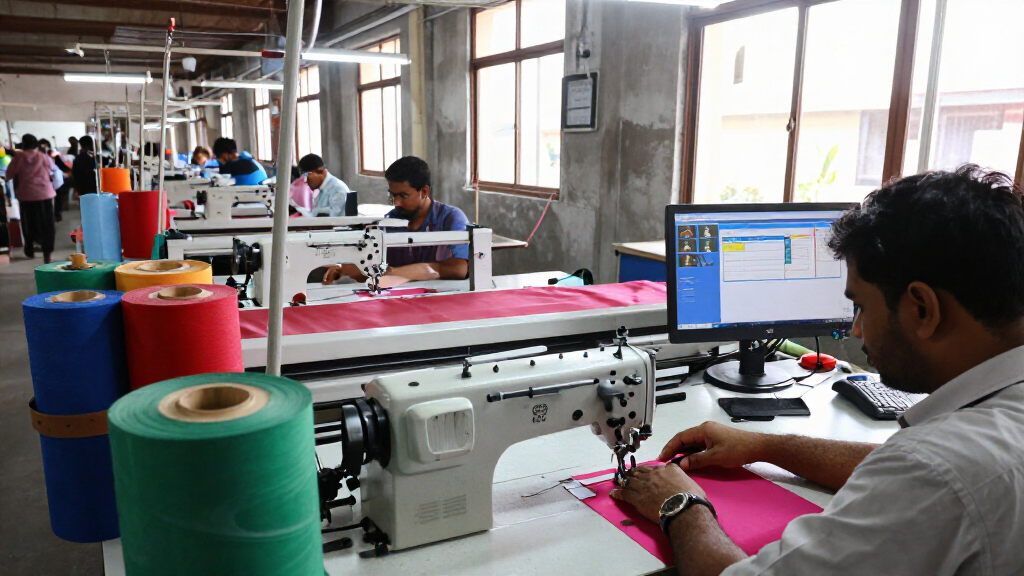
Automation adds a separate strain. A 2024 study of factories around Dhaka found automated lines needed 30.58 percent fewer workers, most of them helpers. That finding describes the factories and sample examined; it does not establish that every factory has automated or that the same reduction applies across the whole industry. Still, it highlights how wage-setting is unfolding alongside changes in demand for particular kinds of factory work.
Women’s place in the workforce is also changing. An ILO working paper, using labour force survey data, calculates that women’s share of apparel jobs fell from 46.2 percent in 2016–17 to 35.2 percent in 2024. The figures do not by themselves explain why the share declined. Together with the automation study, they show why the wage settlement is being watched as part of a wider question about who gets apparel jobs and how secure those jobs are.
Products Worth Considering

LG 27GR83Q-B 27-inch Ultragear QHD IPS Gaming Monitor

LG 27GS60QC-B Ultragear 27-inch Curved Gaming Monitor (QHD, 180Hz, 1ms, 1000R)

Bose QuietComfort Ultra Earbuds (2nd Gen), Wireless Noise-Cancelling Earbuds, White Smoke
As an affiliate, we earn on qualifying purchases.
The Wage Talks and Job Shifts
The minimum wage board’s third meeting was due on November 16, with employers expected to respond to the workers’ proposal. Its postponement came after protests had already begun on October 31, according to the Savar police officer cited by the source. On November 16, BGMEA sources reported that 98 factories were closed under the “no work, no pay” provision of section 13(1) of Bangladesh’s Labour Act and that 24 more had suspended operations.
Reports differed on how many factories were affected during the later protests. A BGMEA vice-president told The Daily Star that production had stopped at nearly 450 factories. The newspaper’s correspondents, citing industrial police and protesters, counted at least 250 closures in Savar, Ashulia and Hemayetpur, plus 60 in Gazipur. AFP, citing sources, put the figure at about 500 of the country’s 4,500 garment factories. These are distinct reported estimates, not a single verified count.
The response included deployment of 42 Border Guard Bangladesh platoons across industrial areas in Dhaka, Gazipur and Narayanganj. The force said it was monitoring the situation and using drones and body-worn cameras, according to AFP and The Daily Star. A Savar police officer said 117 people had been arrested and 11 cases filed since October 31. The officer also alleged that people from various organisations, including banned groups, had infiltrated the protests; the report cited no evidence for that allegation.
“We want to return to our machines.”
— A 28-year-old garment worker, speaking to AFP
Offer, Injuries and Closures Unclear
The central unresolved issue is the employers’ proposed wage figure. The source says owners had discussed around 15,000 taka, but they had not formally submitted an offer as of 07:00 UTC on November 19. The final minimum, and whether the board will reach agreement at its next meeting, remain unknown.
The scale of factory closures also remains unsettled because the reported counts use different sources and coverage areas. AP said it was not immediately clear how many people were injured in the November 18 confrontation. The source reports no deaths in the coverage reviewed, but that should not be read as a complete independent tally of all incidents. The police allegation of infiltration was not supported with evidence in the cited report.
The automation and employment figures offer important indicators, not a complete account of what is happening to every worker. The source does not establish how many jobs have been lost to automation across Bangladesh, how the wage dispute may affect hiring, or what caused the decline in women’s share of apparel employment.
The November 23 Board Meeting
The wage board is scheduled to meet again on November 23. Its chairman said the new minimum wage will take effect on December 1, whatever amount is set, and workers are expected to receive it with their January 2027 pay. Those dates are the stated timetable; the final amount and the board’s decision-making process remain open.
In the meantime, the size and duration of work stoppages, further protest activity and the authorities’ response will shape conditions in industrial areas. The next key development is whether employers put a formal figure on the table and whether that offer narrows the gap with workers’ demand. The source provides no date for a response from international buyers.
Key Questions
What wage are garment workers seeking?
The workers’ representative on the wage board formally proposed a monthly minimum of 32,000 taka. Protesters have also demanded 30,000 taka, while the current minimum is 12,500 taka.
Have factory owners made a formal offer?
No formal offer had been presented in the source’s reporting, current to 07:00 UTC on November 19. The Financial Express reported that employers had discussed about 15,000 taka before the postponed meeting.
When will the wage board meet again?
The next meeting is scheduled for November 23, 2026. The board’s chairman said the new minimum will take effect on December 1 and be paid with January 2027 wages, regardless of the amount.
How is automation affecting garment jobs?
A 2024 study of factories around Dhaka found automated lines required 30.58 percent fewer workers, most of them helpers. The study does not establish the total number of jobs affected across Bangladesh’s garment industry.
How many factories have been disrupted?
Published estimates vary. They range from at least 310 closures counted by The Daily Star’s correspondents in named areas to nearly 450 halted factories cited by a BGMEA vice-president and about 500 reported by AFP sources. The figures differ in source and coverage, so there is no single confirmed total in the material.
Source: ThorstenMeyerAI.com