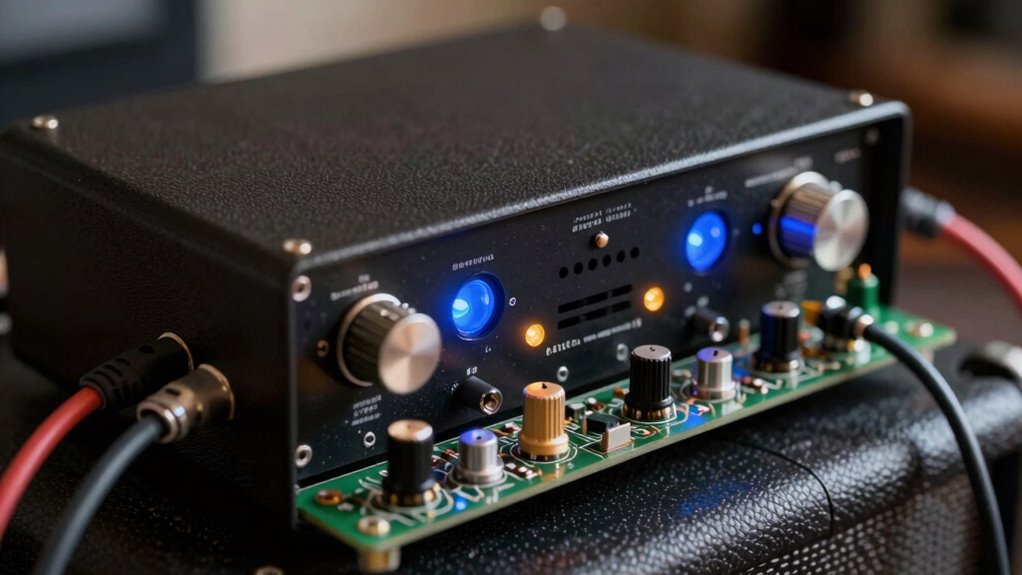

Adjusting your crossover settings is a simple tweak that can dramatically improve your sound quality. By properly managing the frequency split between your subwoofer and main speakers, you prevent muddiness and guarantee deep bass blends smoothly with clarity elsewhere. Proper placement and room considerations also enhance the bass response and overall balance. Small tweaks here make a big difference, helping you achieve a richer, more natural sound. Keep exploring to discover how you can optimize your entire system.

Get the latest gadgets delivered free with Prime
- Fast, free delivery on millions of items
- Prime Video, Amazon Music and more included
- Member-only deals all year
Key Takeaways
- Proper crossover settings ensure optimal frequency distribution between subwoofer and main speakers for balanced sound.
- Adjusting crossover prevents muddiness from overly high settings or disconnects from too low settings.
- Fine-tuning crossover based on room acoustics and speaker placement enhances bass integration and clarity.
- Small adjustments in crossover can significantly improve sound quality and reduce distortion.
- Continuous listening and gradual tweaks help achieve a seamless, high-quality audio experience.
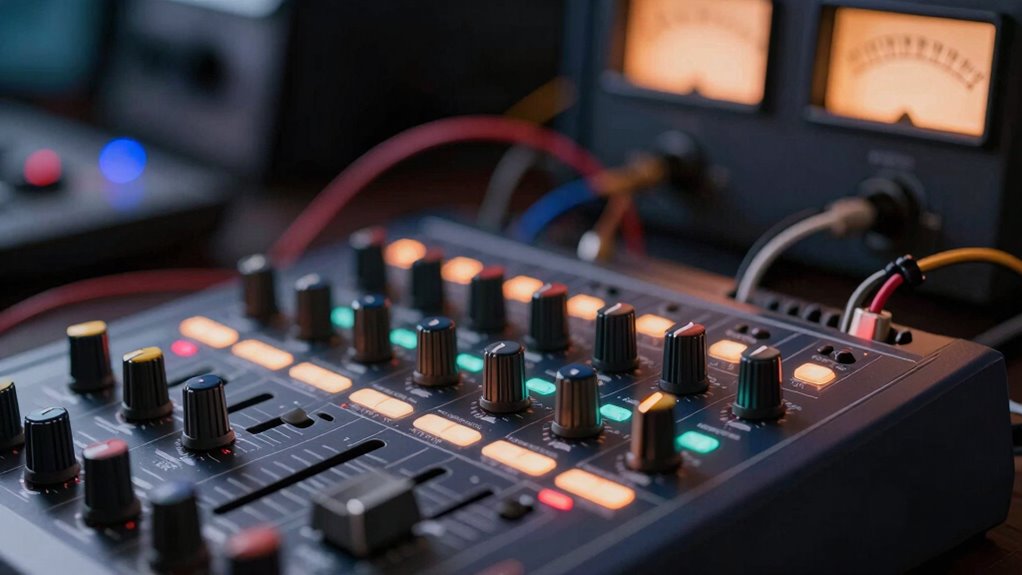
Have you ever wondered how to optimize your audio setup for the best sound quality? One simple yet powerful tweak is adjusting your crossover settings. This small change can dramatically improve your listening experience, especially when it comes to balancing the different frequencies in your system. When setting your crossover, paying attention to speaker placement is essential. Proper placement ensures that sound waves blend smoothly, reducing dead spots and minimizing phase issues. For optimal performance, considering speaker placement is crucial for achieving a seamless soundstage. Positioning your speakers at ear level and equidistant from your listening position enhances clarity and creates a more immersive soundstage. When your speakers are well-placed, you’ll notice a more natural bass response, which is critical for a balanced audio experience. The crossover settings help manage how low-frequency sounds are distributed between your subwoofer and main speakers, directly influencing bass response. If the crossover point is set too high, your main speakers might struggle to produce the deep bass sounds, resulting in muddiness or a boomy feel. Conversely, setting it too low can cause a disconnect between your subwoofer and the larger speakers, leading to a lack of fullness in the low end. Finding the right balance involves experimenting with different crossover frequencies until you achieve a seamless blend. You want your subwoofer to handle the bass without overpowering the midrange and treble, creating a cohesive sound. It’s also worth noting that the room’s acoustics affect how bass responds, so you might need to make minor adjustments to your crossover settings to compensate for room size, shape, and furniture placement. Adjusting room acoustics and other environmental factors can help optimize bass response and overall sound quality. Additionally, listening environment plays a significant role in how you perceive sound, so customizing your setup for your space can lead to significant improvements. When you tweak the crossover, pay attention to how the bass integrates with the overall sound. The goal is to eliminate gaps or overlaps in frequency response, which can cause sound distortion or fatigue. Small fine-tuning adjustments can make a huge difference. By fine-tuning these settings, you’ll notice a clearer, more detailed sound that feels balanced from low to high frequencies. Remember, the key is subtlety—small adjustments can make a huge difference. Take your time listening to familiar tracks, adjusting the crossover as needed, and listening again. Ultimately, the right crossover setting, combined with thoughtful speaker placement, will transform your audio setup into a finely tuned system that delivers crisp, powerful sound with rich bass and pristine clarity.
As an affiliate, we earn on qualifying purchases.
Frequently Asked Questions
How Do I Determine the Best Crossover Frequency for My Speakers?
To find the best crossover frequency, start by considering your speaker placement and room acoustics. Listen carefully to how the sound blends; if the bass sounds boomy or muffled, adjust the crossover slightly higher or lower. Use your ears as a guide, aiming for smooth progressions between speakers and subwoofers. Experiment with small changes, and remember that room acoustics can heavily influence the ideal crossover point.
Can Adjusting Crossover Settings Improve Sound Clarity?
Adjusting crossover settings can considerably improve sound clarity. For example, if you notice muddiness in your vocals, tweaking the crossover frequency might help clarify the midrange. Proper speaker placement and ensuring amplifier compatibility are also essential. When you fine-tune the crossover, you optimize how signals are divided, reducing distortion and blending frequencies smoothly. This results in clearer, more balanced sound, making your listening experience more enjoyable and precise.
Is There a Risk of Damaging My Speakers With Incorrect Crossover Settings?
Yes, incorrect crossover settings can damage your speakers. If you set the crossover too high, it can cause speaker distortion and strain, especially on woofers or tweeters not designed for those frequencies. The crossover complexity means you need to understand your equipment well. Misadjustments can lead to distorted sound, reduced lifespan of the speakers, or even permanent damage. Always follow manufacturer guidelines and fine-tune carefully.
How Often Should I Revisit or Tweak My Crossover Settings?
Did you know that improper crossover settings can reduce sound quality by up to 30%? You should revisit and tweak your crossover settings whenever you change your speaker placement or notice shifts in room acoustics. Regular adjustments help optimize sound, especially as room conditions evolve or new equipment is added. Keep an ear out for muffled or unbalanced sound, and tweak settings accordingly to maintain the best audio experience.
Do Different Music Genres Require Different Crossover Adjustments?
Yes, different music genres often require genre-specific tuning because each has unique musical frequency ranges. For example, bass-heavy genres like hip-hop benefit from lower crossover points to emphasize low frequencies, while acoustic or classical music may need higher settings to keep vocals and instruments clear. Adjusting your crossover based on genre guarantees ideal sound quality, allowing you to enjoy the full richness of each style without distortion or muddiness.
Conclusion
By fine-tuning your crossover settings, you shape your soundstage, sculpt your clarity, and balance your bass. You control the harmony, craft the clarity, and define the depth—each adjustment a brushstroke on your audio canvas. When every setting aligns, your music becomes more than heard; it’s felt. Embrace the tweak, trust the process, and let your sound system transform into a seamless symphony of precision and passion.
Halloween Picks
halloween
As an affiliate, we earn on qualifying purchases.