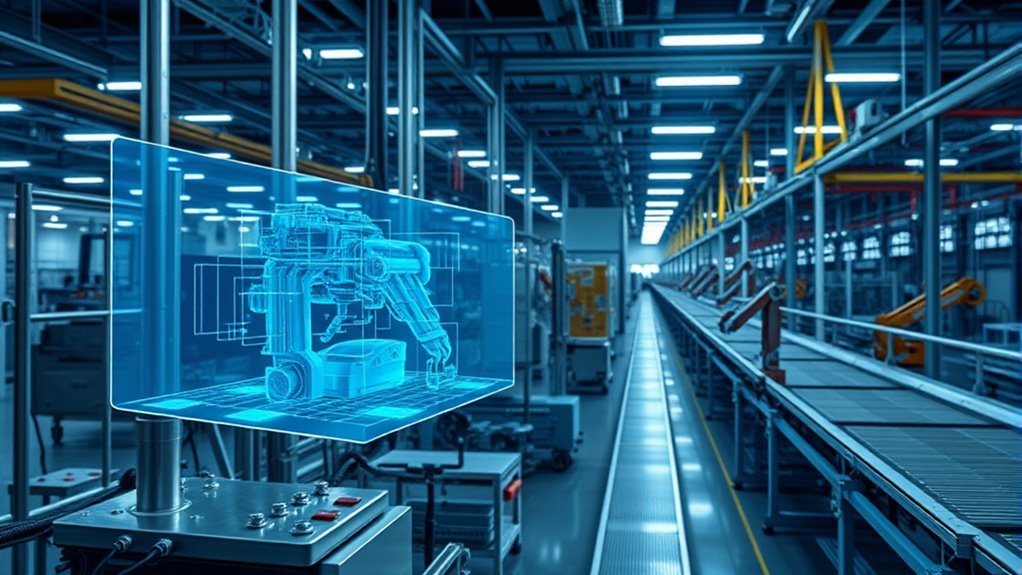

In manufacturing, digital twins help you implement predictive maintenance by creating real-time, accurate virtual models of your equipment. By embedding sensors, you continuously collect data on temperature, vibration, and pressure, feeding it into the digital twin. This allows you to monitor performance, spot abnormalities early, and plan maintenance proactively. Using advanced data analysis, you can identify patterns and improve accuracy over time, leading to reduced downtime and costs. Exploring further reveals how this technology can transform your operations.

Get the latest gadgets delivered free — and shop member deals
- Fast, free delivery on millions of items
- Access to Prime Big Deal Days deals on October 6–7
- Prime Video, Amazon Music and more included
Key Takeaways
- Digital twins provide real-time, accurate simulations of manufacturing assets for proactive maintenance planning.
- Sensor data integration enables continuous monitoring and early detection of potential equipment failures.
- Data analytics identify patterns and anomalies, supporting predictive insights and root cause analysis.
- Implementing digital twins reduces downtime, repair costs, and extends machinery lifespan.
- Ongoing model refinement enhances decision-making, operational efficiency, and safety in manufacturing environments.
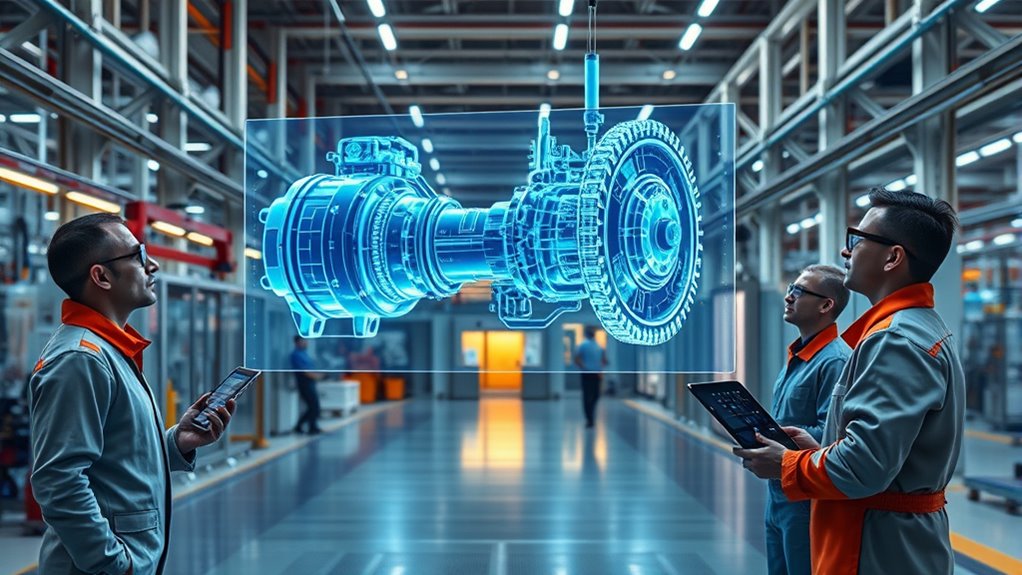
Digital twins are revolutionizing predictive maintenance by providing real-time, accurate simulations of physical assets. With digital replicas of machinery or equipment, you gain a powerful tool to monitor performance, detect issues early, and plan maintenance proactively. This technology hinges on seamless sensor integration, where sensors embedded in your assets continuously collect data on temperature, vibration, pressure, and other critical parameters. These sensors feed live information into the digital twin, creating an up-to-date virtual model that reflects the true state of your equipment. The real magic happens through robust data analytics, which analyze this influx of sensor data to identify patterns, anomalies, and potential failures before they become costly problems.
By integrating sensors effectively, you ensure that your digital twin receives accurate, granular data, enabling precise simulations of how your assets behave under various conditions. This continuous data stream allows you to move from reactive maintenance—fixing issues after they occur—to predictive strategies that anticipate failures before they happen. When data analytics processes this sensor information, it can highlight deviations from normal operation, signaling that a component might be nearing failure. This proactive approach minimizes downtime, reduces repair costs, and extends the lifespan of your machinery.
Effective sensor integration enables precise digital twin simulations, transforming reactive maintenance into proactive, predictive asset management.
You’ll find that data analytics within digital twins isn’t just about spotting problems—it’s also about understanding root causes and optimizing performance. Advanced algorithms sift through vast amounts of sensor data, uncovering insights that might be invisible to the naked eye. These insights enable you to schedule maintenance precisely when needed, avoiding unnecessary servicing and maximizing operational efficiency. Additionally, predictive analytics can simulate various scenarios, helping you assess the impact of different maintenance strategies or operational adjustments, ultimately leading to smarter decision-making.
Furthermore, sensor integration and data analytics facilitate a feedback loop that continually refines your digital twin’s accuracy. As more data is collected over time, the virtual model becomes increasingly sophisticated, offering deeper insights into your assets’ behavior. This ongoing learning process ensures your predictive maintenance approach evolves with your equipment, keeping you ahead of potential issues. By leveraging these technologies, you transform maintenance from a routine task into a strategic practice that enhances productivity, safety, and cost savings.
In essence, the combination of sensor integration and data analytics within digital twins empowers you to monitor, predict, and prevent failures more effectively than ever before. It’s a game-changer for manufacturing, allowing you to operate more efficiently, reduce unplanned downtime, and extend the life of your assets—all driven by real-time insights and intelligent simulations.
digital twin sensor monitoring system
As an affiliate, we earn on qualifying purchases.
As an affiliate, we earn on qualifying purchases.
Frequently Asked Questions
How Does Digital Twin Technology Impact Overall Equipment Lifespan?
Digital twin technology can greatly extend your equipment’s lifespan by improving sensor accuracy and maintenance scheduling. With real-time data, you get precise insights into machinery health, allowing you to address issues early before they cause damage. This proactive approach reduces wear and tear, minimizes unexpected breakdowns, and ensures timely maintenance. As a result, your equipment lasts longer, performs better, and you save costs over time.
What Industries Benefit Most From Digital Twin-Enabled Predictive Maintenance?
You might think only tech-heavy industries benefit, but many others see real gains. Aerospace innovation improves safety and efficiency, while healthcare diagnostics become faster and more accurate. Digital twin-enabled predictive maintenance helps reduce downtime, cut costs, and extend equipment life across sectors. If you’re in manufacturing, these benefits mean less unexpected failure and more reliable operations, making it a game-changer for industries aiming to stay competitive and innovative.
What Are the Initial Costs of Implementing Digital Twin Systems?
When considering digital twin systems, you should conduct a thorough cost analysis to understand initial expenses, including software, hardware, and integration costs. The implementation challenges, like data management and staff training, can also impact your budget. While upfront costs may seem high, you’ll likely see long-term savings through improved maintenance and reduced downtime. Planning carefully helps you balance these initial investments with future operational benefits.
How Is Data Security Managed in Digital Twin Platforms?
Did you know that over 60% of companies face cybersecurity threats annually? When managing data security in digital twin platforms, you should rely on robust cybersecurity protocols and data encryption. These measures guarantee your sensitive manufacturing data stays protected from cyber threats. Implementing strong access controls and continuous monitoring helps you prevent breaches. This way, you confidently leverage digital twins without compromising your data integrity or operational security.
Can Digital Twins Predict Failures in Complex, Interconnected Systems?
Digital twins can indeed predict failures in complex, interconnected systems by leveraging sensor integration and real-time analytics. You can monitor data from various sensors embedded in machinery, allowing the digital twin to analyze performance patterns and detect anomalies early. This proactive approach helps you anticipate issues before they escalate, minimizing downtime and maintenance costs. By continuously updating with live data, digital twins enhance your ability to forecast failures accurately in intricate systems.
Conclusion
By embracing digital twins for predictive maintenance, you open the incredible power to prevent failures before they happen. Imagine avoiding downtime so efficiently that it feels like you have a crystal ball—your manufacturing process becomes unstoppable. With this technology, you’re not just maintaining equipment; you’re revolutionizing your entire operation. Don’t wait for disasters to strike—leverage digital twins now and turn your maintenance into a lightning-fast, foolproof system that keeps your production soaring.
Fall Picks
fall essentials
As an affiliate, we earn on qualifying purchases.