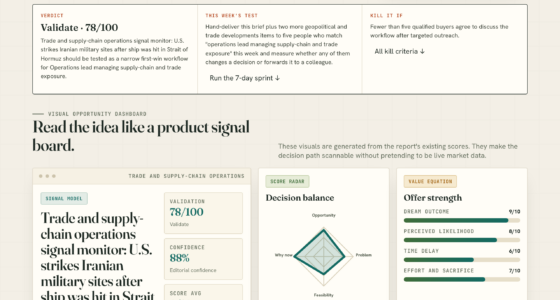

📊 Full opportunity report: Are Invisible Watermarks In AI A Privacy Boon Or A Business Risk? on ThorstenMeyerAI.com — validation score, market gap, and execution plan.

Get the latest gadgets delivered free with Prime
- Fast, free delivery on millions of items
- Prime Video, Amazon Music and more included
- Member-only deals all year
TL;DR
Anthropic is believed to be embedding invisible watermarks in text produced by its AI model Claude. The move is linked to EU transparency rules, but implementation details and scope remain unconfirmed, raising privacy and business concerns.
Anthropic is reportedly embedding invisible watermarks into text generated by its AI model Claude, a move that could influence how AI content is identified and regulated. The practice is linked to upcoming European Union transparency requirements, but the company has not confirmed specific implementation details, leaving the scope and reliability of the system uncertain. For more context, see the original analysis. This development matters because it could affect user privacy, content verification, and competition among AI providers. You can read more about the privacy implications in industry leaders’ concerns.
The report from Thorsten Meyer AI indicates that Anthropic is applying an invisible watermark to ordinary text produced by Claude, which is not visible to users but can potentially be detected later. Learn more about this emerging technology in the coming wave of invisible watermarks. The exact method—whether it involves hidden characters, metadata, or pattern-based markers—has not been disclosed, nor has the scope of its application across products or regions. Anthropic has not provided technical documentation or confirmation that the watermark is active or reliable.
This move is reportedly motivated by European Union regulations aimed at increasing transparency in AI-generated content. The report suggests that similar measures could be adopted by other providers like OpenAI and Google, although no official confirmation exists. The impact on customers, businesses, and content creators remains uncertain, especially regarding potential false positives, editing resilience, and privacy concerns.
Implications for AI Transparency and Privacy Risks
This development could significantly influence AI transparency policies and the way AI-generated content is verified. If effective, invisible watermarks could help publishers, educators, and regulators distinguish AI content from human writing, supporting disclosure and accountability. However, the use of hidden markers raises privacy concerns and questions about data handling, especially if the watermark persists after editing or translation. The potential for false positives and misuse also poses risks to both users and providers, making the technology’s reliability and transparency critical issues.
As an affiliate, we earn on qualifying purchases.
EU Regulations Accelerate AI Content Marking Discussions
The reported watermarking practice appears to be driven by the European Union’s upcoming AI transparency rules, which may require providers to disclose AI involvement in content creation. While the specifics of these regulations are still being finalized, they aim to ensure users are aware when AI assists in generating text. Anthropic’s move could be a proactive step or a response to legal pressures, but the company has not publicly confirmed its motivations or timelines. Other AI providers, like OpenAI and Google, are watching developments closely, with speculation about whether they will adopt similar measures.
Prior to this, AI watermarking has been discussed mainly as a theoretical or optional feature, but regulatory pressure appears to be pushing toward mandatory disclosure methods, including invisible markers, which could alter the competitive landscape.
Unconfirmed Details About Watermarking Method and Scope
Many key aspects of the watermarking system remain unclear: what the marker contains, which products are affected, whether users can disable it, and if it survives editing or translation. There is no technical documentation or independent testing data available, so the reliability, accuracy, and false-positive rate of the watermark are unknown. It is also uncertain whether other AI providers are implementing similar measures or if Anthropic’s actions are voluntary or regulatory-driven.
Awaiting Official Details and Regulatory Clarifications
Next steps include official statements from Anthropic clarifying the technical details and scope of the watermarking system. Regulatory agencies are expected to issue guidance on compliance with EU transparency rules, which could influence industry standards. Independent testing and user feedback will be crucial to assess the effectiveness and privacy implications of the watermark. Monitoring whether other providers adopt similar measures will also be important for understanding industry trends.
Key Questions
What is an invisible watermark in AI-generated text?
An invisible watermark is a hidden marker embedded within AI-generated text that is not visible to readers but can be detected later to verify the origin of the content.
Why are watermarks being added to AI text?
Watermarks aim to support transparency, enable content verification, and comply with emerging regulations like those in the European Union that require disclosure of AI involvement.
Could invisible watermarks affect user privacy?
Yes, if the watermark persists after editing or translation, it could raise concerns about data tracking and confidentiality, especially if detection systems are accessible to third parties.
Are other AI providers implementing similar watermarking?
It is currently unconfirmed whether companies like OpenAI or Google are adopting comparable invisible marking systems, though regulatory pressures may lead to industry-wide changes.
When will more details about this watermarking become available?
Official disclosures from Anthropic and regulatory agencies are expected soon, along with independent testing that could clarify the system’s reliability and scope.
Source: ThorstenMeyerAI.com
Fall Picks
fall essentials
As an affiliate, we earn on qualifying purchases.