
🔍 Read the full analysis: 2026 Microphone Trends: Studio Condenser Microphones For AI on ThorstenMeyerAI.com

Get the latest gadgets delivered free with Prime
- Fast, free delivery on millions of items
- Prime Video, Amazon Music and more included
- Member-only deals all year
TL;DR
In 2026, studio condenser microphones are increasingly optimized for AI integration, emphasizing clarity, connectivity, and durability. Major brands are releasing models with advanced features suited for AI-driven audio processing, impacting both professional studios and home setups.
In 2026, leading audio equipment companies have introduced new studio condenser microphones optimized for artificial intelligence integration, marking a significant shift in professional and consumer audio recording. These models feature advanced connectivity options, enhanced sound fidelity, and built-in AI processing capabilities, making them critical tools for AI-powered voice recognition, transcription, and content creation. This development underscores the increasing demand for high-quality, intelligent audio capture in various sectors, from media production to virtual assistants.
Several major brands, including RØDE and Audio-Technica, have launched microphones with features tailored for AI applications. The RØDE NT1 5th Gen, for example, incorporates USB-C connectivity alongside traditional XLR options, facilitating seamless integration with modern AI-enabled devices and software. The microphone’s enhanced noise rejection and high sensitivity make it suitable for capturing nuanced vocal data essential for AI training and processing. Similarly, the Audio-Technica AT2020 remains popular for its affordability and solid performance, but recent updates focus on making it compatible with AI workflows through optional digital interfaces.
Industry experts highlight that these microphones are designed to deliver pristine sound quality, with flat frequency responses and low self-noise, critical for accurate AI analysis. The emphasis on durability and versatile mounting options indicates a focus on both studio and mobile recording environments, where AI-powered tools are increasingly used for real-time transcription, voice commands, and content moderation. While specific AI features are embedded within the microphones, their full potential depends on integration with compatible software and hardware ecosystems.
The 10 picks
- 1
 RØDE NT1 5th Gen Studio Condenser Microphone, XLR + USB-C, SilverView on Amazon →
 - 2
 RØDE NT1 Signature Series Studio Condenser Microphone, BlackView on Amazon →
 - 3
 Audio-Technica AT2020 Cardioid Condenser Studio XLR Microphone, BlackView on Amazon →
 - 4
 AKG Pro Audio P120 – Affordable 2/3-Inch Diaphragm Condenser Microphone for C…View on Amazon →
 - 5
 Melon Audio MA-87 Studio Condenser Microphone with AccessoriesView on Amazon →
 - 6
 MAONO A04 Gen2 XLR/USB Condenser Microphone Kit for PC Podcast RecordingView on Amazon →
 - 7
 Maono PM320S Condenser PC Microphone with XLR Cable, Boom Arm, Pop FilterView on Amazon →
 - 8
 Mackie EM-Series Large-Diaphragm Condenser Microphone (EM-91C)View on Amazon →
 - 9
 FIFINE T669 Studio Condenser USB Microphone for Recording and PodcastingView on Amazon →
 - 10
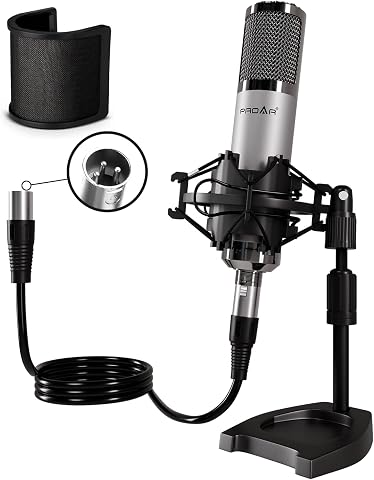 XLR Condenser Microphone with Desktop Stand for Vocals and PodcastingView on Amazon →
Impact of AI-Optimized Microphones on Audio Recording
The introduction of AI-ready condenser microphones in 2026 represents a pivotal advancement in audio technology, enabling more precise, efficient, and intelligent sound capture. For professionals, this means higher fidelity recordings that can be directly fed into AI systems for tasks like speech recognition, language modeling, and automated editing. For consumers and content creators, these microphones simplify workflows by offering plug-and-play compatibility with AI-powered tools, reducing the need for extensive post-processing. Ultimately, this trend accelerates the integration of AI into everyday audio workflows, transforming how voice data is collected, analyzed, and utilized across industries.
Evolution Toward AI-Integrated Microphone Technologies
The trend toward AI integration in microphones has been building over the past few years, with early models focusing on noise reduction and automatic gain control. By 2026, the market has shifted toward devices with embedded AI processing capabilities, allowing real-time noise filtering, voice enhancement, and intelligent pattern recognition. Major brands have responded by developing microphones that not only deliver high sound quality but also connect seamlessly to AI ecosystems via USB-C, Bluetooth, or proprietary interfaces. This evolution reflects broader industry movements toward smarter, more adaptable audio hardware that can serve both professional studios and consumer markets.
Industry analysts note that this shift is driven by the growing use of AI in content creation, virtual communication, and automated transcription services. The convergence of high-quality hardware and AI software is creating new opportunities for innovation, including personalized audio experiences and smarter voice-controlled devices. The development of these microphones aligns with the broader trend of making AI more accessible and integrated into everyday tools.
Unanswered Questions About AI Microphone Capabilities
While many new microphones boast AI-enhanced features, it is still unclear how deeply integrated these AI functions are in practice. Details about the specific algorithms, processing power, and compatibility with various AI platforms remain limited. Additionally, the extent to which these microphones can adapt to different environments or improve over time through software updates is still developing. Industry insiders suggest that broader adoption and real-world performance data will emerge over the coming months, clarifying their full potential and limitations.
Upcoming Developments in AI-Driven Microphone Technology
In the near future, expect more models to incorporate embedded AI processors capable of on-device analysis and real-time adjustments. Manufacturers are also likely to release updated software ecosystems that enhance compatibility with popular AI platforms, such as speech recognition and transcription services. Industry events, like the NAMM Show and AES Convention, will showcase new models and features, providing clearer insights into how AI integration will evolve. Additionally, user feedback and field testing will determine the practical benefits and limitations of these AI-enhanced microphones, shaping future product development.
Key Questions
Are AI-enabled microphones suitable for professional studio use?
Yes, many AI-compatible microphones are designed with professional standards in mind, offering high fidelity, low noise, and versatile connectivity to support advanced recording workflows.
Will AI features in microphones require additional software or hardware?
Most AI functionalities are embedded within the microphone or accessible via connected software. Some models may require compatible AI platforms or updates for full functionality.
Can AI microphones replace traditional audio interfaces?
While AI microphones add intelligent processing capabilities, they typically complement rather than replace traditional audio interfaces, especially for high-end, customizable setups.
What advantages do AI features offer for content creators?
AI features can improve sound clarity, automate noise reduction, enhance voice recognition, and streamline editing processes, making content creation more efficient.
Source: ThorstenMeyerAI.com
Halloween Picks
halloween
As an affiliate, we earn on qualifying purchases.