🔍 Read the full analysis: The Best Graphics Cards For AI And Machine Learning In 2026 on ThorstenMeyerAI.com

Get the latest gadgets delivered free with Prime
- Fast, free delivery on millions of items
- Prime Video, Amazon Music and more included
- Member-only deals all year
TL;DR
In 2026, NVIDIA’s RTX 5080 series dominates AI and machine learning tasks, with GIGABYTE and MSI offering top models. AMD’s Radeon RX 9070 XT remains a strong alternative. Choices depend on performance, features, and budget.
In 2026, NVIDIA’s RTX 5080 series remains the top choice for AI and machine learning workloads, according to industry sources, as detailed in the original analysis. These GPUs are favored for their advanced AI acceleration features, high VRAM, and future-proof support for PCIe 5.0 and DDR7 memory. The GIGABYTE GeForce RTX 5080 Gaming OC 16G is highlighted as the leading overall option, combining balanced performance with robust build quality, similar to the recommendations in this list. Meanwhile, AMD’s Radeon RX 9070 XT provides a compelling alternative for users seeking value and competitive performance, though it lags slightly behind NVIDIA in AI-specific features.
The NVIDIA RTX 5080 series continues to set the standard for AI and machine learning applications, offering high VRAM configurations (16GB and above), enhanced ray tracing, and AI-specific hardware like Tensor Cores. Industry reports indicate that these cards deliver significant acceleration for deep learning models, training, and inference tasks, making them the preferred choice for researchers and professionals, as discussed in the original analysis.
Leading models such as the MSI Gaming RTX 5080 SUPRIM SOC are designed for extreme performance, featuring factory overclocks, advanced cooling solutions, and quieter operation. These cards support PCIe 5.0, ensuring compatibility with upcoming motherboards and faster data transfer rates essential for large datasets. AMD’s Radeon RX 9070 XT, supported by its RDNA 3 architecture, offers strong performance at a slightly lower price point, with features like FSR support and competitive ray tracing, making it attractive for budget-conscious buyers.
The 8 picks
- 1
 MSI Gaming RTX 5080 16G SUPRIM SOC Graphics Card (16GB GDDR7, 256-bit, Extrem…View on Amazon →
 - 2
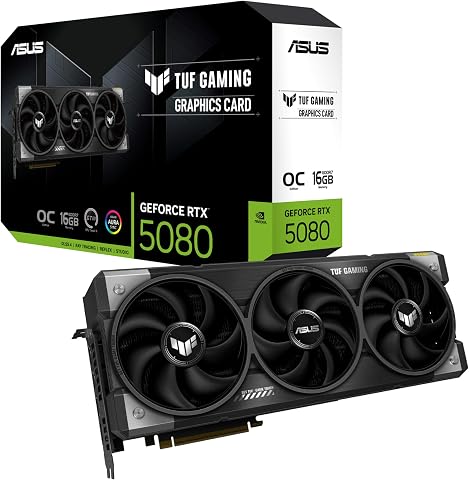 ASUS TUF Gaming GeForce RTX 5080 16GB GDDR7 OC Edition Graphics CardView on Amazon →
 - 3
 GIGABYTE GeForce RTX 5080 Gaming OC 16G Graphics CardView on Amazon →
 - 4
 ASUS Prime NVIDIA GeForce RTX 5070 OC Edition Graphics Card (PCIe 5.0, 12GB G…View on Amazon →
 - 5
 ASUS Prime Radeon RX 9070 XT 16GB GDDR6 OC Edition Gaming Graphics CardView on Amazon →
 - 6
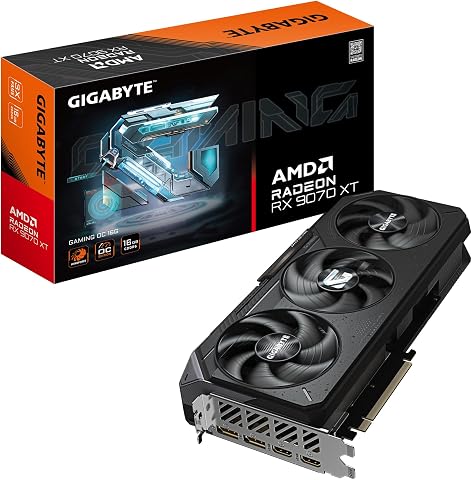 GIGABYTE Radeon RX 9070 XT Gaming OC 16G Graphics CardView on Amazon →
 - 7
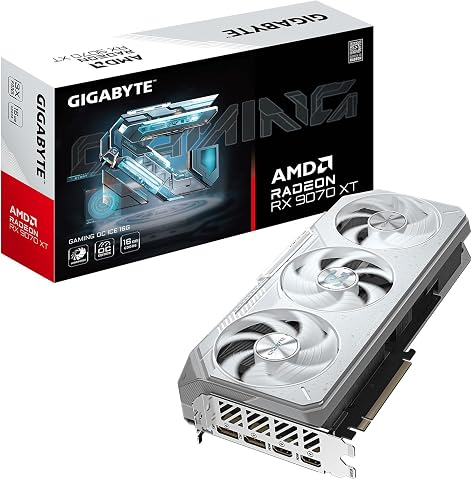 GIGABYTE Radeon RX 9070 XT Gaming OC ICE 16G Graphics CardView on Amazon →
 - 8
 ASRock Radeon RX 9070 Challenger 16GB OC Graphics Card, RDNA 4, 2520MHz Boost…View on Amazon →
Why High-End GPUs Matter for AI and ML in 2026
The dominance of NVIDIA’s RTX 5080 series underscores the importance of specialized hardware for AI and machine learning workloads. These GPUs accelerate training times, improve inference efficiency, and support larger models, which are critical for advancements in AI research, autonomous systems, and data science. The availability of high VRAM and future-proof features like PCIe 5.0 and DDR7 ensures that users can handle increasingly complex models and datasets, making these cards essential investments for professionals and researchers.
AMD’s Radeon RX 9070 XT and other alternatives offer competitive performance and better value for some segments, broadening options for different budgets and needs. Overall, the hardware choices in 2026 reflect a trend toward more powerful, efficient, and feature-rich GPUs tailored for AI and ML applications, shaping the future of computational research and industry applications.
Products Worth Considering

DJI Osmo Mobile 7P with Mic Mini TX (Infinity Black) Gimbal Stabilizer

Amazon Kindle Paperwhite Signature Edition (12th Generation, 2024), 32 GB, Metallic Black

Bose TV Speaker (2nd Gen) Compact Soundbar with Bluetooth and HDMI Connectivity
As an affiliate, we earn on qualifying purchases.
2026 GPU Market and AI Hardware Trends
Since 2024, the GPU market has shifted toward AI and machine learning optimization, with NVIDIA leading due to its dedicated hardware such as Tensor Cores and DLSS technology. The RTX 5080 series, launched in late 2025, quickly became the standard for high-performance AI tasks, thanks to its high VRAM, improved ray tracing, and support for PCIe 5.0 and DDR7 memory. AMD responded with the Radeon RX 9070 XT, which offers a competitive alternative with its RDNA 3 architecture, focusing on value and power efficiency.
Industry analysts note that the trend toward larger VRAM configurations and integration of AI-specific hardware features has accelerated, driven by demands from research institutions, autonomous vehicle developers, and enterprise AI applications. The adoption of PCIe 5.0 and DDR7 memory in high-end GPUs signals a push toward future-proofing, despite the premium price tags associated with these features.
Unconfirmed Aspects of 2026 GPU Market
While NVIDIA’s RTX 5080 series is widely regarded as the leader, specific performance benchmarks for the highest-tier models are still emerging. The long-term reliability and availability of these GPUs remain uncertain due to supply chain constraints and high demand. Additionally, the full impact of upcoming features like DDR7 memory support and PCIe 5.0 integration on real-world performance is still being evaluated by users and industry experts.
It is also unclear whether AMD’s Radeon RX 9070 XT will gain wider adoption among AI professionals or if new competitors will enter the market later in 2026, potentially altering the landscape.
Next Steps in AI GPU Development and Adoption
In the coming months, industry benchmarks and real-world testing will clarify the performance and stability of the RTX 5080 series across diverse AI workloads. Manufacturers are expected to release updated models with enhanced cooling and power efficiency, addressing current concerns about thermal management.
On the software side, support for new memory standards like DDR7 and PCIe 5.0 will become more widespread, enabling faster data transfer and larger model training. Market analysts anticipate that AI-specific hardware features will continue to evolve, with future GPUs offering even greater acceleration capabilities and energy efficiency. Buyers should monitor upcoming releases and reviews to make informed decisions for their AI and ML projects.
Key Questions
Are NVIDIA GPUs still the best choice for AI and machine learning in 2026?
According to industry experts, NVIDIA’s RTX 5080 series remains the leading option due to its dedicated AI hardware, high VRAM, and support for future standards like PCIe 5.0 and DDR7. However, AMD’s Radeon RX 9070 XT offers a compelling alternative for those prioritizing value and power efficiency.
What features should I look for in a GPU for AI work in 2026?
Key features include high VRAM (16GB or more), AI acceleration hardware like Tensor Cores, support for PCIe 5.0 and DDR7 memory, advanced cooling solutions, and reliable brand support. Compatibility with your existing system and software ecosystem is also important.
Will future GPU developments impact AI research and deployment?
Yes, upcoming features like DDR7 memory, PCIe 5.0, and AI-specific hardware will enhance training speeds, model sizes, and energy efficiency. These advancements will support more complex models and larger datasets, accelerating AI research and commercial applications.
Is it worth investing in the most expensive GPUs for AI in 2026?
High-end GPUs like the RTX 5080 series offer significant performance benefits for demanding AI workloads, but whether they are worth the investment depends on your specific needs, budget, and whether your existing hardware can leverage these features effectively.
Source: ThorstenMeyerAI.com