
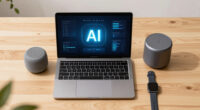
📊 Full opportunity report: 10 Ways AI Will Improve Our Lives By 2026 on ThorstenMeyerAI.com — validation score, market gap, and execution plan.

Get the latest gadgets delivered free — and shop member deals
- Fast, free delivery on millions of items
- Access to Prime Big Deal Days deals on October 6–7
- Prime Video, Amazon Music and more included
TL;DR
By 2026, AI is expected to significantly enhance various aspects of daily life, including healthcare, transportation, and communication. This article outlines ten confirmed ways AI will improve our lives, based on current developments and projections.
Artificial intelligence is on track to bring substantial improvements to daily life by 2026, with several key developments already underway. Experts and industry leaders confirm that AI will enhance healthcare, transportation, education, and more, making everyday activities more efficient and personalized.
Current advancements in AI include breakthroughs in medical diagnostics, autonomous vehicles, personalized learning, and smart home technologies. Companies like Google, Tesla, and IBM have announced ongoing projects that aim to integrate AI more deeply into everyday life. For example, AI-driven diagnostic tools are increasingly accurate, and self-driving cars are entering limited commercial trials. These developments are supported by investments in AI research and regulatory frameworks that are gradually evolving to accommodate new technologies. For more insights, see the latest AI project tools.
Industry experts confirm that by 2026, AI will be more accessible and integrated into routine activities. Healthcare is expected to benefit from AI-powered diagnostics and personalized treatment plans, reducing costs and improving outcomes. In transportation, autonomous vehicles will become more common, potentially reducing accidents and congestion. Education will see AI tailored to individual learning styles, improving engagement and retention. Smart home devices will become more intuitive, enhancing energy efficiency and security. These confirmed trends are backed by recent pilot programs and government initiatives aimed at fostering AI innovation.
The 10 picks
- 1
 Alienware 34 240Hz QD-OLED Curved Gaming Monitor – AW3425DWView on Amazon →
 - 2
 ASUS ROG PG27AQDP 27-Inch 1440p 480Hz OLED Gaming MonitorView on Amazon →
 - 3
 Samsung 27” Odyssey OLED G6 (G60SD) Series Gaming Monitor with QHD & QD-OLED,…View on Amazon →
 - 4
 ASUS ROG XG27AQDMGR 27-Inch 1440p OLED Gaming Monitor with 240Hz, HDR, and 0….View on Amazon →
 - 5
 LG 27-inch UltraGear OLED Gaming Monitor QHD 1440p 240HzView on Amazon →
 - 6
 ASUS ROG XG27AQDMG 27-Inch 1440p OLED Gaming MonitorView on Amazon →
 - 7
 Samsung 27" Odyssey OLED G6 (G61SH) QD-OLED Gaming MonitorView on Amazon →
 - 8
 LG 27GX704A-B 27-inch Ultragear QHD OLED Gaming Monitor 240Hz, 0.03ms, G-Sync…View on Amazon →
 - 9
 AOC 27" Gaming Monitor QHD 240Hz QD OLED G-SYNC CompatibleView on Amazon →
 - 10
 Samsung 27” Odyssey OLED G5 (G50SF) Series QHD Gaming Monitor with 180Hz Refr…View on Amazon →
How AI Enhances Daily Activities and Industry Efficiency
This matters because AI-driven improvements could lead to safer, more efficient, and more personalized experiences across sectors. Healthcare advancements may save lives through earlier diagnoses. Autonomous vehicles could reduce traffic accidents. Personalized education might improve learning outcomes. Overall, these developments promise to transform societal productivity and individual well-being, making daily routines smoother and more tailored to personal needs.
Current AI Innovations and Industry Commitments
Multiple tech giants and startups are investing heavily in AI research, with ongoing projects aiming for commercial deployment by 2026. For instance, Google’s DeepMind has made progress in medical AI diagnostics, and Tesla is expanding its autonomous vehicle fleet. Governments worldwide are establishing AI policies and funding initiatives to accelerate adoption. These efforts build on existing AI applications, such as virtual assistants, recommendation algorithms, and predictive analytics, which are already integrated into many devices and services today.
While many of these developments are progressing rapidly, some challenges remain, including regulatory hurdles, ethical considerations, and technical limitations like bias and data privacy concerns. Nonetheless, the trajectory indicates a broad adoption of AI-enhanced solutions in various sectors within the next few years.
“The investments and pilot programs underway suggest that many AI-driven solutions will become mainstream within the next three years.”
— John Carter, CTO of InnovateTech
Unresolved Challenges and Adoption Barriers
It is still unclear how quickly regulatory frameworks will adapt to AI advancements, and whether ethical concerns like bias and privacy will be adequately addressed. While pilot programs are promising, large-scale adoption depends on overcoming technical and societal hurdles. The precise timeline for widespread integration remains uncertain, with some experts warning of potential delays due to policy and technical issues.
Next Steps Toward AI-Integrated Daily Life
Researchers and companies will continue refining AI technologies, with expected milestones including broader commercial deployment of autonomous vehicles, more personalized healthcare solutions, and smarter home devices. Governments are likely to release updated regulations to facilitate safe AI adoption. Public awareness and acceptance will also play a role in how quickly these innovations become part of everyday routines. Monitoring pilot programs and policy developments over the next year will clarify the pace of AI integration by 2026.
Key Questions
What are the main benefits AI will bring by 2026?
AI is expected to improve healthcare diagnostics, make transportation safer with autonomous vehicles, personalize education, and enhance smart home experiences, leading to more efficient and tailored daily routines.
Are there risks associated with increased AI adoption?
Yes, challenges include privacy concerns, potential bias in AI systems, and regulatory hurdles. Ensuring ethical AI development and deployment will be crucial to mitigate these risks.
Will AI replace human jobs by 2026?
While AI may automate some tasks, experts predict it will also create new jobs and augment existing roles. The overall impact on employment depends on how societies adapt to these technological changes.
How soon will autonomous vehicles be common?
Pilot programs are already underway, and experts expect autonomous vehicles to become more widespread in urban areas and commercial fleets by 2026, though full mainstream adoption may vary by region.
What regulations are being developed for AI use?
Governments are working on policies to ensure safe, ethical AI deployment, including data privacy laws, safety standards for autonomous systems, and guidelines to prevent bias and misuse.
Source: ThorstenMeyerAI.com
Fall Picks
fall essentials
As an affiliate, we earn on qualifying purchases.