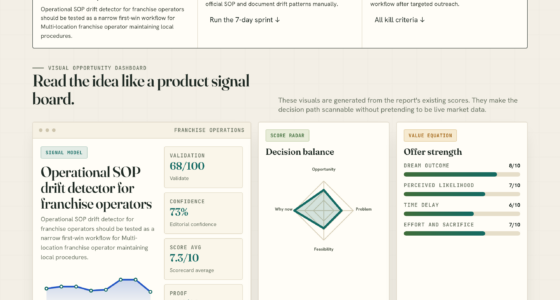

📊 Full opportunity report: How Cloud Security Models Can Improve AI Safety Measures on ThorstenMeyerAI.com — validation score, market gap, and execution plan.
TL;DR
This article examines how principles from cloud security models can strengthen AI safety efforts. It highlights market lessons and the potential for neutral, layered security approaches in AI development.
Emerging research indicates that adopting cloud security models can substantially improve AI safety measures. Experts believe that lessons from the cloud computing era—particularly on market structure and layered security—offer valuable frameworks for managing AI safety risks. This approach could help mitigate concerns about AI misuse, bias, and unintended consequences, making AI deployment safer and more reliable.
Analysts highlight that cloud security models emphasize layered defenses and neutrality, which are crucial for managing complex AI systems. Drawing from cloud market dynamics, the focus is shifting toward building on top of existing platforms, rather than competing directly at the infrastructure level. Companies like Snowflake, which operate across multiple cloud providers, exemplify how neutrality and interoperability create resilient ecosystems. Applying similar principles to AI, the most durable safety measures may come from organizations that develop layered security protocols and multi-platform compatibility.
Industry experts also warn that dismissing AI components as mere commodities overlooks the specialized expertise involved in optimizing AI safety. Just as cloud infrastructure involves scarce, defensible expertise, AI safety layers—such as fine-tuning, evaluation, and monitoring—are complex and require dedicated skills. This recognition could lead to more sophisticated, effective safety frameworks.
The cloud era was mispredicted in both directions by the sharpest investors alive. Both errors were the same mistake: dividing a fixed pie that was about to explode.
Implications of Cloud Security Principles for AI Safety
Understanding and applying cloud security models can transform AI safety strategies by promoting layered defenses, fostering platform neutrality, and emphasizing specialized expertise. This approach could reduce risks associated with AI misuse, bias, and unintended behaviors, making AI deployment safer for users and society. It also signals a shift away from siloed, proprietary safety solutions toward more collaborative, resilient frameworks.

Type S T402 4K Dual View 2-Channel Dash Cam with Adaptive AI-Powered Driver Assistance and 1080p Interior Surveillance Cam
- Dual View Recording: Front 4K and interior 1080p with night vision
- Adaptive AI Driver Assistance: Learns and improves with driving patterns
- Safety Alerts: Vehicle, lane, and pedestrian detection alerts
As an affiliate, we earn on qualifying purchases.
As an affiliate, we earn on qualifying purchases.
Lessons from Cloud Computing Market and Security Strategies
The cloud computing industry experienced two major prediction errors: initially undervaluing AWS's potential and later fearing it would monopolize the entire stack. Over time, the market evolved into a stable oligopoly of three major players—AWS, Azure, and Google Cloud—each with distinct strengths. Importantly, much value was created on top of these platforms by neutral, multi-cloud companies like Snowflake and Datadog, illustrating the power of layered, interoperable ecosystems. These lessons underscore that market structure and security strategies in the cloud have been shaped by emphasizing neutrality, specialization, and layered defenses, principles now being considered for AI safety.
As AI systems grow more complex, the analogy suggests safety measures should likewise evolve beyond simple, monolithic solutions toward layered, platform-agnostic frameworks that leverage specialized expertise and interoperability.
"Lessons from the cloud era—particularly on market structure and layered security—offer valuable frameworks for managing AI risks."
— Thorsten Meyer
Uncertainties in Applying Cloud Security to AI Safety
It is not yet clear how directly cloud security models can be adapted to AI safety, given the unique challenges of AI behavior, transparency, and ethical considerations. The effectiveness of layered, platform-neutral safety measures in real-world AI deployments remains under investigation, and industry consensus is still forming on best practices.
Next Steps in Developing AI Safety Frameworks Inspired by Cloud Models
Researchers and industry leaders are expected to pilot layered safety architectures based on cloud principles, emphasizing multi-platform interoperability and specialized expertise. Further studies will evaluate the effectiveness of these models in mitigating AI risks, potentially leading to new standards and regulations for AI safety.
Key Questions
How can cloud security models improve AI safety?
By emphasizing layered defenses, platform neutrality, and specialized expertise, cloud security principles can help develop more resilient and effective AI safety measures, reducing risks of misuse and unintended behavior.
Are current AI safety practices based on cloud principles?
Some emerging safety frameworks incorporate cloud-inspired ideas, but widespread adoption and validation are still in progress. The field is actively exploring how best to adapt these principles.
What challenges exist in applying cloud security to AI safety?
Differences in AI complexity, transparency, and ethical concerns make direct application challenging. Developing layered, platform-agnostic safety measures requires further research and industry collaboration.
Will AI safety become more standardized through these models?
Potentially, as pilot programs and research validate the effectiveness of cloud-inspired safety frameworks, industry standards and regulations may evolve to incorporate these principles.
Source: ThorstenMeyerAI.com