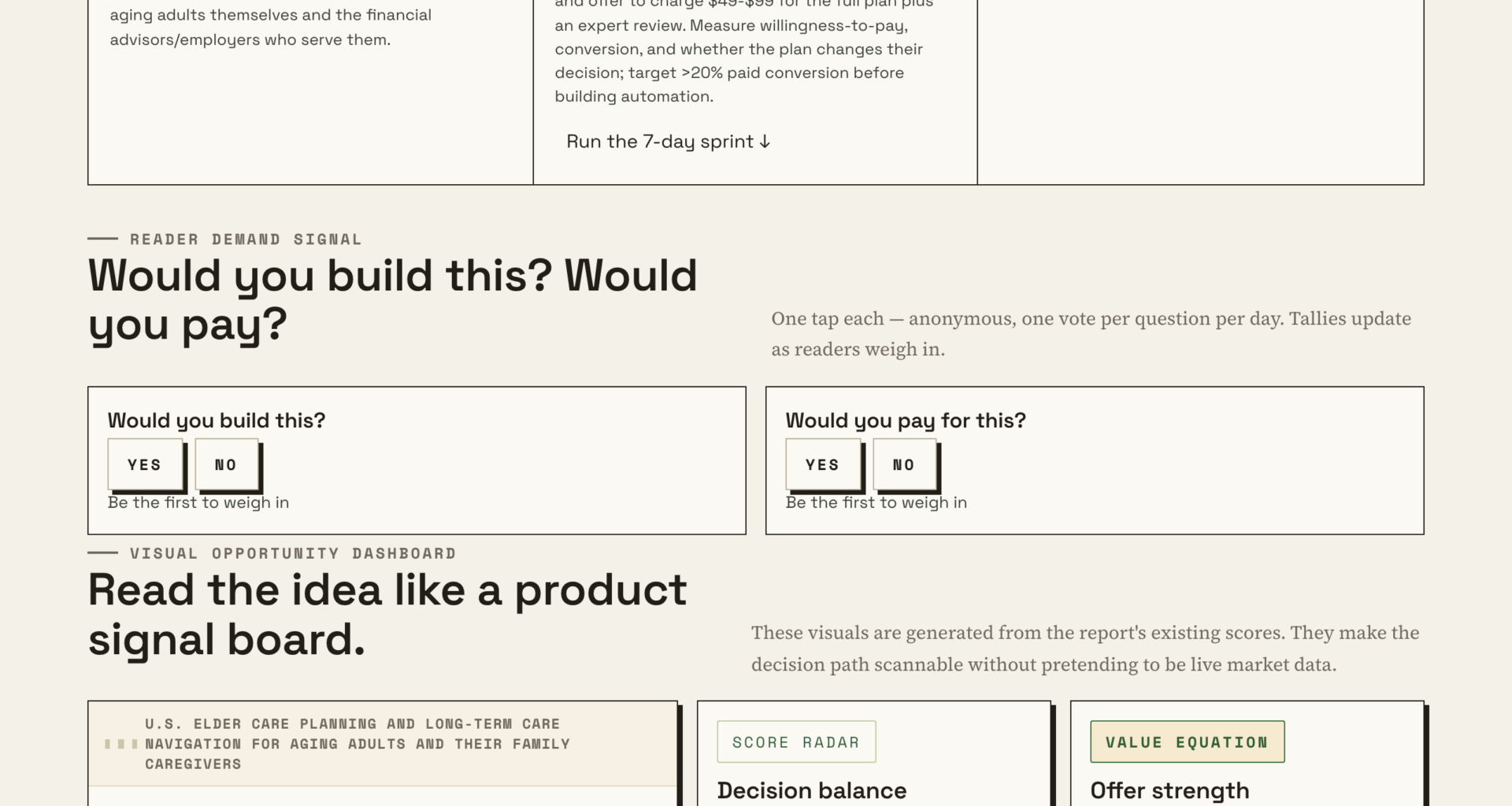

📊 Full opportunity report: Retirement Care Planner on IdeaNavigator AI — validation score, market gap, and execution plan.

Get the latest gadgets delivered free with Prime
- Fast, free delivery on millions of items
- Prime Video, Amazon Music and more included
- Member-only deals all year
TL;DR
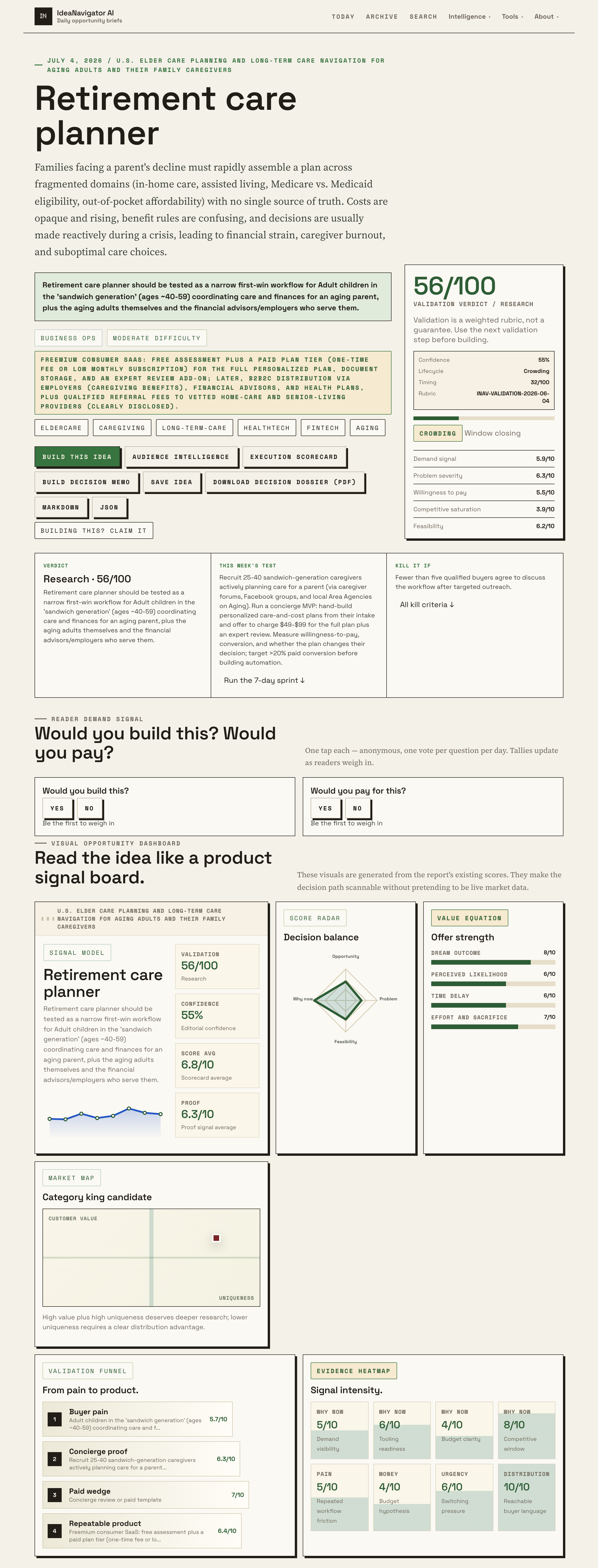
A prototype retirement care planner is being tested to assist middle-aged caregivers in creating personalized care and financial plans for aging parents. The tool aims to simplify decision-making amidst rising costs and fragmented information. Its success could reshape elder care planning in the U.S.
A new retirement care planning web app is being tested to assist adult children in the ‘sandwich generation’ with coordinating care and finances for aging parents. Developed as a potential solution to the fragmentation and opacity of elder care options, this tool aims to deliver personalized, localized plans after brief intake, helping families make informed decisions before crises occur.
The project targets families with parents nearing or in need of long-term care, focusing initially on a high-cost state to manage data complexity. The app will assess health, location, and financial details, then generate a plan that compares costs for in-home care, assisted living, and nursing homes using public benchmark data. It will also explain Medicare and Medicaid eligibility, project affordability, and provide a prioritized checklist with vetted local providers.
Developers plan to offer a freemium SaaS model, with a free initial assessment and a paid tier for a comprehensive, personalized plan, document storage, and optional expert review. Future revenue streams include partnerships with employers, financial advisors, health plans, and referral fees to vetted providers. The testing involves recruiting 25-40 caregivers actively planning for a parent, offering a concierge service at $49-$99, and measuring willingness-to-pay and impact on decision-making.
Impact of a Structured Planning Tool on Elder Care Decisions
This initiative addresses a critical gap in elder care: the lack of a unified, accessible source of truth for families facing complex, costly decisions. As the U.S. population ages, with over 73 million expected to be 65+ by 2030, the need for structured guidance grows urgent. By simplifying the planning process and providing localized, data-driven insights, the tool could reduce financial strain, caregiver burnout, and suboptimal care choices. Its success may lead to broader adoption of digital elder care planning solutions, ultimately improving outcomes for millions of families.
As an affiliate, we earn on qualifying purchases.
Growing Demand for Elder Care Planning Solutions
The U.S. is experiencing a demographic shift, with a rising number of seniors requiring long-term care. Costs for assisted living and nursing homes have surged, with median assisted living costs reaching $6,200/month and nursing homes averaging $115,000 annually. Meanwhile, nearly 70% of those turning 65 will need some form of long-term care. Caregivers in the sandwich generation report mounting financial and emotional burdens, often making reactive decisions during crises due to fragmented information and opaque costs.
Current planning methods are often ad hoc, relying on multiple sources and outdated data, which can lead to financial strain and suboptimal care choices. The new web app aims to address these issues by providing a single, personalized planning platform, initially tested in a high-cost state to gauge feasibility and user interest.
“Families need a structured, data-driven way to navigate the complex landscape of elder care options before crises occur.”
— an anonymous researcher
Uncertainties Around Adoption and Effectiveness
It is not yet clear how widely the app will be adopted by the target demographic or whether it will significantly influence decision-making. The testing phase is limited to a small group, and broader effectiveness, user engagement, and integration into existing care workflows remain unproven. Additionally, the impact on actual costs and care quality has yet to be demonstrated in real-world settings.
Next Steps for Validation and Expansion
The developers plan to complete initial testing, analyze user feedback, and measure willingness-to-pay and decision impact. If results are promising, they will refine the platform, expand testing to more regions, and explore partnerships with employers, financial advisors, and health plans. The ultimate goal is to develop a scalable, automated version of the tool that can be widely adopted across the U.S. elder care market.
Key Questions
How will the retirement care planner help families make better decisions?
The tool will provide personalized, localized cost comparisons, eligibility explanations, and action checklists based on brief intake data, helping families plan proactively and avoid reactive, crisis-driven decisions.
Is the service free, and how will it generate revenue?
The initial assessment will be free, with a paid tier offering full plans, document storage, and expert review. Future revenue streams include partnerships with employers, financial advisors, and referral fees to vetted providers.
What is the target demographic for this tool?
The primary users are adult children aged 40-59 in the ‘sandwich generation’ caring for aging parents, especially those facing complex care decisions in high-cost states.
When will the tool be available for broader use?
The current phase is testing, with plans to expand in 2024 pending positive results and refinements based on initial user feedback.
How does this project address rising elder care costs?
By providing data-driven comparisons and planning tools, it aims to help families choose more cost-effective options and plan ahead, potentially reducing financial strain.
Source: IdeaNavigator AI
Halloween Picks
halloween
As an affiliate, we earn on qualifying purchases.