
📊 Full opportunity report: The Memory Squeeze: Why Your RAM Bill Doubled on ThorstenMeyerAI.com — validation score, market gap, and execution plan.

Get the latest gadgets delivered free — and shop member deals
- Fast, free delivery on millions of items
- Access to Prime Big Deal Days deals on October 6–7
- Prime Video, Amazon Music and more included
TL;DR
DRAM prices have doubled or more in 2026, with consumer RAM now significantly more expensive due to a shift in chip manufacturing toward AI applications. The shortage is driven by economic decisions, not supply disruptions, and is unlikely to resolve quickly.
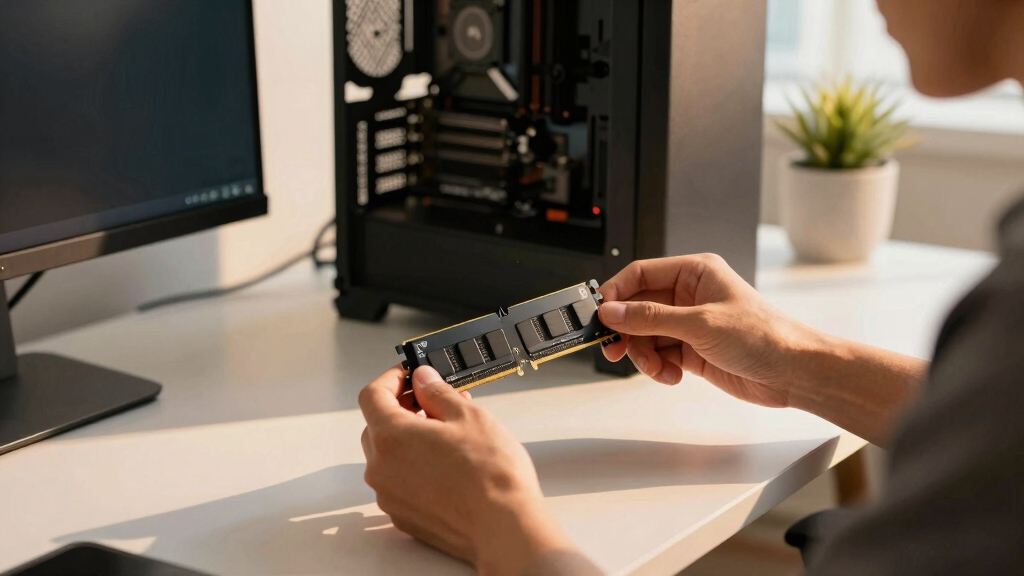
DRAM prices have roughly doubled or more in 2026, with 32GB DDR5 kits now costing over $370, up from about $120 a year earlier, according to Tom’s Hardware. This sharp increase makes RAM the most expensive component in many PC builds, impacting consumers and manufacturers alike. For insights into supply chain challenges, see Apple’s RAM sourcing strategies.
The surge in memory prices is driven by a fundamental shift in chip manufacturing priorities. The three main DRAM producers—Samsung, SK Hynix, and Micron—are reallocating their wafer capacity from consumer RAM to high-margin AI memory modules like High Bandwidth Memory (HBM). Apple Wants Blacklisted Chinese RAM. These specialized modules, essential for AI accelerators, are significantly more profitable, prompting a deliberate market shift away from expanding consumer DRAM supply.
Because HBM consumes three to four times the wafer area of standard DDR5, this reallocation effectively reduces the total available consumer DRAM by a multiple of that amount. As a result, the total wafer output dedicated to consumer memory has decreased, and prices have surged by approximately 90% in just the first quarter of 2026. Major PC manufacturers, including Apple and Lenovo, have responded by raising prices, while some suppliers have exited the consumer market altogether. Learn more about RAM supply issues.
Why your RAM bill doubled
“Doubled” is the polite version — consumer DRAM is running 3–6× its 2024 lows. The boom-bust cycle that always brought cheap RAM back isn’t coming this time, because the factories that make your RAM now make something far more profitable instead.
HBM
This is the quiet tax on the whole AI era. Relief isn’t forecast before 2028, and even then prices may settle 30–50% above pre-crisis levels. Buy what you genuinely need now; don’t panic-buy capacity you won’t use. You can’t out-wait the fab math — but, as this series will show, you can shrink what you need. Next: HBM Ate the Fab.
Why the Memory Price Spike Impacts Everyone
The drastic increase in DRAM prices affects a broad range of stakeholders, from individual consumers to large enterprise buyers. Higher memory costs inflate PC build prices, delay product launches, and limit supply availability. This shift also signals a fundamental change in the global chip industry, where AI development is prioritized over traditional consumer markets, potentially reshaping the future of computing hardware.
As an affiliate, we earn on qualifying purchases.
2026 Memory Market Shift and Historical Comparisons
Historically, memory shortages eased when producers expanded capacity, flooding the market and driving prices down. However, in 2026, the situation diverges: capacity growth is limited, with IDC projecting only 16% growth in DRAM supply—far below the 20–30% typical for previous years. Major manufacturers are intentionally managing supply scarcity, focusing on high-margin AI memory modules rather than increasing consumer RAM output. This strategic restraint is compounded by the long lead times for new fab expansions, which are not expected to impact supply until 2027–2028.
While past shortages were resolved through capacity expansion, current market dynamics suggest this cycle may not repeat, as the industry appears to be managing scarcity rather than resolving it.
“Our focus is on serving enterprise AI customers with high-margin memory products, which impacts the supply of consumer RAM.”
— Micron spokesperson
Unresolved Questions About Market Dynamics
It remains unclear whether the current high prices are solely due to supply reallocation or if collusion or other market manipulation factors also play a role. Although no antitrust actions are reported, the high market concentration among the three main DRAM producers raises questions about potential coordination. Additionally, the long-term impact on consumer availability and whether prices will stabilize or continue rising are still uncertain.
Future Developments in DRAM Supply and Pricing
Manufacturers are expected to begin ramping up new fab capacities in 2027–2028, which may eventually alleviate shortages. However, given the long lead times for fabrication expansion and the ongoing prioritization of AI memory, significant relief for consumer RAM prices is unlikely before late 2020s. Buyers should anticipate continued high costs and potential supply constraints in the near term.
Key Questions
Why have DRAM prices increased so dramatically in 2026?
Prices have surged because manufacturers are reallocating wafer capacity from consumer RAM to more profitable AI memory modules like HBM, reducing overall supply and increasing costs.
Will RAM prices go back to normal soon?
Likely not before 2027–2028, as new fab expansions are still years away, and the industry is intentionally managing supply scarcity to prioritize high-margin AI hardware.
Are collusion or market manipulation involved in this price increase?
No formal antitrust actions have been reported, and the current prices are attributed to strategic reallocation of wafer capacity, though the market’s high concentration raises ongoing questions.
How does this affect consumers and PC builders?
Consumers face significantly higher RAM prices, and PC manufacturers are raising prices or delaying product launches due to increased component costs.
Source: ThorstenMeyerAI.com
Halloween Picks
halloween
As an affiliate, we earn on qualifying purchases.