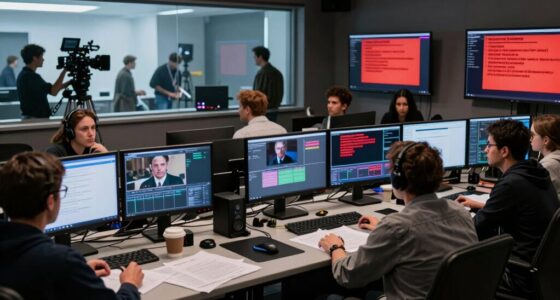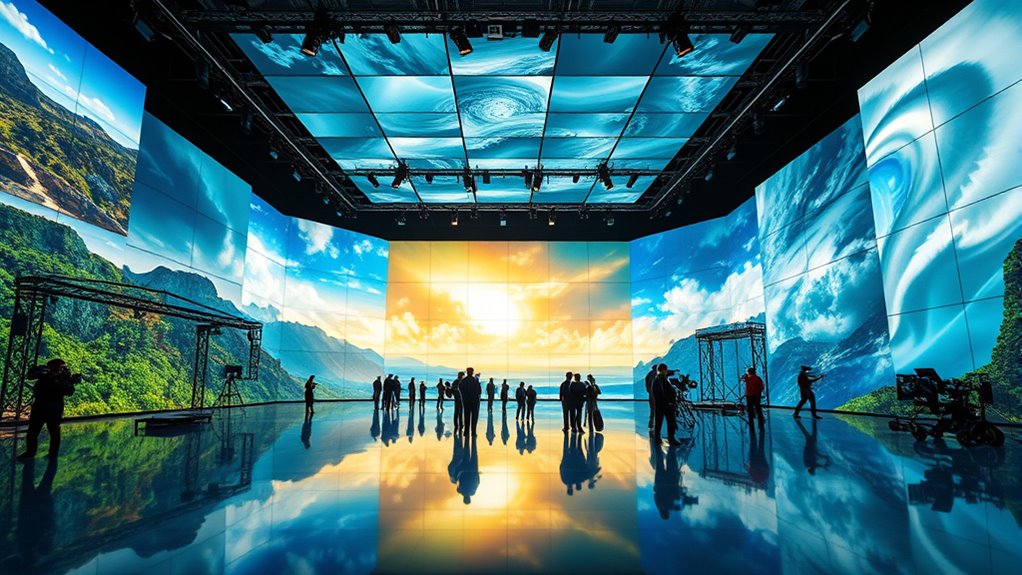

Inside Hollywood’s virtual production stages, you’ll see filmmakers blending live-action with real-time digital environments using advanced tools like LED walls, real-time rendering, and motion capture. These stages allow for instant visual feedback, making performances more natural and enabling quick adjustments on the spot. They speed up production and let creators experiment freely with visuals and camera angles. Keep exploring to discover how these innovative techniques are shaping the future of filmmaking.
Key Takeaways
- Virtual production stages use LED walls and real-time rendering to create immersive digital backgrounds.
- Performers and actors interact naturally with digital environments displayed live on set.
- Directors and VFX teams can adjust scenes instantly, improving workflow efficiency and creative flexibility.
- These stages eliminate traditional green screens, speeding up production and post-production processes.
- Hollywood increasingly adopts virtual production stages to enhance visual storytelling and cinematic innovation.
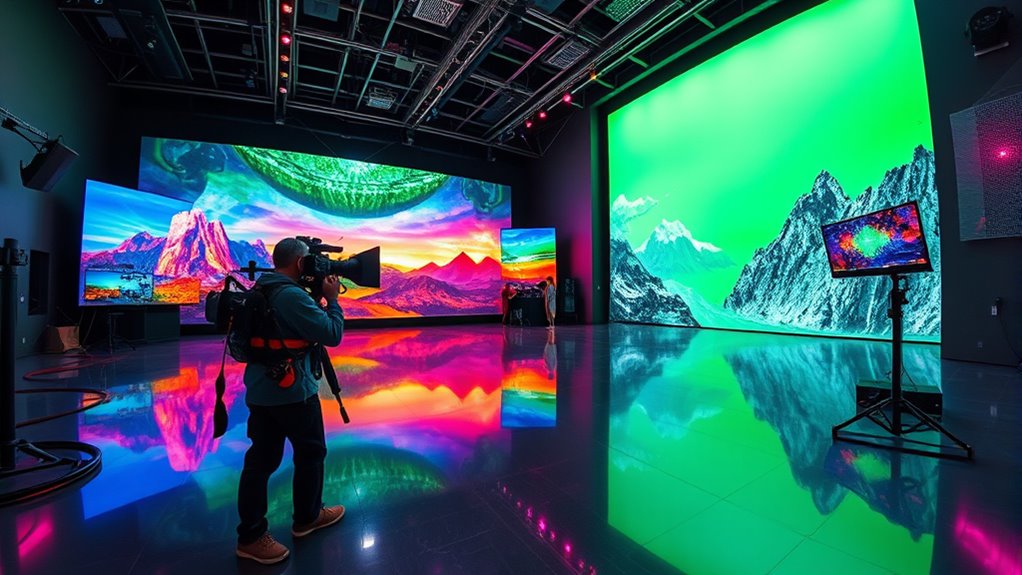
Virtual production stages are revolutionizing Hollywood filmmaking, blending live-action footage with real-time digital environments. Instead of relying solely on green screens and post-production effects, filmmakers now work within immersive digital worlds that respond instantly to their actions. This shift allows for a more dynamic, flexible approach to storytelling, where adjustments can be made on the fly. At the heart of this technology are real-time rendering systems, which generate complex visuals instantly, giving directors and actors immediate feedback. This process markedly speeds up production timelines and enhances creative control. When combined with advanced motion capture techniques, virtual production becomes even more powerful. Motion capture allows performers to wear suits embedded with sensors, translating their movements directly into digital characters or elements within the virtual environment. So, as an actor, you might perform in a motion capture suit, knowing your movements will immediately influence the digital scene around you.
This real-time interaction between live-action and digital environments is what makes virtual production stages so revolutionary. Instead of waiting days or weeks for visual effects to be finalized, everyone involved can see the results instantly on large monitors or immersive screens. This immediate visualization helps directors fine-tune scenes, actors adjust their performances, and VFX teams troubleshoot issues on the spot. The seamless integration of real-time rendering and motion capture techniques means you can physically perform actions that will later be enhanced with digital effects, all within a single, connected environment. This process also fosters more natural performances, since actors can react authentically to digital environments that are displayed in real time, rather than imagining or approximating what they’ll see later.
Furthermore, these stages often utilize LED walls that display dynamic backgrounds, synchronized with the real-time rendering software. This setup creates a convincing sense of depth and realism, making it easier for actors to immerse themselves in their roles. Thanks to the rapid feedback loop enabled by real-time rendering, filmmakers can experiment with different visual styles and camera angles without costly delays. As a result, virtual production stages empower you to be more creative and collaborative, pushing the boundaries of traditional filmmaking. With the help of motion capture techniques, you’re not just performing; you’re actively shaping a digital universe that instantly responds to your actions. This synergy between live performance and digital innovation is transforming Hollywood into a hub of cutting-edge filmmaking, where storytelling becomes more immersive, efficient, and visually stunning. Additionally, the integration of advanced technology such as real-time rendering systems and LED walls further enhances the capabilities of virtual production stages, making them indispensable tools in modern filmmaking.
As an affiliate, we earn on qualifying purchases.
Frequently Asked Questions
How Cost-Effective Are Virtual Production Stages Compared to Traditional Sets?
Virtual production stages offer significant cost efficiency compared to traditional sets. You can achieve budget savings by reducing expenses for location rentals, set construction, and transportation. Plus, these stages allow you to film multiple scenes seamlessly, saving time and money. Overall, virtual stages help stretch your budget further while maintaining high-quality visuals, making them a smart choice for cost-effective production without sacrificing creativity or realism.
What Are the Main Technological Components Used in These Stages?
You’ll find that virtual production stages rely heavily on advanced technology. Virtual camera systems enable real-time filming and dynamic shot adjustments, giving you greater flexibility. LED wall technology creates immersive backgrounds that sync seamlessly with your camera’s perspective, enhancing realism. These components work together to streamline production, reduce costs, and improve visual quality, making virtual stages a powerful tool for filmmakers seeking efficiency and cutting-edge visuals.
How Do Actors Adapt to Performing in Virtual Environments?
Imagine you’re stepping into a digital sphere, much like an unexpected scene from a sci-fi film. You adapt by mastering motion capture, which translates your movements into the virtual environment, helping you stay connected. To deliver emotional authenticity, you focus on your facial expressions and body language, ensuring your performance feels genuine. Training with directors and virtual tools helps you become comfortable, making your acting seamless despite the high-tech setting.
What Are the Future Advancements Expected in Virtual Production?
You’ll see virtual production advance with augmented reality becoming more seamless, allowing for real-time interactions and immersive experiences. AI integration will streamline workflows, making scene creation faster and more efficient. Future innovations might include more realistic visual effects, enhanced motion capture, and interactive sets that respond instantly. These developments will revolutionize how you create and experience content, blurring the lines between real and virtual worlds even further.
How Do Virtual Stages Impact the Filming Schedule and Deadlines?
Virtual stages revolutionize your filming schedule by enabling real-time rendering, which allows you to see effects instantly and make adjustments on the fly. This increases scheduling flexibility, reducing delays caused by post-production changes. You can streamline workflows, meet tight deadlines, and adapt quickly to creative shifts. Overall, virtual stages help you stay on track, delivering high-quality content faster while maintaining control over your project’s timeline.
Conclusion
As you explore Hollywood’s virtual production stages, you realize just how revolutionary this technology is. It’s impressive that nearly 70% of major studios now use virtual sets regularly, cutting production costs and time dramatically. With such rapid adoption, you’re witnessing a complete transformation in filmmaking. This shift not only enhances creativity but also reshapes the industry’s future, proving that virtual production is here to stay and redefine what’s possible on screen.