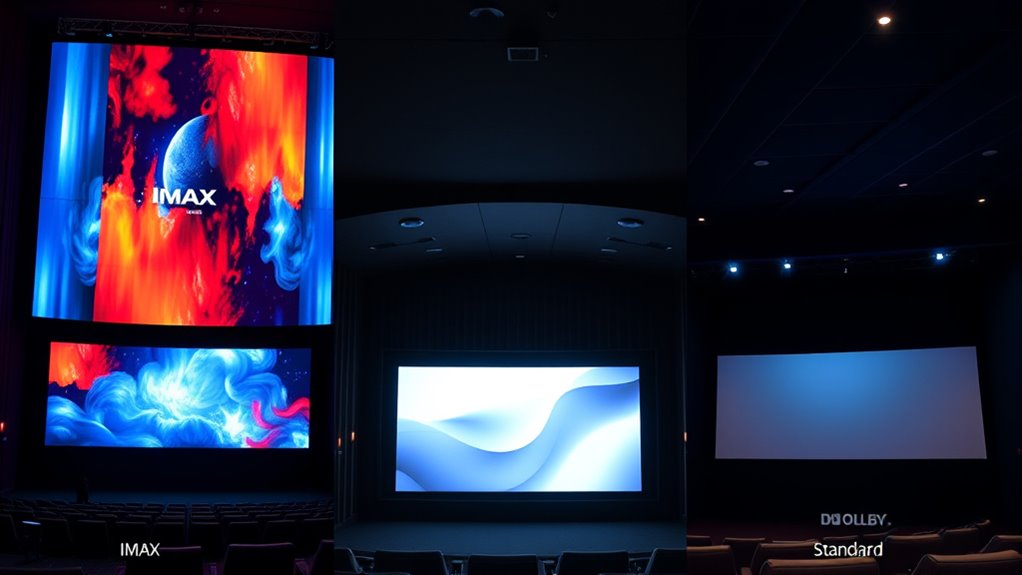

IMAX offers a giant screen and powerful sound for a jaw-dropping experience, perfect for big spectacle movies. Dolby Cinema provides sharper visuals with vibrant colors, deeper blacks, and immersive Dolby Atmos sound, creating a more detailed and refined viewing. Standard theaters lack these advanced features, offering less impact and clarity. If you want to discover how each format enhances your movie nights, explore the details below for a clearer picture.
Key Takeaways
- IMAX features massive screens and immersive sound for a grand, awe-inspiring experience, ideal for blockbuster movies.
- Dolby Cinema offers sharper visuals with high dynamic range and three-dimensional sound, emphasizing visual clarity and audio precision.
- Standard theaters have regular-sized screens and basic sound systems, providing a more typical viewing experience.
- IMAX emphasizes scale and loudness, while Dolby prioritizes detailed visuals and immersive, multidimensional audio.
- Choice depends on whether viewers prefer a larger-than-life spectacle or a more refined, detailed cinematic experience.
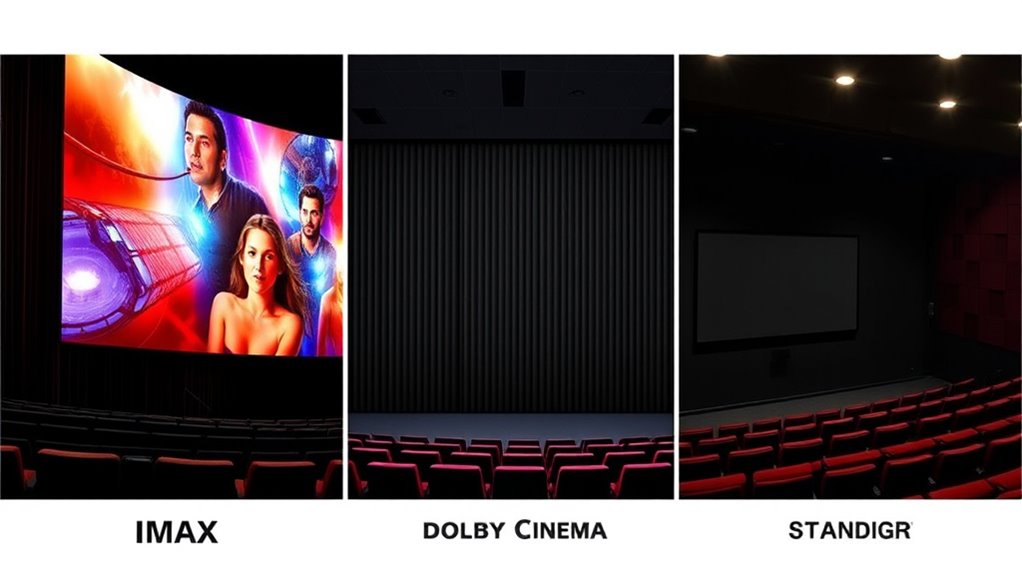
Have you ever wondered which premium cinema experience is better for your movie night—IMAX or Dolby Cinema? If so, you’re not alone. Both formats aim to elevate your viewing, but they do so in distinct ways. When comparing these two, the first thing you’ll notice is their approach to immersive experiences. IMAX emphasizes an enormous screen size, often stretching from wall to wall and ceiling to floor. This massive display draws you into the film, making you feel like you’re right there in the action. The size of the screen is a defining feature, providing a sense of scale that standard theaters just can’t match. However, it’s not just about size; sound quality plays a vital role in creating immersion. IMAX theaters typically feature a custom sound system with powerful speakers strategically placed around the auditorium. This setup delivers loud, clear audio that complements the large visuals, ensuring dialogue, effects, and music hit you with impressive punch. The combination of expansive screen and robust sound makes IMAX ideal for blockbuster movies with grand visuals and intense soundtracks.
On the other hand, Dolby Cinema focuses on delivering a different kind of immersive experience through advanced technology. While the screen size in Dolby Cinema might not be as enormous as IMAX, it’s designed with precision to maximize picture quality. Dolby’s high dynamic range (HDR) ensures vibrant, lifelike colors and deeper blacks, making every scene visually stunning. The screen itself is often coated with a special material that enhances contrast and clarity, so you see every detail with sharpness. When it comes to sound quality, Dolby Cinema truly shines thanks to Dolby Atmos technology. This system creates a three-dimensional sound environment, with audio coming from all around you—above, below, and behind. This precise sound placement heightens your sense of immersion and makes you feel part of the story in a more nuanced way. While the screen size may be smaller than IMAX, the superior image and sound quality compensate by delivering a richer, more detailed experience. Additionally, Dolby Cinema often incorporates advanced projection technology, further elevating the visual experience.
In essence, if you prioritize a colossal visual spectacle and a loud, powerful sound, IMAX might be your best choice. But if you prefer a more refined, detailed picture paired with immersive, multidimensional sound, Dolby Cinema could be the better pick. Both formats are designed to enhance your movie night, but they do so through different strengths—massive screens and boisterous sound versus vivid visuals and precise audio. Your choice ultimately depends on what kind of experience you’re craving, whether it’s the awe of size or the intimacy of clarity.

XGIMI HORIZON 20 4K RGB Triple Laser Home Projector, 3200 ISO Lumens
- Laser Technology: RGB Triple Laser with 3200 ISO lumens
- Enhanced Visuals: IMAX, Dolby Vision, HDR10+ Certified
- All-in-One Design: Built-in Google TV and Harman Kardon speakers
As an affiliate, we earn on qualifying purchases.
As an affiliate, we earn on qualifying purchases.
Frequently Asked Questions
How Do Ticket Prices Compare Across IMAX, Dolby Cinema, and Standard Formats?
You’ll find that ticket prices differ across formats, with IMAX generally costing the most, followed by Dolby Cinema, and then standard screens. The pricing differences reflect the enhanced experience and technology each offers, making each format more or less affordable depending on your budget. When doing a ticket cost comparison, consider these differences, as paying extra for IMAX or Dolby might be worth it for the improved picture and sound quality.
Which Format Offers the Best Audio Experience for Viewers?
You’ll find Dolby Cinema offers the best audio experience with its immersive surround sound and exceptional audio clarity. It uses advanced sound technology to deliver deep bass and precise dialogue, making you feel part of the action. IMAX also provides impressive sound, but Dolby’s focus on surround sound and crystal-clear audio gives it a slight edge. Standard formats, meanwhile, often lack the immersive quality that Dolby delivers.
Are Certain Genres Better Suited for One Format Over the Others?
Certain genres do better in specific formats based on genre preferences and visual effects. Action and sci-fi movies thrive in IMAX or Dolby Cinema because of their enhanced visuals and immersive sound, amplifying intense scenes. Dramas and comedies, however, often suit standard screens where subtle visuals and dialogue matter more. So, choose a format that complements the genre’s visual effects and your viewing preferences for the best experience.
Can I Upgrade From Standard to Premium Formats After Purchasing a Ticket?
Sure, you can upgrade from standard to premium formats after buying a ticket, but don’t count on it being seamless. Ticket upgrade policies vary by theater, and some might charge extra or have limited availability. Remember, those premium format benefits—like better visuals and sound—are worth the effort. So, if you’re craving that immersive experience, it’s worth checking in early to secure your upgrade and avoid disappointment.
How Do Screen Sizes and Aspect Ratios Differ Among These Formats?
You’ll notice that IMAX screens have larger dimensions, often with taller aspect ratios like 1.43:1, providing an immersive experience. Dolby Cinema screens typically have a 2.39:1 aspect ratio, giving a wider view. Standard screens vary in size but usually stick to 1.85:1 or 2.39:1. These aspect ratio variations influence how much of the image you see, with IMAX offering the most expansive view.
Conclusion
Choosing between IMAX, Dolby Cinema, and standard formats is like selecting a different lens for your movie experience. IMAX immerses you in towering images, Dolby Cinema surrounds you with rich sound and vibrant visuals, while standard screens keep things simple. Each offers a unique way to enjoy films, so think about whether you want to feel dwarfed by the screen or simply enjoy the story. Whatever you pick, your next movie night will never be the same.