
In a writers’ room, you’re part of a collaborative space where everyone helps shape stories, characters, and dialogue for a TV show. Open communication, diverse ideas, and mutual respect drive the creative process, which is often non-linear and full of brainstorms and debate. Your role, along with others, ensures the show’s voice remains consistent. Keep exploring to discover how this dynamic environment turns ideas into compelling series.
Key Takeaways
- Writers’ rooms serve as collaborative creative hubs where stories, characters, and dialogue are developed through open communication.
- The process involves brainstorming, feedback, and rewrites, with a non-linear “dance of ideas” shaping the show’s voice.
- Roles such as showrunners and writers’ assistants structure workflow, manage notes, and ensure episode consistency.
- Healthy debate and diverse perspectives drive innovation, prevent stagnation, and refine narrative direction.
- Trust, transparency, and mutual respect foster a positive environment crucial for effective storytelling collaboration.
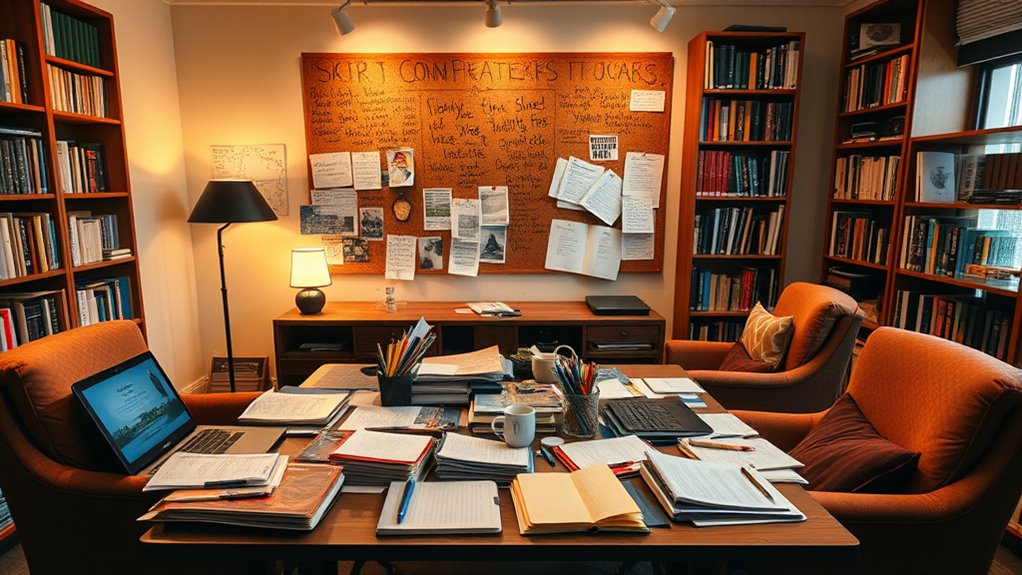
A writers’ room is the creative hub where television shows come to life through collaboration, debate, and shared vision. In this environment, your role is central to shaping stories, characters, and dialogue, but it’s the collective effort that truly drives the magic. The collaborative process is the backbone of a writers’ room, demanding open communication, mutual respect, and a willingness to build on each other’s ideas. You’ll find that creative dynamics are constantly shifting, influenced by personalities, expertise, and the show’s tone. The room functions best when everyone feels empowered to contribute, challenge, and refine concepts, knowing that their input can lead to a stronger script.
A writers’ room thrives on collaboration, mutual respect, and diverse ideas shaping compelling stories.
As you step into this space, you quickly realize that the creative process isn’t linear. Instead, it’s a dynamic dance of ideas, where brainstorming sessions spark inspiration and lead to unexpected directions. Your fellow writers might pitch a plot twist, a character arc, or witty dialogue, which you then build upon or pivot from. This back-and-forth isn’t just about generating content; it’s about shaping the show’s voice and ensuring consistency across episodes. The creative dynamics foster an environment where diverse perspectives collide and converge, making the story richer and more layered.
In the collaborative process, your ability to listen and adapt becomes indispensable. You’re encouraged to voice your opinions but also to remain receptive to feedback. Sometimes, your ideas will be challenged, leading you to clarify your vision or discover new angles. This healthy debate is essential because it pushes the narrative forward and prevents stagnation. The room’s energy is fueled by these interactions, which often produce more innovative solutions than solitary writing ever could.
The room’s atmosphere is also shaped by its structure — from showrunners guiding the overall vision to writers’ assistants managing schedules and notes. Everyone’s role contributes to a smooth, creative workflow. The process involves multiple drafts, notes from producers, and rewrites, all of which require patience and flexibility. Additionally, understanding the importance of cookie policies can help maintain a positive and transparent environment, ensuring everyone’s comfort and trust. Ultimately, the goal is to forge a cohesive story that aligns with the show’s tone and audience expectations, and that’s only possible through the collaborative effort and the vibrant creative dynamics at play. Here, your voice matters, but it’s the collective effort that transforms ideas into a compelling television series.

NGAEAK Writer Gifts Leather Journal Notebook, Gifts for Writers Birthday Christmas, Author Gift for Writing Lover Journalist, You Are a Writer Engraved Leather Travel Journal
- Perfect Gift for Writers: Ideal for birthdays, holidays, and special occasions
- Vintage Design: Elegant retro style with beautiful handwriting texture
- High-Quality Material: Durable PU leather cover and eco-friendly paper
As an affiliate, we earn on qualifying purchases.
As an affiliate, we earn on qualifying purchases.
Frequently Asked Questions
How Do Writers Handle Creative Disagreements?
When you face creative disagreements, you handle them through collaborative brainstorming to explore different ideas and find common ground. You stay open-minded, listen carefully, and respect each other’s viewpoints. Conflict resolution becomes a team effort, focusing on the best story rather than personal biases. By maintaining a positive, solution-oriented attitude, you guarantee that disagreements lead to stronger, more creative outcomes, keeping the writing process productive and collaborative.
What Is the Typical Timeline for Writers’ Room Projects?
Think of a writers’ room as a well-oiled machine, where script development and episode pitching follow a steady rhythm. Typically, the process spans several months, starting with initial ideas, followed by script drafts, revisions, and final touches. It’s common for a season to take anywhere from 6 to 12 months, depending on the project’s complexity. During this time, collaboration and deadlines keep everything moving smoothly toward the finished product.
How Are Credits and Royalties Distributed Among Writers?
You’ll find that credit allocation is typically negotiated upfront, with royalty splits divided based on each writer’s contribution. Usually, writers share royalties proportionally to their credited work, like story or script contributions. Clear agreements are essential to avoid disputes, ensuring everyone gets fair compensation. Keep in mind that some projects may have standard splits, but flexibility and transparency in credit allocation help maintain harmony and reward everyone’s efforts appropriately.
What Role Does a Showrunner Play in the Room?
You might think a showrunner just oversees everything, but they’re also crucial in shaping character development and episode pacing. They facilitate brainstorming, guide writers’ ideas, and guarantee the story stays cohesive. By actively participating in script revisions and balancing creative input, you see how they steer the room toward a unified vision. Their leadership keeps characters consistent and episodes engaging, making the entire process smooth and focused.
How Do Writers Break Down Complex Story Arcs?
You break down complex story arcs by holding storyboarding sessions where everyone pitches ideas and maps out key plot points. Focus on character development to make certain each character’s journey feels authentic and compelling. Collaborate with your team to identify turning points and emotional beats, then organize these elements into a cohesive structure. This process helps you visualize the arc clearly, making it easier to weave multiple storylines smoothly.
Conclusion
Just like a ship’s wheel guides a vessel through stormy seas, your role in the writers’ room steers the story forward. Every idea, like a star in a constellation, contributes to the bigger picture. Remember, collaboration is the lighthouse illuminating the path amidst creative darkness. Embrace the chaos, trust the process, and let your collective voices chart a course toward a compelling final draft. Together, you craft a narrative that’s greater than the sum of its parts.