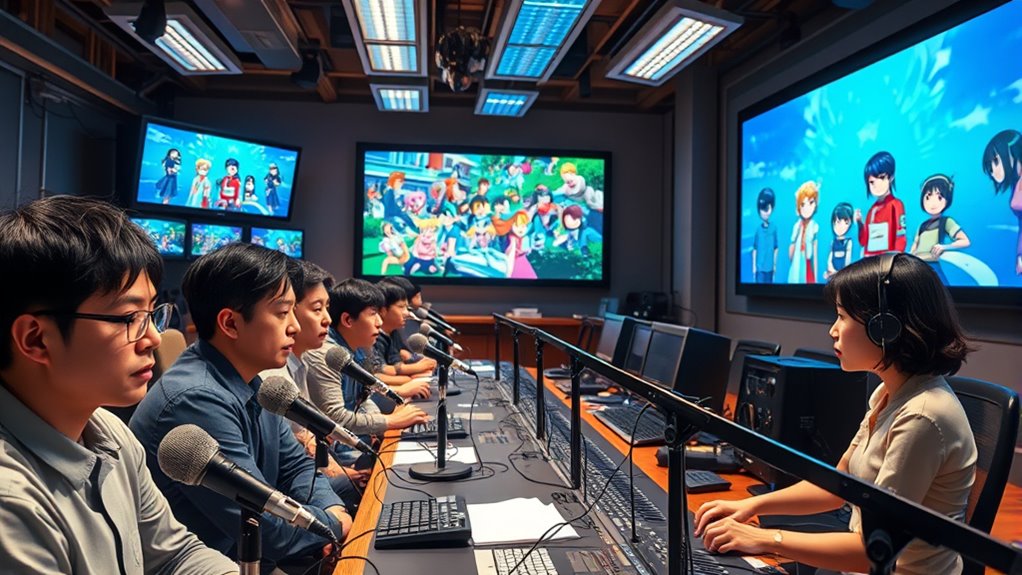

Anime simulcasts and dubs are made quickly through close collaboration among translation teams, voice actors, and directors, all working efficiently with advanced technology. Translators typically convert dialogue swiftly while preserving nuances, and voice actors record lines rapidly, often on the same day episodes air in Japan. Sound syncing and quality checks happen rapidly to guarantee high-quality episodes reach fans soon after broadcast. Want to discover how all these pieces come together seamlessly?
Key Takeaways
- Coordinated efforts among translators, voice actors, and directors enable rapid production while maintaining quality.
- Advanced technology accelerates translation, dubbing, and editing processes without sacrificing accuracy.
- Voice actors record lines quickly, often on the same day episodes air in Japan, ensuring timely dubs and simulcasts.
- Close collaboration ensures scripts are faithfully adapted, preserving humor, nuance, and character integrity.
- Strategic planning and streamlined workflows facilitate fast delivery of authentic, high-quality episodes for global audiences.
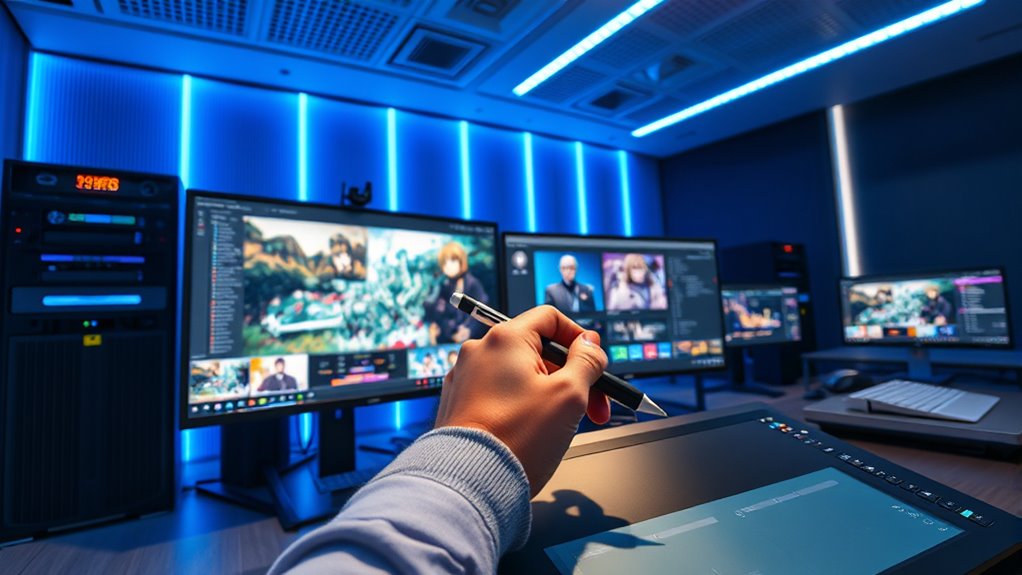
Anime simulcasts and dubs have revolutionized how fans access their favorite shows, making it easier to watch new episodes shortly after they air in Japan. This rapid availability brings excitement and immediacy, but it also requires a highly coordinated effort behind the scenes. When you’re watching a simulcast or a dubbed version, you’re experiencing the culmination of a complex process involving voice acting and translation accuracy. These elements are vital in ensuring that the show’s original essence is preserved while making it accessible to a global audience.
Voice acting plays a significant role in both simulcasts and dubs. For simulcasts, voice actors often record their lines quickly but with precision, sometimes even on the same day the episode airs in Japan. This demands a high level of skill, as they need to match the timing, tone, and emotional delivery of the original characters, all while working under tight deadlines. For dubs, the process involves not only capturing the character’s personality but also syncing dialogue seamlessly with the animation. The voice actors must interpret the script in a way that feels natural and authentic, often adapting lines to fit lip movements without losing the original intent. This tight synchronization keeps the viewing experience smooth and engaging.
Voice actors quickly but precisely match timing, tone, and emotion under tight deadlines for authentic dubbed and simulcast experiences.
Translation accuracy is equally essential. When producing simulcasts, translators work swiftly to convert Japanese dialogue into a language that resonates with viewers worldwide. They aim to maintain the story’s nuances, humor, and cultural references, which can be challenging under time constraints. In dubs, the translation process involves more than just quick conversions; it requires careful adaptation to ensure that dialogue sounds natural in the target language. Accurate translation preserves the show’s integrity and helps viewers connect with the characters and plot, even if they don’t understand Japanese. Additionally, advances in technology and translation tools have significantly sped up the process without sacrificing quality.
Both processes rely heavily on collaboration between translators, voice actors, and directors. They work together to ensure that the final product feels authentic and faithful to the original. Speed is essential, but it never compromises quality. Thanks to advanced technology and dedicated teams, simulcasts and dubs now deliver high-quality episodes rapidly, satisfying fans’ craving for instant access while maintaining the show’s integrity. When you tune in for a simulcast or a dub, you’re witnessing the results of meticulous planning, skilled voice acting, and precise translation—all working in harmony to bring anime to your screen quickly and authentically.

MAONO A04 USB Microphone, 192kHz/24Bit Condenser Mic Kit for PC Podcast
- High-Resolution Sound: 192kHz/24Bit professional chipset
- Easy Plug & Play: USB 2.0 connection, no drivers needed
- Wide Frequency Response: 30Hz-16kHz for clear sound
As an affiliate, we earn on qualifying purchases.
As an affiliate, we earn on qualifying purchases.
Frequently Asked Questions
How Do Studios Decide Which Series to Dub First?
You’ll notice studios prioritize which series to dub first based on factors like translation accuracy and dubbing localization. They often choose popular or highly anticipated shows to meet audience demand quickly. Additionally, they consider the show’s potential for success internationally and the availability of voice actors. This strategic approach guarantees that the series with the most impact get localized swiftly, providing fans with accurate and high-quality dubs without delay.
What Technology Is Used to Speed up Dubbing Processes?
Speeding up dubbing processes is like hitting two birds with one stone. You use advanced automation tools and real-time translation to streamline voice recording and synchronization. Automation tools help manage editing and lip-syncing efficiently, while real-time translation speeds up adapting scripts for dubbing. Together, these technologies reduce turnaround times, allowing studios to deliver dubbed episodes swiftly without sacrificing quality, making the entire process more agile and responsive to fan demand.
How Are Voice Actors Selected for Fast Production?
You’re selected through a targeted casting process that prioritizes voice actors with quick adaptability and clear diction. During language localization, casting directors look for talent who can match the original character’s tone and emotion swiftly. They consider previous experience with fast-paced projects and audition recordings that demonstrate your ability to deliver lines promptly. This guarantees the dubbing stays on schedule while maintaining quality and character integrity.
What Are Common Challenges in Quick Anime Dubbing?
Like trying to catch lightning in a bottle, quick anime dubbing faces many challenges. You often struggle with translation accuracy, ensuring the dialogue stays true to the original’s meaning. Lip sync challenges also make it tough, as you must match speech to mouth movements perfectly, all under tight deadlines. Balancing speed with quality pushes you to be precise, flexible, and creative to deliver a seamless viewing experience.
How Do Simulcast Schedules Impact Post-Production Editing?
Simulcast schedules put pressure on post-production editing, forcing you to work quickly and stay on tight deadlines. You need to guarantee translation accuracy while managing lip sync challenges, which can be tough with limited time. This rapid pace can lead to compromises in quality, making it vital for you to prioritize efficient workflows and clear communication between translation and editing teams to deliver accurate, well-synced dubs on a tight schedule.
Conclusion
Now you see how anime simulcasts and dubs come together like a well-oiled machine, delivering your favorite shows at lightning speed. Thanks to dedicated teams and cutting-edge technology, the magic unfolds behind the scenes, making it feel like the anime universe is just a click away. So next time you binge-watch, remember the incredible effort that keeps your anime dreams flowing smoothly—it’s a symphony of teamwork and innovation working in perfect harmony.