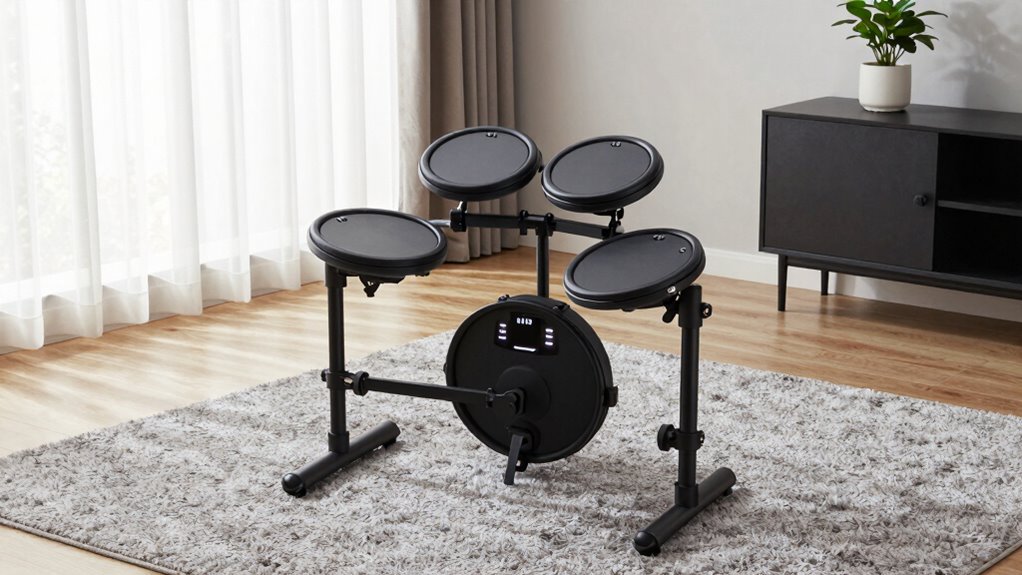
To keep your electronic drum kit apartment-friendly, you should carefully consider where you place it. Positioning it in the center of the room or away from walls helps produce a balanced sound, while avoiding corners prevents muffled or boomy tones. Use soft furnishings and acoustic treatments like foam panels to improve clarity, and place vibration isolation pads under the kit to reduce noise transfer. For more tips on setting up your kit for a quieter, more harmonious practice space, keep exploring.

Get the latest gadgets delivered free — and shop member deals
- Fast, free delivery on millions of items
- Access to Prime Big Deal Days deals on October 6–7
- Prime Video, Amazon Music and more included
Key Takeaways
- Position the electronic drum kit away from corners or bare walls to prevent muffled or boomy sound.
- Use acoustic treatments like foam panels and curtains to improve sound clarity and reduce noise transfer.
- Place the kit on vibration isolation pads to minimize floor noise and vibrations.
- Opt for headphones during practice to avoid disturbing neighbors and maintain a quiet environment.
- Regularly reassess and adjust the setup for optimal sound quality and minimal impact on apartment living.
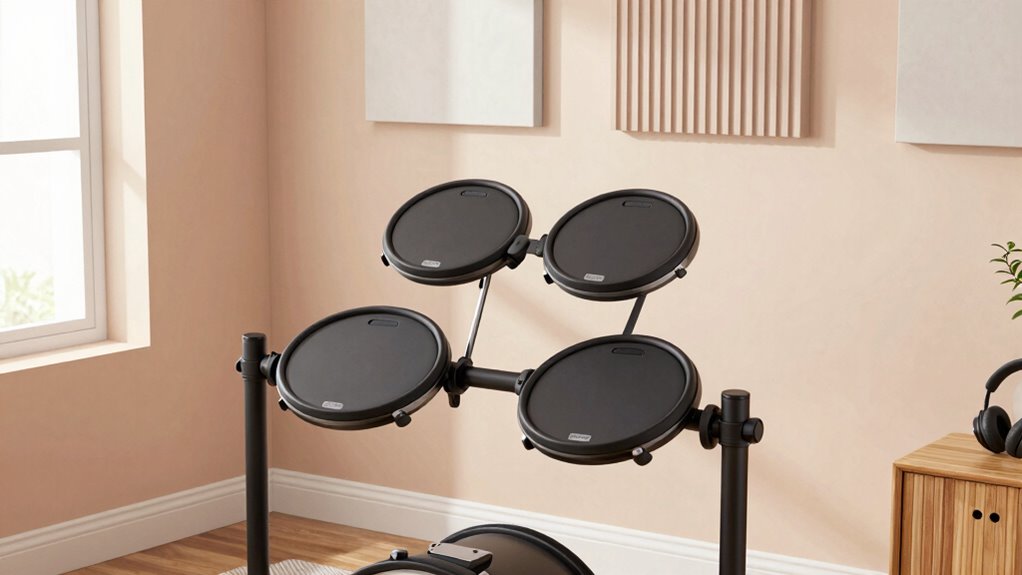
Have you ever wondered why your electronic drum kit doesn’t sound as good as it could? The answer often lies in its placement. Unlike acoustic drums, which rely on natural resonance and room acoustics, electronic kits depend heavily on where you set them up. Proper placement can dramatically improve sound quality, making your practice sessions more satisfying. To optimize your setup, you need to consider acoustic comparison—how your kit interacts with the space—and space optimization, making sure your apartment remains functional and noise doesn’t disturb neighbors.
First, think about acoustic comparison. Your electronic drum kit produces sound electronically, but the environment around it influences how you perceive that sound. If you place the kit in a corner or against a bare wall, the sound may seem muffled or overly boomy. Conversely, positioning it in the middle of the room—away from reflective surfaces—helps create a balanced sound. Adding soft furnishings like rugs, curtains, or foam panels can further absorb unwanted reflections, improving clarity. The goal is to find a placement that offers a clear, natural tone, similar to an acoustic drum, but tailored to your apartment’s acoustics. Being aware of the room’s acoustics and how they interact with your setup is crucial for achieving the best sound quality. Additionally, experimenting with different placements can help you understand how room acoustics impact your sound. Incorporating acoustic treatment can also further enhance the clarity and balance of your sound environment. Recognizing how environmental factors influence sound perception can help you make smarter placement choices.
Space optimization is equally important, especially in smaller living environments. You need to make the most of limited space without sacrificing comfort or usability. Start by choosing a compact setup—many electronic kits offer foldable or modular components that can be stored easily. When setting up, avoid cluttering your living area; instead, find a dedicated corner or alcove that can double as a practice zone. Elevate your kit on a sturdy stand to save floor space and make access easier. Keep cables organized and out of the way to prevent tripping hazards or damage. Remember, a well-placed kit that’s easy to access encourages regular practice, which is vital for progress. Additionally, understanding the importance of acoustic comparison can help you make more informed decisions about setup and environment, especially when considering how your space influences sound. Using multi-functional furniture or storage solutions can also maximize space efficiency and keep your practice area tidy.
You also want to make sure your setup doesn’t disrupt your apartment’s functionality. Use headphones during practice to keep noise levels down. If you need speakers, choose compact monitors and position them carefully for ideal sound without disturbing neighbors. Consider using vibration isolation pads under your kit to prevent noise transfer through the floor. These small adjustments help maintain a peaceful environment while still enjoying rich, full sound from your electronic drums. Incorporating space optimization techniques can make a significant difference in how your setup fits into your daily life. Moreover, regularly reassessing your setup as your needs change can help maintain an optimal balance between sound quality and apartment living.
electronic drum kit vibration isolation pads
As an affiliate, we earn on qualifying purchases.
As an affiliate, we earn on qualifying purchases.
Frequently Asked Questions
Can Electronic Drum Kits Be Used With Headphones Exclusively?
Yes, you can use electronic drum kits with headphones exclusively. When you do, it’s important to prioritize headphone comfort, especially during long practice sessions. Look for headphones with good sound isolation to block out external noise and prevent disturbing neighbors. This setup allows you to enjoy your drumming without bothering others, making it an ideal solution for apartment living. Just make certain your headphones are comfortable and provide solid sound isolation for the best experience.
How Loud Are Electronic Drum Kits Compared to Acoustic Drums?
Electronic drum kits are typically 70% quieter than acoustic drums, making them ideal for apartments. You can easily control volume with built-in volume control features, and sound insulation helps contain noise. This setup allows you to practice without disturbing neighbors. By using headphones and adjusting volume, you get a realistic drumming experience while maintaining a peaceful environment inside your apartment.
Do Electronic Drums Require Special Power Sources or Batteries?
Electronic drums generally don’t require special power sources; most need standard AC power supplies, making them easy to plug into your home outlet. Some models also offer battery options, which are perfect if you want portability or don’t have easy access to power sockets. Check the power requirements before buying, but overall, they’re convenient and flexible, allowing you to practice quietly without fussing over complex setup or extra equipment.
Are There Portable Options for Small Apartments?
Are you wondering if portable options exist for small apartments? Absolutely! Many electronic drum kits feature space-saving designs and portable solutions, making them perfect for limited spaces. These compact setups are lightweight and easy to move, so you can practice without hassle. You won’t need a dedicated room or complex setup, allowing you to enjoy your drumming while keeping your apartment organized and quiet. Isn’t that what you’re looking for?
How Long Do Electronic Drum Kits Typically Last?
Electronic drum kits typically last around 5 to 10 years, depending on usage and maintenance. Drum pad durability and electronic component lifespan play key roles in their longevity. If you handle your kit carefully and keep it in a stable environment, it can serve you well for many years. Regularly updating firmware and replacing worn pads can extend its life, ensuring you get the most out of your investment.
Conclusion
So, next time you set up your electronic drum kit, remember it’s not just a musical instrument—it’s a stealth ninja, sneaking into your apartment without causing a racket. Think of it as a tiny, polite neighbor who only drums when everyone’s asleep. With thoughtful placement, you can keep the neighbors happy and your sanity intact. After all, who knew that playing drums could require such strategic diplomacy? Happy drumming—quietly!
Fall Picks
fall essentials
As an affiliate, we earn on qualifying purchases.