
DNA data storage has reached key milestones like achieving record-breaking data densities, long-term stability, and successful encoding and decoding of complex files. However, hurdles remain, such as high synthesis and sequencing costs, error correction challenges, and limited scalability. Advances in error-correcting codes and improved synthesis techniques are underway to address these issues. If you keep exploring, you’ll uncover how researchers are overcoming these obstacles to make DNA storage a practical reality.

Get the latest gadgets delivered free with Prime
- Fast, free delivery on millions of items
- Prime Video, Amazon Music and more included
- Member-only deals all year
Key Takeaways
- Major milestones include successful encoding and retrieval of digital data in DNA, demonstrating practical viability.
- Challenges involve high synthesis costs, error rates, and the need for advanced error correction techniques.
- Long-term stability and data integrity depend on effective storage conditions and error management strategies.
- Ongoing research aims to improve sequencing accuracy, reduce costs, and develop scalable, sustainable DNA synthesis methods.
- Security and data protection are critical as DNA storage moves toward widespread adoption, ensuring confidentiality and integrity.
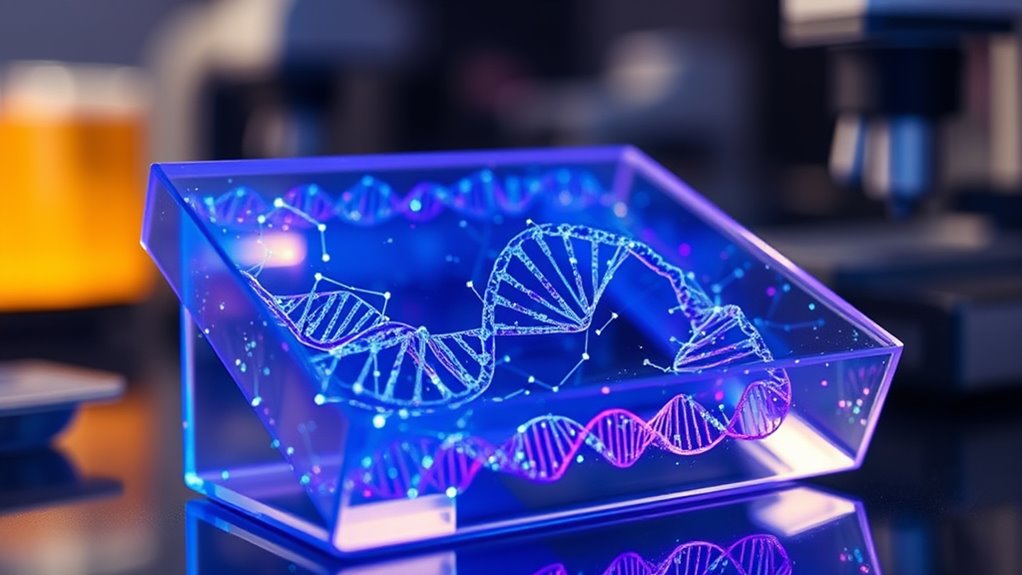
Have you ever wondered how we might store massive amounts of data in a tiny space? DNA data storage offers a fascinating answer. Because DNA can pack an incredible amount of information into a minuscule volume, scientists are exploring it as a long-term, high-density storage medium. But to achieve reliable storage and retrieval, you need to understand the critical roles of error correction and synthesis techniques. When encoding digital data into DNA sequences, errors can occur during synthesis, sequencing, or storage, which makes error correction essential. These errors might be insertions, deletions, or substitutions, and if left uncorrected, they can corrupt your data. That’s why advanced error correction algorithms are integrated into DNA storage systems, enabling you to spot and fix mistakes efficiently. Techniques like Reed-Solomon codes or newer error-correcting codes tailored for DNA help maintain data integrity, ensuring that what you store can be accurately retrieved decades later. These methods are fundamental because DNA synthesis and sequencing are still imperfect processes, prone to errors that could compromise your data’s fidelity. Improving cybersecurity measures is also vital to protect stored data from unauthorized access or tampering, especially as these storage methods become more widespread.
As an affiliate, we earn on qualifying purchases.
Frequently Asked Questions
What Are the Costs Associated With DNA Data Storage?
When you look into DNA data storage, you’ll find that costs vary depending on the technology and scale. A thorough cost analysis reveals high initial expenses for synthesis and sequencing, which can impact your budget considerations. While costs are decreasing over time, you’ll need to weigh factors like data volume and long-term benefits against the current financial investment. Planning carefully helps you determine if this innovative storage method fits your budget.
How Long Does It Take to Read/Write DNA Data?
You might wonder how long it takes to read and write DNA data. Reading speed depends on sequencing methods, which can take hours to days for large datasets, while writing efficiency varies with synthesis techniques, often taking several hours. Advances are improving both processes, but currently, the storage cycle isn’t instantaneous. Your data’s transfer rate still lags behind traditional digital methods, making speed a key focus in DNA data storage research.
Is DNA Data Storage Environmentally Sustainable?
Is DNA data storage environmentally sustainable? Think of it as a green promise—its biodegradability reduces waste, making it eco-friendly. Plus, it consumes less energy than traditional storage methods, helping cut down carbon footprints. While challenges remain, embracing DNA for data storage could be a game-changer, blending innovation with sustainability. You’re stepping into a future where data and the environment can thrive together, harmonizing progress and planet care.
What Are the Ethical Concerns Surrounding DNA Data Storage?
You should consider the ethical concerns surrounding DNA data storage, especially privacy concerns and data security. As you store sensitive information in DNA, there’s a risk of unauthorized access or misuse. You might worry about how securely your data is protected and whether future technologies could potentially read or manipulate it without consent. Addressing these concerns involves developing strict security protocols and legal frameworks to protect individuals’ privacy and data integrity.
Can DNA Data Storage Be Integrated With Existing Digital Systems?
Imagine your data seamlessly flowing into a tiny, biological vault. You can see the potential for biological integration, but compatibility challenges remain. To integrate DNA data storage with existing digital systems, researchers must develop interfaces that bridge biological and electronic signals. While promising, this process requires overcoming technical hurdles to guarantee reliable communication between biological storage and traditional hardware, making full integration a challenging yet exciting frontier.
Conclusion
As you stand on the brink of this revolutionary technology, the future of data storage feels both exciting and uncertain. Will DNA finally unveil infinite capacity and durability, or will unforeseen hurdles slow progress? The breakthroughs so far hint at incredible possibilities, but the path ahead remains uncharted. One thing’s clear: what’s coming next could redefine how you store and access information forever—if the challenges can be overcome. The next chapter is waiting to be written.
Fall Picks
fall essentials
As an affiliate, we earn on qualifying purchases.