🔍 Read the full analysis: Best Mesh WiFi Systems To Future-Proof Your Home In 2026 on ThorstenMeyerAI.com

Get the latest gadgets delivered free with Prime
- Fast, free delivery on millions of items
- Prime Video, Amazon Music and more included
- Member-only deals all year
TL;DR
In 2026, WiFi 7 mesh systems like Deco 7 Pro and Orbi 360 lead the market with ultra-fast speeds and extensive coverage. WiFi 6 options remain popular for affordability and performance. Choice depends on home size, device needs, and budget.
In 2026, the market for mesh WiFi systems is dominated by the latest WiFi 7 models, with the Deco 7 Pro Tri-Band WiFi 7 BE10000 and NETGEAR Orbi 360 Series leading the way in speed and coverage. For an overview of top options, see the 15 Best Mesh Wi‑Fi Systems for Seamless Home Connectivity in 2026. These systems are designed to meet the demands of increasingly connected households, offering ultra-fast speeds and extensive coverage that can support multiple high-bandwidth devices simultaneously. The adoption of WiFi 7 technology signifies a major step toward future-proofing home networks, making these systems essential for households seeking long-term reliability and performance.
The Deco 7 Pro Tri-Band WiFi 7 BE10000 stands out as the top overall choice due to its exceptional speed, with support for multi-gigabit connections, and its extensive coverage that can serve large homes with multiple nodes. Learn more about the latest advancements in AI Wi-Fi routers for faster home internet. It features a tri-band setup, including a dedicated backhaul band, which optimizes performance in crowded environments. The NETGEAR Orbi 360 Series WiFi 7 offers similar high-end features, targeting demanding households with multiple users and high data throughput needs, though at a higher price point.
Meanwhile, WiFi 6 systems such as the Deco X55 AX3000 and Deco X15 provide strong performance at more accessible prices, making them suitable for most households. These systems support multiple devices without congestion and are compatible with existing WiFi 5 devices, offering a cost-effective upgrade path. The number of nodes in a system influences coverage; three-node configurations are generally recommended for larger or multi-story homes to eliminate dead zones effectively.
Performance in crowded environments is a key consideration. To explore the best options for such scenarios, check out the original analysis of mesh WiFi systems. Tri-band systems with dedicated backhaul bands reduce congestion and improve overall stability, especially in densely populated areas or homes with many connected devices. Ease of setup and management also vary; systems with user-friendly apps and straightforward installation processes are preferred by non-technical users. Price considerations involve balancing features with budget, as high-end WiFi 7 systems come at a premium, while WiFi 6 options remain affordable for most.
The 10 picks
- 1
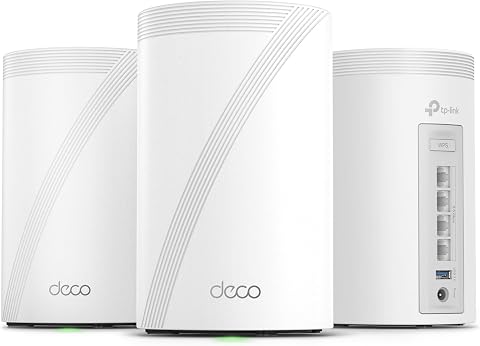 Deco 7 Pro Tri-Band WiFi 7 BE10000 Whole Home Mesh System 6-Stream 10 GbpsView on Amazon →
 - 2
 eero 7 Dual-Band Mesh Wi-Fi 7 Router (3-Pack)View on Amazon →
 - 3
 NETGEAR Orbi 370 Series WiFi 7 Mesh System, 3 PackView on Amazon →
 - 4
 Deco 7 Dual-Band WiFi 7 Mesh System with 4 Streams and 5 Gbps SpeedView on Amazon →
 - 5
 TP-Link Deco XE75 AXE5400 Tri-Band WiFi 6E Mesh System – 3 PackView on Amazon →
 - 6NETGEAR Orbi 360 Series WiFi 7 Mesh System, 3 PackView on Amazon →
- 7
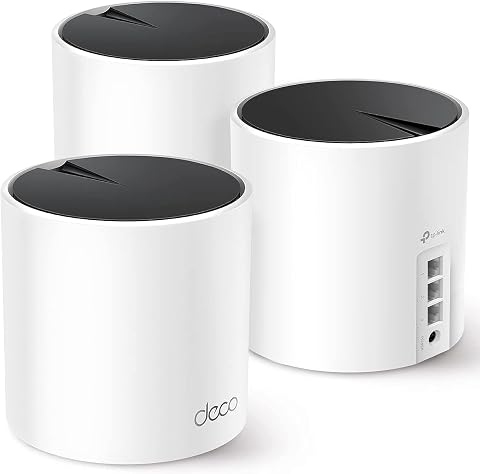 TP-Link Deco X55 AX3000 WiFi 6 Mesh System (3-Pack)View on Amazon →
 - 8
 TP-Link Deco S4 Mesh AC1900 WiFi System (3-Pack)View on Amazon →
 - 9
 TP-Link Deco X55 AX3000 WiFi 6 Mesh System (2-Pack)View on Amazon →
 - 10
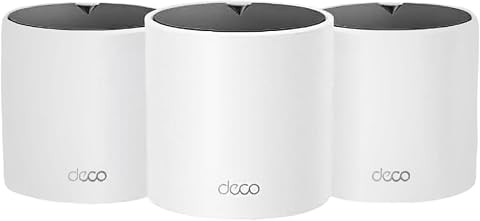 TP-Link Deco X15 Dual-Band AX1500 WiFi 6 Mesh Wi-Fi System, 3-PackView on Amazon →
Why Future-Proofing Your Home Network Matters in 2026
As household internet demands continue to grow, investing in a mesh WiFi system that supports the latest standards like WiFi 7 ensures your network remains capable of handling high-bandwidth activities such as 4K/8K streaming, online gaming, and smart home device integration. Future-proofing reduces the need for frequent upgrades, saving money and effort over time. Additionally, high-performance mesh systems improve overall reliability, coverage, and user experience, which are critical as more devices become interconnected and internet-based services expand.
Evolution of Mesh WiFi Technology Leading into 2026
Mesh WiFi technology has evolved rapidly over the past few years, with WiFi 6 becoming the standard for most new systems by 2023. This year, WiFi 7 has begun to dominate the premium segment, offering faster speeds and better capacity for dense environments. Leading manufacturers like TP-Link, NETGEAR, and others have introduced advanced tri-band systems with dedicated backhaul channels, addressing previous limitations related to congestion and coverage gaps. The market has shifted towards multi-node setups, with 3-pack systems becoming the norm for larger homes, and the integration of AI-driven management features improving user experience.
While WiFi 6 remains a strong choice for many, the push toward WiFi 7 reflects a broader industry trend to prepare homes for future connectivity needs. Compatibility with existing devices remains a consideration, but the trend indicates a move towards higher-speed, more reliable networks that can support increasingly demanding applications and smart home ecosystems.
Remaining Questions About Mesh WiFi in 2026
While WiFi 7 systems are leading the market, widespread device compatibility and real-world performance in diverse home environments are still being evaluated. It is not yet clear how quickly consumers will adopt WiFi 7 hardware, and whether the higher costs will limit accessibility. Additionally, future firmware updates and software management features may influence user experience, but details are still emerging. The long-term durability and potential need for additional hardware upgrades remain areas to watch.
Upcoming Developments in Mesh WiFi Technology
Manufacturers are expected to release more affordable WiFi 7 models throughout 2026, broadening access to high-speed mesh networks. Software enhancements, such as AI-driven network management and improved security features, will likely become standard. Consumers should watch for firmware updates that optimize performance and stability. As the market matures, integration with smart home ecosystems and seamless device compatibility will also improve, making future mesh systems even more user-friendly and adaptable to evolving connectivity needs.
Key Questions
Can I upgrade my current mesh WiFi system to WiFi 7 later?
Most current mesh systems are not upgradeable to WiFi 7 through firmware updates alone. Typically, hardware upgrades are required to access WiFi 7 features, so purchasing a new WiFi 7-compatible system is recommended for future-proofing.
Is WiFi 7 necessary for my home now?
WiFi 7 is not strictly necessary for most households today, but it offers significant performance benefits for demanding activities and future device compatibility. WiFi 6 remains a strong and more affordable choice for current needs.
How many nodes do I need for a large home?
For large or multi-story homes, a 3-pack system is generally recommended to ensure comprehensive coverage and minimize dead zones. The exact number may vary based on home layout and construction materials.
Are tri-band systems worth the extra cost?
Tri-band systems with dedicated backhaul channels tend to perform better in congested environments or large homes, making them a worthwhile investment if high performance and reliability are priorities.
Source: ThorstenMeyerAI.com
Halloween Picks
halloween
As an affiliate, we earn on qualifying purchases.