
📊 Full opportunity report: Upgrade Your Home Entertainment With AI Soundbars In 2026 on ThorstenMeyerAI.com — validation score, market gap, and execution plan.
TL;DR
AI-enhanced soundbars are emerging as the latest upgrade for home entertainment in 2026. They offer adaptive sound, personalized profiles, and improved integration, promising a more immersive experience. This development is driven by new technology and consumer demand for smarter audio solutions.
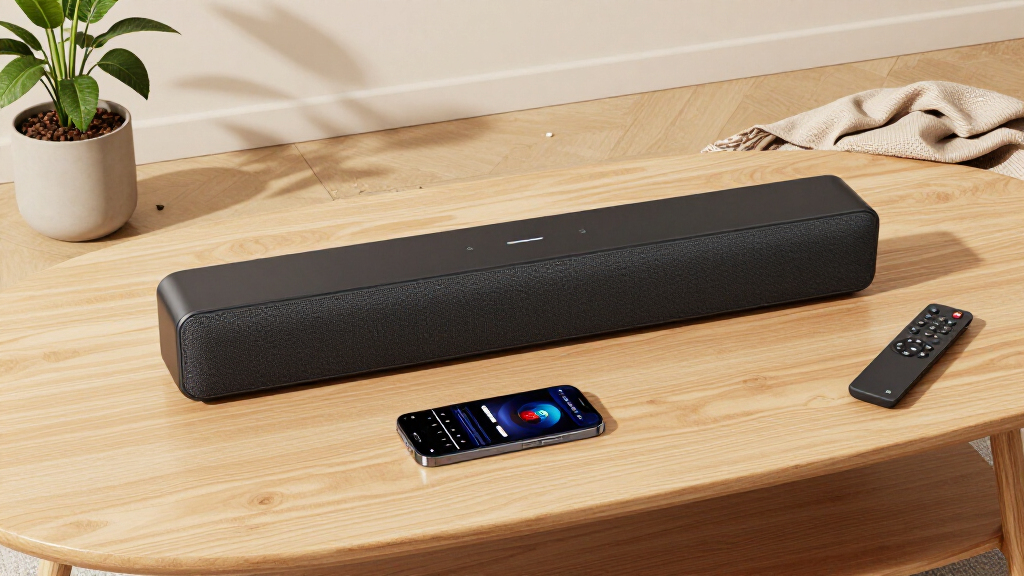
In 2026, leading electronics manufacturers are unveiling new AI-powered soundbars that incorporate advanced artificial intelligence features to enhance home audio experiences. For a review of top options, see the original analysis of the best soundbars. These devices aim to deliver adaptive sound, personalized profiles, and seamless ecosystem integration, making them a key upgrade for consumers seeking richer, more customized entertainment. The move reflects a broader trend toward smarter home technology and a response to increasing consumer demand for convenience and immersive audio.
Several brands, including Samsung, Sonos, and Bose, have announced or released AI-enabled soundbars this year. These devices utilize real-time sound processing powered by AI algorithms to automatically optimize audio based on room acoustics, content type, and user preferences. For a curated list of the best models, check out the top soundbars for clearer TV audio. For example, Samsung’s latest models feature adaptive sound that adjusts dynamically during playback, improving clarity and immersion without manual tuning.
In addition to sound optimization, these soundbars support personalized listening profiles that can be customized via smartphone apps or voice commands, allowing different users to experience tailored audio settings. Integration with smart home ecosystems and voice assistants like Alexa and Google Assistant is standard, enabling voice control and multi-device synchronization. Some models also include AI-driven room calibration, ensuring optimal sound distribution regardless of room layout or furniture placement. Learn more about the latest soundbar features in this comprehensive guide.
Why AI Soundbars Mark a Major Home Entertainment Shift
This development matters because it significantly enhances the quality and convenience of home audio. AI-driven features enable automatic tuning and personalization, reducing setup time and improving user experience. As entertainment content becomes more immersive with formats like Dolby Atmos, AI soundbars help maximize these effects without complex manual adjustments. For consumers, this means better sound quality, easier operation, and a more integrated smart home ecosystem, all in a single device.

Samsung Q990F 11.1.4ch Q Series Subwoofer + Rear Speaker, Wireless Dolby Atmos, Q-Symphony, Game Mode Pro, Adaptive Sound (HW-Q990F, 2025)
- Immersive 11.1.4 Channel Audio: Surrounds from all directions with multiple channels
- Wireless Dolby Atmos Support: 3D sound without messy cables
- Enhanced Samsung TV Compatibility: Works seamlessly with Samsung TVs for richer sound
As an affiliate, we earn on qualifying purchases.
As an affiliate, we earn on qualifying purchases.
The Evolution of Home Audio and AI Integration in 2026
Over the past decade, home entertainment has shifted from basic TV speakers to sophisticated sound systems with multiple speakers and immersive formats. The introduction of AI in consumer electronics has accelerated in recent years, with smart assistants, adaptive lighting, and intelligent appliances becoming common. The latest wave of AI soundbars builds on this trend, combining real-time processing, machine learning, and ecosystem connectivity to deliver smarter audio solutions. Major brands have been gradually integrating AI features into their flagship models, with 2026 seeing a surge in availability and capabilities.
Earlier models relied on fixed presets or manual tuning, but recent innovations enable the device to learn user preferences and adapt automatically. Industry analysts predict that AI will become a standard feature in high-end and mid-range soundbars, transforming how consumers experience home entertainment.
“Our latest AI soundbars automatically calibrate to your room and preferences, providing an immersive experience with minimal setup.”
— Samsung spokesperson
Unresolved Questions About AI Soundbar Adoption
While many brands have announced AI features, it is still unclear how widespread adoption will be across different price tiers and ecosystems. Consumer feedback on real-world performance, reliability, and compatibility with existing home setups remains limited. Additionally, the long-term durability of AI components and the privacy implications of data collection are still under discussion. It is also not yet clear whether AI features will be standardized or vary significantly between brands, potentially leading to fragmentation in the market.
Upcoming AI Soundbar Releases and Industry Trends
In the coming months, more brands are expected to launch AI-enabled soundbars, with improvements in processing power and ecosystem integration. Industry analysts anticipate increased adoption of machine learning for even more personalized sound experiences and smarter home integration. Consumer interest is likely to drive further innovation, with upcoming models potentially offering features like voice-based customization, automatic content detection, and enhanced multi-room audio. Regulatory discussions around data privacy and standardization may influence how these features evolve.
Key Questions
What are AI soundbars and how do they differ from traditional models?
AI soundbars incorporate artificial intelligence to automatically optimize audio, personalize listening profiles, and integrate seamlessly with smart home systems, offering a smarter, more adaptable experience compared to traditional models.
Are AI soundbars easy to set up and use?
Yes, most AI soundbars are designed for user convenience, with features like automatic room calibration, voice control, and app-based customization that simplify setup and daily operation.
Will AI features increase the cost of soundbars?
Typically, AI features are included in mid-range and premium models, which may be more expensive than basic models. However, the added convenience and performance are often considered worth the investment.
How secure is the data collected by AI soundbars?
Manufacturers state they implement data privacy measures, but consumers should review privacy policies and settings to understand what data is collected and how it is used.
When can consumers expect more AI soundbars to hit the market?
Many brands are expected to release new AI-enabled models throughout 2026, with ongoing advancements likely to expand features and improve affordability.
Source: ThorstenMeyerAI.com