

📊 Full opportunity report: Prepare For Success: 13 AI Student Planners For Smarter Learning In 2026 on ThorstenMeyerAI.com — validation score, market gap, and execution plan.
TL;DR
In 2026, a lineup of 13 student planners offers a mix of traditional paper agendas and AI-assisted guides. The standout is a waterproof, school-ready planner, while the ChatGPT guide targets graduate students. This development signals growing interest in combining AI tools with effective planning for students.
In 2026, a new lineup of 13 student planners has been introduced, blending traditional paper agendas with AI-guided academic tools. The most notable is a durable, school-ready planner designed for middle and high school students, while a specialized guide leveraging ChatGPT targets graduate-level research. This development reflects a broader trend toward integrating AI into student organization, offering tailored options for different educational levels.
The lineup includes 12 paper-based planners with features like waterproof covers, pockets, and stickers, aimed at students from elementary to college. For more on AI tools for students, see the original analysis. The standout is an 8.5 x 11-inch waterproof planner suitable for regular desk use, favored for its durability and spacious pages. The ChatGPT thesis and dissertation guide is the only product explicitly centered on AI-assisted academic work, designed for graduate students managing complex research tasks. Learn more about AI in education from the detailed coverage in the original analysis.
Other models include a compact SUNEE planner for portability, a premium Matrix planner with full-color pages, and a more restrained Elan organizer. The selection emphasizes matching planner size and layout to student needs, such as weekly/monthly views or guided routines. Notably, none of these are dedicated AI scheduling apps; instead, they support AI workflows through paper or supplementary guides.
Why These Planners Signal a Shift in Student Tools
The introduction of these 13 planners, especially the AI-focused guide, highlights a growing recognition of AI’s role in academic success. For students, this means more tailored tools that can enhance organization, task breakdown, and deadline management. For educators and parents, it underscores the importance of choosing planning tools aligned with students’ academic levels and habits. The trend toward integrating AI guidance with traditional planning could reshape how students prepare for exams, manage research, and develop study routines.
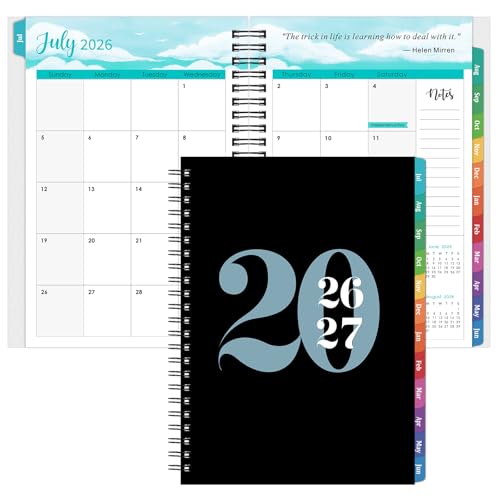
Planner 2026-2027 – Academic Planner 2026-2027, JUL.2026 – JUN.2027
- Coverage Period: July 2026 to June 2027
- Page Layout: Weekly and monthly pages with holidays
- Material & Cover: High-quality paper, waterproof cover
As an affiliate, we earn on qualifying purchases.
As an affiliate, we earn on qualifying purchases.
Evolution of Student Planning Tools and AI Integration
Historically, student planners have been primarily paper-based, focusing on organizing assignments and schedules. Recently, digital tools with AI capabilities have gained popularity, offering features like automatic deadline extraction, rescheduling, and reminders. However, most current products are dedicated apps rather than hybrid solutions. The 2026 lineup reflects a hybrid approach: traditional paper planners supplemented or supported by AI guides, catering to different student preferences and needs. The ChatGPT guide, in particular, marks a step toward more specialized AI academic assistance, especially for higher education research and thesis work.
“While none of these planners are true AI scheduling apps, the AI-guided guide for thesis work stands out as a significant step toward integrating AI into academic planning.”
— Thorsten Meyer, product reviewer
Unclear Details About AI Integration and Future Developments
It is not yet clear how deeply integrated the AI guidance will be in these products beyond the ChatGPT manual, or whether future planners will incorporate more automated features like reminders and rescheduling. The market’s response and adoption rates remain uncertain, as do the long-term impacts on student learning outcomes.
Next Steps for Students and Educators in AI Planning Tools
Expect further development of AI-assisted academic guides and digital planners in 2026, with potential expansion into more integrated, automated solutions. Educators and students should monitor these tools’ effectiveness and consider how they can complement existing study routines. Additionally, feedback from early users could influence future iterations, possibly leading to more sophisticated AI features embedded in both paper and digital formats.
Key Questions
Are any of these planners fully AI-powered digital apps?
No, all 13 options are either traditional paper planners or guides supporting AI workflows; none are dedicated AI scheduling apps.
What makes the ChatGPT guide different from other planners?
It is specifically designed to assist with thesis and dissertation work, offering AI-guided research workflows, unlike standard paper planners.
Will these planners support automatic reminders or scheduling?
Currently, no; most are designed as physical tools or guides. Future products may incorporate more automation, but this lineup focuses on manual or semi-guided planning.
Which planner is best for elementary students?
The SUNEE Elementary planner is designed with guided routines suitable for younger students, emphasizing visual structure and simplicity.
How do I choose between paper and digital planning tools?
Consider whether you need visible, distraction-free assignment tracking (favoring paper) or automated, adaptable scheduling (favoring digital AI apps). The lineup offers options for both needs.
Source: ThorstenMeyerAI.com