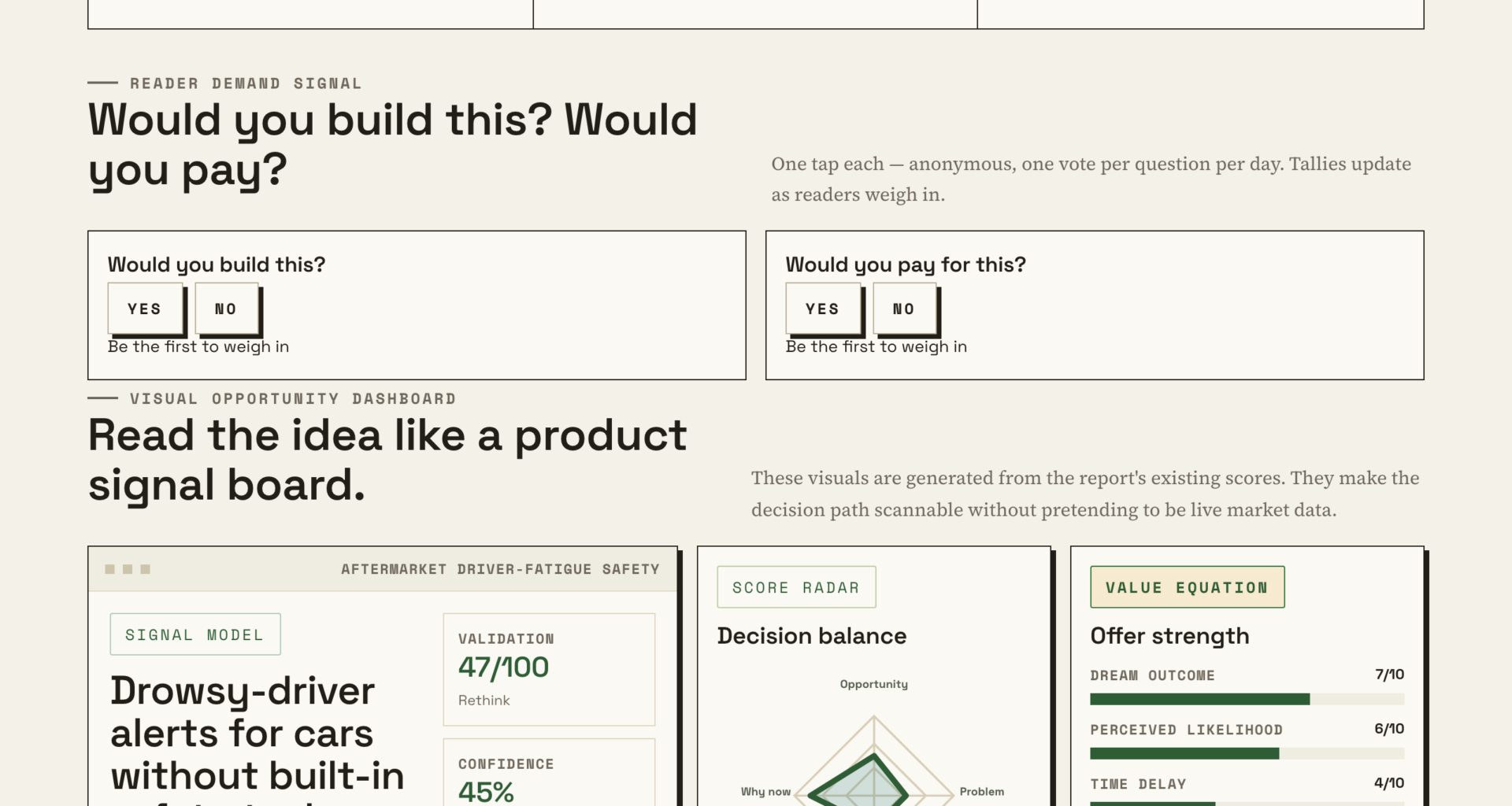

📊 Full opportunity report: Why Add Aftermarket Driver Fatigue Alerts To Your Car? on IdeaNavigator AI — validation score, market gap, and execution plan.
TL;DR
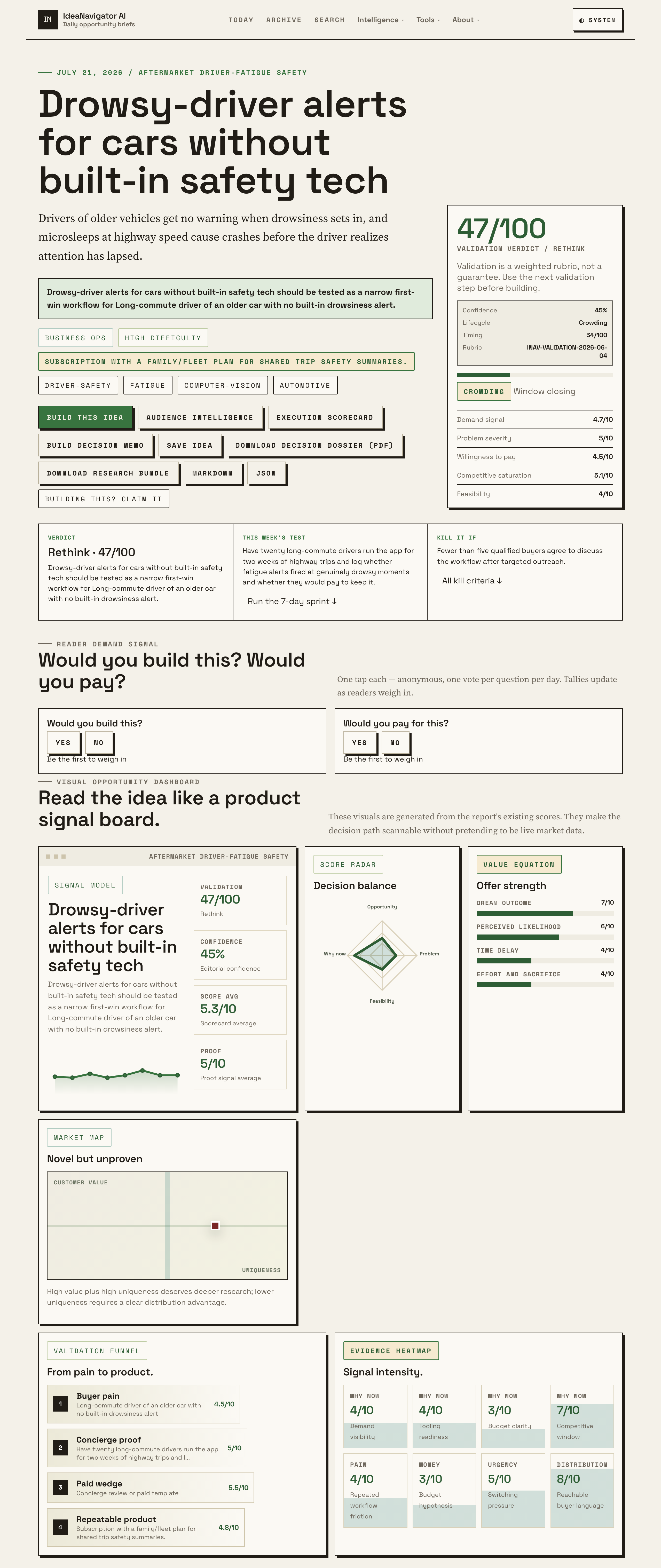
New aftermarket driver fatigue alert apps are emerging for older vehicles lacking built-in sensors. These tools aim to warn drivers of drowsiness, potentially reducing highway crashes caused by microsleeps. Validation is underway through driver testing, but widespread adoption remains to be seen.
Developers are introducing aftermarket driver fatigue alert apps designed for older vehicles without built-in safety sensors, aiming to warn drivers of drowsiness during long highway commutes. This development addresses a critical safety gap for drivers of older cars, where microsleeps at highway speeds often lead to crashes before warning signs are detected.
The core innovation involves using smartphone-mounted devices equipped with face-landmark models to monitor eye closure and head nodding patterns, which are indicators of drowsiness. This approach leverages affordable technology, such as dashboard phone mounts and on-device face recognition, to provide real-time alerts.
According to an anonymous researcher involved in the project, a minimal viable product (MVP) is being tested with twenty long-commute drivers over two weeks. The app sounds escalating alerts and prompts drivers to take breaks when signs of fatigue are detected. The goal is to validate whether these alerts effectively correspond with genuine drowsiness and whether drivers are willing to pay for ongoing use through subscription plans, including family or fleet options.
Potential Impact on Road Safety for Older Vehicle Drivers
This development could significantly improve safety for drivers of older vehicles that lack built-in fatigue detection systems. By providing a cost-effective, easy-to-install aftermarket solution, it addresses a persistent safety concern: the inability of traditional cars to warn drivers when they are too drowsy to drive safely. Reducing microsleeps and fatigue-related accidents could save lives and decrease highway injuries.
Furthermore, the subscription model and shared safety summaries could create a new market segment in aftermarket vehicle safety technology, encouraging wider adoption among drivers who typically cannot afford or do not have access to newer vehicles with integrated safety sensors.
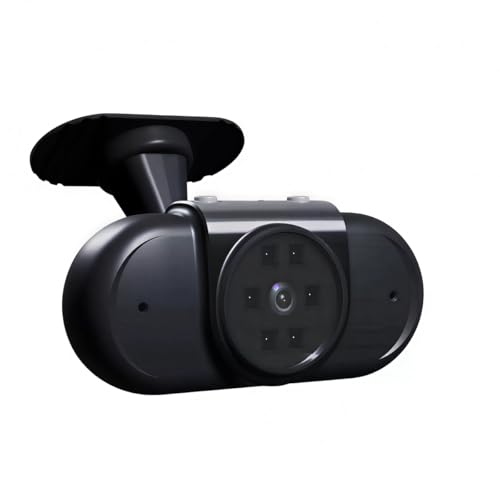
kiaikmc Driver Fatigue Alarm Device with Video Recording, 1080P AI Face & Eye Detection,Stay Awake While Driving Devices for Drivers Security, English Version with Night Vision, A8 Standard Version
- AI-Powered Driver Fatigue Detection: Detects fatigue and unsafe behaviors in seconds
- 1080P Night Vision Recording: High-definition footage with infrared night vision
- Automatic Alert Recording: Records 20-second clips upon alerts
As an affiliate, we earn on qualifying purchases.
As an affiliate, we earn on qualifying purchases.
Growing Need for Aftermarket Driver Fatigue Solutions
Many vehicles on the road today are older models without built-in driver monitoring systems. While newer cars increasingly incorporate sensors to detect drowsiness, the lack of such features in older cars leaves drivers vulnerable to fatigue-induced crashes. Historically, efforts to address this gap relied on expensive, integrated safety features, limiting their reach.
Recent advances in smartphone technology and face recognition models have made it feasible to develop affordable, aftermarket solutions. These innovations come amid rising awareness of highway fatigue risks, especially for long-distance commuters who lack built-in alerts. The idea of using mobile devices to monitor eye closure and head nodding has gained momentum as a practical workaround for older vehicle owners.
“Using face-landmark models on smartphones, we can estimate eye-closure and head-nod patterns that indicate drowsiness, providing a real-time alert system for drivers of older cars.”
— an anonymous researcher
Uncertainties About Effectiveness and Adoption Rates
It remains unclear how accurately the app’s alerts will correspond with actual driver drowsiness in broader real-world conditions. The ongoing testing involves only twenty drivers over two weeks, and results have yet to be published or peer-reviewed. Additionally, questions remain about driver willingness to pay for ongoing subscriptions and the system’s long-term reliability.
Next Steps for Validation and Market Adoption
The next phase involves expanding testing to include more drivers and diverse driving conditions to validate the system’s effectiveness. Developers aim to refine alert accuracy and user experience based on initial feedback. If successful, they plan to commercialize the app with subscription options and partner with aftermarket safety providers. Broader adoption will depend on regulatory acceptance and consumer awareness of the safety benefits.
Key Questions
How does the aftermarket fatigue alert app work?
The app uses a smartphone mounted on the dashboard to monitor face landmarks, estimating eye closure and head nodding. When signs of drowsiness are detected, it sounds alerts and prompts the driver to take a break.
Is this system reliable for all drivers and conditions?
Reliability is still being tested. Initial results are promising, but broader validation is needed to confirm accuracy across different drivers, lighting, and driving environments.
Will drivers pay for this aftermarket system?
Early testing includes assessing driver willingness to subscribe to the service. The model proposes a subscription with shared safety summaries, but market acceptance remains uncertain until larger-scale trials are conducted.
Can this system replace built-in vehicle safety sensors?
Currently, it is designed as a supplementary solution for older vehicles lacking built-in tech. It is not expected to fully replace integrated sensors but could serve as an important safety aid.
Source: IdeaNavigator AI