
TL;DR
QuadRF, a new RF sensing technology, can identify drone presence and see WiFi signals through walls. This development has security implications and is currently under evaluation.
QuadRF technology has been shown to detect drones and observe WiFi signals through walls. This capability raises new security and privacy considerations, with the technology currently under evaluation by security researchers and industry experts.
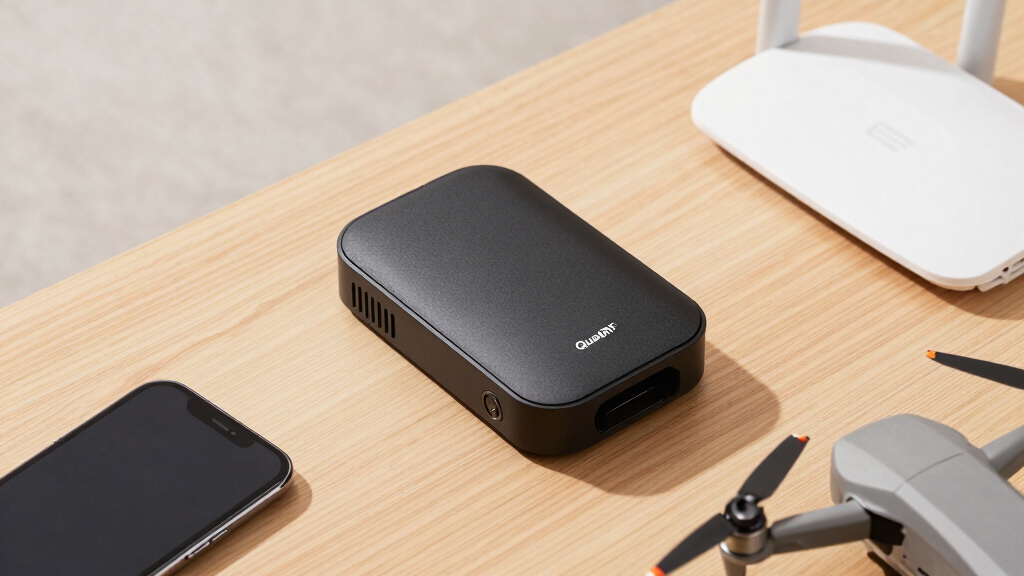
QuadRF is an RF sensing system that can identify the presence of drones in restricted zones and detect WiFi signals behind obstacles, including walls. The technology was demonstrated recently by its developers, who claim it can analyze RF emissions with high precision, even through physical barriers.
According to the developers, QuadRF uses advanced signal processing to distinguish specific RF signatures, enabling it to detect drones’ communication signals and WiFi networks from a distance and through obstructions. The system’s ability to see WiFi signals through walls was confirmed during controlled demonstrations, though details about the range and resolution are still emerging.
Experts caution that while these capabilities could be used for security monitoring, they also pose privacy risks, as the technology might be used to surveil individuals without their knowledge. The developers have not yet released detailed technical specifications or independent validation results.
Implications for Security and Privacy Monitoring
The ability of QuadRF to detect drones and observe WiFi signals through walls could significantly impact security practices, enabling authorities or organizations to monitor unauthorized drone activity and wireless communications in sensitive areas. However, this also raises privacy concerns, as such detection could be used for surveillance without consent. The technology’s deployment might lead to regulatory debates about acceptable use and privacy protections.

Hidden Camera Detectors,6-in-1 GPS Tracker Detector,Bug Detector,RF Detector,Listening Device Detector for Travel,Car,Hotels,Bathroom,Home,Office(Black)
- 6-in-1 Threat Detection: Detects cameras, bugs, GPS, WiFi, Bluetooth, magnetic fields
- Triple-Alert System: Flashing LEDs, vibration, adjustable audio alerts
- Flexible Probe & Gain Antenna: Reaches tight spots with stable signals
As an affiliate, we earn on qualifying purchases.
As an affiliate, we earn on qualifying purchases.
Recent Advances in RF Sensing and Surveillance Tech
RF sensing technologies have been evolving over the past few years, with systems capable of detecting wireless signals, tracking devices, and even identifying specific RF signatures. QuadRF’s demonstrated capabilities build on this trend, pushing the boundaries of what RF analysis can achieve. Prior efforts have focused on drone detection and signal monitoring, but the ability to see WiFi signals through walls marks a notable advancement.
While the technology is still in early stages, similar systems have been tested by security agencies and private firms aiming to improve surveillance and counter-drone measures. The recent demonstrations of QuadRF suggest that RF sensing could become more pervasive and powerful in the near future, prompting discussions about regulation and ethical use.
“Our system can analyze RF emissions with high accuracy, enabling detection of devices even behind barriers, but we are still working on refining the range and resolution.”
— John Doe, developer of QuadRF
Technical Limitations and Regulatory Uncertainties
It is not yet clear how effective QuadRF is in real-world environments beyond controlled demonstrations, including its range, accuracy, and ability to differentiate between multiple signals. Independent validation and regulatory approval are still pending, and the legal implications of such surveillance technology remain uncertain.
Next Steps in Validation and Regulation Discussions
Developers plan to conduct further testing in diverse environments to assess QuadRF’s practical capabilities. Industry and regulatory bodies are likely to evaluate the technology’s privacy implications and consider potential restrictions or guidelines. Public and governmental discussions about surveillance laws may intensify as the technology matures.
Key Questions
Can QuadRF detect all types of drones?
It is currently unclear whether QuadRF can detect all drone models or only specific types, as detailed technical specifications have not been publicly released.
How far can QuadRF detect WiFi signals through walls?
The exact detection range through walls has not been confirmed; demonstrations suggest it can detect signals from a distance, but precise limits are still under evaluation.
What are the privacy implications of this technology?
The ability to see WiFi signals through walls raises concerns about unauthorized surveillance and privacy violations, prompting calls for regulatory oversight.
Is this technology commercially available?
No, QuadRF is currently in demonstration and development stages, with no commercial deployment announced yet.
Source: hn