
📊 Full opportunity report: When One Agent Isn’t Enough: Claude Now Builds Its Own Team Of Agents On The Fly on ThorstenMeyerAI.com — validation score, market gap, and execution plan.
TL;DR
Claude has introduced a new feature called dynamic workflows, enabling it to create and manage its own team of agents on the fly. This allows for better handling of complex, high-value tasks by dividing work and maintaining focus. The development marks a significant step in autonomous AI orchestration.
Anthropic’s Claude has launched a new capability called dynamic workflows, allowing the AI to autonomously assemble and manage a team of specialized agents on the fly for complex, high-value tasks. This feature enables Claude to better address challenges where a single agent’s limitations—such as partial work, bias, or goal drift—are evident.
The dynamic workflows feature is a software layer that Claude writes and executes as a small JavaScript program. It can spawn multiple subagents, assign different models based on task complexity, and run agents in isolated worktrees to prevent interference. This approach mimics a human team lead, dividing tasks into specialized roles like dispatchers, reviewers, and specialists, then coordinating their efforts.
According to Anthropic, this capability is particularly useful for complex projects such as extensive code refactoring, research routines, fact-checking, and large-scale data analysis. The workflows are designed to address the failure modes typical of single-agent operation—such as premature stopping, self-assessment bias, and goal drift—by enabling parallel processing, independent verification, and iterative refinement.
When one agent isn’t enough: Claude now builds its own team on the fly
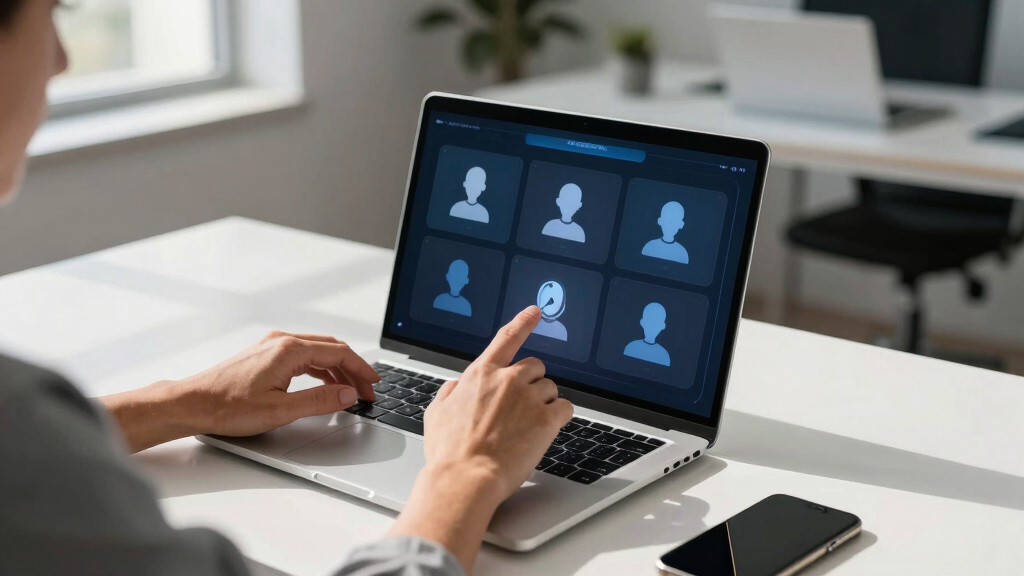
Skills package what you know; loops decide how far you delegate over time. Dynamic workflows are the third axis — within a single task, Claude writes its own harness and assembles a temporary team of subagents. Think of it as Claude drawing an org chart for one job.
The shift is from prompting a worker to commissioning a team — more output, more cost, and a manager’s judgment required. Reach for a workflow when a task is big, parallel, adversarial, or judgment-heavy — and when you can feel a single agent getting lazy, grading its own homework, or losing the plot. Bound it (token budgets, pilot first) — workflows can spawn hundreds of agents and burn far more tokens. For everything else, don’t hire five people to change a lightbulb.
Implications for AI-Driven Project Management
The introduction of autonomous team-building marks a significant evolution in AI capabilities, moving beyond static, single-agent tasks toward dynamic, multi-agent collaboration. This could transform how organizations deploy AI for complex workflows, reducing the need for constant human oversight and increasing reliability in high-stakes projects.
By enabling Claude to orchestrate its own agents, companies can potentially improve efficiency, accuracy, and consistency in tasks such as software development, research synthesis, and compliance auditing. However, the approach also raises questions about control, transparency, and safety, especially in sensitive applications.

Agentic Artificial Intelligence: Harnessing AI Agents to Reinvent Business, Work and Life
As an affiliate, we earn on qualifying purchases.
As an affiliate, we earn on qualifying purchases.
Evolution of AI Orchestration and Workflows
Previous developments in AI orchestration focused on static multi-agent setups or manual configuration using SDKs. Anthropic’s recent work, including the release of Claude Opus 4.8, introduced reasoning capabilities that allow Claude to generate tailored harnesses for specific tasks. The new dynamic workflows extend this by enabling real-time, autonomous assembly of agent teams, reflecting a broader trend toward self-managing AI systems.
This development follows industry efforts to improve AI reliability through structured task decomposition and independent verification, addressing common failure modes observed in large language model applications.
“Claude’s dynamic workflows allow it to write and execute custom orchestration scripts, effectively building its own team of agents for complex tasks.”
— Thorsten Meyer, AI researcher at Anthropic
Unanswered Questions About Autonomous Agent Teams
It is not yet clear how well Claude’s autonomous team-building performs across diverse real-world scenarios or how it manages potential conflicts between subagents. The safety implications and oversight mechanisms for such self-organizing AI systems remain under discussion, with details still emerging from ongoing testing.
Next Steps for Deployment and Evaluation
Anthropic plans to expand testing of dynamic workflows across different industries and project types. Future updates may include enhanced safety controls, user customization options, and performance benchmarks. Observers expect further insights into how well autonomous team management scales in complex, real-world environments.
Key Questions
How does Claude decide what agents to create for a task?
Claude uses a set of orchestration patterns, such as classify-and-act or fan-out-and-synthesize, to determine the roles needed and constructs an appropriate team dynamically based on the task’s requirements.
Can users control or customize these autonomous workflows?
Currently, workflows are generated automatically by Claude, but users can trigger specific patterns or request workflows with keywords like ‘ultracode.’ Future versions may include more user controls.
What are the safety considerations with autonomous agent teams?
Anthropic acknowledges that safety and oversight are important, especially as systems become more autonomous. The company is actively researching safeguards, but detailed safety protocols are still under development.
Is this feature available for all types of tasks?
Dynamic workflows are designed for complex, high-value projects. They are not recommended for simple tasks like fixing typos or straightforward queries.
Source: ThorstenMeyerAI.com