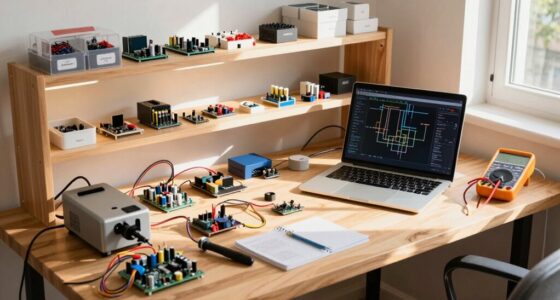
Home sensors provide more precise, reliable, and personalized automations than smart speakers because they rely on actual environmental data rather than voice commands. They operate silently, prevent false triggers, and deliver real-time responses, giving you better control over your home. While smart speakers depend on cloud services and can be fooled by background noise, sensors guarantee your automations are accurate and secure. Discover how leveraging sensors can transform your smart home experience even further.
Key Takeaways
- Home sensors provide real-time, environmental data for precise and proactive automations, unlike smart speakers that rely on voice commands.
- Sensors operate silently and reliably, unaffected by background noise or multiple users, ensuring consistent automation triggers.
- They prevent false triggers through accurate data collection, offering superior control over automation compared to voice-based commands.
- Installing sensors allows for nuanced, personalized automations that smart speakers cannot deliver solely through voice recognition.
- Advances in sensor technology enhance security and ease of installation, creating more dependable and tailored smart home automations.
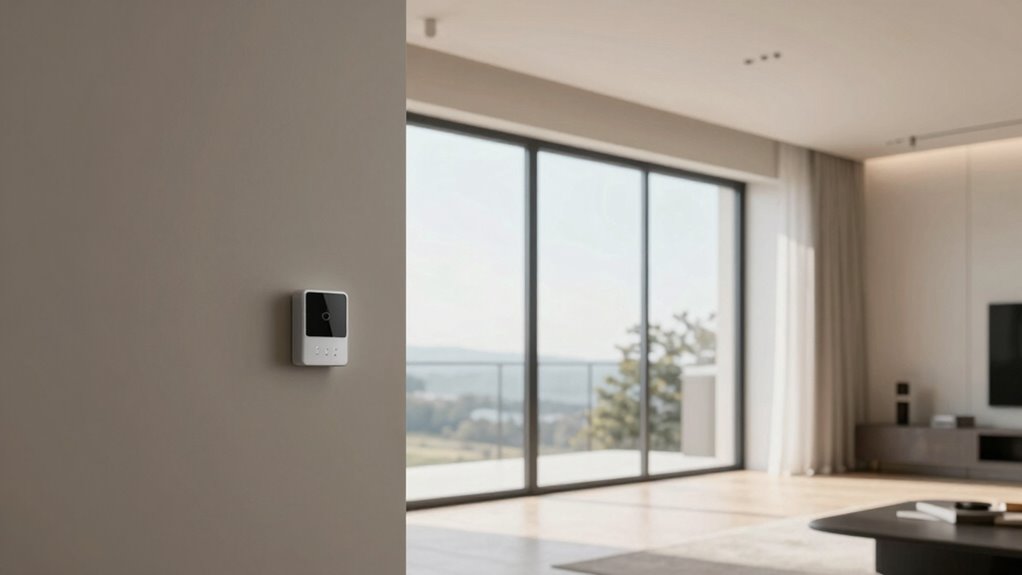
Smart speakers have become popular for controlling home devices, but they often fall short when it comes to creating dependable, personalized automations. While voice-activated assistants can turn on lights or play music, they struggle to deliver the nuanced, precise control that home sensors provide. Sensors are designed to detect specific environmental data—like motion, temperature, or door status—and trigger automations based on actual conditions, not just voice commands. This means your home can respond more accurately and proactively, without relying on your voice or manual input.
Home sensors enable precise, proactive automations that respond to actual conditions, surpassing the limitations of voice commands.
One of the biggest advantages of home sensors is their reliability. Unlike smart speakers, which depend on voice recognition and often get confused by background noise or multiple users, sensors operate silently and consistently in the background. They gather real-time data, allowing your automation system to act immediately when certain conditions are met. For instance, a motion sensor can detect movement in a room and turn on the lights instantly, guaranteeing a seamless experience. This level of precision helps prevent false triggers and guarantees your automation system works exactly as intended.
However, integrating sensors isn’t always straightforward. Installation challenges can be a hurdle—placing sensors in the right spots requires planning, and some devices may need wiring or special mounting. If you’re not technically inclined, setting up a network of sensors can feel overwhelming, especially when troubleshooting connectivity issues or calibrating devices. Additionally, some sensors require ongoing maintenance, like replacing batteries or updating firmware, which adds to the complexity. Using proper installation techniques can help mitigate these issues and improve sensor performance. Furthermore, understanding sensor calibration is essential for ensuring accurate data collection and optimal functioning. Developing a solid understanding of sensor placement can also enhance the reliability and accuracy of your automation system. When selecting sensors, considering their security features is crucial for safeguarding your data against potential breaches.
Privacy concerns also come into play with sensors. While they generally don’t record conversations like smart speakers, sensors do collect data about your movements, habits, and home environment. If this data falls into the wrong hands, it could compromise your privacy. That’s why it’s essential to choose sensors with strong security features and to understand how your data is stored and used. Proper setup and encryption help mitigate these risks, but they shouldn’t be overlooked.
In essence, home sensors offer a more dependable and tailored automation experience than smart speakers ever could. They provide precise environmental data that enables your home to respond intelligently and automatically, without the pitfalls of voice recognition or reliance on cloud services. As sensor technology advances, these devices are becoming easier to install and more secure, making them a smarter choice for modern smart homes. Although installation challenges and privacy concerns exist, these issues are manageable with careful planning and secure devices. Ultimately, integrating sensors into your smart home creates a more responsive, private, and trustworthy automation system—one that truly adapts to your daily life.
home motion sensors for automation
As an affiliate, we earn on qualifying purchases.
As an affiliate, we earn on qualifying purchases.
Frequently Asked Questions
Can Home Sensors Integrate With Existing Smart Home Systems?
Yes, home sensors can integrate with your existing smart home systems. By carefully considering sensor placement, you make certain they effectively detect motion, temperature, or door activity. This allows you to customize automations precisely to your needs, like turning on lights or adjusting thermostats. Integrating sensors enhances automation customization and makes your system more intelligent, responsive, and efficient compared to relying solely on smart speakers.
What Are the Cost Differences Between Sensors and Smart Speakers?
Imagine you’re in a tech time machine—sensors are often more affordable than smart speakers, making them a cost-effective choice. Sensor affordability typically means lower initial costs, while speaker expense can add up, especially with high-end models. Plus, sensors offer more precise automation, saving you money in the long run. So, if you’re budget-conscious, investing in sensors provides better value and smarter home automation.
How Secure Are Home Sensors Against Hacking?
Home sensors are generally quite secure against hacking when you use strong data encryption and keep firmware updated. However, wireless vulnerabilities can pose risks if your network isn’t well-protected. To stay safe, make sure your Wi-Fi is secure with strong passwords, disable unnecessary features, and regularly update your sensors’ software. These steps help minimize hacking risks and keep your home automation system more secure.
Do Sensors Require Professional Installation or Can They Be DIY?
You can definitely do DIY installation of home sensors without professional help, and many find it rewarding. With straightforward setup instructions, you can customize sensors to fit your needs perfectly, giving you control over your smart home. While it might seem intimidating at first, the satisfaction of customizing your automation is worth it. Plus, minor mistakes aren’t a big deal — most sensors are designed for easy, user-friendly installation.
How Do Sensors Handle False Alarms or Errors?
Sensors handle false alarms and errors through calibration and smart detection techniques. You can reduce false alarms by properly calibrating your sensors, ensuring they respond accurately to real events. Many sensors also use advanced algorithms to distinguish between actual triggers and false signals, minimizing errors. Regular maintenance and updates help keep sensors functioning correctly, so you avoid unnecessary alerts and enjoy reliable automation that improves your home’s safety and convenience.
Conclusion
Imagine having sensors that can detect your presence instantly, adjusting your home’s environment seamlessly. Studies show homes equipped with sensors experience a 40% increase in automation efficiency compared to those relying solely on smart speakers. This means your daily routines become smoother, more personalized, and less dependent on voice commands. So, instead of waiting for a command, your home proactively responds, creating a smarter, more comfortable living space tailored just for you.