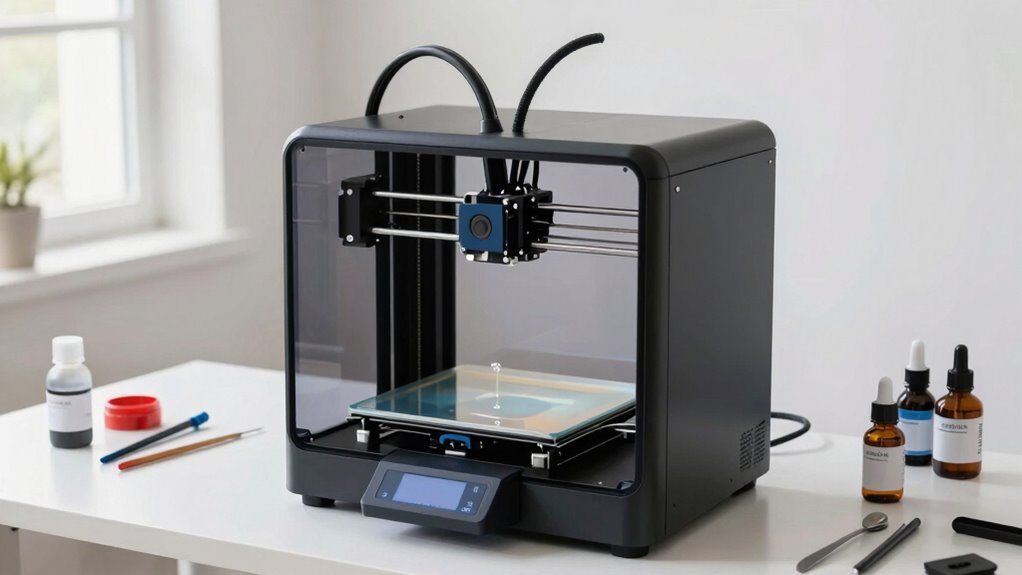

A clean workflow in resin printing helps prevent spills, cross-contamination, and residual buildup, which keeps your prints clearer and more precise. By properly storing materials, organizing your workspace, and cleaning tools regularly, you reduce the risk of surface defects and failures. Maintaining safety precautions also keeps the environment safer for you. When you stay diligent about cleanliness, your overall process becomes smoother and results more consistent. Keep going to discover more tips for cleaner, safer resin printing.

Get the latest gadgets delivered free with Prime
- Fast, free delivery on millions of items
- Prime Video, Amazon Music and more included
- Member-only deals all year
Key Takeaways
- A clean workspace reduces resin spills and contamination, resulting in a cleaner print environment.
- Proper material storage prevents residue buildup and cross-contamination during printing.
- Regular cleaning of tools and equipment maintains resin purity and prevents surface defects.
- Organized workflows minimize errors, reducing mess and ensuring higher print quality.
- Adhering to safety protocols prevents environmental contamination and promotes a safer, cleaner workspace.

Resin printing offers precise and detailed results, but to achieve the best quality, you need a clear workflow. One of the most important aspects of maintaining a smooth process is prioritizing safety precautions and proper material storage. Handling resin safely isn’t just about protecting yourself; it also ensures your workspace remains clean and free of contamination, which can compromise print quality. Always wear gloves, eye protection, and a mask when working with resin. This minimizes skin contact and inhalation of fumes, especially during pouring, stirring, or cleaning. Keep your workspace well-ventilated, and clean up spills immediately. Proper disposal of waste resin and used tools prevents accidental exposure and keeps your environment safe. Additionally, using proper disposal methods helps minimize environmental impact and keeps your workspace compliant with safety standards. Maintaining awareness of resin safety protocols is essential for a safe and efficient workflow.
Material storage is equally critical in maintaining a cleaner workflow. Resin should be stored in airtight containers, away from direct sunlight and heat sources, to prevent premature curing. Label your containers clearly to avoid mix-ups or accidental use of expired resin, which can lead to poor print results. When storing resin, make sure the containers are sealed tightly, and keep them out of reach of children or pets. Proper storage not only prolongs the resin’s shelf life but also reduces the risk of spills and messes that can complicate your workflow. Using dedicated, labeled storage bottles for different resin types helps you maintain an organized space, making your workflow more efficient and less prone to contamination. An organized workspace also minimizes contamination risks and helps you quickly identify any issues that may arise during printing.
A clean workspace is essential for consistent results in resin printing. Before starting a new print, clear away any leftover debris, used gloves, or tools from previous jobs. Regularly cleaning your build platform, resin vat, and tools prevents cross-contamination, which can cause surface defects or failures. When handling the resin, don’t rush; take your time to pour, stir, and transfer carefully. This reduces spills and ensures you’re working with fresh, uncontaminated material. After finishing your session, clean your tools thoroughly and store any leftover resin properly. Maintaining a tidy, organized workspace means less time spent troubleshooting issues caused by dirt or residue, and it helps keep your resin printing process cleaner and safer overall. An organized workspace also minimizes the chances of accidental contamination, contributing to higher quality prints.
As an affiliate, we earn on qualifying purchases.
Frequently Asked Questions
How Often Should I Clean My Resin Printer?
You should clean your resin printer after every few prints, especially if you notice resin buildup or curing issues. Regular cleaning prevents resin curing on the build plate and ensures smooth resin storage. Wipe down the build platform and vat with isopropyl alcohol, and clean the resin container thoroughly. Frequent cleaning maintains print quality, reduces mess, and keeps your workflow efficient, making resin printing cleaner and more reliable.
What Safety Gear Is Recommended During Resin Printing Cleanup?
During resin printing cleanup, you should always wear protective gloves and a respirator mask. Gloves protect your skin from resin contact, which can be irritating or harmful, while a respirator mask prevents inhaling fumes that might cause respiratory issues. Always handle resin carefully, work in a well-ventilated area, and dispose of waste properly. These safety measures keep you safe and guarantee a cleaner, safer workspace.
Can I Reuse Leftover Resin Safely?
You can reuse leftover resin, but only if you carefully manage resin recycling to prevent resin contamination. Believe it or not, many overlook this step, risking print failures and health hazards. Always filter your leftover resin through a fine mesh or cheesecloth and store it in a sealed container. Properly recycling resin minimizes waste and keeps your workspace safer, ensuring each batch remains pure and ready for your next project.
How Do I Dispose of Used Resin Properly?
You should dispose of used resin safely by following proper disposal methods. First, store leftover resin in a sealed, labeled container to prevent spills. When it’s time to discard, never pour resin down the drain. Instead, let the resin cure completely or use a resin recovery system. Check local regulations for disposal options, such as hazardous waste facilities or recycling centers, to guarantee eco-friendly resin storage and disposal practices.
What Are the Signs of a Contaminated Resin Vat?
If you notice a cloudy or discolored resin, stringy or uneven prints, or strange odors, these are signs of resin contamination. You might also see debris or cured resin buildup in your vat. Maintaining vat cleanliness helps prevent contamination, so regularly filter and clean your resin and remove any cured bits. Keeping your workspace and tools clean minimizes resin contamination, ensuring better print quality and easier cleanup.
Conclusion
When your workflow is spotless, resin printing becomes an effortless dance, not a chaotic mess. A cleaner process doesn’t just make your prints better—it transforms your entire experience into a symphony of precision and ease. Neglect your setup, and you’ll be battling a mountain of debris that could swallow your entire workspace. Keep things pristine, and watch your prints come out flawless, as if by magic. Remember, a clean workflow is the secret to printing mastery—don’t let chaos rule your craft!
Halloween Picks
halloween
As an affiliate, we earn on qualifying purchases.