Wearable sleep trackers measure many aspects of your sleep, like duration, light, deep, and REM stages, but they often oversimplify or misjudge these phases. While they’re good for spotting trends and improving habits, their accuracy for sleep stages isn’t perfect. Instead of relying solely on these devices, focus on how you feel and establish consistent sleep routines. Want to understand the real limitations and how to get meaningful insights? Keep exploring to learn more.
Key Takeaways
- Wearables primarily estimate sleep stages using sensors like accelerometers and heart rate monitors, but often misclassify sleep quality.
- Accurate sleep tracking is limited; devices often overestimate light sleep and underestimate deep or REM sleep.
- Comfort and fit impact both sleep quality and data reliability; uncomfortable devices can disturb sleep and skew results.
- Use sleep tracker data as a general guide, understanding their limitations, rather than relying on them for precise health assessments.
- Choosing a comfortable, well-fitting device enhances wearability, consistent use, and more meaningful sleep insights.
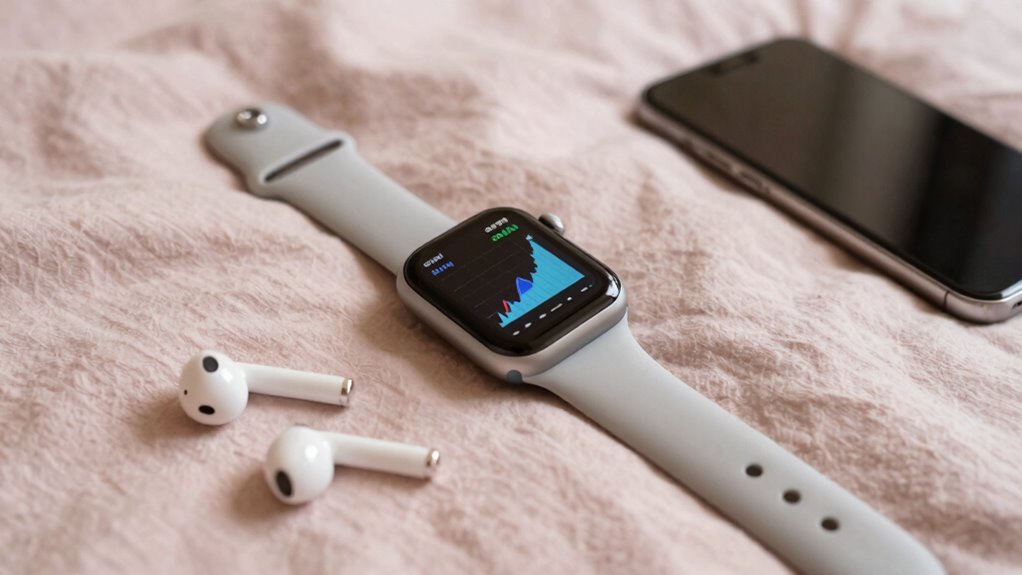
Have you ever wondered if your sleep tracker really tells the truth? Many people rely on these devices to monitor their rest, but it’s worth questioning how accurate they truly are. Two critical factors influence their reliability: sleep stage accuracy and wearable comfort. Sleep stage accuracy refers to a device’s ability to correctly identify whether you’re in light sleep, deep sleep, REM, or awake. While most modern wearables use sensors like accelerometers and heart rate monitors to estimate these stages, they can sometimes fall short. For example, a tracker might overestimate light sleep or underestimate deep sleep, leading you to believe you’re getting better rest than you actually are or vice versa. This discrepancy can impact your sleep goals or health decisions. Understanding the limits of sleep stage accuracy helps you interpret your data more wisely. It’s also important to contemplate wearable comfort, which directly affects your sleep quality and the usefulness of your device. If a tracker feels bulky, tight, or uncomfortable, it might disturb your sleep or cause you to remove it altogether. Even minor discomfort can lead to restless nights that skew the data further, making it harder to get an authentic reading of your sleep patterns. The best wearable comfort comes from lightweight, ergonomic designs that sit snugly without feeling intrusive. You want to forget it’s even there, so it doesn’t interfere with your natural sleep cycle. The material also matters—breathable, skin-friendly fabrics reduce irritation and help you maintain consistent wear. Remember, a device that’s uncomfortable won’t serve its purpose well; you might take it off during the night or keep adjusting it, which compromises the accuracy of your sleep tracking. When choosing a sleep tracker, prioritize models that strike a good balance between sleep stage accuracy and wearable comfort. It’s tempting to focus solely on the features or the brand, but a device that isn’t comfortable won’t be used properly, and inaccurate sleep data can lead to misguided health decisions. Ultimately, no sleep tracker is perfect, but understanding their limitations in sleep stage detection and how they feel on your wrist can help you set realistic expectations. Use these devices as a guide, not an absolute authority, and always listen to your body’s signals for a clearer picture of your sleep health. Remember, accurate sleep tracking involves both reliable data and a comfortable experience, so choose wisely and keep your expectations grounded. Incorporating sleep tracking limitations into your understanding can lead to better health choices and more realistic goals.
Top picks for "sleep track truth"
Open Amazon search results for this keyword.
As an affiliate, we earn on qualifying purchases.
Frequently Asked Questions
Do Sleep Trackers Accurately Measure Sleep Stages?
Sleep trackers don’t always accurately measure sleep stages because they primarily rely on movement and heart rate, which aren’t perfect indicators of sleep cycle and brain activity. While they can give you a general idea of your sleep patterns, they might misclassify light, deep, or REM sleep. For precise data on sleep stages, consider tools that monitor brain activity, like polysomnography, but wearables provide useful, if approximate, insights.
Can Wearables Improve My Overall Sleep Quality?
Imagine your sleep as a delicate garden, needing careful tending. Wearables can help you improve your sleep quality by highlighting patterns and encouraging better sleep hygiene. They remind you to stick to consistent bedtime routines, reduce screen time before bed, and create a calming environment. By tracking your sleep, you become more aware of habits that hinder rest, empowering you to make changes and cultivate more restful, rejuvenating sleep each night.
Are There Risks Associated With Relying on Sleep Data?
Yes, relying on sleep data can have risks, especially with privacy concerns and data accuracy. You might worry about how your personal info is stored or shared, so choose devices with strong privacy policies. Also, don’t take the data as gospel—wearables can sometimes be inaccurate, which might lead you to misjudge your sleep quality. Stay informed, use the data wisely, and prioritize your privacy.
How Do Wearables Compare to Professional Sleep Studies?
When comparing wearables to professional sleep studies, keep in mind that wearables are more like a bird’s-eye view than an in-depth exploration. They provide useful insights into your sleep environment and can track trends, but user compliance and the device’s accuracy limit their reliability. For precise diagnosis, a professional sleep study remains the gold standard, offering detailed data that wearables can’t fully replicate.
What Features Should I Look for in a Sleep Tracker?
When choosing a sleep tracker, look for features that enhance sleep comfort, like a lightweight, comfortable design, and guarantee wearable durability so it lasts through nightly use. Focus on accurate motion sensors for reliable data, simple interface for easy insights, and compatibility with your devices. Prioritize long battery life, water resistance, and adjustable straps to improve overall comfort and longevity, helping you track your sleep effectively without hassle.
Conclusion
So, next time you glance at your sleep tracker, remember it’s not the whole story. Sometimes, the numbers match how you feel after a rough night—no coincidence there. While wearables can offer helpful insights, they don’t capture everything your body needs. Trust your instincts and rest isn’t just about data; it’s about listening to how you truly feel. After all, the best sleep advice often comes from within, not just your device.