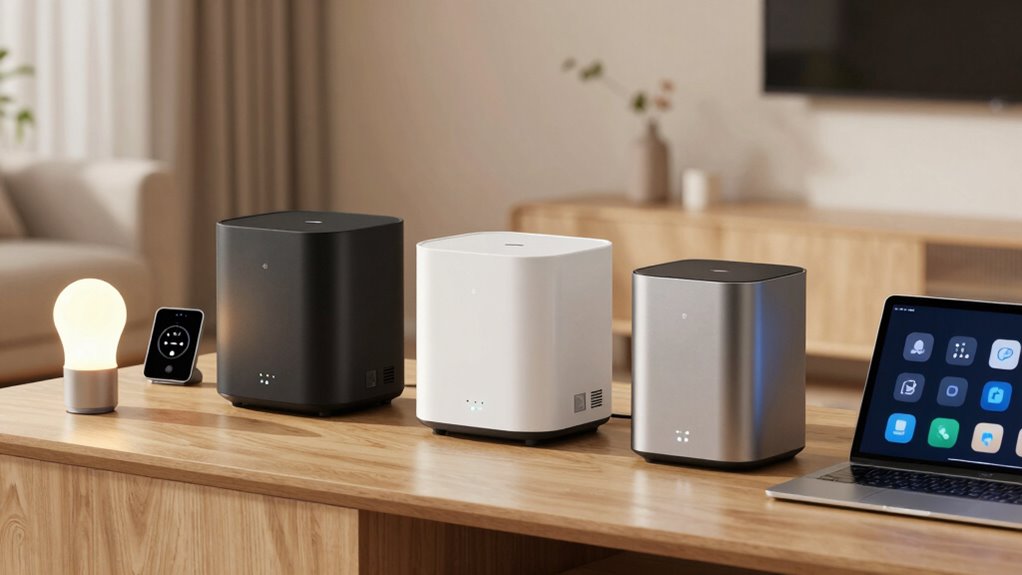

Choosing between Matter, HomeKit, and Alexa depends on your priorities. If you want universal compatibility and better device interoperability, Matter is your best bet, but it may involve some setup challenges. For top security and privacy, especially within Apple’s ecosystem, HomeKit excels. If you prefer broad device support and advanced voice features, Alexa offers flexibility but with potential privacy trade-offs. Stay tuned to discover how to make this choice work best for your smart home.
Key Takeaways
- Matter offers broad device compatibility across brands, reducing setup issues due to interoperability gaps.
- HomeKit’s limited device ecosystem may cause compatibility challenges with non-Apple devices.
- Alexa supports extensive device integration but can complicate setups with diverse, non-standard products.
- Compatibility issues in any system can lead to broken routines or incomplete automation.
- Choosing the right ecosystem depends on your existing devices and desired interoperability level.
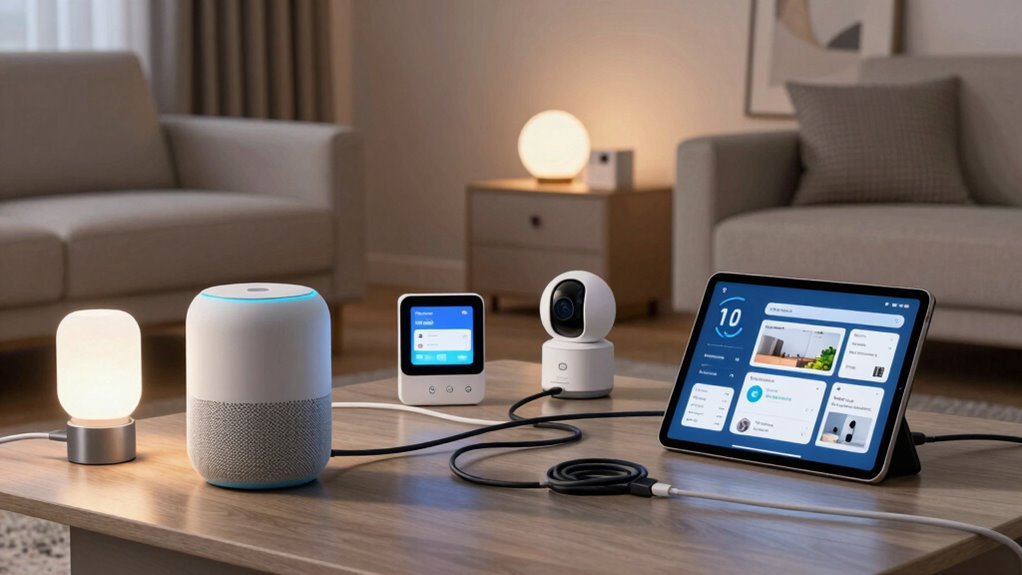
With the rise of smart home technology, choosing the right ecosystem can feel overwhelming. You want a system that’s reliable, secure, and easy to use, but with so many options—Matter, Apple’s HomeKit, and Amazon Alexa—it’s tough to know which one fits your needs best. Your decision hinges on understanding how these platforms handle security protocols and voice recognition, which directly impact your privacy and convenience.
Matter, the emerging universal standard, aims to bridge compatibility gaps between devices from different brands. It emphasizes robust security protocols, ensuring your data stays protected as devices communicate across the ecosystem. When you’re setting up Matter-compatible devices, you can expect end-to-end encryption and secure onboarding processes. Its design prioritizes safety, making it less vulnerable to hacking attempts. This focus on security protocols means you can confidently add new devices to your network without worrying about weak points that could compromise your system. Plus, Matter supports various voice assistants, so you’re not locked into a single voice recognition system—giving you flexibility and peace of mind. Additionally, Matter’s emphasis on interoperability facilitates seamless device integration, reducing setup complexity and enhancing user experience.
Matter ensures secure device communication with end-to-end encryption and flexible voice assistant support for a safer, more adaptable smart home.
HomeKit, Apple’s ecosystem, is renowned for its strict security protocols. When you opt for HomeKit-enabled devices, Apple’s authentication process ensures that only trusted devices can connect to your network. This tight security setup keeps your smart home private and safeguarded from external threats. Additionally, HomeKit uses advanced encryption for data transmitted between devices, further protecting your privacy. Its voice recognition capabilities are integrated with Siri, Apple’s intelligent assistant, which offers a seamless, privacy-focused experience. Siri’s voice recognition is designed to be highly accurate within your home, and Apple’s emphasis on user privacy means your voice data isn’t stored or shared without your consent. This makes HomeKit an appealing choice if you prioritize security and privacy.
Alexa, Amazon’s voice service, provides broad compatibility and expansive device support. Its security protocols are comprehensive but sometimes less transparent than Apple’s. Amazon employs encryption and regular updates to protect your data, but there have been concerns about data collection and storage. Alexa’s voice recognition is highly advanced, allowing for multiple user profiles and voice training, so it can distinguish between different family members. This feature enhances personalization but also raises privacy questions for some users. If you value versatility and extensive device compatibility, Alexa might be your best bet. However, if you’re particularly concerned about security protocols and voice privacy, you’ll want to examine how Amazon handles your data and consider whether its security measures meet your standards.
Ultimately, your choice depends on what you value most—universal compatibility, security protocols, or voice recognition features. Each ecosystem offers strengths and trade-offs, so weigh your priorities carefully before making a decision that could shape your entire smart home experience.

Linkind Matter Smart Plug, Work with Apple Home, Siri, Alexa, Google, SmartThings, Smart Home Smart Outlet Timer 15A/1800W, APP Remote Control & Schedule, 2.4G Wi-Fi Only, 4 Pack
【Easy Setup, One Control】With Matter, Skip the step of downloading and registering multiple manufacturers' apps every time you…
As an affiliate, we earn on qualifying purchases.
As an affiliate, we earn on qualifying purchases.
Frequently Asked Questions
Can I Use All Three Platforms Simultaneously?
Yes, you can use all three platforms simultaneously, but expect some interoperability challenges. You’ll need compatible devices and may face platform integration hurdles, as not all smart home products work smoothly across Matter, HomeKit, and Alexa. To minimize issues, stick to devices that support multiple platforms and keep your software updated. This way, you guarantee better integration and a more seamless smart home experience.
Do Device Prices Vary Between Platforms?
Think of choosing a platform like shopping at different markets—each has its own price tags. Device price variations mean some platforms might cost more or less depending on the brand and ecosystem. Platform cost differences can influence your budget, with certain ecosystems offering cheaper devices or bundled deals. So, you might find that device prices vary between platforms, affecting your overall smart home investment. Always compare before making a purchase.
Is There a Way to Upgrade Existing Devices?
Yes, you can upgrade your existing devices through firmware updates provided by manufacturers. These updates often include compatibility improvements, enabling your devices to work better with platforms like Matter, HomeKit, or Alexa. Check your device settings or manufacturer’s app regularly to verify you’re running the latest firmware. Upgrading firmware can enhance functionality, fix bugs, and help maintain compatibility across your smart home ecosystem.
Which Platform Offers the Best Security Features?
Imagine a fortress guarding your smart home—each platform offers its own security. HomeKit stands out with robust security protocols and end-to-end data encryption, making it the most secure choice. Alexa and Matter also prioritize security, but HomeKit’s strict standards give you peace of mind. You get advanced security protocols that protect your data, ensuring your devices stay safe from breaches while maintaining seamless connectivity.
Are There Regional Restrictions for These Technologies?
Yes, there are regional limitations for these technologies. You might face international compatibility issues, as some features or devices may not function properly outside their primary regions. For example, certain regional restrictions can affect your ability to use Alexa, HomeKit, or Matter devices seamlessly across borders. To avoid disruptions, check each platform’s regional restrictions before purchasing, and ensure your devices support the necessary regional standards for your location.

Airversa Smart HomeKit Button Controller, 3-Button Smart Switch, Works with Apple Home over Thread (Home Hub Needed), HomeKit Trigger, Apple Home Ecosystem Exclusive QliQ AC1 White-2 Packs
Click. Trigger. Done. —— Take control of all your Apple Home (HomeKit) accessories in the palm of your…
As an affiliate, we earn on qualifying purchases.
As an affiliate, we earn on qualifying purchases.
Conclusion
Choosing between Matter, HomeKit, and Alexa is like steering the labyrinth of Daedalus—your setup’s harmony depends on your choice. Embrace the right platform to forge a seamless smart home, avoiding the pitfalls of fragmentation. Remember, the right compatibility isn’t just about convenience; it’s about creating your own Minotaur’s maze—complex and frustrating—unless you pick the path that guides you smoothly. Make your decision wisely, and your smart home can become your modern Icarus—soaring, not falling.
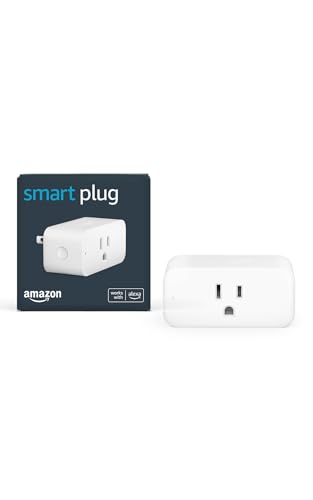
Amazon Smart Plug, Works with Alexa, Simple Setup, Endless Possibilities
Amazon Smart Plug works with the Alexa app and compatible Alexa devices to add voice control to any…
As an affiliate, we earn on qualifying purchases.
As an affiliate, we earn on qualifying purchases.
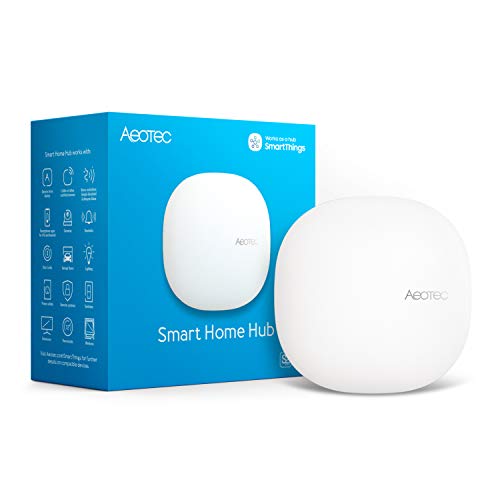
Aeotec Smart Home Hub, Works as a SmartThings Hub, Z-Wave, Zigbee, Matter Gateway, Compatible with Alexa, Google Assistant, WiFi
Connect & control your smart home — Easily link thousands of compatible devices from leading brands to create…
As an affiliate, we earn on qualifying purchases.
As an affiliate, we earn on qualifying purchases.