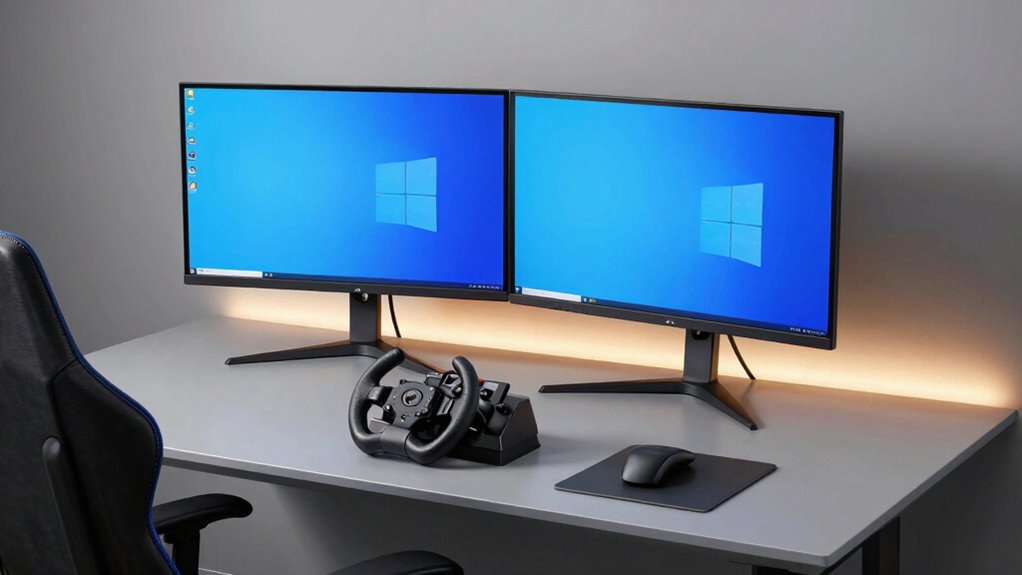

The best sim setup isn’t about having the priciest equipment but about finding the right balance between hardware, software, and comfort. Mixing mid-range gear that works well together often beats top-tier gear that’s mismatched or overwhelming. Focus on harmony to boost immersion and avoid fatigue, making your experience smoother and more realistic. Keep exploring how to optimize your system, and you’ll discover how balance truly enhances your simulation adventures.

Get the latest gadgets delivered free with Prime
- Fast, free delivery on millions of items
- Prime Video, Amazon Music and more included
- Member-only deals all year
Key Takeaways
- A balanced setup combines mid-range hardware and software for optimal performance and immersion without unnecessary costs.
- Proper integration and calibration of components ensure harmony, reducing fatigue and enhancing realism.
- Prioritizing comfort features and ergonomic design prevents discomfort during extended use.
- Compatibility and synchronization between VR, motion platforms, and controls create seamless, immersive experiences.
- Investing thoughtfully in key components yields better overall satisfaction than simply opting for the most expensive gear.
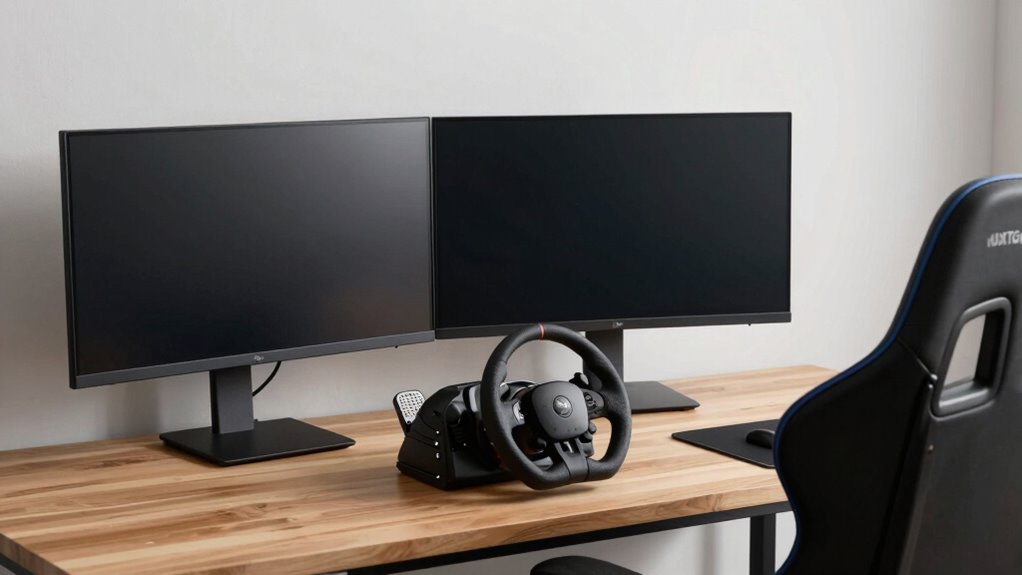
When it comes to creating the perfect sim setup, balance is everything. You don’t need the priciest gear to enjoy a realistic, immersive experience. Instead, focus on how well your components work together. A system overloaded with high-end equipment but lacking harmony can feel confusing or cumbersome. The goal is to find the sweet spot where hardware, software, and comfort come together seamlessly.
VR integration plays a vital role here. With VR, your entire experience transforms—from visual immersion to spatial awareness. The key is ensuring your VR headset pairs smoothly with your other equipment. A good setup minimizes latency and maximizes comfort, so you stay immersed without fatigue or disorientation. You want your VR environment to respond instantly to your movements, which means investing in compatible hardware that doesn’t bottleneck performance. This doesn’t mean you need the most expensive VR headset; it means you need one that fits your needs and integrates well with your system.
Seamless VR integration minimizes latency and maximizes comfort for a truly immersive sim experience.
A motion platform is another critical component that can elevate your sim experience. It adds realistic movement, making turns, accelerations, and impacts feel authentic. But a motion platform alone isn’t enough. It must be compatible with your simulator software and work smoothly with your other hardware. A clunky or improperly calibrated platform can do more harm than good, leading to disorientation or fatigue. The best setups use a well-calibrated motion platform that enhances immersion without overwhelming your senses. It should respond quickly and accurately, syncing perfectly with your visuals and controls.
The real secret to a balanced sim setup is not just adding high-end gear but ensuring everything works in harmony. For example, pairing a decent VR headset with a mid-range motion platform can give you a much better experience than over-investing in one area while neglecting others. Comfort matters, too. You want adjustable seating, ergonomic controls, and easy access to all your equipment. This prevents fatigue and allows you to focus on the experience, not on battling your gear. Additionally, optimizing your system for hardware-software compatibility ensures smooth operation and reduces frustration. Incorporating system calibration practices can further enhance the overall harmony of your setup, making sure each component performs optimally together.
Ultimately, the most satisfying sim setup isn’t about having the latest gadgets but about creating a cohesive, functional system tailored to your style and budget. When your VR integration is seamless and your motion platform responds naturally, you’ll notice how much more immersive and enjoyable your sessions become. It’s about smart choices and balance—investing where it counts and making sure everything works together smoothly. That’s how you get the most out of your sim experience without breaking the bank.
best balanced VR headset for sim racing
As an affiliate, we earn on qualifying purchases.
As an affiliate, we earn on qualifying purchases.
Frequently Asked Questions
How Do I Determine My Ideal Balance for a Sim Setup?
To determine your ideal balance for a sim setup, focus on advanced customization options that suit your preferences and gameplay style. Prioritize ergonomic considerations to guarantee comfort during long sessions. Test different configurations, adjusting controls, seating, and hardware until you find a setup that feels natural and supports your performance. Remember, a balanced setup enhances immersion and reduces fatigue, making your experience more enjoyable without necessarily relying on the most expensive equipment.
What Budget Should I Aim for to Get a Balanced Setup?
You should aim for a budget around $1,000 to $2,000 for a balanced setup. Imagine slipping into virtual reality goggles and feeling the rush of motion simulation, where quality meets affordability. This range lets you invest in a solid VR headset, responsive controllers, and a decent motion platform without overspending. With careful choices, you’ll create an immersive experience that balances performance and cost, making every virtual flight or race feel real.
Are There Specific Brands Known for Balanced Sim Equipment?
You should consider brands like Fanatec, Logitech, and Thrustmaster, as they’re known for balanced sim equipment. Their reputation for reliable product quality and compatibility across various setups makes them great choices. Fanatec offers high-end, customizable gear, while Logitech and Thrustmaster provide more budget-friendly options without sacrificing performance. By choosing these brands, you guarantee your setup remains compatible and balanced, giving you a better gaming experience.
How Important Is the Space Available for My Sim Setup?
Think of your space like a cockpit; the more room you have, the easier it is to focus. Your available space influences your setup’s comfort and immersion, so consider ambient lighting to reduce glare and ergonomic furniture for long sessions. If space is tight, you might need compact gear or clever arrangements. Prioritizing space guarantees your sim experience stays smooth, comfortable, and fully immersive, without feeling cramped or cluttered.
Can a Beginner Achieve a Balanced Setup Easily?
As a beginner, you can definitely achieve a balanced setup easily. Focus on a versatile racing wheel type that suits your budget and preferences, and consider VR integration for immersive experiences. Start with essential components like a good wheel and pedals, then gradually upgrade. This approach helps you build a comfortable, functional setup without overwhelming yourself, making your racing experience enjoyable and balanced from the start.
Conclusion
Remember, a truly top-tier sim setup isn’t about the biggest budget or the most bells and whistles. It’s about balance—blending budget, build, and comfort to create a seamless, satisfying experience. Focus on functionality over fluff, and you’ll find your perfect setup without the splurge. Aim for harmony, harness your hardware, and hit your highest potential. Because the best setup isn’t the most expensive—it’s the most balanced, bringing blissful, brilliant gameplay to your fingertips.
Fall Picks
fall essentials
As an affiliate, we earn on qualifying purchases.