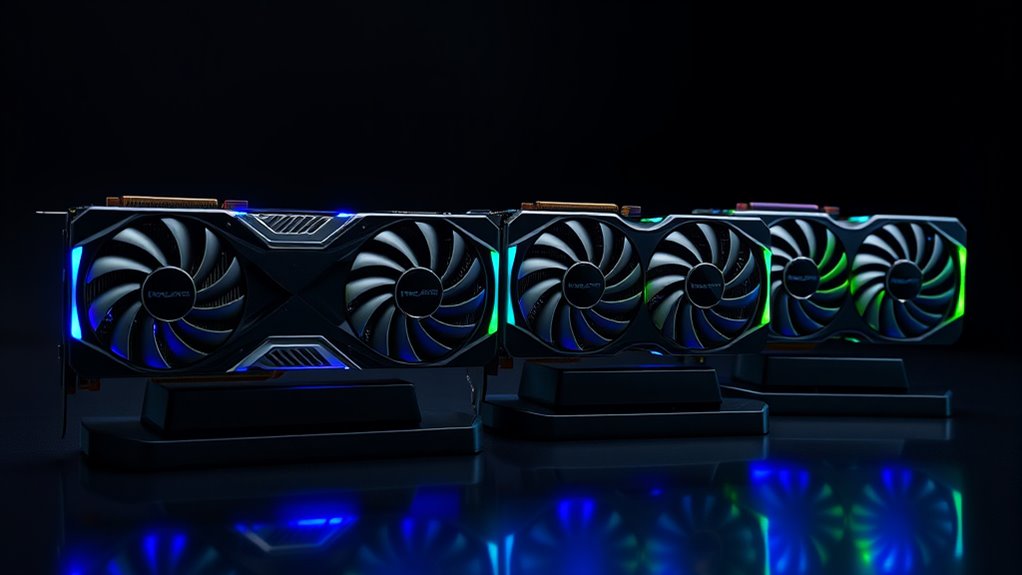

Choosing the right Nvidia GPU for VR in 2026 requires balancing performance, price, and compatibility. If you want peak VR experiences, the ASUS Dual GeForce RTX 3050 OC stands out for its advanced ray tracing and cooling, while the GIGABYTE GeForce RTX 3060 Gaming OC offers a solid balance of power and affordability. For professional-grade VR or immersive rendering, the PNY Quadro RTX 4000 delivers unmatched accuracy. Each choice involves tradeoffs: higher-end cards like the RTX 3060 and Quadro provide better performance but at a premium, whereas more compact or budget options sacrifice some headroom. This guide walks through these options to help you find the best Nvidia GPU for your VR needs in 2026.

Get the latest gadgets delivered free — and shop member deals
- Fast, free delivery on millions of items
- Access to Prime Big Deal Days deals on October 6–7
- Prime Video, Amazon Music and more included
Complete the kit



Key Takeaways
- The RTX 3060 offers strong VR performance with ample 12GB VRAM at a mid-range price.
- The Quadro RTX 4000 is ideal for professional VR workflows, with superior ray tracing capabilities.
- The RTX 3050 variants are budget-friendly but may struggle with the most demanding VR titles.
- Size and cooling features vary; smaller cards like the RTX 3050 Low Profile are suitable for compact builds.
- Tradeoffs include VRAM limitations and premium prices for high-end professional GPUs.
| GIGABYTE GeForce RTX 3060 Gaming OC 12G (REV2.0) Graphics Card |  | Best Overall for VR Performance | GPU: NVIDIA GeForce RTX 3060 | Memory: 12 GB GDDR6 | Core Clock Speed: 1837 MHz | VIEW ON AMAZON | See Our Full Breakdown |
| PNY NVIDIA Quadro RTX 4000 – Ray Tracing GPU |  | Best for Professional VR and Creative Work | GPU Architecture: NVIDIA Turing | RT Cores: 36 | Memory: Ultra-fast graphics memory | VIEW ON AMAZON | See Our Full Breakdown |
| Maxsun GeForce RTX 3050 6GB Graphics Card for Gaming and Small Form Factor PCs |  | Best Compact VR Card for Small Builds | GPU: NVIDIA GeForce RTX 3050 | Memory: 6 GB GDDR6 | Video Output: DisplayPort, HDMI | VIEW ON AMAZON | See Our Full Breakdown |
| Nvidia GeForce GTX 1070 Founders Edition (Renewed) |  | Best for Budget VR and Gaming | GPU: NVIDIA GeForce GTX 1070 | Memory: 8GB GDDR5 | Interface: PCI Express 3.0 | VIEW ON AMAZON | See Our Full Breakdown |
| ASUS Dual GeForce RTX 3050 6GB GDDR6 OC Edition Gaming Graphics Card | 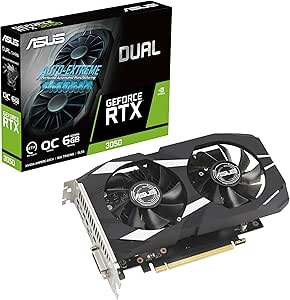 | Best for Power and Durability in Small Form Factors | GPU: NVIDIA GeForce RTX 3050 | Memory: 6 GB GDDR6 | GPU Clock Speed: 1500 MHz | VIEW ON AMAZON | See Our Full Breakdown |
| nvidia gpu for vr | Memory | Interface | GPU | Maximum Resolution |
|---|---|---|---|---|
| GIGABYTE GeForce RTX 3060 Gami | 12 GB GDDR6 | PCI-Express x16 | NVIDIA GeForce RTX 3060 | 7680 x 4320 |
| PNY NVIDIA Quadro RTX 4000 | Ultra-fast graphics memory | PCI-Express 3.0 | — | 7680 x 4320 |
| Maxsun GeForce RTX 3050 6GB Gr | 6 GB GDDR6 | PCI-Express x8 | NVIDIA GeForce RTX 3050 | 7680 x 4320 |
| Nvidia GeForce GTX 1070 Founde | 8GB GDDR5 | PCI Express 3.0 | NVIDIA GeForce GTX 1070 | — |
| ASUS Dual GeForce RTX 3050 6GB | 6 GB GDDR6 | PCI-Express x16 | NVIDIA GeForce RTX 3050 | 3840 x 2160 |
More Details on Our Top Picks
GIGABYTE GeForce RTX 3060 Gaming OC 12G (REV2.0) Graphics Card
The GIGABYTE RTX 3060 Gaming OC stands out for its high core clock of 1837 MHz and 12GB of GDDR6 memory, making it a robust choice for most VR setups. Its triple-fan WINDFORCE cooling keeps thermals in check during extended sessions, ensuring consistent performance. Compared with more modest options like the RTX 3050, it offers significantly better VR headroom, especially for graphically intensive titles. However, its size and lack of detailed user reviews may pose challenges for smaller builds or first-time buyers. Overall, this GPU provides a solid balance of power and features for demanding VR experiences.
Pros:- High core clock speed of 1837 MHz for fast rendering
- 12GB GDDR6 memory supports high-resolution VR
- Effective WINDFORCE triple-fan cooling system
- Multiple display outputs including HDMI and DisplayPort
Cons:- Large size may require spacious case
- Limited detailed user reviews available
- No explicit warranty information
Best for: Enthusiasts seeking high-performance VR without stepping into the top-tier price range
Not ideal for: Small form factor builds or users on a tight budget
- GPU:NVIDIA GeForce RTX 3060
- Memory:12 GB GDDR6
- Core Clock Speed:1837 MHz
- Video Output:DisplayPort, HDMI
- Interface:PCI-Express x16
- Maximum Resolution:7680 x 4320
Our verdict“A versatile, high-performance choice that balances power, cooling, and price for most VR users.”
PNY NVIDIA Quadro RTX 4000 – Ray Tracing GPU
The PNY Quadro RTX 4000 is tailored for professionals demanding accurate rendering and immersive VR workflows. Its Turing architecture and specialized RT cores support real-time ray tracing, delivering photorealistic visuals crucial for design, simulation, and high-end VR applications. Compared with gaming-focused GPUs, it excels in stability and precision, though it comes with a high price tag and limited gaming features. Its power consumption is also higher, making it less suitable for casual or budget-conscious setups. For serious creators, however, this GPU elevates VR experiences to a new level of realism and reliability.
Pros:- Supports real-time ray tracing for hyper-realistic visuals
- Optimized for professional VR workflows
- 36 RT cores for advanced rendering
- Reliable for extended professional use
Cons:- High cost limits accessibility
- Limited support for gaming features
- Potentially high power draw
Best for: VR professionals, designers, and creators needing precise rendering
Not ideal for: Casual gamers or users on a strict budget
- GPU Architecture:NVIDIA Turing
- RT Cores:36
- Memory:Ultra-fast graphics memory
- VR Ready:Yes
- Interface:PCI-Express 3.0
- Maximum Resolution:7680 x 4320
Our verdict“A premium professional GPU that delivers unmatched VR rendering fidelity at a higher price point.”
Maxsun GeForce RTX 3050 6GB Graphics Card for Gaming and Small Form Factor PCs
The Maxsun RTX 3050 is a compact, budget-friendly GPU that still manages to support VR with 6GB of GDDR6 memory. Its small size and low-profile design make it ideal for mini or small form factor PCs, especially where space is limited. Its PCIe 4.0 support and HDMI 2.1 ensure modern connectivity, but the 6GB VRAM can limit its performance in demanding VR titles. The single fan cooling may also restrict thermal performance under heavy load. This model suits users who need VR capability in a tight space without paying premium prices, though it sacrifices some headroom for more intense VR applications.
Pros:- Compact low-profile design fits small cases
- Supports 8K resolution output
- Modern HDMI 2.1 and DisplayPort 1.4a connectivity
- Affordable for entry-level VR users
Cons:- Limited VRAM at 6GB may bottleneck demanding titles
- Single fan cooling might lead to higher temps
- Designed mainly for small form factor PCs
Best for: Small case builds and budget-conscious VR gamers
Not ideal for: High-end VR gaming or professional VR workflows
- GPU:NVIDIA GeForce RTX 3050
- Memory:6 GB GDDR6
- Video Output:DisplayPort, HDMI
- Memory Clock Speed:1750 MHz
- Interface:PCI-Express x8
- Maximum Resolution:7680 x 4320
Our verdict“A practical, space-saving option that provides decent VR performance on a budget, with some limitations in VR headroom.”
Nvidia GeForce GTX 1070 Founders Edition (Renewed)
The GTX 1070 Founders Edition is a solid choice for budget-conscious VR gamers. With 8GB GDDR5 memory and PCIe 3.0 support, it offers enough power for most VR titles at a lower price point. Its VR readiness makes it suitable for immersive experiences, though it lacks the latest ray tracing features and is somewhat dated compared to newer Ampere and Turing cards. Being renewed, it may have some longevity concerns, but overall, it provides good value for entry-level VR setups.
Pros:- Affordable, especially in renewed condition
- 8GB GDDR5 memory supports most VR titles
- VR-ready for immersive experiences
Cons:- Refurbished condition may affect durability
- No modern cooling details available
- Power consumption could be higher
Best for: Budget VR users and casual gamers
Not ideal for: High-end VR or professional rendering tasks
- GPU:NVIDIA GeForce GTX 1070
- Memory:8GB GDDR5
- Interface:PCI Express 3.0
- VR Ready:Yes
- Memory Interface:256-bit
Our verdict“A cost-effective option for entry-level VR, suitable for casual use but not future-proof for demanding VR titles.”
ASUS Dual GeForce RTX 3050 6GB GDDR6 OC Edition Gaming Graphics Card
The ASUS Dual RTX 3050 OC combines NVIDIA’s Ampere architecture with enhanced ray tracing and AI features, packaged in a durable, compact design. Its dual Axial-tech fans provide efficient cooling, and the stainless steel bracket adds longevity. While it shares the same 6GB VRAM limitation as other RTX 3050 cards, its factory overclocking and reliable build make it a strong choice for gamers who want a small, robust GPU that can handle VR and modern games. Still, the higher price reflects its enhanced features and build quality, making it less suitable for those on tight budgets.
Pros:- Enhanced ray tracing and AI capabilities
- Dual Axial-tech fans for effective cooling
- Compact 2-slot design fits small cases
- 3-year warranty adds peace of mind
Cons:- Limited VRAM at 6GB can restrict high-end VR performance
- Price premium for features and durability
- No RGB lighting or aesthetic flair
Best for: Gamers seeking a compact, reliable VR GPU with advanced features
Not ideal for: High-end VR or future-proofing for very demanding titles
- GPU:NVIDIA GeForce RTX 3050
- Memory:6 GB GDDR6
- GPU Clock Speed:1500 MHz
- Video Output:HDMI
- Interface:PCI-Express x16
- Maximum Resolution:3840 x 2160
Our verdict“A reliable, feature-rich choice for small builds that need a balance of power and durability in VR gaming.”

How We Picked
Our selection process focused on GPUs that excel in VR performance, balancing raw power, compatibility, and value in 2026. We prioritized models with recent architectures like Ampere and Turing, emphasizing features that benefit VR, such as high core counts, fast memory, and ray tracing. We also considered cooling solutions, size, and user reviews to gauge reliability and thermal performance. Price was a factor, but only if the performance justified it. Ultimately, each card was chosen for its ability to provide smooth, immersive VR experiences while fitting different budget and space constraints.
| nvidia gpu for vr | GPU | Video Output | Interface |
|---|---|---|---|
| GIGABYTE GeForce RTX 3060 Gami | NVIDIA GeForce RTX 3060 | DisplayPort, HDMI | PCI-Express x16 |
| PNY NVIDIA Quadro RTX 4000 | — | — | PCI-Express 3.0 |
| Maxsun GeForce RTX 3050 6GB Gr | NVIDIA GeForce RTX 3050 | DisplayPort, HDMI | PCI-Express x8 |
| Nvidia GeForce GTX 1070 Founde | NVIDIA GeForce GTX 1070 | — | PCI Express 3.0 |
| ASUS Dual GeForce RTX 3050 6GB | NVIDIA GeForce RTX 3050 | HDMI | PCI-Express x16 |
Factors to Consider When Choosing Nvidia Gpu For Vr
When selecting an Nvidia GPU for VR in 2026, the primary considerations are performance, VRAM, size, and features like ray tracing. Your choice depends heavily on your VR use case—whether gaming, professional creation, or casual play. Compatibility with your PC’s motherboard and case size also influence which models make sense. Understanding these factors will help you avoid bottlenecks and ensure smooth, immersive VR experiences that match your expectations and budget.
Performance and VRAM
For smooth VR performance, prioritize GPUs with high core counts, fast memory, and technologies like RT cores for ray tracing. Generally, 12GB of VRAM offers better future-proofing and performance in high-resolution VR, while 6–8GB is sufficient for most current titles. Keep in mind that VR demands consistent frame rates; a GPU that can consistently hit 90 FPS or higher is essential for comfort and immersion.
Size and Cooling
Consider your PC case size and cooling options. Larger, triple-fan cards like the GIGABYTE RTX 3060 are excellent for thermal management but require spacious cases. Compact cards like the ASUS Dual RTX 3050 OC are ideal for small builds but may run hotter or underperform if cooling isn’t optimal. Balance your space constraints with cooling needs to maintain performance over long VR sessions.
Price and Use Case
High-end professional GPUs like the Quadro RTX 4000 offer unmatched accuracy and ray tracing for VR workflows but come at a premium. Gaming-focused cards like the RTX 3060 or RTX 3050 provide excellent performance for gaming and moderate professional work at more accessible prices. Assess your primary use—whether gaming, creation, or professional VR—and choose accordingly to avoid overspending or underperforming.
Future-Proofing
VR technology evolves rapidly. Picking a GPU with newer architectures like Ampere or Turing ensures your system stays capable for upcoming titles and applications. Additional VRAM and features like DLSS or improved ray tracing support make a significant difference in long-term usability. However, balancing cost and performance is key; not everyone needs the latest top-tier hardware if their current VR demands are modest.
Frequently Asked Questions
What is the most important GPU feature for VR?
The most critical feature for VR is a high and stable frame rate, ideally 90 FPS or higher. This requires a GPU with sufficient core count, fast memory, and technologies like RT cores for ray tracing. Additionally, VRAM capacity impacts how well the GPU can handle high-resolution textures and complex scenes, making 8-12GB preferable for demanding VR titles.
Is a professional GPU necessary for VR content creation?
While consumer GPUs can handle many VR content creation tasks, professional GPUs like the Quadro RTX 4000 are designed for precision, stability, and advanced rendering features. They are better suited for professional workflows that demand higher accuracy, detailed modeling, and real-time ray tracing, though they come with a higher price tag and power consumption.
Can I use a mid-range GPU for high-end VR gaming?
Yes, mid-range GPUs like the RTX 3060 or RTX 3050 can deliver good VR experiences for most titles. However, they might struggle with the most demanding or future releases at maximum settings, potentially resulting in lower frame rates or reduced quality. For the best experience in high-end VR, investing in a higher-tier GPU provides more headroom and longevity.
How does VRAM affect VR performance?
VRAM determines how much high-resolution textures and complex scenes your GPU can handle without dropping frames. For VR, 8GB is generally sufficient for current titles, but 12GB or more offers better future-proofing, especially with higher resolutions or more detailed worlds. Insufficient VRAM can cause stuttering, lower quality textures, or crashes in demanding VR environments.
Are cooling solutions important for VR GPUs?
Absolutely. VR gaming involves extended periods of high GPU load, which generates significant heat. Efficient cooling solutions like multiple fans or advanced heatsinks maintain stable performance and prevent thermal throttling. Smaller or less robust cooling setups may lead to higher temperatures, noise, and potentially reduced hardware lifespan, especially during long VR sessions.
Conclusion
If you’re a casual VR gamer or working with a limited budget, the Maxsun RTX 3050 offers decent performance in a small form factor. Serious gamers and enthusiasts aiming for smooth, high-resolution VR experiences should consider the GIGABYTE RTX 3060 for its balance of power and features. Professionals and creative users needing precise rendering and advanced features will find the PNY Quadro RTX 4000 worth the investment. Small-builders or those with space constraints should look at the ASUS Dual RTX 3050 OC for its durability and compact size. Your choice depends on your specific VR requirements, budget, and PC setup.
Fall Picks
fall essentials
As an affiliate, we earn on qualifying purchases.