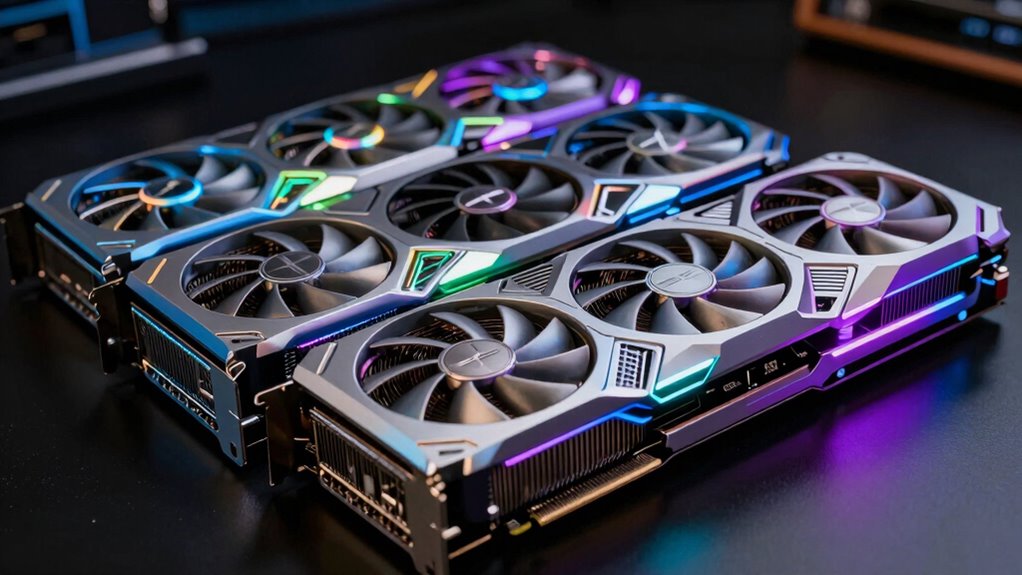

Finding the right GPU for VR with 12GB VRAM can be challenging, as it requires balancing performance, price, and future-proofing. The NVIDIA GeForce GTX TITAN X 12GB stands out as a reliable overall choice, offering strong legacy support for VR applications. The ZOTAC Gaming GeForce RTX 3060 Twin Edge OC delivers excellent value with modern features and solid performance, while the PNY GeForce RTX 4070 Super provides premium power for demanding VR sessions. However, tradeoffs include higher prices or less availability for older models. Continue reading to see how these options compare and which one fits your needs best.

Get the latest gadgets delivered free with Prime
- Fast, free delivery on millions of items
- Prime Video, Amazon Music and more included
- Member-only deals all year
Complete the kit



Key Takeaways
- The top-performing GPUs combine high VRAM with latest generation architectures, ensuring longevity for VR use.
- Value options like the RTX 3060 series strike a good balance between performance and affordability for most users.
- Older models like the GTX TITAN X still hold relevance but may lack newer VR features and efficiency gains.
- Premium picks such as the RTX 4070 Super offer cutting-edge performance but at a significantly higher cost.
- VR-specific features like ray tracing and DLSS support are key for future-proofing and immersive experiences.
| NVIDIA GeForce GTX TITAN X 12GB GDDR5 PCI-e x16 Graphics Video Card (Renewed) |  | Best for Budget-Conscious Users Needing Large VR Memory | Graphics Coprocessor: NVIDIA GeForce GTX Titan X | Video Memory: 12 GB GDDR5 | Interface: PCI-Express x16 | VIEW ON AMAZON | See Our Full Breakdown |
| ZOTAC Gaming GeForce RTX 3060 Twin Edge OC Graphics Card, 12GB GDDR6, PCIe 4.0, ZT-A30600H-10M |  | Best for Modern VR with 8K Capabilities | GPU: NVIDIA GeForce RTX 3060 | CUDA Cores: 3584 | Memory: 12GB GDDR6 | VIEW ON AMAZON | See Our Full Breakdown |
| ASUS Dual NVIDIA GeForce RTX 3060 12GB GDDR6 Gaming Graphics Card |  | Best for Aesthetic Builders and Moderate VR | Brand: ASUS | Model: DUAL-RTX3060-O12G | Graphics Engine: NVIDIA GeForce RTX 3060 | VIEW ON AMAZON | See Our Full Breakdown |
| PNY GeForce RTX 4070 Super 12GB XLR8 Gaming Verto Epic-X RGB OC Triple Fan Graphics Card |  | Best for High-End 4K VR with Advanced Features | GPU: NVIDIA GeForce RTX 4070 Super | Memory: 12GB GDDR6X (192-bit) | Memory Bandwidth: Up to 504GB/sec | VIEW ON AMAZON | See Our Full Breakdown |
| MSI Gaming GeForce RTX 3060 12GB Graphics Card |  | Best for Versatile High-Res VR and Creative Work | GPU Model: GeForce RTX 3060 | Memory: 12GB GDDR6 | GPU Clock Speed: 1710 MHz | VIEW ON AMAZON | See Our Full Breakdown |
| PNY RTX A2000 NVIDIA 12GB GDDR6 Graphics Card |  | Best for Professional Workstations | Graphics Coprocessor: NVIDIA RTX A2000 | RAM: 12 GB | Video Output Interface: Mini DisplayPort | VIEW ON AMAZON | See Our Full Breakdown |
| MSI Gaming GeForce RTX 3060 Ventus 2X 12G OC 12GB GDDR6 Graphics Card (Renewed) |  | Best for Budget Gaming with High VRAM | Boost Clock: 1807MHz | Memory Speed: 15Gbps | Memory: 12GB GDDR6 | VIEW ON AMAZON | See Our Full Breakdown |
| GIGABYTE GeForce RTX 3060 Gaming OC 12G (Rev 2.0) |  | Best for Creative and Moderate Gaming | GPU: NVIDIA GeForce RTX 3060 | Memory: 12 GB GDDR6 | Core Clock: 1837 MHz | VIEW ON AMAZON | See Our Full Breakdown |
| ASRock Radeon RX 7700 XT Challenger 12GB OC |  | Best for AMD Fans and High-Performance Gaming | Graphics Coprocessor: AMD Radeon RX 7700 XT | Memory: 12 GB GDDR6 | Boost Clock: 2584 MHz | VIEW ON AMAZON | See Our Full Breakdown |
| ASUS Radeon RX 9070 GRE OC Edition Gaming Graphics Card |  | Best for Overclocked Gaming and Longevity | Memory: 12GB GDDR6 | Clock Speed: Up to 2880 MHz | Design: 2.5-slot | VIEW ON AMAZON | See Our Full Breakdown |
| MSI Gaming GeForce RTX 3060 Ventus 3X 12G OC 12GB GDDR6 Graphics Card (Renewed) |  | Best Overall for Balanced Performance and Cooling | GPU: NVIDIA GeForce RTX 3060 (Ampere) | Memory: 12GB GDDR6 | Memory Speed: 15 Gbps | VIEW ON AMAZON | See Our Full Breakdown |
| ZOTAC Gaming GeForce RTX 5070 Solid OC 12GB GDDR7 Graphics Card (ZT-B50700J-10A) |  | Best Compact High-End VR Card with Latest Architecture | GPU: NVIDIA GeForce RTX 5070 (Blackwell) | Memory: 12GB GDDR7 | Memory Speed: 28 Gbps | VIEW ON AMAZON | See Our Full Breakdown |
| ASUS TUF Gaming GeForce RTX 5070 12GB GDDR7 OC Edition Graphics Card |  | Best Durability and Overclocking Features for Enthusiasts | GPU: NVIDIA GeForce RTX 5070 | Memory: 12GB GDDR7 | Memory Bus: 192-bit | VIEW ON AMAZON | See Our Full Breakdown |
| PNY NVIDIA RTX A2000 12GB Graphics Card |  | Best Professional VR Workstation GPU | Memory: 12GB | CUDA Cores: 3328 | GPU Performance: 7.99 TFLOPS | VIEW ON AMAZON | See Our Full Breakdown |
| gpu for vr with 12gb vram | Memory | Interface |
|---|---|---|
| NVIDIA GeForce GTX TITAN X 12G | — | PCI-Express x16 |
| ZOTAC Gaming GeForce RTX 3060 | 12GB GDDR6 | — |
| ASUS Dual NVIDIA GeForce RTX 3 | — | — |
| PNY GeForce RTX 4070 Super 12G | 12GB GDDR6X (192-bit) | — |
| MSI Gaming GeForce RTX 3060 12 | 12GB GDDR6 | — |
| PNY RTX A2000 NVIDIA 12GB GDDR | — | PCI Express |
| MSI Gaming GeForce RTX 3060 Ve | 12GB GDDR6 | PCIe 4.0 |
| GIGABYTE GeForce RTX 3060 Gami | 12 GB GDDR6 | PCI-Express x16 |
| ASRock Radeon RX 7700 XT Chall | 12 GB GDDR6 | PCI-Express x16 (4.0) |
| ASUS Radeon RX 9070 GRE OC Edi | 12GB GDDR6 | — |
| MSI Gaming GeForce RTX 3060 Ve | 12GB GDDR6 | PCIe 4.0 |
| ZOTAC Gaming GeForce RTX 5070 | 12GB GDDR7 | PCIe 5.0 |
| ASUS TUF Gaming GeForce RTX 50 | 12GB GDDR7 | PCIe 5.0 |
| PNY NVIDIA RTX A2000 12GB Grap | 12GB | — |
More Details on Our Top Picks
NVIDIA GeForce GTX TITAN X 12GB GDDR5 PCI-e x16 Graphics Video Card (Renewed)
The GTX TITAN X 12GB stands out for offering a substantial 12GB GDDR5 buffer at a lower cost thanks to its renewed status. Compared with newer models like the RTX 3060 options, it provides ample VRAM for multi-monitor or VR setups that don’t require the latest ray tracing features. However, being a previous-generation card, it lacks support for modern APIs like DirectX 12 Ultimate and consumes more power, which can impact efficiency and compatibility with recent systems. Its multiple outputs support diverse display configurations, making it suitable for multi-monitor VR environments where budget matters more than raw performance. This makes it a solid choice for those who want a large VRAM buffer without paying premium prices but are okay with older tech and higher power use.
Pros:- Large 12GB GDDR5 memory buffer supports extensive VR and multi-monitor setups
- Multiple display outputs enable flexible display configurations
- Supports high resolutions up to 4096×2160 for VR clarity
Cons:- Renewed condition may affect lifespan and reliability
- Older GPU architecture lacks support for modern features like DLSS and ray tracing
- Higher power consumption compared to newer cards
Best for: Budget-conscious VR enthusiasts who need high VRAM for multi-monitor or extended display setups
Not ideal for: Users seeking the latest ray tracing or DLSS features or building a cutting-edge VR rig
- Graphics Coprocessor:NVIDIA GeForce GTX Titan X
- Video Memory:12 GB GDDR5
- Interface:PCI-Express x16
- Video Outputs:3x DisplayPort, DVI, HDMI
- Max Display Resolution:4096×2160
- Compatible Devices:Desktop
Our verdict“This card suits budget-conscious users prioritizing VRAM over cutting-edge features and modern efficiency.”
ZOTAC Gaming GeForce RTX 3060 Twin Edge OC Graphics Card, 12GB GDDR6, PCIe 4.0, ZT-A30600H-10M
The ZOTAC RTX 3060 Twin Edge OC offers a balance of VRAM and cutting-edge features, making it ideal for those who want to future-proof their VR setup. Its 12GB GDDR6 memory and PCIe 4.0 support enable high-bandwidth data transfer, supporting demanding VR applications and high-resolution multi-display setups. Compared to the older TITAN X, it provides much better support for ray tracing and DLSS, though it demands a robust power supply (600W minimum) and can be bulky in smaller cases. Its cooling system is quiet and effective, which helps maintain performance during extended VR sessions. For users seeking a more modern, feature-rich GPU that still offers ample VRAM, this is a compelling choice despite its higher power needs and larger size.
Pros:- 12GB GDDR6 memory provides significant headroom for high-res VR and multitasking
- Supports 8K output and multiple displays for immersive experiences
- Quiet cooling system maintains thermal performance during long VR sessions
Cons:- Requires a high-capacity 600W power supply with an 8-pin connector
- Dual-slot design may limit compatibility with compact builds
- Some software features may require recent Windows 10 updates
Best for: VR gamers and creators looking for a modern GPU with 8K output and strong ray tracing capabilities
Not ideal for: Builds with limited power supply or small cases that cannot accommodate its dual-slot size
- GPU:NVIDIA GeForce RTX 3060
- CUDA Cores:3584
- Memory:12GB GDDR6
- Memory Bus:192-bit
- Boost Clock:1807 MHz
- Outputs:3 x DisplayPort 1.4a, 1 x HDMI 2.1
- Max Resolution:7680 x 4320
- Power Consumption:170 W
Our verdict“This card makes the most sense for users who want a future-ready VR experience with high-resolution support and ray tracing.”
ASUS Dual NVIDIA GeForce RTX 3060 12GB GDDR6 Gaming Graphics Card
The ASUS Dual RTX 3060 combines solid VRAM capacity with appealing RGB aesthetics, making it suitable for gamers who want both performance and style. Its 12GB GDDR6 memory supports 1080p and 1440p VR gaming, with ray tracing and DLSS for enhanced visuals. While it offers PCIe 4.0 support, its ray tracing performance is more modest compared to higher-end cards like the RTX 4070 Super, and its LHR version limits cryptocurrency mining utility. Its dual-fan cooling system is effective for most VR sessions, but the card’s size and power needs are comparable to other RTX 3060 models, which may be a concern for small builds or power-restricted systems. This is ideal for users wanting a balanced blend of performance, style, and VR readiness.
Pros:- 12GB GDDR6 memory supports high-quality VR and gaming
- RGB lighting adds aesthetic appeal for custom PC builds
- Supports PCIe 4.0 and modern APIs like DirectX 12 Ultimate
Cons:- LHR limits cryptocurrency mining performance
- Entry-level ray tracing performance for intensive VR titles
- No significant performance difference from other RTX 3060 models
Best for: Gamers seeking a stylish, mid-range VR GPU for 1080p or 1440p with good ray tracing support
Not ideal for: Power-limited systems or users wanting top-tier ray tracing performance for demanding VR titles
- Brand:ASUS
- Model:DUAL-RTX3060-O12G
- Graphics Engine:NVIDIA GeForce RTX 3060
- Video Memory:12GB GDDR6
- Memory Speed:15Gbps
- Memory Interface:192-bit
- Boost Clock:1867 MHz
- Max Resolution:7680 x 4320
Our verdict“This GPU suits users who want a stylish, capable VR card for mainstream gaming at 1080p or 1440p with decent ray tracing.”
PNY GeForce RTX 4070 Super 12GB XLR8 Gaming Verto Epic-X RGB OC Triple Fan Graphics Card
The PNY RTX 4070 Super offers a leap in performance with NVIDIA’s Ada Lovelace architecture, making it ideal for demanding VR experiences at 4K. Its 12GB GDDR6X memory and 7168 CUDA cores deliver exceptional rendering power, comparable to or surpassing higher-tier cards like the RTX 3060 Ti in VR contexts. The inclusion of DLSS 3 and full ray tracing support ensures immersive visuals alongside smooth frame rates. Its robust triple-fan cooling and ARGB lighting combine style with thermal efficiency, fitting even small form factor builds. Compared with the RTX 3060 models, it provides a significant upgrade in performance and future-proofing for VR, though it comes with a higher price tag. This GPU is best for those who want top-tier VR performance and are willing to invest in cutting-edge tech.
Pros:- DLSS 3 and ray tracing enable stunning VR visuals and performance
- 12GB GDDR6X memory handles intensive VR workloads at high resolutions
- Compact dual-slot design with triple-fan cooling and customizable ARGB lighting
Cons:- Higher price point limits accessibility for casual users
- Limited availability and potential pricing fluctuations
- Requires PCIe 4.0 compatible system
Best for: Power users and enthusiasts demanding ultra-high-resolution VR and advanced graphics features
Not ideal for: Budget-conscious builders or those who don’t need full ray tracing or DLSS support
- GPU:NVIDIA GeForce RTX 4070 Super
- Memory:12GB GDDR6X (192-bit)
- Memory Bandwidth:Up to 504GB/sec
- CUDA Cores:7168
- Core Clock:1980 MHz
- Boost Clock:2505 MHz
- Outputs:DisplayPort, HDMI
- Features:DLSS 3, Ray Tracing, 4K Support
Our verdict“This GPU makes sense for VR enthusiasts who want premium performance and advanced features for 4K and demanding titles.”
MSI Gaming GeForce RTX 3060 12GB Graphics Card
The MSI RTX 3060 12GB offers a reliable choice for users who need VRAM for both immersive VR experiences and creative tasks. Its 1710 MHz GPU clock and 12GB GDDR6 memory provide enough power for 1080p or 1440p VR gaming, as well as high-resolution professional applications. Compared to the ASUS Dual version, MSI’s robust build quality and multiple display outputs make it a versatile option. Its high maximum resolution of 7680 x 4320 supports demanding VR and multi-monitor setups. However, with no specific power supply info provided, users should verify compatibility, especially since high VRAM and GPU clocks increase power demands. This card is suitable for users seeking dependable VR performance with good connectivity options.
Pros:- High 12GB GDDR6 memory supports VR and high-res creative work
- Multiple high-resolution outputs facilitate multi-monitor VR setups
- Supports 4K and 8K displays for immersive experiences
Cons:- Lack of detailed power supply requirements may cause compatibility issues
- Potentially high power consumption with demanding tasks
- No direct mention of advanced features like DLSS or ray tracing
Best for: Creative professionals and gamers needing high VRAM for high-res VR and multi-display workflows
Not ideal for: Those with limited power supply or small case space, due to potential power needs and size
- GPU Model:GeForce RTX 3060
- Memory:12GB GDDR6
- GPU Clock Speed:1710 MHz
- Memory Clock Speed:1807 MHz
- Display Outputs:3 x DisplayPort, 1 x HDMI 2.1
- Maximum Resolution:7680 x 4320
Our verdict“This card is best suited for users who need high VRAM for professional and gaming use across high-resolution displays.”
PNY RTX A2000 NVIDIA 12GB GDDR6 Graphics Card
The PNY RTX A2000 stands out for its 12GB of GDDR6 memory, supporting ultra-high resolutions up to 7680 x 4320 pixels, which makes it an excellent choice for high-end professional graphics and visualization tasks. Compared with gaming-focused cards like the RTX 3060 models, the A2000 emphasizes stability, precision, and real-time ray tracing for content creators and engineers. Its limited port selection (Mini DisplayPort only) and higher price reflect its professional orientation, which might be overkill for casual or gaming users. However, for users needing a reliable workstation GPU capable of handling demanding design software or 8K video editing, this card delivers exceptional performance. The tradeoff is that this model is less suited for gaming or general use due to its specialized design and cost.
Pros:- 12GB GDDR6 memory for demanding visualization tasks
- Supports resolutions up to 7680 x 4320 for ultra-high-definition work
- Multiple Mini DisplayPort outputs for multi-monitor setups
- NVIDIA RTX features for real-time ray tracing and AI compute
Cons:- Designed primarily for professional use, not gaming
- Limited port options restrict connectivity
- Higher cost may not justify gaming needs
Best for: Professionals in CAD, video editing, or 3D rendering who need high resolution and stability.
Not ideal for: Casual gamers or budget-conscious users who prioritize gaming performance over professional features.
- Graphics Coprocessor:NVIDIA RTX A2000
- RAM:12 GB
- Video Output Interface:Mini DisplayPort
- Graphics RAM Type:GDDR6
- Maximum Display Resolution:7680 x 4320 pixels
- Interface:PCI Express
Our verdict“This card is ideal for professionals needing high-resolution outputs and AI features, but less suitable for casual or gaming users.”
MSI Gaming GeForce RTX 3060 Ventus 2X 12G OC 12GB GDDR6 Graphics Card (Renewed)
The MSI RTX 3060 Ventus 2X 12G OC makes a compelling case for gamers seeking 12GB of VRAM at a more accessible price point. It offers robust cooling with TORX 3.0 twin fans and quiet operation thanks to Zero Frozr technology, making it suitable for extended gaming sessions. Compared to the GIGABYTE RTX 3060 Gaming OC, this model presents similar core clocks and VRAM but might have slight variations in build quality or aesthetics. The 192-bit memory bus, however, could limit bandwidth slightly compared to higher-tier cards, which may affect performance in very demanding VR or creative workloads. Its renewed condition adds financial value but might raise reliability concerns for some buyers. Overall, this card balances VRAM capacity with cooling efficiency, but the renewal status could be a concern for those prioritizing warranty and longevity.
Pros:- 12GB of VRAM suitable for VR and high-res gaming
- Quiet operation with Zero Frozr technology
- Effective cooling with TORX 3.0 twin fans
- Supports 4K at 120Hz via HDMI 2.1
Cons:- Renewed condition may limit warranty or reliability
- Limited memory bandwidth due to 192-bit bus
- Potential size compatibility issues in smaller cases
Best for: Budget-conscious gamers who want high VRAM for VR and 1440p gaming.
Not ideal for: Enthusiasts seeking maximum performance or long-term reliability, due to renewal condition.
- Boost Clock:1807MHz
- Memory Speed:15Gbps
- Memory:12GB GDDR6
- Memory Bus:192-Bit
- Video Outputs:DisplayPort x 3, HDMI x 1
- Interface:PCIe 4.0
Our verdict“This card delivers ample VRAM and cooling for gamers on a budget but comes with renewal risks and bandwidth limits.”
GIGABYTE GeForce RTX 3060 Gaming OC 12G (Rev 2.0)
The GIGABYTE RTX 3060 Gaming OC is tailored for users who want a balance of gaming and creative workloads, thanks to its 12GB of GDDR6 VRAM and effective WINDFORCE 3X cooling. Its 1837 MHz core clock offers a slight performance edge over some competitors, making it suitable for VR and 1440p gaming. When compared with the MSI Ventus 2X, this model’s cooling design and RGB lighting add aesthetic appeal and potentially better thermal management. However, its large size (11.1 inches long) may be incompatible with smaller cases, and the limited hash rate (LHR) version restricts mining performance, which is irrelevant for most gamers but a consideration for some. Its high-quality build and cooling make it a solid pick for mixed workloads, though space and compatibility should be checked beforehand.
Pros:- 12GB GDDR6 VRAM supports VR and high-res gaming
- Effective WINDFORCE 3X triple-fan cooling system
- High core clock for improved gaming performance
- Aesthetic RGB Fusion 2.0 lighting
Cons:- Large size may not fit in compact cases
- Limited hash rate reduces mining effectiveness
- Price premium compared to non-OC models
Best for: Creative professionals and gamers seeking a reliable, high-VRAM GPU with good cooling and aesthetics.
Not ideal for: Small form factor PCs or users wanting maximum mining performance, due to size and LHR limits.
- GPU:NVIDIA GeForce RTX 3060
- Memory:12 GB GDDR6
- Core Clock:1837 MHz
- Memory Clock Speed:15000 MHz
- Video Outputs:2x HDMI 2.1, 2x DisplayPort 1.4
- Interface:PCI-Express x16
Our verdict“A balanced choice for gamers and creators needing VRAM and cooling, but case compatibility is essential.”
ASRock Radeon RX 7700 XT Challenger 12GB OC
The ASRock Radeon RX 7700 XT Challenger leverages AMD RDNA 3 architecture, offering a substantial boost clock up to 2584 MHz and 12GB of GDDR6 VRAM, making it a strong contender for gaming and content creation. Compared to NVIDIA’s RTX 3060 options, this AMD card often provides better rasterization performance at a similar VRAM capacity, especially in titles optimized for AMD. Its dual-fan cooling system and support for PCIe 4.0 help maintain thermal efficiency during extended sessions. However, its size (10.5 x 5.1 inches) and dual 8-pin power connectors demand ample chassis space and power supply capacity. Compatibility should be verified with existing systems, especially pre-builts. It’s a compelling choice for those who prefer AMD ecosystems and need high-performance VRAM for demanding workloads.
Pros:- High boost clock up to 2584 MHz for smooth gaming
- Effective dual-fan cooling system
- Supports high-resolution outputs and PCIe 4.0
- Strong rasterization performance in AMD-optimized titles
Cons:- Requires dual 8-pin power connectors, limiting upgrade options
- Large size may restrict compatibility in smaller cases
- Potentially higher power consumption
Best for: AMD enthusiasts and gamers seeking high clock speeds and VRAM for VR or 4K content creation.
Not ideal for: Users with limited case space or older power supplies lacking dual 8-pin connectors.
- Graphics Coprocessor:AMD Radeon RX 7700 XT
- Memory:12 GB GDDR6
- Boost Clock:2584 MHz
- Memory Clock:18000 MHz
- Display Outputs:3 x DisplayPort 2.1, 1 x HDMI 2.1
- Interface:PCI-Express x16 (4.0)
Our verdict“Ideal for AMD loyalists needing high clocks and VRAM for gaming and creative tasks, with a note to verify case and power compatibility.”
ASUS Radeon RX 9070 GRE OC Edition Gaming Graphics Card
The ASUS RX 9070 GRE OC Edition offers a boost clock up to 2880 MHz, surpassing many competitors and making it a strong choice for high-performance gaming and VR. Its axial-tech fans and phase-change thermal pad provide efficient cooling, supporting extended use without thermal throttling. Compared with AMD’s RX 7700 XT, this card emphasizes higher clock speeds and longer-lasting components, including dual-ball fan bearings. Dual BIOS options allow users to switch between performance and quiet modes, adding flexibility. However, its size and premium build might require a spacious case, and the lack of detailed pricing information makes assessing value difficult. This pick suits enthusiasts who prioritize overclocking and durability for demanding VR and gaming sessions.
Pros:- High boost clock up to 2880 MHz for top-tier performance
- Effective axial-tech cooling with thermal pads
- Dual BIOS for customizable operation
- Long-lasting dual-ball fan bearings
Cons:- Potentially large size, requiring ample case space
- Price may be higher than non-overclocked alternatives
- Limited price transparency in listings
Best for: Overclocking enthusiasts and long-term gamers seeking high clocks and durable cooling solutions.
Not ideal for: Budget buyers or those with small cases, due to size and premium features.
- Memory:12GB GDDR6
- Clock Speed:Up to 2880 MHz
- Design:2.5-slot
- Cooling:Axial-tech fans, phase-change thermal pad
- Features:Dual BIOS, 0dB technology
Our verdict“Best suited for overclockers and long-term users demanding high clocks and reliable thermal management, with case size consideration.”
MSI Gaming GeForce RTX 3060 Ventus 3X 12G OC 12GB GDDR6 Graphics Card (Renewed)
This MSI model stands out for its generous 12GB VRAM and effective cooling system, making it a solid choice for VR enthusiasts who want reliable performance without breaking the bank. Compared with the RTX 5070 options, it offers a more budget-friendly entry point, though it doesn’t match the raw power of the newer architecture. Its triple TORX 3.0 fans and Zero Frozr technology ensure quieter operation during extended VR sessions, but the larger triple-fan design requires a spacious case, which might be a constraint for smaller builds. The card’s support for 4K@120Hz and overclocking tools make it versatile for both gaming and creative VR workloads. However, since it is renewed, warranty and longevity could vary, and performance may lag behind high-end cards like the RTX 5070 in demanding scenarios. This pick makes the most sense for gamers seeking a balanced mix of VR-ready performance, cooling efficiency, and affordability.
Pros:- 12GB GDDR6 VRAM offers ample memory for VR and creative workloads
- Effective triple-fan cooling keeps thermals and noise in check
- Supports 4K@120Hz output via HDMI 2.1
Cons:- Renewed condition may mean limited warranty and uncertain longevity
- Performance is entry-level for modern high-refresh gaming at 1440p/4K
Best for: VR gamers and content creators who want a reliable, cooling-efficient card with ample VRAM at a reasonable price.
Not ideal for: Enthusiasts aiming for the latest architecture and peak performance, or those with compact cases that can’t accommodate triple-fan designs.
- GPU:NVIDIA GeForce RTX 3060 (Ampere)
- Memory:12GB GDDR6
- Memory Speed:15 Gbps
- Boost Clock:1807 MHz
- Video Outputs:3x DisplayPort 1.4a, 1x HDMI 2.1
- Interface:PCIe 4.0
- Cooling:Triple TORX Fan 3.0, Zero Frozr
- Condition:Renewed
Our verdict“This card is ideal for budget-conscious VR users who prioritize cooling and VRAM capacity over the latest architecture.”
ZOTAC Gaming GeForce RTX 5070 Solid OC 12GB GDDR7 Graphics Card (ZT-B50700J-10A)
The ZOTAC RTX 5070 scores highly for compact SFF compatibility and the latest Blackwell architecture, making it a compelling choice for small form factor VR setups that demand modern features. Its 12GB GDDR7 memory at 28 Gbps provides a significant boost over older GDDR6 models, supporting high-resolution VR and multi-display configurations. Compared to the MSI RTX 3060, it offers newer DLSS 4 support and PCIe 5.0, translating into better future-proofing and higher frame rates in VR. The IceStorm 2.0 cooling module with fan stop ensures quiet operation, even during intense VR sessions. Nevertheless, the 12GB VRAM, while impressive, might still limit ultra-high-end 4K workloads, and as a newer, more expensive card, it could be overkill for users with modest VR needs. This model is best suited for those with limited space who want cutting-edge features without sacrificing VR performance.
Pros:- Latest NVIDIA Blackwell architecture with DLSS 4 support
- Compact SFF design fits small cases easily
- High-speed 12GB GDDR7 memory and PCIe 5.0 support
Cons:- Limited 12GB VRAM may restrict ultra-high-res VR workloads
- Higher price point compared to previous-generation models
Best for: VR enthusiasts with small cases seeking the latest architecture and high-quality visuals.
Not ideal for: Budget buyers or those with larger cases who do not prioritize SFF design and want more VRAM for ultra-high-resolution VR.
- GPU:NVIDIA GeForce RTX 5070 (Blackwell)
- Memory:12GB GDDR7
- Memory Speed:28 Gbps
- Interface:PCIe 5.0
- Cooling:IceStorm 2.0, Fan stop
- Video Outputs:3x DisplayPort 2.1b, 1x HDMI 2.1b
- Max Resolution:8K
- Form Factor:Compact SFF
Our verdict“This card is perfect for small form factor VR setups that need modern features and future-ready performance.”
ASUS TUF Gaming GeForce RTX 5070 12GB GDDR7 OC Edition Graphics Card
The ASUS TUF Gaming RTX 5070 OC combines robust durability with overclocking potential, making it ideal for VR users who want a long-lasting, high-performance card. Its military-grade components and protective PCB coating ensure resilience under extended use, while the phase-change thermal pad and MaxContact technology optimize cooling. The three Axial-tech fans, which stop below 50°C, reduce noise during lighter tasks, providing a quieter VR experience. Compared to the Zotac RTX 5070, this model emphasizes durability and cooling enhancements, though its larger 3.125-slot design could limit compatibility with smaller cases. The included ASUS GPU Tweak III software enhances tuning and system monitoring, appealing to enthusiasts who want control. However, it’s bulkier than some compact cards, making it less suitable for tight builds. This makes it a strong choice for users prioritizing longevity and overclocking in their VR setup.
Pros:- Military-grade components ensure durability
- Effective phase-change thermal pad and MaxContact for cooling
- Fans stop below 50°C for quieter operation
Cons:- Large 3.125-slot design limits compatibility with smaller cases
- Higher price point may be restrictive for budget-conscious buyers
Best for: Enthusiasts seeking a durable, overclockable card with advanced cooling for prolonged VR sessions.
Not ideal for: Users with small or compact cases who need a slim, space-saving GPU or are on a tight budget.
- GPU:NVIDIA GeForce RTX 5070
- Memory:12GB GDDR7
- Memory Bus:192-bit
- Memory Speed:28 Gbps
- Interface:PCIe 5.0
- Cooling:3x Axial-tech fans, phase-change thermal pad
- Video Outputs:HDMI / DisplayPort 2.1
- Form Factor:3.125-slot
Our verdict“This card is well-suited for VR enthusiasts who want a durable, overclockable GPU with premium cooling features.”
PNY NVIDIA RTX A2000 12GB Graphics Card
The PNY RTX A2000 is tailored for professional workloads but offers 12GB VRAM that can benefit serious VR development and CAD tasks. Its lower 7.99 TFLOPS performance and 3328 CUDA cores make it less ideal for raw gaming or high-fidelity VR experiences compared to gaming-oriented options like the RTX 3060 or 5070. However, its low power consumption and compact dual-slot design make it perfect for tight, professional workstations that combine VR with productivity. Compared to consumer cards, it emphasizes stability and longevity over gaming performance, which may leave VR gamers wanting in immersive frame rates. This card makes the most sense for users integrating VR into a workstation environment where reliability and low power are priorities, rather than pushing high-end gaming visuals.
Pros:- Low-profile, dual-slot form factor fits small workstations
- Low 70W power consumption with no extra power connector
- Reliable professional-grade components
Cons:- Modest raw performance limits VR gaming potential
- Not designed for high-end gaming or ultra-high-res VR
Best for: VR professionals or developers needing a stable, low-power GPU for workstation use and VR content creation.
Not ideal for: Gamers or VR users seeking high frame rates and the latest gaming features, as performance is modest in comparison.
- Memory:12GB
- CUDA Cores:3328
- GPU Performance:7.99 TFLOPS
- Tensor Cores:63.9 TFLOPS
- RT Cores:15.6 TFLOPS
- Form Factor:Dual-slot, low-profile
- Max Power Consumption:70W
Our verdict“This GPU suits VR professionals who need reliable, low-power performance for workstation tasks rather than gaming dominance.”
How We Picked
The selection process focused on evaluating key factors such as VRAM size, graphics processing performance, compatibility with VR headsets, power efficiency, and driver stability. We prioritized GPUs that are capable of handling demanding VR applications smoothly while offering good value. Models were ranked based on a combination of performance benchmarks, feature sets, build quality, and user reviews. Special attention was given to ensuring the options cover a range of budgets and use cases, from entry-level to premium setups, so that readers can find a suitable choice regardless of their specific needs.| gpu for vr with 12gb vram | Interface |
|---|---|
| NVIDIA GeForce GTX TITAN X 12G | PCI-Express x16 |
| ZOTAC Gaming GeForce RTX 3060 | — |
| ASUS Dual NVIDIA GeForce RTX 3 | — |
| PNY GeForce RTX 4070 Super 12G | — |
| MSI Gaming GeForce RTX 3060 12 | — |
| PNY RTX A2000 NVIDIA 12GB GDDR | PCI Express |
| MSI Gaming GeForce RTX 3060 Ve | PCIe 4.0 |
| GIGABYTE GeForce RTX 3060 Gami | PCI-Express x16 |
| ASRock Radeon RX 7700 XT Chall | PCI-Express x16 (4.0) |
| ASUS Radeon RX 9070 GRE OC Edi | — |
| MSI Gaming GeForce RTX 3060 Ve | PCIe 4.0 |
| ZOTAC Gaming GeForce RTX 5070 | PCIe 5.0 |
| ASUS TUF Gaming GeForce RTX 50 | PCIe 5.0 |
| PNY NVIDIA RTX A2000 12GB Grap | — |
Factors to Consider When Choosing Gpu For Vr With 12gb Vram
When choosing a GPU for VR with 12GB VRAM, it’s important to consider several factors beyond raw specs. The right GPU should match your VR headset requirements, support upcoming VR features, and fit within your system’s power and size constraints. Carefully weighing these factors can prevent costly mismatches and ensure a smoother virtual experience.Performance and VR Readiness
Performance is the foundation of a good VR experience. Look for GPUs that deliver high frame rates and low latency, which are essential for comfort and immersion. Modern architectures with support for features like DLSS and ray tracing can significantly improve visual quality without sacrificing smoothness. Avoid older models that might struggle with the latest VR titles or require compromises in graphics settings.
VRAM Capacity and Future-proofing
12GB of VRAM is a strong baseline for VR in 2026, but it’s also vital to consider how future games and applications will utilize VRAM. More VRAM allows for larger textures and more complex scenes, reducing stuttering and loading issues. However, VRAM alone isn’t enough—pairing it with a capable GPU core ensures you’re not bottlenecked in performance.
Compatibility and Connectivity
Ensure the GPU supports the connection types your VR headset requires, such as HDMI or DisplayPort, and check for compatibility with your motherboard and power supply. Some high-end GPUs may need additional power connectors or larger cases. Confirming these details beforehand can save frustration and upgrade costs later.
Power Efficiency and System Integration
Power consumption varies across different models, affecting your system’s cooling and energy costs. More efficient GPUs reduce heat output and noise, creating a more comfortable VR setup. Additionally, consider how the GPU integrates into your existing build, especially if space or airflow are limited.
Price and Value Considerations
Pricing for GPUs with 12GB VRAM can fluctuate based on market conditions and availability. While aiming for the best specs is tempting, focus on the best value—an option that balances cost with performance. Sometimes, older or less powerful models offer enough performance for casual VR use at a fraction of the price, but they may lack support for newer VR features.
Frequently Asked Questions
Is 12GB VRAM necessary for VR gaming in 2026?
While 12GB VRAM provides ample headroom for most current VR titles and future titles, it isn’t the only factor to consider. The overall GPU architecture, clock speeds, and feature support like DLSS and ray tracing play a crucial role in VR performance. For most users, 12GB is a solid choice that balances future-proofing with affordability, but some high-end setups may benefit from even more VRAM or newer architectures.
Can I use a 12GB VRAM GPU with a mid-range VR headset?
Yes, a 12GB VRAM GPU is compatible with most mid-range VR headsets, and it will generally provide smoother experiences and higher visual quality. However, the headset’s resolution and refresh rate also influence performance. Pairing a high VRAM GPU with a lower-tier headset might lead to underutilized potential, so matching your hardware capabilities with your headset specifications is wise.
Should I prioritize VRAM or GPU core performance for VR?
Both matter, but for VR, GPU core performance often has a more immediate impact on frame rates and latency, which are critical for comfort. VRAM is important for handling large textures and complex scenes, especially in high-resolution VR. Ideally, aim for a balanced combination—12GB VRAM ensures you won’t be limited in texture size, while a strong core provides the necessary processing power.
Are older GPUs with 12GB VRAM still worth considering in 2026?
Older GPUs like the GTX TITAN X can still handle many VR tasks, especially if you are on a tight budget. However, they often lack support for the latest VR features, efficiency improvements, and driver updates, which can affect compatibility and performance. For long-term use and the best experience, newer architectures generally offer better value and future-proofing.
How important is ray tracing support in a VR GPU?
Ray tracing enhances visual realism, making virtual environments appear more natural and immersive. While not essential for basic VR functionality, support for ray tracing can significantly improve high-end experiences and future VR titles. If you want cutting-edge visuals and have a compatible headset, choosing a GPU with ray tracing support makes sense, but it often comes with higher costs.
Conclusion
The best overall choice for most users is the NVIDIA GeForce GTX TITAN X 12GB, thanks to its reliable performance and broad compatibility. For those seeking the best value, the ZOTAC RTX 3060 Twin Edge OC offers excellent modern features at a reasonable price. If budget is less of a concern and you want maximum performance, the PNY RTX 4070 Super stands out as a premium pick. Beginners or casual users should consider mid-tier options like the RTX 3060 variants, while enthusiasts aiming for future-proof setups might lean toward the latest RTX 5070 models. Matching your specific VR needs and system specs will help you make the best choice among these options.
As an affiliate, we earn on qualifying purchases.Fall Picks
fall essentials