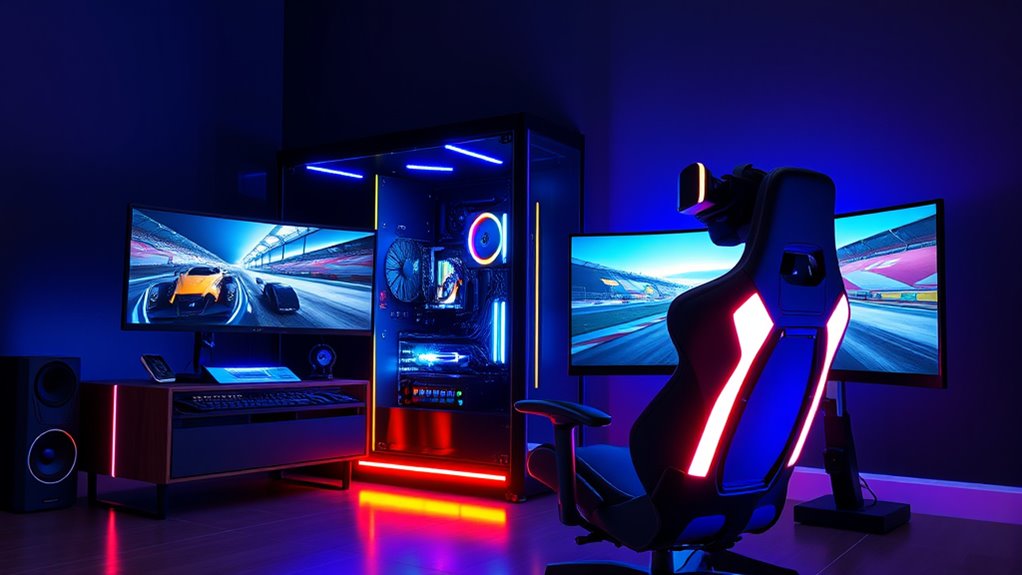

Choosing a VR ready gaming PC for sim racing VR involves balancing powerful hardware with affordability, as VR gaming demands high frame rates and smooth visuals. The CyberPowerPC Gamer Xtreme with Intel Core i5-13400F and RTX 5060 stands out as the best overall, offering a strong combination of performance and value. For those prioritizing raw power, the CyberpowerPC with Intel Core i9-14900KF and RTX 5070 provides top-tier specs, but at a higher cost. Meanwhile, the Stormcraft Sirius with RTX 5060 Ti offers a compelling mid-range option for immersive VR experiences. The main tradeoffs in this category revolve around balancing GPU power, CPU performance, and budget constraints. Continue reading for a detailed breakdown of each option and what makes them suitable for different types of buyers.

Get the latest gadgets delivered free — and shop member deals
- Fast, free delivery on millions of items
- Access to Prime Big Deal Days deals on October 6–7
- Prime Video, Amazon Music and more included
Complete the kit



Key Takeaways
- The most powerful configurations tend to come with premium prices, but they provide the best future-proofing for demanding VR titles.
- GPU choice is critical—mid-tier cards like the RTX 4060 or RTX 5060 Ti can deliver smooth sim racing VR without overpaying.
- More RAM (16GB or more) generally benefits VR multitasking and future game requirements, but isn’t always necessary for basic setups.
- Prebuilt systems vary significantly in build quality and included features like WiFi, which impacts overall usability.
- Budget constraints often lead to compromises in GPU or CPU, so understanding your performance needs is essential before purchasing.
| CyberPowerPC Gamer Xtreme VR Gaming Desktop with Intel Core i5-13400F and GeForce RTX 5060 |  | Best Overall for High-Performance VR Gaming | Processor: Intel Core i5-13400F 2.5GHz, 10 cores | Motherboard: Intel B760 Chipset | RAM: 16GB DDR5, 6000 MHz | VIEW ON AMAZON | See Our Full Breakdown |
| CyberpowerPC Gamer Xtreme VR Gaming Desktop, Intel Core i5-10400F, GTX 1660 Super 6GB, 8GB DDR4, 500GB NVMe SSD, WiFi & Windows 10 Home |  | Best Value for Entry-Level VR Racing | Processor: Intel Core i5-10400F 2.9GHz, 6 cores | Graphics Card: NVIDIA GeForce GTX 1660 Super 6GB | Memory: 8GB DDR4 | VIEW ON AMAZON | See Our Full Breakdown |
| CyberPowerPC Gamer Xtreme VR Gaming PC, Intel Core i5-13400F, GeForce RTX 4060 8GB, 16GB DDR5, 1TB SSD, Windows 11 Home |  | Best for High-End VR Racing and Multimedia | Processor: Intel Core i5-13400F 2.5GHz, 10 cores | Graphics Card: NVIDIA GeForce RTX 4060 8GB | Memory: 16GB DDR5 | VIEW ON AMAZON | See Our Full Breakdown |
| MSI Codex Z2 Gaming Desktop, AMD Ryzen 7 8700F, RTX 5070, 32GB DDR5, 2TB SSD |  | Best for Heavy Multitasking and Extended VR Sessions | Processor: AMD Ryzen 7 8700F | Graphics Card: NVIDIA GeForce RTX 5070 | RAM: 32GB DDR5 | VIEW ON AMAZON | See Our Full Breakdown |
| CyberpowerPC Gamer Xtreme VR Gaming PC, Intel Core i5-9400F, NVIDIA GeForce GTX 1660 6GB, 8GB DDR4, 120GB SSD, 1TB HDD, WiFi, Windows 10 Home |  | Best for Budget-Conscious VR Racing with Basic Needs | Processor: Intel Core i5-9400F 2.9GHz | Graphics Card: NVIDIA GeForce GTX 1660 6GB | RAM: 8GB DDR4 | VIEW ON AMAZON | See Our Full Breakdown |
| CyberPowerPC Gamer Xtreme VR Gaming PC with Intel Core i9-14900KF and GeForce RTX 5070 |  | Best Overall for High-End VR Racing Performance | Processor: Intel Core i9-14900KF 3.2GHz | Graphics Card: NVIDIA GeForce RTX 5070 12GB | RAM: 32GB DDR5 | VIEW ON AMAZON | See Our Full Breakdown |
| Stormcraft Sirius Gaming PC i5-14400F, RTX 5060 Ti, 16GB RAM, 1TB SSD |  | Best for Mid-Range VR Sim Racing Setups | Processor: Intel i5-14400F, 10 Cores, 4.7GHz max | Graphics Card: NVIDIA GeForce RTX 5060 Ti 16GB | Memory: 32GB DDR5 6000MHz RGB | VIEW ON AMAZON | See Our Full Breakdown |
| vr ready gaming pc for sim racing vr | Processor | Storage | Graphics Card | Operating System |
|---|---|---|---|---|
| CyberPowerPC Gamer Xtreme VR G | Intel Core i5-13400F 2.5GHz, 10 cores | 1TB PCIe 4.0 NVMe SSD | NVIDIA GeForce RTX 5060 8GB | Windows 11 Home |
| CyberpowerPC Gamer Xtreme VR G | Intel Core i5-10400F 2.9GHz, 6 cores | 500GB NVMe SSD | NVIDIA GeForce GTX 1660 Super 6GB | Windows 10 Home |
| CyberPowerPC Gamer Xtreme VR G | Intel Core i5-13400F 2.5GHz, 10 cores | 1TB PCIe Gen4 NVMe SSD | NVIDIA GeForce RTX 4060 8GB | Windows 11 Home |
| MSI Codex Z2 Gaming Desktop | AMD Ryzen 7 8700F | 2TB NVMe SSD | NVIDIA GeForce RTX 5070 | Windows 11 Home |
| CyberpowerPC Gamer Xtreme VR G | Intel Core i5-9400F 2.9GHz | 120GB SSD, 1TB HDD | NVIDIA GeForce GTX 1660 6GB | Windows 10 Home |
| CyberPowerPC Gamer Xtreme VR G | Intel Core i9-14900KF 3.2GHz | 2TB PCIe 4.0 NVMe SSD | NVIDIA GeForce RTX 5070 12GB | Windows 11 Home |
| Stormcraft Sirius Gaming PC i5 | Intel i5-14400F, 10 Cores, 4.7GHz max | 1TB NVMe SSD | NVIDIA GeForce RTX 5060 Ti 16GB | Windows 11 Home |
More Details on Our Top Picks
CyberPowerPC Gamer Xtreme VR Gaming Desktop with Intel Core i5-13400F and GeForce RTX 5060
This configuration stands out for its balance of CPU and GPU power, making it ideal for smooth sim racing in VR. The Intel Core i5-13400F with 10 cores provides strong processing for VR environments, while the NVIDIA GeForce RTX 5060 ensures crisp, immersive graphics. Compared with the RTX 4060 in other picks, this GPU offers slightly lower performance but still handles most VR racing titles with ease, especially at 1080p or 1440p. The 16GB DDR5 RAM is sufficient for current VR demands, and the 1TB PCIe 4.0 SSD guarantees rapid load times. However, its weight of nearly 29 pounds could hinder portability, and the lack of RGB customization might be a downside for aesthetic enthusiasts. This PC makes the most sense for serious sim racers who prioritize balanced performance without the need for extra high-end specs.
Pros:- Balanced combination of CPU and GPU for smooth VR performance
- Fast PCIe 4.0 SSD reduces load times
- Upgradable RAM and storage options
Cons:- Heavy weight may affect portability
- Limited RGB customization for aesthetic preferences
Best for: Dedicated VR sim racers who want reliable, high-quality performance without overspending on premium hardware.
Not ideal for: Casual gamers or users needing frequent portability, as its weight and size may be inconvenient for frequent movement.
- Processor:Intel Core i5-13400F 2.5GHz, 10 cores
- Motherboard:Intel B760 Chipset
- RAM:16GB DDR5, 6000 MHz
- Storage:1TB PCIe 4.0 NVMe SSD
- Graphics Card:NVIDIA GeForce RTX 5060 8GB
- Operating System:Windows 11 Home
- Weight:28.6 pounds
- Video Outputs:HDMI, DisplayPort
Our verdict“This PC is best suited for serious VR sim racers seeking dependable performance at a reasonable price point.”
CyberpowerPC Gamer Xtreme VR Gaming Desktop, Intel Core i5-10400F, GTX 1660 Super 6GB, 8GB DDR4, 500GB NVMe SSD, WiFi & Windows 10 Home
This model offers a solid entry point into VR gaming, with an Intel Core i5-10400F and GTX 1660 Super that can handle many VR racing titles at moderate settings. Compared to the more recent Core i5-13400F-based options, this setup is less powerful for multitasking but still delivers enjoyable VR experiences for casual racing. The 8GB RAM is a limiting factor for multitasking or future-proofing, unlike the 16GB found in higher-end picks like the CyberPowerPC Gamer Xtreme VR with the RTX 4060. The 500GB NVMe SSD provides quick load times, but the overall build is less future-proof due to older components and limited upgrade potential. Its stylish tempered glass panel and RGB lighting add aesthetic appeal, but portability could be affected by its 30-pound weight. This choice is ideal for beginners or those on a tighter budget who want VR racing performance without breaking the bank.
Pros:- Decent GPU for smooth VR racing at moderate settings
- Fast NVMe SSD for quick game loads
- Stylish case with RGB lighting
Cons:- Limited RAM may hinder multitasking and future upgrades
- Older CPU and GPU may struggle with demanding titles or multitasking
Best for: Entry-level VR racing enthusiasts or casual gamers looking for a budget-friendly setup.
Not ideal for: Hardcore sim racers or users planning extensive multitasking, as 8GB RAM and older GPU may limit performance.
- Processor:Intel Core i5-10400F 2.9GHz, 6 cores
- Graphics Card:NVIDIA GeForce GTX 1660 Super 6GB
- Memory:8GB DDR4
- Storage:500GB NVMe SSD
- Operating System:Windows 10 Home
- Connectivity:Wi-Fi 802.11AC, Ethernet RJ-45
- Dimensions:18.8 x 8.2 x 18.6 inches
- Weight:30 pounds
Our verdict“This PC is best for beginners or budget-conscious racers who want a decent VR experience without high-end specs.”
CyberPowerPC Gamer Xtreme VR Gaming PC, Intel Core i5-13400F, GeForce RTX 4060 8GB, 16GB DDR5, 1TB SSD, Windows 11 Home
This setup combines a robust Intel Core i5-13400F with an RTX 4060, offering excellent VR performance, especially compared with lower-tier options like the GTX 1660 Super. The 16GB DDR5 RAM ensures smooth multitasking and future-proofing, while the 1TB PCIe Gen4 SSD provides quick load times for demanding titles. The inclusion of Windows 11 Home and RGB lighting adds modern convenience and aesthetic flair. Its size and weight are comparable to other mid-range PCs, making it suitable for dedicated gaming spaces. However, the absence of additional storage expansion details or higher-end GPU options could limit upgrade paths. This PC is ideal for users seeking a balance of performance and future readiness for VR sim racing and multimedia tasks.
Pros:- Powerful CPU and GPU for demanding VR titles
- Fast PCIe Gen4 SSD for rapid load times
- Future-proof RAM and storage capacity
Cons:- Size may be less suitable for small spaces
- Limited information on upgrade options for future hardware
Best for: Advanced VR racers and multimedia users wanting reliable, future-proof hardware at a reasonable price.
Not ideal for: Users with limited space or those requiring portability, as the size and weight are less flexible.
- Processor:Intel Core i5-13400F 2.5GHz, 10 cores
- Graphics Card:NVIDIA GeForce RTX 4060 8GB
- Memory:16GB DDR5
- Storage:1TB PCIe Gen4 NVMe SSD
- Operating System:Windows 11 Home
- Connectivity:WiFi 5, Bluetooth 4.2, 1 HDMI, 2 DisplayPort
- Dimensions:18.11 x 9.25 x 19.61 inches
- Weight:30.6 pounds
Our verdict“This PC is best for serious VR racers needing a reliable, high-performance machine that handles current and upcoming titles well.”
MSI Codex Z2 Gaming Desktop, AMD Ryzen 7 8700F, RTX 5070, 32GB DDR5, 2TB SSD
The MSI Codex Z2 is a powerhouse with a Ryzen 7 8700F and RTX 5070, making it suitable for demanding VR racing alongside other intensive tasks like streaming or content creation. The 32GB DDR5 RAM far exceeds typical gaming needs, providing outstanding multitasking capacity. The 2TB SSD ensures ample storage and fast load times for multiple titles and media. Its cooling system with four fans helps maintain performance during extended VR sessions. Compared to smaller or less powerful setups, this machine is overkill for casual use but shines for those who want a future-proof system that can handle more than just VR racing. However, its size and weight demand a dedicated space, and upgrade options are not explicitly detailed. This pick is perfect for gamers who plan to do more than just race in VR.
Pros:- Very powerful CPU and GPU for demanding VR titles
- Massive 32GB DDR5 RAM for multitasking
- Large 2TB SSD for extensive storage and fast load times
Cons:- Bulky size and weight limit portability
- Potentially overpowered for casual VR use
Best for: Multitasking-heavy users and VR racers who want a durable, future-ready setup for extended gaming and multimedia sessions.
Not ideal for: Users with limited space or those seeking a portable setup, since its bulk and weight are considerable.
- Processor:AMD Ryzen 7 8700F
- Graphics Card:NVIDIA GeForce RTX 5070
- RAM:32GB DDR5
- Storage:2TB NVMe SSD
- Operating System:Windows 11 Home
- Color:Black
- Dimensions:16 x 8.38 x 19 inches
- Weight:21.3 pounds
Our verdict“This PC is best suited for heavy multitaskers or enthusiasts wanting a future-proof, high-performance VR gaming and multimedia machine.”
CyberpowerPC Gamer Xtreme VR Gaming PC, Intel Core i5-9400F, NVIDIA GeForce GTX 1660 6GB, 8GB DDR4, 120GB SSD, 1TB HDD, WiFi, Windows 10 Home
This older model provides a decent VR experience with an Intel Core i5-9400F and GTX 1660, suitable for casual or beginner racers. It balances performance with affordability, especially when compared to more recent builds with higher-end components like the RTX 4060 or RTX 5070. The 8GB RAM is a limiting factor for multitasking or future-proofing, but the combination of a small SSD and larger HDD offers a good mix of speed and storage. Its RGB case lighting and included peripherals add visual appeal, although the system’s age may lead to compatibility issues with newer VR titles or future updates. The weight of nearly 19 pounds makes it relatively portable, but space for expansion may be constrained. This is a solid choice for entry-level VR racing on a budget, provided the user is willing to accept some performance compromises.
Pros:- Decent CPU and GPU for entry-level VR racing
- Includes both SSD and HDD for fast boot and ample storage
- Stylish case with RGB lighting
Cons:- Limited RAM for multitasking and future updates
- Older hardware may struggle with demanding titles
Best for: Beginners or budget-conscious gamers who want to experience VR racing without investing in high-end hardware.
Not ideal for: Advanced VR racers or users planning extensive multitasking, as older components may limit performance and longevity.
- Processor:Intel Core i5-9400F 2.9GHz
- Graphics Card:NVIDIA GeForce GTX 1660 6GB
- RAM:8GB DDR4
- Storage:120GB SSD, 1TB HDD
- Operating System:Windows 10 Home
- Motherboard:Intel B360 Chipset
- Dimensions:18.5 x 7.9 x 17.9 inches
- Color:Black
Our verdict“This PC is best suited for newcomers or casual VR racers seeking an affordable entry into virtual racing.”
CyberPowerPC Gamer Xtreme VR Gaming PC with Intel Core i9-14900KF and GeForce RTX 5070
This configuration stands out for its powerful Intel Core i9-14900KF processor, which excels at handling demanding VR applications like sim racing, especially when paired with the NVIDIA GeForce RTX 5070 graphics card that offers smooth, high-fidelity visuals. Unlike the CyberPowerPC models with lower-end CPUs, this build is crafted for enthusiasts who want the best possible experience with minimal lag and maximum detail. The 32GB DDR5 RAM ensures multitasking and future-proofing, while the 2TB PCIe 4.0 SSD guarantees rapid load times. However, this level of performance comes at a premium, making it less suitable for budget-conscious buyers. Its large size and premium components might also require ample space and setup considerations. Overall, this PC makes the most sense for serious sim racers who demand top-tier hardware and are willing to invest accordingly.
Pros:- Exceptional processing power with the Intel Core i9-14900KF
- High-end NVIDIA GeForce RTX 5070 GPU for immersive visuals
- Fast 2TB PCIe 4.0 SSD for quick game load times
- Expandable RAM capacity up to 192GB
Cons:- High cost may be prohibitive for casual users
- Large footprint requiring significant space
- Some may prefer WiFi 6 or newer connectivity standards
Best for: Hardcore sim racers and enthusiasts seeking the highest performance VR setup.
Not ideal for: Casual gamers or users with limited space who prefer a more compact or budget-friendly option.
- Processor:Intel Core i9-14900KF 3.2GHz
- Graphics Card:NVIDIA GeForce RTX 5070 12GB
- RAM:32GB DDR5
- Storage:2TB PCIe 4.0 NVMe SSD
- Operating System:Windows 11 Home
- Connectivity:WiFi 5, Bluetooth 4.2, Ethernet LAN
Our verdict“This PC is ideal for serious sim racers who prioritize top performance and are prepared for a higher investment.”
Stormcraft Sirius Gaming PC i5-14400F, RTX 5060 Ti, 16GB RAM, 1TB SSD
Compared with the high-end CyberPowerPC, the Stormcraft Sirius offers a balanced mix of performance and affordability, featuring an Intel i5-14400F that handles VR tasks well without overspending. Its RTX 5060 Ti 16GB delivers solid visuals suitable for sim racing, though it may struggle slightly in ultra-high detail settings compared to the RTX 5070. The 16GB DDR5 RAM and 1TB SSD provide snappy operation and faster load times, but the system’s upgradeability isn’t clearly detailed, which could be a concern for future-proofing. The sleek tempered glass case with RGB lighting adds aesthetic appeal, and support for Wi-Fi 6E and Bluetooth 5.3 enhances connectivity. While it’s a capable performer for its price, it may not satisfy those seeking maximum VR resolution or extensive upgrade options. It’s perfect for gamers who want a strong VR experience without the premium cost of top-tier hardware.
Pros:- Solid CPU and GPU combo for realistic sim racing
- Fast DDR5 RAM and NVMe SSD for smooth gameplay
- Stylish case with RGB lighting
- Supports the latest Wi-Fi 6E and Bluetooth 5.3 standards
Cons:- Limited details on upgrade options
- Potential noise from cooling system
- Might underperform in ultra settings compared to higher-end builds
Best for: Mid-range VR racers and gamers who want good performance without overspending.
Not ideal for: Power users who need maximum future expandability or ultra-high VR settings.
- Processor:Intel i5-14400F, 10 Cores, 4.7GHz max
- Graphics Card:NVIDIA GeForce RTX 5060 Ti 16GB
- Memory:32GB DDR5 6000MHz RGB
- Storage:1TB NVMe SSD
- Operating System:Windows 11 Home
- Connectivity:Wi-Fi 6E, Bluetooth 5.3
Our verdict“This PC offers a well-rounded VR racing experience suitable for mid-tier enthusiasts seeking value without sacrificing performance.”

How We Picked
The products in this roundup were evaluated based on their hardware specifications, performance potential in VR sim racing, build quality, and value for the price. Priority was given to systems with powerful GPUs and fast CPUs, as these are critical for high-fidelity VR experiences that require high frame rates. We also considered expandability, cooling, and included features like WiFi and storage options. The ranking reflects a balanced approach, favoring models that deliver consistent VR performance while offering good value for different budgets. Systems were compared directly on performance specs, user reviews, and overall build quality to identify the best options for serious sim racers and VR enthusiasts alike.| vr ready gaming pc for sim racing vr | Processor | Operating System | Connectivity |
|---|---|---|---|
| CyberPowerPC Gamer Xtreme VR G | Intel Core i5-13400F 2.5GHz, 10 cores | Windows 11 Home | — |
| CyberpowerPC Gamer Xtreme VR G | Intel Core i5-10400F 2.9GHz, 6 cores | Windows 10 Home | Wi-Fi 802.11AC, Ethernet RJ-45 |
| CyberPowerPC Gamer Xtreme VR G | Intel Core i5-13400F 2.5GHz, 10 cores | Windows 11 Home | WiFi 5, Bluetooth 4.2, 1 HDMI, 2 DisplayPort |
| MSI Codex Z2 Gaming Desktop | AMD Ryzen 7 8700F | Windows 11 Home | — |
| CyberpowerPC Gamer Xtreme VR G | Intel Core i5-9400F 2.9GHz | Windows 10 Home | — |
| CyberPowerPC Gamer Xtreme VR G | Intel Core i9-14900KF 3.2GHz | Windows 11 Home | WiFi 5, Bluetooth 4.2, Ethernet LAN |
| Stormcraft Sirius Gaming PC i5 | Intel i5-14400F, 10 Cores, 4.7GHz max | Windows 11 Home | Wi-Fi 6E, Bluetooth 5.3 |
Factors to Consider When Choosing Vr Ready Gaming Pc For Sim Racing Vr
When selecting a VR ready gaming PC for sim racing VR, understanding key technical factors helps ensure you get the right system for your needs. VR gaming is particularly demanding because it requires high frame rates, low latency, and reliable hardware. A well-balanced build minimizes lag and stuttering, providing a smooth, immersive racing experience. Beyond raw specs, consider future-proofing and upgrade paths, as VR titles increasingly push hardware limits. Avoid common pitfalls like undervaluing GPU power or overestimating CPU importance, which can lead to subpar VR performance.GPU Power and VR Performance
The graphics card is the heart of a VR gaming PC, directly impacting frame rates and visual clarity during sim racing. High-end GPUs like the RTX 4060 or RTX 5070 ensure smoother experiences and better support for higher resolutions. Lower-tier cards may struggle with demanding VR titles, causing stuttering and discomfort. When choosing, prioritize a GPU that meets or exceeds the recommended specs for your favorite VR sim racing titles, considering future game releases for added longevity.
CPU and System Responsiveness
The CPU handles game logic, physics, and background processes, which are all vital for realistic sim racing and VR responsiveness. A powerful processor like the Intel Core i5-13400F or Ryzen 7 8700F strikes a good balance for most users, but enthusiasts may prefer an i9 or Ryzen 9 for maximum performance. Avoid systems with outdated or underpowered CPUs, as they can bottleneck GPU performance and cause input lag, diminishing the immersive feel of VR racing.
Memory and Storage
While 8GB of RAM is often enough for basic VR setups, 16GB or more offers better multitasking and future-proofing, especially with demanding or multititle VR sessions. SSD storage, particularly NVMe drives, significantly reduces load times and stutter during gameplay. Consider systems with at least 1TB SSDs for quick access to your racing titles and smooth gameplay, as slower HDDs can introduce lag that breaks immersion.
Build Quality and Expandability
A sturdy, well-ventilated case and quality cooling are essential for maintaining performance during extended VR sessions. Check if the system allows upgrades, especially for GPU and RAM, as VR hardware evolves rapidly. Systems with integrated WiFi and multiple USB ports simplify setup and connectivity, reducing clutter and potential issues. Avoid budget models with poor airflow or limited upgrade options, which can lead to overheating and compatibility hurdles down the line.
Value and Total Cost of Ownership
It’s tempting to focus solely on initial price, but total cost of ownership includes future upgrades, maintenance, and reliability. Higher-quality power supplies and cooling components tend to last longer and perform better. Systems with better warranties and customer support can save headaches later. While premium builds cost more upfront, they often provide a more stable and satisfying VR experience, justifying the investment for dedicated sim racers.
Frequently Asked Questions
How much GPU power do I really need for smooth VR sim racing?
A GPU like the RTX 4060 or higher provides enough horsepower for most current VR titles at high settings, ensuring smooth frame rates and minimal latency. If you plan to run the most demanding VR racing games or want to future-proof, opting for a card like the RTX 5070 makes sense. Lower-tier GPUs may struggle with frame drops and stuttering, which can cause VR sickness. Always check the recommended specs for your preferred titles and aim slightly above them to avoid bottlenecks.
Is it better to buy a prebuilt system or build my own for VR racing?
Prebuilt systems offer convenience and guaranteed compatibility, making them a popular choice for VR racing enthusiasts who want quick setup and support. Building your own can save money and allow for custom component selection, but it requires more technical knowledge and time. For most users focused on VR sim racing, a well-chosen prebuilt offers excellent value, especially if it includes modern, high-performance hardware and warranty support. Consider your comfort with hardware assembly before deciding.
How important is VR headset compatibility in choosing a gaming PC?
While most modern gaming PCs support popular VR headsets, checking specific compatibility ensures seamless connection and optimal performance. Some headsets require particular ports or USB standards, and certain hardware features like DisplayPort or HDMI are critical. Verify that the PC’s outputs match your VR headset’s requirements and that the system has sufficient USB and power connections. Compatibility issues can lead to setup frustration or subpar VR experiences, so review headset specs alongside PC specs.
Should I prioritize CPU over GPU for VR sim racing?
In VR sim racing, GPU performance generally has a greater impact on visual quality and frame rates, but a balanced system is essential. A strong CPU supports physics calculations and game logic, preventing bottlenecks that can cause stuttering. Systems with high-end GPUs but weaker CPUs may still experience issues. Aim for a setup where both components are capable enough to deliver high frame rates and smooth physics, typically meaning a mid to high-tier CPU paired with a good GPU.
What is the best upgrade path for a VR ready gaming PC?
Choosing a system with upgradeability in mind allows you to extend its lifespan. Focus on motherboards with multiple RAM slots, PCIe slots for future GPU upgrades, and a power supply with headroom. Starting with a slightly more powerful CPU or GPU than currently needed can provide headroom for future titles or higher settings. Keep an eye on case size and cooling options to accommodate larger or more powerful components later. Planning for upgrades helps maximize your initial investment and keeps your VR experience current.
Conclusion
For dedicated sim racers seeking the best overall experience, the CyberPowerPC Gamer Xtreme with Intel Core i5-13400F and RTX 5060 offers a balanced mix of performance and affordability. Buyers prioritizing raw power and future-proofing should consider the CyberpowerPC with Intel Core i9-14900KF and RTX 5070, despite its higher price. The Stormcraft Sirius with RTX 5060 Ti makes a compelling mid-range choice for immersive VR without breaking the bank. Beginners or those on tighter budgets will find the CyberPowerPC with GTX 1660 Super sufficient for entry-level VR racing, but should be aware of potential limitations. Tailor your choice based on your performance needs, budget, and upgrade plans to maximize your VR sim racing experience in 2026.
Evergreen bestsellers Picks
bestsellers
As an affiliate, we earn on qualifying purchases.