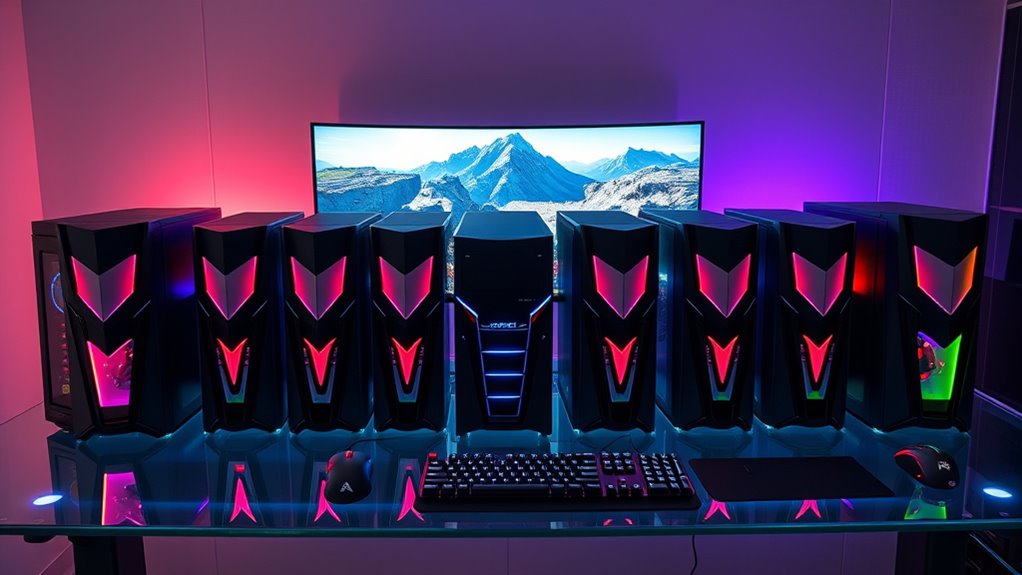
Finding a VR ready gaming PC for 120Hz VR in 2026 means balancing performance, price, and future-proofing. The CyberpowerPC Gamer Xtreme i7-13700KF with RTX 4070 stands out for its high-end specs and smooth 120Hz VR support, making it ideal for serious gamers. The MSI Codex Z2 offers a compelling mix of modern components at a more affordable price, suited for those who want reliable performance without breaking the bank. Meanwhile, the Horizon Autherium Dragon caters to enthusiasts seeking premium hardware and maximum immersive experience. These options highlight the main tradeoff: higher performance often comes with increased cost, while budget choices may sacrifice some future-proofing. Continue reading for a detailed breakdown of each model and which might fit your needs best.
Open a free Amazon Business account
Business pricing, bulk buying and tax-exempt orders.
Create a free accountAs an affiliate, we earn on qualifying purchases.
Complete the kit



Key Takeaways
- Top-tier models like the Horizon Autherium Dragon and CyberPowerPC i9-14900KF pack the highest processing power, ideal for demanding VR applications.
- Mid-range options such as the MSI Codex Z2 offer excellent value, balancing current VR needs with affordability.
- GPU choice is critical—models with RTX 4060 Ti or higher ensure smoother performance at 120Hz VR, especially for graphically intensive titles.
- Processor strength varies; Intel’s i7 and i9 series outperform i5 options in sustained VR workloads, but at a higher price point.
- Future-proofing means investing in the latest generation GPUs and CPUs; older hardware might struggle with upcoming VR software updates.


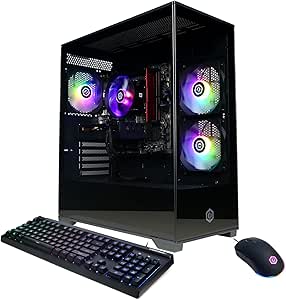


| vr ready gaming pc for 120hz vr | Processor | RAM | Storage | Connectivity |
|---|---|---|---|---|
| CYBERPOWERPC Gamer Xtreme VR G | Intel Core i5-11600KF 3.9GHz | 16GB DDR4 | 500GB PCIe NVMe SSD, 1TB HDD | WiFi 802.11AC, Ethernet RJ-45 |
| MSI Codex Z2 Gaming Desktop | AMD Ryzen R7-8700F | 16GB DDR5 | 1TB SSD | USB Type-C, VR-Ready |
| CyberpowerPC Gamer Xtreme VR G | Intel i7-13700KF 3.4GHz | 32GB DDR5 | 1TB NVMe SSD, 2TB HDD | Wi-Fi 802.11AC, Ethernet 10/100/1000 |
| Horizon Autherium Dragon RGB G | Intel Core i9 Upto 5.4GHz | 64GB | 5TB (1TB NVMe SSD + 4TB HDD) | WiFi 2.4GB/s, Bluetooth, USB-C 3.2, LAN 2.5GB/s |
| CyberPowerPC Gamer Xtreme VR G | Intel Core i5-13400F 2.5GHz, 10 cores | 16GB DDR5, 6000 MHz | 1TB PCIe 4.0 NVMe SSD | WiFi 6, Bluetooth 5.3 |
| CyberPowerPC Gamer Xtreme VR G | Intel Core i5-12400F 2.5GHz | 16GB DDR4 | 500GB PCIe NVMe SSD | WiFi 802.11AC, Ethernet 10/100/1000 |
| CyberPowerPC Gamer Xtreme VR G | Intel Core i5-13400F 2.5GHz | 16GB DDR5 | 1TB PCIe Gen4 SSD | WiFi 5, Bluetooth 4.2, Ethernet 1G |
| MSI Codex R2 Gaming Desktop PC | Intel Core i5-14400F | 32GB DDR5 | 1TB NVMe SSD | — |
| CyberPowerPC Gamer Xtreme VR G | Intel Core i9-14900KF 3.2GHz | 32GB DDR5 | 2TB PCIe 4.0 NVMe SSD | WiFi 5, Bluetooth 4.2, USB-C, multiple DisplayPort and HDMI |
More Details on Our Top Picks
CYBERPOWERPC Gamer Xtreme VR Gaming PC, Intel Core i5-11600KF, 16GB DDR4, GeForce RTX 3060 12GB, 500GB NVMe SSD, 1TB HDD, WiFi, Windows 11 Home
This option stands out for delivering solid VR performance at a more accessible price point compared to higher-end models like the CyberpowerPC Gamer Xtreme i7-13700KF. Its Intel Core i5-11600KF and RTX 3060 graphics are capable of handling 120Hz VR with smooth frame rates, but it sacrifices some future-proofing and upgrade potential due to limited expansion slots. The combination of an SSD and HDD strikes a balance between fast load times and storage capacity, yet the system’s size and power consumption may be drawbacks for some users. This pick makes the most sense for gamers who want reliable VR performance without overinvesting, but those seeking higher graphical fidelity or more room for upgrades might consider options with more robust specs.
Pros:- Affordable entry point for VR at 120Hz
- Solid performance with RTX 3060 and i5-11600KF
- Fast boot and load times via SSD
Cons:- Limited expansion slots restrict future upgrades
- Large size may require significant desk space
- Power consumption of 295W impacts energy costs
Best for: Budget-conscious gamers new to VR or with limited space who want dependable performance at 120Hz.
Not ideal for: Power users or enthusiasts aiming for maximum future upgradeability or ultra-high settings in VR.
- Processor:Intel Core i5-11600KF 3.9GHz
- Motherboard:Intel B560 Chipset
- RAM:16GB DDR4
- Storage:500GB PCIe NVMe SSD, 1TB HDD
- Graphics Card:NVIDIA GeForce RTX 3060 12GB GDDR6
- Connectivity:WiFi 802.11AC, Ethernet RJ-45
- Video Output:HDMI, 2x DisplayPort
- Dimensions:23.62 x 12.6 x 23.62 inches
Our verdict“This is a practical choice for gamers seeking reliable 120Hz VR performance on a budget, with some tradeoffs in upgradeability.”
MSI Codex Z2 Gaming Desktop, AMD Ryzen R7-8700F, RTX 5060Ti, 16GB DDR5, 1TB SSD
This desktop targets gamers who want a step up in VR fluidity and multitasking, offering a faster AMD Ryzen R7-8700F processor and a capable RTX 5060Ti compared to the CyberPowerPC Gamer Xtreme i5-11600KF. Its DDR5 RAM and 1TB SSD ensure quick load times and future-ready performance, but the cooling system’s noise levels and limited upgrade details could be issues for some. The RGB lighting and modern connectivity make it aesthetically appealing, yet the GPU’s power might fall slightly short for ultra-settings or future VR titles. This model is better suited to gamers who prioritize performance and aesthetics but are less concerned about extensive upgrade options.
Pros:- Strong Ryzen 7 processor for multitasking
- Capable RTX 5060Ti for smooth VR experiences
- Fast DDR5 RAM and 1TB SSD for quick load times
Cons:- Potential high noise levels from cooling fans
- Limited details on future upgradeability
- GPU may underperform compared to higher-end cards in demanding VR
Best for: Enthusiast gamers seeking high frame rates and multitasking capability in VR at a mid-tier price.
Not ideal for: Casual users or those with limited space seeking a quieter or more upgradeable system.
- Processor:AMD Ryzen R7-8700F
- Motherboard:Not specified
- RAM:16GB DDR5
- Storage:1TB SSD
- Graphics Card:NVIDIA GeForce RTX 5060Ti
- Cooling System:ARGB fan air cooler with four fans
- Connectivity:USB Type-C, VR-Ready
Our verdict“Ideal for gamers who want high performance for VR and multitasking without stepping into ultra-premium territory.”
CyberpowerPC Gamer Xtreme VR Gaming PC, Intel i7-13700KF, GeForce RTX 4070, 32GB DDR5, 1TB NVMe SSD, 2TB HDD, Windows 11 Home
This system stands out for its exceptional power, featuring an Intel i7-13700KF and RTX 4070, making it perfect for demanding VR at 120Hz and beyond, especially compared to models like the CyberPowerPC Gamer Xtreme i5-11600KF. Its 32GB DDR5 RAM and dual storage options support multitasking and content creation, but the high price and large footprint could be off-putting. Its advanced cooling and premium build quality cater to gamers who seek maximum longevity and performance, although its upgrade options are not explicitly detailed. This pick is best for users who need top-tier VR performance and plan to push settings or multitask heavily.
Pros:- Exceptional CPU and GPU combination for demanding VR
- Ample 32GB DDR5 RAM for multitasking and future upgrades
- Dual storage for fast boot and large capacity
Cons:- Premium price point
- Large size requiring ample space
- Upgradeability details are not specified
Best for: Power users and VR enthusiasts who want a cutting-edge, future-proof setup for demanding applications.
Not ideal for: Budget gamers or those with limited space and lower performance needs.
- Processor:Intel i7-13700KF 3.4GHz
- Motherboard:Intel Z790 Chipset
- RAM:32GB DDR5
- Storage:1TB NVMe SSD, 2TB HDD
- Graphics Card:NVIDIA GeForce RTX 4070 12GB
- Cooling:Liquid Cool CPU
- Connectivity:Wi-Fi 802.11AC, Ethernet 10/100/1000
Our verdict“Designed for serious VR players and creators who demand premium specs and future-proofing in a single setup.”
Horizon Autherium Dragon RGB Gaming PC with Intel Core i9 and RTX 5070
This powerhouse is tailored for those who want maximum VR performance and beyond, featuring an Intel Core i9 and RTX 5070 OC, surpassing most options in raw power like the CyberPowerPC Gamer Xtreme i7-13700KF. Its 64GB RAM and 5TB storage make it ideal for intensive VR, AI, and deep learning applications, but its size and high power draw may limit placement options. The robust cooling system, extensive connectivity, and premium build make it suitable for long-term, demanding use, yet its higher cost and energy needs could be drawbacks. This system is best for professionals or enthusiasts pushing the limits of VR and AI workloads rather than casual gaming.
Pros:- Top-tier Intel Core i9 CPU with high clock speeds
- NVIDIA RTX 5070 OC for extreme VR and AI tasks
- Massive 64GB RAM and 5TB storage for multitasking
Cons:- High cost and energy consumption
- Large physical footprint
- Complex cooling and maintenance needs
Best for: VR developers, AI researchers, or gamers who require maximum performance and capacity for demanding tasks.
Not ideal for: Casual gamers or users with limited space and budget constraints.
- Processor:Intel Core i9 Upto 5.4GHz
- Graphics Card:NVIDIA GeForce RTX 5070 OC 12GB
- RAM:64GB
- Storage:5TB (1TB NVMe SSD + 4TB HDD)
- Cooling:360mm Liquid Cooling
- Connectivity:WiFi 2.4GB/s, Bluetooth, USB-C 3.2, LAN 2.5GB/s
Our verdict“Best suited for demanding professional VR applications and high-end content creation, with a premium price and size tradeoff.”
CyberPowerPC Gamer Xtreme VR Gaming PC, Intel Core i5-13400F, GeForce RTX 5060 8GB, 16GB DDR5, 1TB SSD, Windows 11 Home
This model offers a balanced mix of performance and affordability for VR at 120Hz, with the Intel Core i5-13400F and RTX 5060 8GB providing sufficient power for most VR titles, outperforming the lower-spec CyberPowerPC Gamer Xtreme i5-12400F. Its 16GB DDR5 RAM and 1TB SSD ensure quick load times and responsiveness, but it lacks the high-end features or upgrade options of premium models. This pick is well-suited for gamers who want reliable VR without the cost of premium components, yet those seeking maximum future-proofing might find it limiting.
Pros:- Good CPU and GPU combo for 120Hz VR
- Fast DDR5 RAM and 1TB SSD for quick performance
- Pre-installed Windows 11 Home
Cons:- Limited upgrade options are not clearly detailed
- No mention of advanced cooling solutions
- GPU may struggle with future demanding VR titles
Best for: Mid-tier gamers new to VR or looking for solid performance at an accessible price point.
Not ideal for: Power users or those planning to push ultra-settings or upgrade extensively in VR.
- Processor:Intel Core i5-13400F 2.5GHz, 10 cores
- Motherboard:Intel B760 Chipset
- RAM:16GB DDR5, 6000 MHz
- Storage:1TB PCIe 4.0 NVMe SSD
- Graphics Card:NVIDIA GeForce RTX 5060 8GB
- Connectivity:WiFi 6, Bluetooth 5.3
- Ports:1 HDMI, 2 DisplayPort, 9 USB ports
Our verdict“A well-rounded choice for gamers wanting dependable VR performance at a reasonable price, with some upgrade limitations.”
CyberPowerPC Gamer Xtreme VR Gaming PC, Intel Core i5-12400F, GeForce RTX 3050 8GB, 16GB DDR4, 500GB NVMe SSD, WiFi, Windows 11 Home
This model offers solid VR readiness with an Intel Core i5-12400F and RTX 3050 graphics, making it a reliable choice for those new to VR gaming. Compared to the MSI Codex R2 with a higher-end RTX 5070, this PC is less powerful but more affordable, though it sacrifices future-proofing with only 500GB SSD storage. The RGB lighting and included peripherals add style and convenience, but the limited storage can quickly become a bottleneck for larger VR libraries. This pick makes the most sense for budget-conscious buyers who want a capable VR setup without breaking the bank.
Pros:- Affordable price point for entry-level VR gaming
- Decent performance with RTX 3050 for 120Hz VR
- Includes gaming keyboard and mouse for immediate use
Cons:- Limited storage capacity with only 500GB SSD
- No clear upgrade path for future hardware improvements
Best for: Beginners or casual gamers seeking an affordable VR-ready system for 120Hz experiences
Not ideal for: Enthusiasts planning for long-term upgrades or extensive VR libraries due to limited storage and future expansion options
- Processor:Intel Core i5-12400F 2.5GHz
- Motherboard:Intel B660 Chipset
- RAM:16GB DDR4
- Storage:500GB PCIe NVMe SSD
- Graphics:NVIDIA GeForce RTX 3050 8GB
- Connectivity:WiFi 802.11AC, Ethernet 10/100/1000
- Ports:6 x USB 3.1, 2 x USB 2.0, HDMI, DisplayPort
- Operating System:Windows 11 Home
Our verdict“This is a practical choice for newcomers prioritizing affordability over extreme performance or upgradeability.”
CyberPowerPC Gamer Xtreme VR Gaming PC, Intel Core i5-13400F, GeForce RTX 4060 8GB, 16GB DDR5, 1TB SSD, Windows 11 Home
This configuration elevates VR performance with an Intel Core i5-13400F and RTX 4060, providing noticeably better graphics and speed than the CyberPowerPC Gamer Xtreme with RTX 3050. It’s suitable for gamers who want a more balanced experience with faster DDR5 RAM and double the storage, although it’s a bit bulky at over 30 pounds and has limited upgrade details. The inclusion of Windows 11 and multiple connectivity options makes it ready for immersive VR and multitasking. Compared to entry-level models, this PC offers a significant upgrade in performance, but the larger size and limited upgrade info may deter some users seeking flexibility.
Pros:- Faster DDR5 RAM and 1TB SSD for enhanced responsiveness
- Stronger GPU with RTX 4060 for higher-quality VR visuals
- Includes peripherals and Windows 11 for immediate gaming
Cons:- Relatively large and heavy for small spaces
- Limited details on upgrade pathways
Best for: Intermediate gamers looking for a reliable, future-proof VR setup with room to grow
Not ideal for: Space-constrained environments or users who prioritize a lightweight, compact design over raw power
- Processor:Intel Core i5-13400F 2.5GHz
- Motherboard:Intel B760 Chipset
- RAM:16GB DDR5
- Storage:1TB PCIe Gen4 SSD
- Graphics:NVIDIA GeForce RTX 4060 8GB
- Connectivity:WiFi 5, Bluetooth 4.2, Ethernet 1G
- Ports:1 HDMI, 2 DisplayPort, 3 USB 3.1, 6 USB 2.0, LAN
- Operating System:Windows 11 Home
Our verdict“This offers a balanced upgrade for users seeking more performance without venturing into high-end territory.”
MSI Codex R2 Gaming Desktop PC with NVIDIA GeForce RTX 5070 and Intel Core i5-14400F
The MSI Codex R2 stands out for its RTX 5070 GPU and 32GB DDR5 RAM, making it ideal for demanding VR titles at 120Hz and even 1440p or 4K gaming. Compared to the CyberPowerPC with RTX 4060, it offers superior graphics and multitasking capacity, but at a higher price point and larger footprint. The extensive RAM and upgrade options make it future-proof for intensive VR, streaming, and multitasking. However, it lacks included peripherals and detailed upgrade pathways, which could be a drawback for budget-conscious or space-limited buyers. This system is best for enthusiasts who want top-tier VR performance and room to expand.
Pros:- Exceptional GPU capable of 1440p and 4K VR with ray tracing
- Massive 32GB DDR5 RAM supports multitasking and streaming
- Upgradeable components for future hardware enhancements
Cons:- Higher cost than mid-range options
- No included peripherals or monitor specified
Best for: Power users and serious gamers demanding high-end VR performance and upgrade potential
Not ideal for: Casual gamers or those with limited space or budget, due to its cost and size
- GPU:NVIDIA GeForce RTX 5070 12GB
- Processor:Intel Core i5-14400F
- RAM:32GB DDR5
- Storage:1TB NVMe SSD
- Cooling:Air cooling with four fans
- Wi-Fi:Wi-Fi 6E
- Operating System:Windows 11 Home
Our verdict“This system is designed for gamers who prioritize cutting-edge VR performance and future flexibility.”
CyberPowerPC Gamer Xtreme VR Gaming PC with Intel Core i9-14900KF and GeForce RTX 5070
The CyberPowerPC Gamer Xtreme with i9-14900KF and RTX 5070 offers the ultimate in VR performance, far exceeding typical 120Hz requirements with a 24-core Intel i9 and 32GB DDR5 RAM. Compared to the MSI Codex R2, it provides more raw power and extensive storage, making it suitable for demanding multitasking, streaming, and future VR titles at higher resolutions. Its premium specs come with a significant price, and limited upgrade details might concern users seeking flexibility. Without peripherals included, it’s geared toward experienced users who want a turnkey high-performance system for immersive VR and beyond.
Pros:- Top-tier Intel Core i9 processor with 24 cores
- Massive 2TB PCIe 4.0 SSD for fast load times and storage
- High-end RTX 5070 GPU for smooth, high-resolution VR experiences
Cons:- High cost that may be prohibitive for most users
- Limited information on upgrade options and peripherals
Best for: Advanced gamers and VR enthusiasts seeking maximum performance and future-proofing
Not ideal for: Budget-conscious buyers or those needing a compact, lightweight setup
- Processor:Intel Core i9-14900KF 3.2GHz
- Motherboard:Intel Z790 Chipset
- RAM:32GB DDR5
- Storage:2TB PCIe 4.0 NVMe SSD
- Graphics:NVIDIA GeForce RTX 5070 12GB
- Connectivity:WiFi 5, Bluetooth 4.2, USB-C, multiple DisplayPort and HDMI
- Case Features:Tempered side panel, custom RGB lighting
Our verdict“This system is tailored for those demanding the highest VR performance and maximum future-proofing regardless of price.”
How We Picked
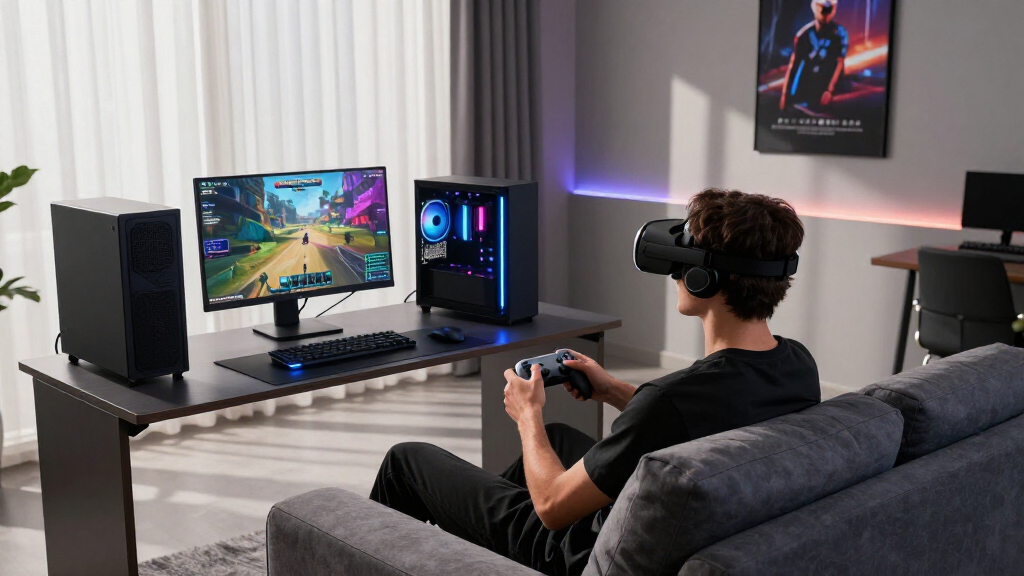
The products were evaluated based on their ability to support consistent 120Hz VR performance, focusing on graphics card quality, CPU power, and system memory. We prioritized models with recent hardware that can handle current and upcoming VR titles without lag or stuttering. Build quality, upgradeability, and value for the price also influenced rankings. Compatibility with VR headsets and overall system stability were key factors, ensuring these PCs can deliver a seamless immersive experience for gaming at 120Hz. Our goal was to identify options that balance raw power with real-world usability and longevity, helping buyers find models suited for various budgets and needs.| vr ready gaming pc for 120hz vr | Motherboard | Graphics Card |
|---|---|---|
| CYBERPOWERPC Gamer Xtreme VR G | Intel B560 Chipset | NVIDIA GeForce RTX 3060 12GB GDDR6 |
| MSI Codex Z2 Gaming Desktop | Not specified | NVIDIA GeForce RTX 5060Ti |
| CyberpowerPC Gamer Xtreme VR G | Intel Z790 Chipset | NVIDIA GeForce RTX 4070 12GB |
| Horizon Autherium Dragon RGB G | — | NVIDIA GeForce RTX 5070 OC 12GB |
| CyberPowerPC Gamer Xtreme VR G | Intel B760 Chipset | NVIDIA GeForce RTX 5060 8GB |
| CyberPowerPC Gamer Xtreme VR G | Intel B660 Chipset | — |
| CyberPowerPC Gamer Xtreme VR G | Intel B760 Chipset | — |
| MSI Codex R2 Gaming Desktop PC | — | — |
| CyberPowerPC Gamer Xtreme VR G | Intel Z790 Chipset | — |
Factors to Consider When Choosing Vr Ready Gaming Pc For 120hz Vr
Choosing the right VR ready gaming PC for 120Hz VR requires understanding several key factors. Beyond raw specs, buyers should consider upgradeability, cooling systems, and how well the system balances CPU and GPU performance. Recognizing the common pitfalls—such as overpaying for unnecessary features or opting for hardware that can’t sustain high refresh rates—can save money and future headaches. This guide highlights important considerations to help you make an informed decision tailored to your gaming habits and budget.GPU Power and VR Performance
The graphics card is the backbone of VR performance at 120Hz. For smooth and immersive experiences, look for GPUs like the RTX 3060 Ti or higher, which can handle high frame rates without stuttering. Cheaper GPUs may struggle with demanding VR titles, leading to lag or motion sickness. Keep in mind that VR performance isn’t solely about raw power; driver stability and compatibility with your headset are equally important. Investing in a slightly more powerful GPU than you currently need can help future-proof your setup for upcoming titles and updates.
CPU Considerations
The CPU handles game logic, tracking, and system responsiveness. For 120Hz VR, a high-performance processor such as an Intel Core i7 or AMD Ryzen 7 ensures smooth gameplay and multitasking capabilities. Weaker CPUs can bottleneck the GPU, causing frame drops and reducing immersion. However, extremely high-end CPUs come at a premium, so balancing your CPU choice with your GPU is key. Upgrading your CPU later is possible but often more complex and costly than upgrading your GPU.
System Memory and Storage
At least 16GB of RAM is recommended for VR at 120Hz, ensuring quick load times and smooth multitasking. Faster RAM (DDR5 over DDR4) can provide slight performance improvements, especially in CPU-bound scenarios. Storage speed matters too; NVMe SSDs significantly reduce load times and potential stuttering during gameplay. Adequate storage capacity is essential for installing multiple VR titles and large updates without hassle. Remember, more RAM and faster storage are investments that improve overall system responsiveness, not just VR performance.
Upgradeability and Cooling
VR gaming can push hardware to its limits, making good cooling and future upgrade paths important. Look for PCs with spacious cases and quality cooling solutions to prevent thermal throttling. Upgrade paths, such as extra RAM slots or additional M.2 slots for SSDs, extend your system’s lifespan. Avoid pre-built systems with limited upgrade options, as VR hardware demands tend to evolve quickly. A well-designed case and cooling setup help keep your system stable during extended VR sessions.
Cost vs. Future-Proofing
High-performance components come at a higher price, but they offer longer-term value, especially as VR software demands increase. Cheaper systems might save money initially but could require upgrades sooner, leading to higher total costs. Consider your gaming ambitions—if you plan to keep VR gaming for years, investing in top-tier hardware makes sense. Conversely, casual users can often get by with mid-range components and upgrade later as needed. Finding the right balance between current needs and future potential is key to making a smart purchase.
Frequently Asked Questions
Will a mid-range GPU like the RTX 3060 Ti support 120Hz VR effectively?
Yes, a GPU like the RTX 3060 Ti is capable of supporting 120Hz VR in many titles, especially at 1080p or 1440p resolutions. It strikes a good balance between performance and cost, offering smooth frame rates for most modern VR games. However, for the most demanding titles or future titles with higher graphics requirements, a higher-end GPU like the RTX 4070 may be necessary to maintain consistent 120Hz performance. Keep in mind that driver support and VR headset compatibility are equally important for optimal experience.
Is a higher-end CPU necessary for VR gaming at 120Hz?
While the GPU primarily determines VR frame rates, a powerful CPU ensures smooth tracking, reduced latency, and less chance of bottlenecks. An Intel Core i7 or AMD Ryzen 7 is recommended for high-end VR experiences, especially when running demanding titles or multitasking. Weaker CPUs may cause frame drops or input lag, diminishing immersion. For most gamers aiming for premium 120Hz VR, investing in a solid CPU alongside a capable GPU results in the best overall experience.
Can I upgrade my existing gaming PC to support 120Hz VR?
Upgrading an existing PC for 120Hz VR depends on its current hardware. If your system has a recent GPU like an RTX 3060 or better and a CPU comparable to an i7 or Ryzen 7, upgrading the GPU alone might suffice. However, older CPUs or insufficient RAM can bottleneck performance, requiring more extensive upgrades. Additionally, ensure your case can accommodate new hardware and that your power supply has enough capacity. Sometimes, a new pre-built system provides a more reliable and straightforward path to achieving 120Hz VR support.
How important is system cooling for VR performance?
Cooling is critical because VR gaming can generate significant heat, especially during extended sessions. Overheating components may throttle performance, leading to frame drops and latency issues. Good airflow within your case, quality fans, and possibly liquid cooling solutions help maintain stable temperatures. A well-cooled system not only enhances performance but also prolongs hardware lifespan. Neglecting cooling can result in inconsistent VR experiences, which defeats the purpose of choosing a high-performance setup.
Is it worth paying extra for a prebuilt VR-ready gaming PC?
Prebuilt systems often offer the convenience of ready-to-go setups with warranty support, which can save time and technical hassle. They are calibrated for compatibility and often include quality components designed for VR. However, they can be more expensive than building your own, and options might be limited in customization. If you’re not comfortable assembling your own PC or want a reliable, tested configuration, paying extra for a prebuilt can be worthwhile. For tech-savvy users, building a custom PC might offer better value and tailored performance.
Conclusion
For those seeking the best overall performance, the CyberPowerPC i7-13700KF with RTX 4070 offers a balanced mix of power and future readiness. Budget-conscious buyers should consider the MSI Codex Z2, which provides solid performance at a lower price point. Enthusiasts aiming for maximum immersion and longevity might prefer the Horizon Autherium Dragon or high-end models like the CyberPowerPC i9-14900KF. Beginners or casual gamers can opt for mid-range options that prioritize value without sacrificing too much VR experience quality. Ultimately, your choice depends on your gaming ambitions and how much you’re willing to invest in smooth, immersive 120Hz VR gameplay.Flea & tick season Picks
flea and tick prevention
As an affiliate, we earn on qualifying purchases.