
If you’re looking for the best value GPUs for VR in 2026 that won’t drain your wallet, I recommend considering options like the GIGABYTE GeForce RTX 3060, ASUS RTX 3050, and XFX Radeon RX 580. These cards balance performance, VR compatibility, and affordability well. I’ll show you how to pick the right one based on features, benchmarks, and future-proofing, so stay with me to discover the top options and what makes them stand out.
Key Takeaways
- Focus on affordable GPUs with at least 6GB VRAM, like the RTX 3060 or RX 7600 EVO, for VR-ready performance.
- Prioritize GPUs with modern outputs such as HDMI 2.1 and DisplayPort 1.4a for seamless VR compatibility.
- Choose cards with strong benchmark scores and real VR testing to ensure smooth, low-latency immersive experiences.
- Consider cooling solutions and power efficiency to maintain long-term stability during extended VR sessions.
- Opt for reputable brands with good warranties and support to ensure reliability and future-proofing in VR setups.
| GIGABYTE GeForce RTX 3060 Gaming OC 12G | 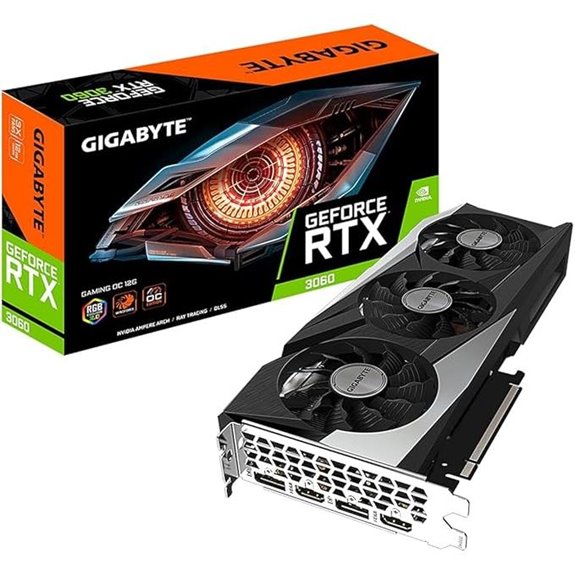 | High-Performance Gaming | Memory Capacity: 12GB GDDR6 | Connectivity Options: 2x HDMI 2.1, 2x DisplayPort 1.4 | Architecture Type: NVIDIA Ampere | VIEW LATEST PRICE | See Our Full Breakdown |
| ASUS NVIDIA GeForce RTX 3050 6GB Gaming Graphics Card | 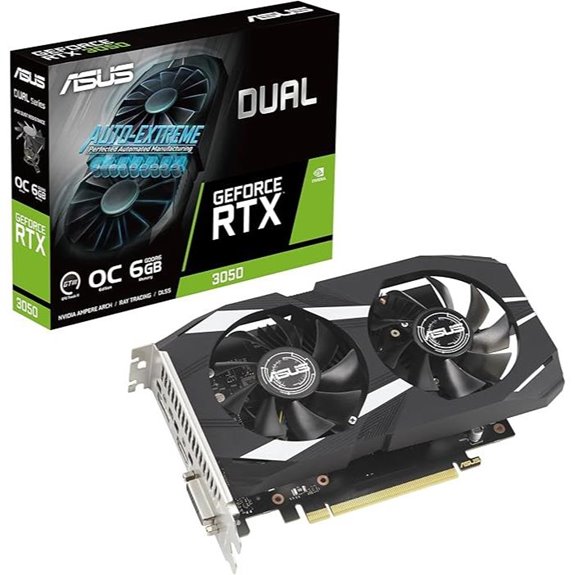 | Compact Powerhouse | Memory Capacity: 6GB GDDR6 | Connectivity Options: HDMI 2.1, DisplayPort 1.4a | Architecture Type: NVIDIA Ampere | VIEW LATEST PRICE | See Our Full Breakdown |
| XFX Radeon RX 580 GTS XXX Edition 8GB Graphics Card | 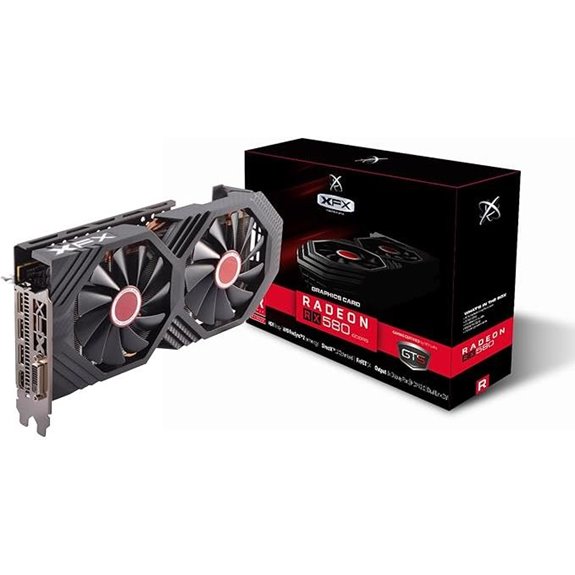 | VR Ready Excellence | Memory Capacity: 8GB GDDR5 | Connectivity Options: 3x DisplayPort, HDMI | Architecture Type: AMD Polaris (GCN) | VIEW LATEST PRICE | See Our Full Breakdown |
| ASUS Radeon RX 7600 EVO OC 8GB Graphics Card |  | Next-Gen Efficiency | Memory Capacity: 8GB GDDR6 | Connectivity Options: HDMI 2.1, DisplayPort 1.4a | Architecture Type: AMD RDNA 3 (RDNA EVO) | VIEW LATEST PRICE | See Our Full Breakdown |
| GTX 1060 6GB Graphics Card with Dual Fans | 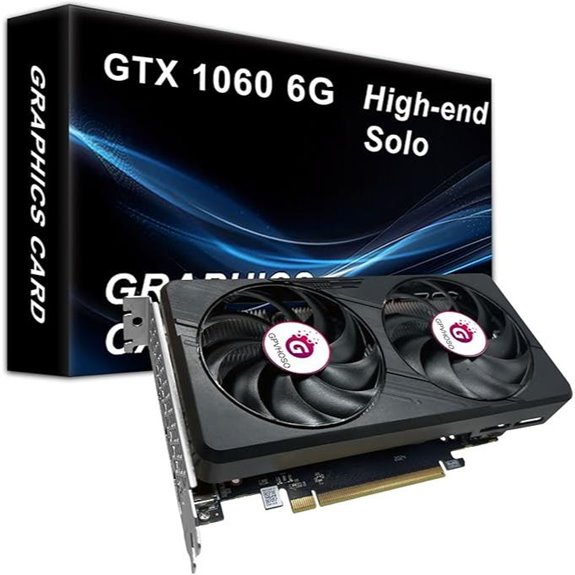 | Classic Value | Memory Capacity: 6GB GDDR5 | Connectivity Options: HDMI, 2x DisplayPort, DVI | Architecture Type: NVIDIA Pascal (Maxwell/GTX) | VIEW LATEST PRICE | See Our Full Breakdown |
| Maxsun GeForce RTX 3050 6GB Graphics Card | 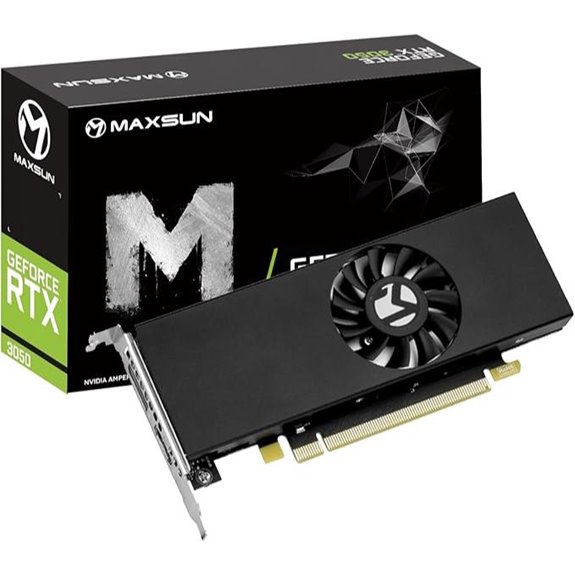 | Small Form Factor | Memory Capacity: 6GB GDDR6 | Connectivity Options: HDMI 2.1, DisplayPort 1.4a | Architecture Type: NVIDIA Ampere | VIEW LATEST PRICE | See Our Full Breakdown |
| XFX Radeon RX 570 RS Graphics Card (8GB DX12) |  | Budget VR Gaming | Memory Capacity: 8GB GDDR5 | Connectivity Options: 3x DisplayPort, HDMI, DVI | Architecture Type: AMD Polaris | VIEW LATEST PRICE | See Our Full Breakdown |
More Details on Our Top Picks
GIGABYTE GeForce RTX 3060 Gaming OC 12G
If you’re looking for a budget-friendly GPU that still handles VR gaming with impressive performance, the GIGABYTE GeForce RTX 3060 Gaming OC 12G is a top choice. It features NVIDIA’s Ampere architecture, delivering fast core speeds of 1837 MHz, along with 12GB of GDDR6 memory for smooth gameplay and creative tasks. The WINDFORCE 3X cooling system keeps temperatures in check during intense sessions, while RGB Fusion 2.0 adds a personalized touch. With multiple connectivity options, including HDMI 2.1 and DisplayPort 1.4, it offers versatility. Overall, this card balances performance, features, and affordability, making it ideal for VR enthusiasts on a budget.
- Memory Capacity:12GB GDDR6
- Connectivity Options:2x HDMI 2.1, 2x DisplayPort 1.4
- Architecture Type:NVIDIA Ampere
- VR Support:Yes
- Cooling System:WINDFORCE 3X cooling
- Form Factor/Size:11.1 x 4.61 x 1.61 inches
- Additional Feature:RGB Fusion 2.0 lighting
- Additional Feature:Metal backplate protection
- Additional Feature:1837 MHz core clock
ASUS NVIDIA GeForce RTX 3050 6GB Gaming Graphics Card
Looking for a budget-friendly GPU that still delivers solid VR performance? The ASUS NVIDIA GeForce RTX 3050 6GB OC Edition is a great choice. It features NVIDIA’s Ampere architecture with improved ray tracing and AI capabilities, thanks to 2nd Gen RT Cores and 3rd Gen Tensor Cores. Its 6GB GDDR6 memory handles modern VR titles smoothly. The dual Axial-tech fans keep it cool in small cases, while HDMI 2.1 and DisplayPort 1.4a ensure fast, high-quality connections. With a sturdy steel bracket and low-noise operation, this card offers excellent value for immersive VR gaming without breaking the bank.
- Memory Capacity:6GB GDDR6
- Connectivity Options:HDMI 2.1, DisplayPort 1.4a
- Architecture Type:NVIDIA Ampere
- VR Support:Yes
- Cooling System:Axial-tech fans
- Form Factor/Size:2-slot design
- Additional Feature:Axial-tech fan design
- Additional Feature:Dual-slot design
- Additional Feature:2nd Gen RT Cores
XFX Radeon RX 580 GTS XXX Edition 8GB Graphics Card
The XFX Radeon RX 580 GTS XXX Edition 8GB Graphics Card stands out as an excellent choice for gamers seeking solid VR performance without breaking the bank. With a true clock of 1366 MHz and boost OC of 1386 MHz, it offers reliable power for immersive VR experiences. Built on Polaris architecture with 4th gen GCN cores, it’s efficient and capable of handling next-generation VR content. Its dual dissipation cooling technology keeps temperatures in check, while multiple outputs—DisplayPort, HDMI, DVI—provide versatile connectivity. With 8GB of GDDR5 memory, it’s well-suited for smooth, stutter-free VR gameplay at a budget-friendly price point.
- Memory Capacity:8GB GDDR5
- Connectivity Options:3x DisplayPort, HDMI
- Architecture Type:AMD Polaris (GCN)
- VR Support:Yes
- Cooling System:Double dissipation cooling
- Form Factor/Size:9.57 x 1.57 x 4.88 inches
- Additional Feature:Dual BIOS feature
- Additional Feature:14nm FinFET process
- Additional Feature:VR Ready certification
ASUS Radeon RX 7600 EVO OC 8GB Graphics Card
Are you seeking a reliable GPU that balances performance and affordability for immersive VR experiences in 2026? The ASUS Radeon RX 7600 EVO OC 8GB is a solid choice. It features 8GB of GDDR6 memory and a PCIe 4.0 interface, ensuring smooth gameplay. Its OC mode boosts up to 2715 MHz, delivering great performance without breaking the bank. The dual axial-tech fans provide efficient cooling, with quieter operation thanks to Zero dB technology. Built with durability in mind, it uses automated manufacturing and a stainless-steel bracket. Plus, GPU Tweak III software helps fine-tune performance and thermal management effortlessly.
- Memory Capacity:8GB GDDR6
- Connectivity Options:HDMI 2.1, DisplayPort 1.4a
- Architecture Type:AMD RDNA 3 (RDNA EVO)
- VR Support:Yes
- Cooling System:Axial-tech fans
- Form Factor/Size:2.5-slot design
- Additional Feature:Auto-Extreme manufacturing
- Additional Feature:Zero dB technology
- Additional Feature:GPU Tweak III software
GTX 1060 6GB Graphics Card with Dual Fans
If you’re seeking a reliable GPU that balances performance and cost for VR gaming, the GTX 1060 6GB with dual fans stands out as an excellent choice. It offers high clock speeds, CUDA cores, and 6GB of GDDR5 memory, ensuring smooth gameplay and immersive visuals. Supports DirectX 12 and PCIe 3.0 x16 for compatibility with demanding applications. Its dual fans and thermal design keep temperatures low during intense sessions, improving stability and longevity. With multiple connectivity options like HDMI and DisplayPort, it handles multi-monitor setups and VR devices effortlessly. Just make sure your power supply exceeds 400W and you have a 6-pin cable ready for stable operation.
- Memory Capacity:6GB GDDR5
- Connectivity Options:HDMI, 2x DisplayPort, DVI
- Architecture Type:NVIDIA Pascal (Maxwell/GTX)
- VR Support:Yes
- Cooling System:Dual fans
- Form Factor/Size:Standard size (not specified)
- Additional Feature:Supports DirectX 12
- Additional Feature:VRWorks technology
- Additional Feature:Dual cooling fans
Maxsun GeForce RTX 3050 6GB Graphics Card
Looking for a compact yet powerful GPU that can handle demanding VR experiences without breaking the bank? The Maxsun GeForce RTX 3050 6GB is a great choice. Built on NV Ampere architecture, it offers solid gaming performance with AI-accelerated Tensor Cores and DLSS support, boosting frame rates and image quality. Its 6GB GDDR6 memory runs at 14,000MHz, and the core clock reaches up to 1,470MHz. The slim design measures just 6.65 inches long, making it perfect for small form factor systems. Connectivity options include HDMI 2.1 and DisplayPort 1.4a, supporting high-resolution outputs for immersive VR gaming.
- Memory Capacity:6GB GDDR6
- Connectivity Options:HDMI 2.1, DisplayPort 1.4a
- Architecture Type:NVIDIA Ampere
- VR Support:Yes
- Cooling System:Not specified (standard cooling)
- Form Factor/Size:Slim low-profile (6.65 x 2.71 inches)
- Additional Feature:Slim low-profile design
- Additional Feature:96-bit memory interface
- Additional Feature:Supports NV DLSS
XFX Radeon RX 570 RS Graphics Card (8GB DX12)
The XFX Radeon RX 570 RS Graphics Card stands out as an excellent choice for budget-conscious gamers and VR enthusiasts seeking solid performance without breaking the bank. It features an 8GB GDDR5 memory and a 1286MHz clock speed, making it capable of handling high-resolution gaming and VR applications. With DX12 support and dual BIOS modes, it offers versatility and reliable performance. Its double dissipation cooling design ensures better thermal management, while multiple outputs—3 DisplayPorts, HDMI, and DVI—allow for flexible setups. Priced affordably, it’s a dependable option for those wanting strong VR performance without investing in the latest high-end cards.
- Memory Capacity:8GB GDDR5
- Connectivity Options:3x DisplayPort, HDMI, DVI
- Architecture Type:AMD Polaris
- VR Support:Yes
- Cooling System:Double dissipation cooling
- Form Factor/Size:9.57 x 1.57 x 4.88 inches
- Additional Feature:Dual BIOS modes
- Additional Feature:Double dissipation cooling
- Additional Feature:3 DisplayPort outputs
Factors to Consider When Choosing a Value GPU for VR
When choosing a value GPU for VR, I focus on several key factors to guarantee I get the best bang for my buck. I consider my budget, VR compatibility, and how well the GPU performs in benchmarks, along with power needs and cooling. Future-proofing features also matter, so I look for options that will keep up with evolving VR tech.
Price and Budget
Setting a clear budget is essential when choosing a value GPU for VR, as it helps you focus on options that deliver good performance without overspending. Knowing your limit allows you to narrow down choices and avoid costly models that might not provide a significant performance boost. Budget-friendly GPUs often have less VRAM and fewer advanced features, which could impact your VR experience, but they can still handle most titles smoothly if selected wisely. Higher-priced GPUs typically offer better frame rates and smoother performance, making them worth the investment for immersive VR. Comparing prices across different retailers can uncover deals and discounts, helping you find a more affordable option that meets your needs. Balancing cost and performance ensures you get the best value within your financial constraints.
VR Compatibility
To guarantee a smooth VR experience, you need a GPU that supports the right technologies and outputs. Look for models with VR-ready features like AMD VR Ready or NVIDIA VR Works to ensure compatibility. Check that the GPU has HDMI 2.1 or DisplayPort 1.4a outputs, essential for high-resolution VR headsets. Confirm the card meets or exceeds the recommended performance specs for your specific headset to avoid lag or stuttering. Adequate video memory is crucial—at least 6GB GDDR6—to handle high-quality visuals smoothly. Additionally, features like low latency, dual BIOS, or enhanced cooling are vital for stable performance during long VR sessions. Prioritizing these compatibility factors will help you enjoy immersive VR without unnecessary frustration or upgrades later.
Performance Benchmarks
Performance benchmarks are essential tools for evaluating a GPU’s suitability for VR, as they provide quantifiable data on how well a card handles demanding VR tasks. These benchmarks typically measure frame rates, latency, and rendering quality, all vital for smooth, immersive experiences. Higher scores in synthetic benchmarks like 3DMark or VRMark often indicate better performance in real-world VR scenarios. To truly assess a GPU, I also look at testing with popular VR titles, checking for stable frame rates and high visual fidelity. VR-specific benchmarks are particularly helpful—they evaluate a GPU’s ability to handle high-resolution, low-latency rendering. Ultimately, I seek a good balance: a GPU that delivers solid benchmark results without overspending on unnecessary high-end features, ensuring value and performance.
Power and Cooling
Choosing the right GPU for VR isn’t just about raw power; it also depends heavily on power and cooling considerations. A stable VR experience requires at least a 500W power supply to support the GPU’s demands and prevent issues like crashes or lag. GPUs with higher thermal design power (TDP) need robust cooling solutions—think multiple fans or advanced heatsinks—to avoid overheating during long VR sessions. Effective cooling maintains ideal GPU temperatures, reducing thermal throttling that can hurt performance. Proper airflow within your PC case, combined with the GPU’s cooling features like axial-tech fans or double dissipation designs, ensures consistent performance. Investing in a GPU with efficient cooling isn’t just about immediate performance; it helps extend hardware lifespan and keeps your VR experience smooth over time.
Future-Proofing Features
As VR technology continues to evolve rapidly, selecting a GPU with future-proofing features becomes vital to guarantee your investment remains relevant. I look for support for the latest standards like HDMI 2.1 and DisplayPort 1.4a, which ensure compatibility with upcoming VR headsets. Advanced ray-tracing cores and AI acceleration boost visual quality and performance in future applications. A higher VRAM capacity, 8GB or more, helps manage demanding VR content and higher resolutions. Support for PCIe 4.0 or newer interfaces means faster data transfer, reducing latency and improving responsiveness. Features like DLSS and AI-driven enhancements extend a GPU’s relevance by maintaining high performance with future software updates. Prioritizing these features helps future-proof your setup without overspending.
Brand Reliability
When selecting a value GPU for VR, brand reliability should be a top priority because it directly impacts long-term performance and user experience. I focus on customer ratings and reviews, where high ratings signal consistent quality and performance. Established brands usually offer better warranty support and more frequent driver updates, which are vital for VR stability. Reliable brands also have strict quality control, reducing the risk of defective or overheating units. You can verify a brand’s reputation through industry awards, certification standards, and positive feedback from professional reviewers. Choosing a trusted brand minimizes compatibility issues and ensures access to genuine parts and technical support. In the long run, brand reliability helps you avoid headaches and keeps your VR experience smooth and enjoyable.
Frequently Asked Questions
How Does GPU VR Performance Vary Across Different VR Headsets?
GPU VR performance varies based on the headset’s requirements and the GPU’s capabilities. I’ve found that high-end headsets like Oculus Quest or HTC Vive demand more powerful GPUs for smooth experiences, while more affordable options like Meta Quest 2 work well with mid-range cards. It’s crucial to match your GPU with your headset’s specifications to guarantee peak performance and avoid lag or stuttering.
What Is the Impact of GPU VR Latency on User Experience?
Sure, high GPU VR latency is like having a conversation with someone who keeps interrupting—you get frustrated and lose immersion fast. When latency spikes, I feel disoriented, motion sickness kicks in, and the experience feels sluggish. It totally kills the magic of VR because your brain’s trying to sync real and virtual worlds, but high latency throws a wrench in that. Keep it low, and VR feels smooth, natural, and enjoyable.
Are Older GPU Models Still Viable for Current VR Applications?
Older GPU models can still be viable for current VR applications, especially if you’re on a budget. They may struggle with the latest, most demanding games or experiences, but for less intensive VR use, they often suffice. I’ve found that with some settings adjustments, like lowering resolution or graphic quality, even older GPUs can deliver a decent VR experience without breaking the bank.
How Do Driver Updates Affect VR Performance on Budget GPUS?
Driver updates can critically boost VR performance on budget GPUs. I’ve noticed that regularly updating my drivers improves stability, reduces lag, and enhances graphics quality, making my VR experience smoother. Manufacturers often optimize drivers for new games and hardware tweaks, which is essential for less powerful GPUs. So, I always keep my drivers current to squeeze the best possible performance out of my budget-friendly GPU and enjoy VR without breaking the bank.
What Is the Recommended Vr-Ready GPU RAM Size for Smooth Gameplay?
Think of VR GPU RAM like a backpack—more space lets you carry more, preventing delays. I recommend at least 8GB of VR-ready GPU RAM for smooth gameplay. It’s enough to handle most modern VR titles without stuttering or lag. If you want to future-proof your setup or run more demanding experiences, opting for 12GB or higher is even better. This ensures your VR journey stays seamless and immersive.
Conclusion
In my quest for a budget-friendly VR GPU, I’ve found that these options strike a great balance between price and performance—no need to summon Iron Man’s arc reactor just yet. Whether you choose the RTX 3060 or the RX 580, each offers solid VR experiences without breaking the bank. Remember, even in 2026, a good GPU is your best sidekick—like having a trusty, high-tech lightsaber ready for your virtual adventures.