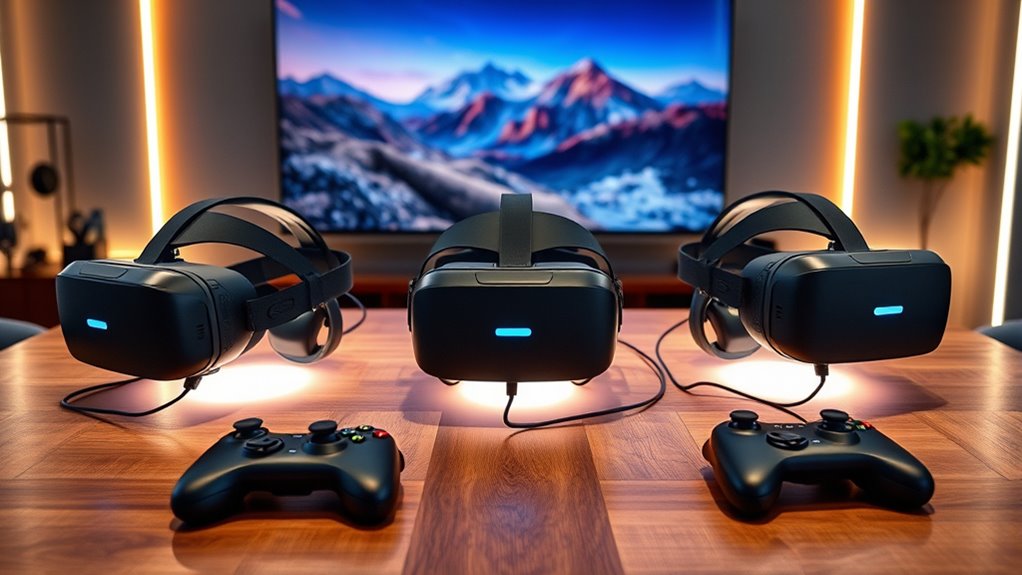

If you’re looking for the best tethered VR headsets for PC in 2026, I recommend the Oculus Quest with a reliable USB-C cable, the HTC Vive Pro 2 with its seamless connection, and the Valve Index known for comfort and performance. These options combine durability, fast data transfer, and compatibility with latest software updates. Keep an eye on their compatibility and build quality, as these details make a big difference. Stay with me, and you’ll discover even more about choosing the perfect VR setup.
Key Takeaways
- Look for headsets with high compatibility, supporting USB 3.0, USB-C, or DisplayPort for seamless PC connection.
- Prioritize models with durable, flexible cables that support long lengths and high transfer speeds for immersive gaming.
- Choose headsets with robust build quality, reinforced connectors, and water-resistant features for longevity.
- Ensure firmware and software are regularly updated to maintain compatibility, stability, and access to new features.
- Consider warranties and overall value to protect your investment and ensure reliable performance over time.
| Syntech 16FT USB 3.0 to USB-C VR Link Cable | 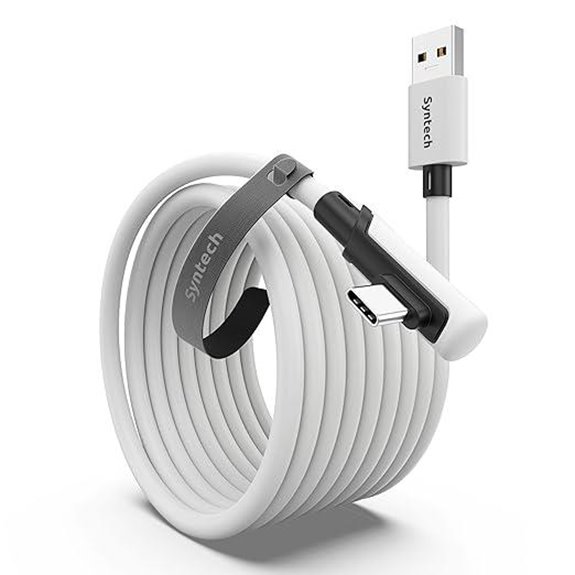 | Best Flexibility | Length: 16 ft | Compatibility: Meta Quest 3S, Quest 3, Quest 2, Pro, Pico 4, Ultra | Data Transfer Speed: Up to 5Gbps (USB 3.0) | VIEW LATEST PRICE | See Our Full Breakdown |
| 16FT VR Link Cable for Oculus Quest and PC Gaming |  | Best Compatibility | Length: 16 ft | Compatibility: Quest 3S, Quest 3, Quest 2, Pico 4, other VR headsets | Data Transfer Speed: Up to 5 Gbps (USB 3.2 Gen 1) | VIEW LATEST PRICE | See Our Full Breakdown |
| Syntech 16FT VR Link Cable with Charging | 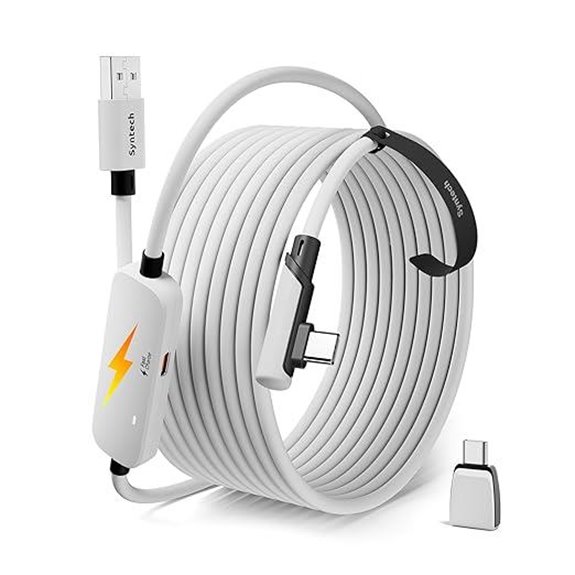 | Best Charging Integration | Length: 16 ft | Compatibility: Oculus/Meta Quest 3S/3/2, Quest Pro, Pico4, other VR devices | Data Transfer Speed: 1.9–3.2 Gbps | VIEW LATEST PRICE | See Our Full Breakdown |
More Details on Our Top Picks
Syntech 16FT USB 3.0 to USB-C VR Link Cable
If you’re looking for a reliable connection that offers maximum freedom of movement during your VR sessions, the Syntech 16FT USB 3.0 to USB-C VR Link Cable is an excellent choice. I’ve used it with Meta Quest 3, Quest 2, and Pico 4 headsets, and it delivers smooth, stable data transfer at up to 5Gbps. The 16-foot length provides plenty of room to move naturally, while the L-shaped USB-C connector adds comfort. Made from durable, stretch-resistant materials, it’s built to last. Plus, the included velcro strap keeps everything secure. It’s perfect for immersive, wire-connected VR gaming without sacrificing freedom or performance.
- Length:16 ft
- Compatibility:Meta Quest 3S, Quest 3, Quest 2, Pro, Pico 4, Ultra
- Data Transfer Speed:Up to 5Gbps (USB 3.0)
- Material/Durability:Bendable, stretch-resistant, abrasion-resistant materials
- Flexibility/Design:Flexible, stretch-resistant, includes velcro strap
- Power/Charging Support:Not for charging
- Additional Feature:Velcro strap included
- Additional Feature:L-shaped USB-C connector
- Additional Feature:18-month warranty
16FT VR Link Cable for Oculus Quest and PC Gaming
The FT VR Link Cable is an essential accessory for serious VR gamers who want seamless, high-quality connection between their Oculus Quest or Quest 3 and a gaming PC. This 16-foot cable supports Quest 3S, Quest 3, Quest 2, Pico 4, and other headsets, enabling access to Oculus Rift and Steam VR games. It delivers fast data transfer with USB 3.2 Gen 1 A to C, supporting speeds up to 5 Gbps, and allows for charging during gameplay. Its lightweight, flexible design reduces tangles, while durable materials like aluminum alloy and nylon braided construction ensure long-lasting performance and stability for extended, immersive VR sessions.
- Length:16 ft
- Compatibility:Quest 3S, Quest 3, Quest 2, Pico 4, other VR headsets
- Data Transfer Speed:Up to 5 Gbps (USB 3.2 Gen 1)
- Material/Durability:Aluminum alloy, nylon braided, flexible, resistant to stretching and kinks
- Flexibility/Design:Lightweight, ergonomic, reduces tangles
- Power/Charging Support:Supports 5V charging
- Additional Feature:Aluminum alloy construction
- Additional Feature:Supports VR headset charging
- Additional Feature:Reduces tangles and kinks
Syntech 16FT VR Link Cable with Charging
Designed for serious VR enthusiasts, the Syntech 16FT VR Link Cable with Charging offers a reliable, high-speed connection that’s essential for immersive PC-based VR experiences. It supports Oculus/Meta Quest 3S/3/2, Quest Pro, Pico4, and Next-Gen VR headsets, providing seamless data transfer of up to 3.2 Gbps over a 16-foot length. Its advanced charging chip delivers up to 18W PD power, enabling fast charging and safe battery management. The cable’s durable triple-layer design and Velcro strap guarantee longevity and secure connection during intense gameplay. Plus, Syntech’s 24/7 support and firmware tips make it a dependable choice for anyone seeking a high-quality tethered VR link.
- Length:16 ft
- Compatibility:Oculus/Meta Quest 3S/3/2, Quest Pro, Pico4, other VR devices
- Data Transfer Speed:1.9–3.2 Gbps
- Material/Durability:Triple-layer protection (water, corrosion, leakage resistant)
- Flexibility/Design:Flexible, extended reach, velcro strap for security
- Power/Charging Support:Supports up to 18W PD fast charging with intelligent power management
- Additional Feature:2025 fast charging chip
- Additional Feature:Trickle charge feature
- Additional Feature:Triple-layer water and corrosion protection
Factors to Consider When Choosing Tethered VR Headsets for PC
When choosing a tethered VR headset, I focus on compatibility with my PC and devices to guarantee smooth setup. I also consider cable length, flexibility, and data speed to prevent restrictions and lag during gameplay. Additionally, I check build quality and power needs to find a durable headset that can handle extended use without hassle.
Compatibility With Devices
Choosing a tethered VR headset for your PC starts with ensuring it’s compatible with your system’s hardware and software. I always check if the headset supports my operating system and meets my PC’s specs to avoid performance issues. It’s essential to verify that it connects via USB 3.0, USB-C, or DisplayPort, depending on what my system offers, for ideal performance. I also make sure the headset works with my preferred VR platforms like SteamVR or Oculus software. Regular firmware and software updates are key for maintaining compatibility and stability. Finally, I consider the cable length and flexibility, ensuring they suit my available space and movement preferences. Compatibility is the foundation for a smooth, immersive VR experience.
Cable Length and Flexibility
A key factor in selecting a tethered VR headset is ensuring the cable offers enough length and flexibility to support natural movement without causing inconvenience or discomfort. Longer cables, like 16 feet, give you more freedom to move around, but they can tangle easily if not managed properly. Flexible, stretch-resistant materials improve comfort and durability, especially during long gaming sessions. A Velcro strap or cable management system helps secure the cable, reducing disconnections during intense movements. Lightweight, bendable cables put less strain on connection points, decreasing user fatigue. Overall, adequate flexibility guarantees smooth, unrestricted motion, enhancing immersion and making your VR experience more enjoyable. Finding the right balance between length and flexibility is essential for seamless, comfortable gameplay.
Data Transmission Speed
Higher data transmission speeds are essential for delivering a smooth and responsive VR experience, especially during fast-paced gameplay. With transfer speeds of 5 Gbps supported by USB 3.0, 3.1, and 3.2 standards, I can guarantee minimal lag and better responsiveness. Stable and fast data transfer reduces lag and buffering, making interactions seamless and immersive. Faster speeds also allow high-quality visuals and audio to transmit simultaneously, boosting realism. The quality of the USB connection directly impacts the stability of the experience, particularly during intense moments. When choosing a tethered headset, I prioritize models that support these high transfer rates to assure a lag-free, immersive VR experience that maximizes the headset’s potential. Reliable data transmission truly makes or breaks the quality of VR gameplay.
Power and Charging Needs
Reliable power and charging capabilities are essential for maintaining uninterrupted VR sessions, especially when data transmission speeds are maximized for smooth gameplay. I look for headsets that support high power delivery, like up to 18W PD charging, ensuring they stay charged during extended use. It’s important to choose a cable that handles both data transfer and charging simultaneously, so the battery doesn’t drain mid-session. Compatibility with fast-charging adapters and USB-C ports can considerably cut downtime, keeping me immersed longer. I also prefer cables with smart power management features, like trickle charging, which help prolong battery life and prevent overcharging. Ultimately, durability matters—high-quality, multi-layered cables protect against wear and tear, ensuring safe, reliable power delivery in demanding VR environments.
Build Durability and Materials
When selecting a tethered VR headset for PC, focusing on build durability and materials is crucial to guarantee it withstands frequent use and intense gameplay. High-quality materials like nylon braided cables and aluminum alloy connectors are common, providing strength and resistance to wear. Cables made with abrasion-resistant and stretch-resistant materials prevent damage during vigorous sessions. Reinforced connectors, such as L-shaped USB-C ports, reduce strain on connection points, enhancing longevity. Triple-layer protection against water, corrosion, and electrical leakage further extends the headset’s lifespan. Flexibility is also key; bendable, stretch-resistant components minimize cable breakage and improve reliability. Overall, a sturdy build and resilient materials ensure your headset remains durable, reliable, and ready for demanding gaming marathons.
Ease of Setup
Selecting a tethered VR headset that’s easy to set up can save you time and frustration, especially if you’re new to virtual reality. Make sure the headset is compatible with your PC’s operating system and hardware specs to prevent headaches during installation. Look for models that include clear, step-by-step instructions or tutorials—they make the process smoother. Choosing a headset with fewer cables and simple, easy-to-connect ports will reduce setup complexity. Also, verify that the link cables support high-speed data transfer, like USB 3.0 or higher, for a seamless experience. Finally, opt for headsets with user-friendly software that guides you through calibration and connection steps, making setup quick and hassle-free so you can jump into VR faster.
Software and Firmware Updates
Keeping your VR headset’s software and firmware up to date is essential for ensuring smooth performance and compatibility with the latest PC titles. Regular updates often include bug fixes, security patches, and improvements to link stability and data transfer speeds, which are vital for a seamless experience. Firmware updates help maintain compatibility with new game releases and system features, preventing connection issues that can disrupt your session. Manufacturers frequently release updates that enhance stability, reduce latency, and improve overall user experience during tethered VR use. Staying current with software and firmware guarantees your headset functions at its best, minimizes glitches, and offers the best possible immersion. Regularly checking for updates and installing them as recommended keeps your VR setup reliable and ready for any new content or system improvements.
Price and Warranty
Price and warranty are vital factors to contemplate when choosing a tethered VR headset for PC, as they directly impact your overall investment and peace of mind. Higher-priced headsets usually come with longer warranties, offering better protection against defects and technical issues. Most warranties range from 12 to 24 months, influencing the overall value and reassurance you get. Budget-friendly models might have limited warranties or require additional purchases for extended coverage. A solid warranty can save you money on repairs, replacements, and technical support during the product’s lifespan. Considering warranty terms is essential—longer warranties often justify higher initial costs by reducing potential repair expenses, making them a smarter long-term investment. Balancing price and warranty ensures you get the best value for your money.
Frequently Asked Questions
How Do Tethered VR Headsets Compare to Wireless Options in 2026?
Tethered VR headsets still outperform wireless options in 2026, especially for high-fidelity gaming and detailed experiences. I find that wired headsets offer lower latency, sharper visuals, and more consistent tracking, which makes gameplay smoother. While wireless headsets are more convenient and free of cables, they often compromise on performance and battery life. If you’re serious about immersive, high-quality VR, tethered headsets remain the top choice for me.
What Is the Average Lifespan of a Tethered VR Headset Cable?
The average lifespan of a tethered VR headset cable is usually around 1 to 2 years, but don’t let that fool you. It’s not about how long it lasts, it’s about how well you treat it. Frequent bending, pulling, or twisting can cut that time short. So, if you’re planning to keep your headset for a while, handle the cable like a fragile treasure—because, honestly, it kind of is.
Are There Compatibility Issues With Different PC VR Headsets?
Yes, there can be compatibility issues between different PC VR headsets, especially with software and hardware requirements. I’ve found that some headsets need specific drivers or software versions to work smoothly. Also, connections like HDMI or DisplayPort might vary, causing issues with certain PCs. To avoid headaches, I always double-check compatibility specs before buying, and I recommend ensuring your PC meets all the headset’s requirements.
How Much Does a High-Quality Tethered VR Setup Typically Cost?
A high-quality tethered VR setup usually costs between $1,000 and $2,500. I’ve found that this range covers a top-tier headset, a powerful PC, and the necessary accessories like sensors and controllers. While it’s an investment, I think it’s worth it for immersive experiences and smooth gameplay. Keep in mind, prices can vary depending on the hardware specs and brands you choose.
What Are the Best Practices for Cable Management During Gameplay?
Imagine your cable snaking like a wild serpent across your room—chaotic and dangerous. To tame it, I use cable clips and sleeves to keep everything organized and out of my way. I also route the cable along walls or ceiling mounts, creating a smooth path that prevents tripping. Regularly checking and adjusting my setup guarantees my gameplay stays immersive, safe, and free of cable chaos.
Conclusion
Choosing the right tethered VR headset is like finding the perfect pair of shoes—comfort, performance, and fit matter. With options like Syntech’s 16FT USB 3.0 to USB-C VR Link Cable, you’re equipped for seamless gaming adventures. Think of your headset as the bridge to another world—strong, reliable, and ready to take you there. Pick the one that feels right, and let your virtual journey begin with confidence.