
If you’re looking for compact GPUs for a VR-ready PC in 2026, I’d recommend the ZOTAC RTX 5050 with 8GB VRAM for its powerful performance and efficient cooling, fitting easily into smaller cases. The ZOTAC GTX 1660 Super is another solid choice, offering good VR support in a smaller package, ideal if you’re on a tighter budget. Keep in mind size, power, and video outputs, and you’ll find these options fit your setup perfectly—keep exploring to learn more.
Key Takeaways
- Prioritize single or dual-slot GPUs with compact dimensions for seamless fit in small VR-focused PC cases.
- Select GPUs with at least 8GB VRAM and VR-optimized features for immersive high-quality experiences.
- Ensure the GPU’s power requirements match a reliable, high-capacity power supply with appropriate PCIe connectors.
- Opt for GPUs with multiple high-bandwidth outputs like DisplayPort 1.4/2.0b and HDMI 2.0b or higher for VR headsets.
- Choose models with efficient cooling solutions, such as heatsinks and blower fans, to maintain performance in compact setups.
| ZOTAC RTX 5050 Gaming Graphics Card (8GB) | 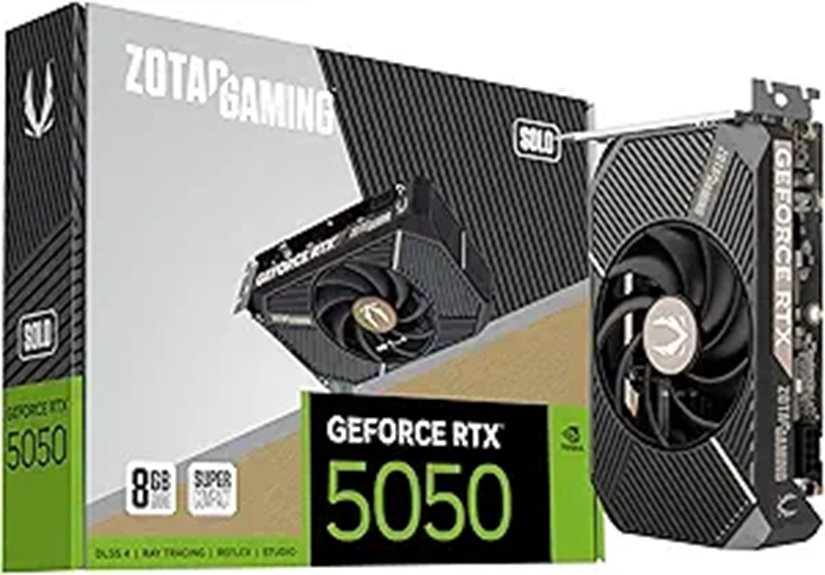 | Compact Powerhouse | Memory Size: 8GB GDDR6 | Interface: PCIe 5.0 | Display Outputs: 3 x DisplayPort 2.1b, 1 x HDMI 2.1b | VIEW LATEST PRICE | See Our Full Breakdown |
| ZOTAC GeForce GTX 1660 Super 6GB Gaming Graphics Card | 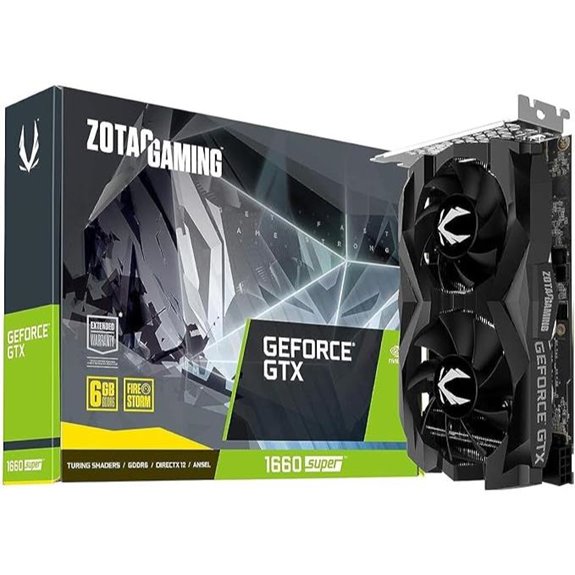 | Budget Gaming Performance | Memory Size: 6GB GDDR6 | Interface: PCIe 3.0/4.0 (implied compatibility) | Display Outputs: 3 x DisplayPort 1.4, 1 x HDMI 2.0b | VIEW LATEST PRICE | See Our Full Breakdown |
More Details on Our Top Picks
ZOTAC RTX 5050 Gaming Graphics Card (8GB)
If you’re building a compact VR PC in 2026, the ZOTAC RTX 5050 Gaming Graphics Card stands out thanks to its super small form factor combined with powerful features. Its 8GB GDDR6 memory and NVIDIA Blackwell architecture deliver solid gaming performance while fitting into a 2-slot, SFF-ready design. The card’s cooling system, including a 90mm BladeLink fan and composite heatpipes, keeps temperatures in check. With PCIe 5.0 support, 8K readiness, and DLSS 4 technology, it’s optimized for high-quality gaming and VR experiences. Despite its compact size, it packs enough power to handle demanding titles and multi-display setups seamlessly.
- Memory Size:8GB GDDR6
- Interface:PCIe 5.0
- Display Outputs:3 x DisplayPort 2.1b, 1 x HDMI 2.1b
- Form Factor:2-slot, super compact SFF-ready
- VR Readiness:Yes
- Cooling Fan:90mm BladeLink fan
- Additional Feature:DLSS 4 technology support
- Additional Feature:Compact SFF-ready design
- Additional Feature:8K resolution readiness
ZOTAC GeForce GTX 1660 Super 6GB Gaming Graphics Card
The ZOTAC GeForce GTX 1660 Super 6GB is an excellent choice for compact VR PCs, thanks to its small 6.83-inch design that fits easily into limited spaces. It features the latest Turing architecture with 6GB GDDR6 memory and a 192-bit interface, providing strong performance for gaming and VR. The card supports three DisplayPort 1.4 outputs and one HDMI 2.0b, enabling 4K, HDR, and VR compatibility. Its dual-slot, space-saving form factor ensures easy installation without sacrificing power. To keep it running smoothly, avoid unofficial software that could impact stability during intensive gaming or VR sessions.
- Memory Size:6GB GDDR6
- Interface:PCIe 3.0/4.0 (implied compatibility)
- Display Outputs:3 x DisplayPort 1.4, 1 x HDMI 2.0b
- Form Factor:Dual-slot, compact design
- VR Readiness:Yes
- Cooling Fan:Not specified, but designed for high performance
- Additional Feature:Supports HDR and 4K
- Additional Feature:192-bit memory interface
- Additional Feature:6GB GDDR6 memory
Factors to Consider When Choosing a Small GPU for Compact VR PC
When choosing a small GPU for a compact VR PC, I focus on size compatibility to guarantee it fits your case. I also consider VR performance capabilities to deliver smooth experiences, along with power supply requirements to avoid issues. Finally, I check video output options and cooling efficiency to keep everything running smoothly and quietly.
Size Compatibility
Choosing the right small GPU for your compact VR PC starts with guaranteeing it fits perfectly within your case. First, check the GPU’s physical dimensions—length, width, and height—to match your case’s available space. Pay attention to the form factor, such as single-slot or dual-slot, to ensure it won’t block other expansion slots or components. Also, consider the cooling system and fan size; in small cases, airflow is limited, so a compact cooling solution is essential. verify that your power supply can support the GPU’s wattage and connectors without overloading. Finally, assess how the GPU’s size impacts other components, avoiding obstruction of airflow or interference with nearby hardware. Proper size compatibility is key to a smooth, efficient VR setup.
VR Performance Capabilities
Ensuring smooth VR performance with a small GPU hinges on its ability to deliver high frame rates and low latency, which are essential for an immersive experience. A capable VR GPU should handle at least 8GB of VRAM to process high-resolution textures and complex scenes without stuttering. Support for VR-specific features like asynchronous reprojection and low latency input enhances realism and reduces motion sickness. Compatibility with DisplayPort 1.4 or HDMI 2.0b (or higher) guarantees stable connections to VR headsets, maintaining visual fidelity. Additionally, the GPU’s architecture and driver optimizations play a critical role in rendering efficiency, directly affecting smoothness and visual quality. Choosing a GPU with these capabilities guarantees an enjoyable, lag-free VR experience in a compact build.
Power Supply Needs
Power supply needs are a key consideration when selecting a small GPU for a compact VR PC. While smaller GPUs typically draw less power, it’s essential to check each model’s wattage and connector requirements to guarantee compatibility. Many compact GPUs, especially those designed for small builds, use 6-pin or 8-pin PCIe power connectors, impacting your power supply choice. Pay attention to the GPU’s TDP (thermal design power) rating to confirm your power supply can deliver stable power under load. For VR, peak performance demands more power, so having a power supply with 20-30% headroom above the GPU’s TDP is wise. Additionally, choosing a power supply with multiple PCIe connectors provides extra stability and flexibility for future upgrades or additional components.
Video Output Options
When selecting a small GPU for a compact VR PC, paying close attention to video output options is vital. You want multiple ports like DisplayPort 1.4 or 2.1 and HDMI 2.0b or higher, guaranteeing compatibility with VR headsets and multiple displays. Confirm that the GPU supports at least four simultaneous outputs to maximize versatility for VR and multimedia setups. High-bandwidth outputs that handle 4K resolution and HDR are essential for immersive experiences, so look for DisplayPort 2.1b support, which offers increased bandwidth and faster refresh rates. Additionally, double-check that the output ports match your VR headset’s input requirements, guaranteeing seamless connections and peak performance. These factors ensure your small GPU can deliver the best visual experience for demanding VR applications.
Cooling Efficiency
Optimizing cooling in small GPUs is vital to maintaining performance in compact VR setups. Effective cooling relies on specialized heatsinks and heatpipe designs that maximize heat dissipation within limited space. Smaller GPUs often use efficient fan setups, like blade or blower fans, to improve airflow without adding bulk. High-quality thermal paste and proper case airflow management are essential to keep temperatures in check. Low-profile or SFF GPUs may feature single or dual-fan configurations optimized for minimal size but still need adequate cooling solutions. It’s also imperative to ensure the GPU’s TDP matches the cooling system’s capacity, preventing overheating and thermal throttling. Prioritizing these cooling factors helps guarantee your small GPU performs reliably during intensive VR sessions.
Budget Considerations
Choosing a small GPU for a compact VR PC often comes down to balancing your budget with performance needs. Smaller GPUs tend to cost less, making them appealing for budget-conscious builds. However, entry-level models may offer limited performance, so you’ll need to weigh cost against the quality of your VR experience. High-end small GPUs, with their advanced features and architecture, tend to be pricier, which can stretch your budget. Opting for a smaller GPU also reduces cooling costs since they typically generate less heat. That said, budget constraints might limit you to older or less powerful models, potentially impacting VR quality. Carefully consider your desired performance level and how much you’re willing to spend to find the best fit for your compact VR setup.
Frequently Asked Questions
How Do Small GPUS Impact Overall VR Experience Quality?
Small GPUs can impact your VR experience quality by offering less power than larger counterparts, which might lead to lower frame rates or decreased detail. However, with the right balance of efficiency and recent tech advancements, they can still deliver smooth, immersive VR sessions. I’ve found that choosing a small GPU with solid performance specs guarantees you don’t sacrifice too much quality for compactness, keeping your VR experience enjoyable.
Are Small GPUS Compatible With All VR Headsets?
Small GPUs are generally compatible with most VR headsets, but you’ll want to double-check specific requirements. I recommend verifying the headset’s compatibility list and ensuring your GPU meets the minimum performance specs. While most modern headsets work well with compact GPUs, some high-end or newer models might demand more power or advanced features. So, always do a quick compatibility review before making your choice.
What Is the Typical Lifespan of Compact VR GPUS?
The typical lifespan of compact VR GPUs is around 3 to 5 years, depending on usage and maintenance. I’ve found that high-quality cooling and regular updates help extend their life. As technology advances, newer models will outperform older ones, making upgrades worthwhile. If you care for your GPU properly, it can serve you well for several years, giving you smooth VR experiences without frequent replacements.
Can Small GPUS Be Upgraded Easily in Compact PCS?
Did you know that only about 20% of compact PCs support easy GPU upgrades? I’d say it depends on the system. Many compact PCs have soldered or integrated GPUs, making upgrades tricky or impossible. However, some mini-ITX builds feature removable GPUs, allowing upgrades with the right tools. If you’re planning an upgrade, check your system’s specs first, as compatibility and space constraints are key factors.
Do Small GPUS Generate More Heat in Confined Spaces?
Yes, small GPUs can generate more heat in confined spaces because their compact design often limits airflow and cooling options. I’ve noticed that in tight cases, these GPUs tend to run hotter, especially during intensive VR sessions. To keep temperatures in check, I recommend upgrading to better cooling solutions like enhanced fans or liquid cooling. Proper airflow management is vital to prevent overheating and guarantee smooth performance.
Conclusion
Choosing the right small GPU for my compact VR PC really boils down to balancing size, performance, and power needs. The ZOTAC RTX 5050 and GTX 1660 Super each offer unique advantages, making them top contenders in 2026. Did you know that compact GPUs can now deliver up to 90% of full-sized counterparts’ VR performance? That’s impressive progress, and it means you can enjoy immersive VR experiences without sacrificing your small build.