
If you’re aiming for the best VR gaming experience in 2026, I recommend AMD Ryzen 9 9950X3D or Intel’s latest Core i9-14900KF. These processors offer high core counts and fast speeds, ensuring smooth, lag-free gameplay. The Ryzen 5 5600 and Ryzen 5 4500 are solid mid-range options, while the i9-12900KF provides impressive performance for demanding VR. Keep in mind, cooling and compatibility matter—stick around if you want to learn more about optimizing your setup.
Key Takeaways
- High core counts (8+ cores) and fast clock speeds (up to 6 GHz) are essential for smooth, immersive VR experiences.
- Processors with unlocked multipliers and overclocking support enable performance tuning for demanding VR gaming.
- Compatibility with VR-Ready standards ensures seamless integration with VR headsets and peripherals.
- Robust thermal management and cooling solutions prevent overheating during extended VR sessions.
- Future-proof CPUs with support for latest interfaces and upgradeability enhance long-term VR gaming performance.
| AMD Ryzen 5 4500 6-Core Desktop Processor | 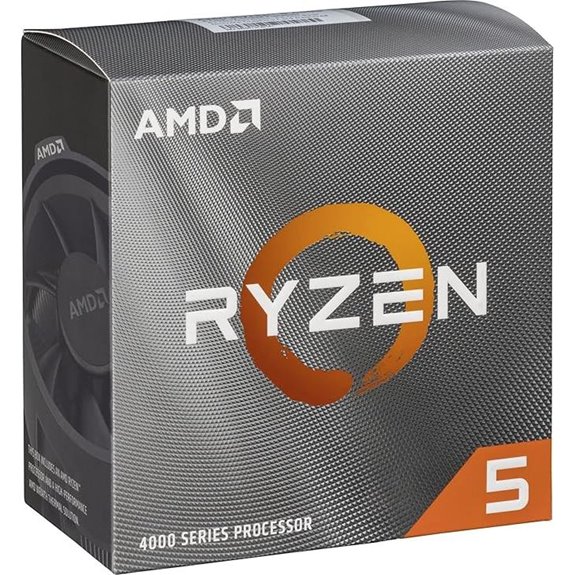 | Balanced Performance | Core Count: 6 cores | Thread Count: 12 threads | Overclockable: Yes | VIEW LATEST PRICE | See Our Full Breakdown |
| Intel Core i9-12900KF Gaming Processor 16 Cores | 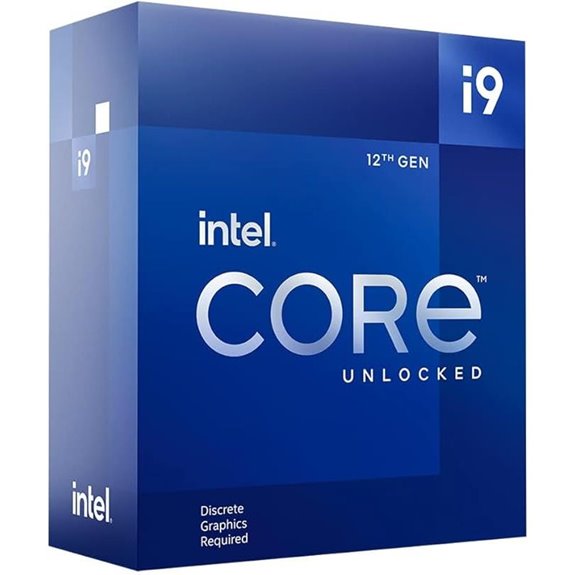 | High-End Powerhouse | Core Count: 16 cores | Thread Count: 30 threads | Overclockable: Yes | VIEW LATEST PRICE | See Our Full Breakdown |
| Intel Core i9-14900KF Gaming Desktop Processor |  | Next-Gen Performance | Core Count: 24 cores | Thread Count: 32 threads | Overclockable: Yes | VIEW LATEST PRICE | See Our Full Breakdown |
| AMD Ryzen 5 5600 6-Core Desktop Processor | 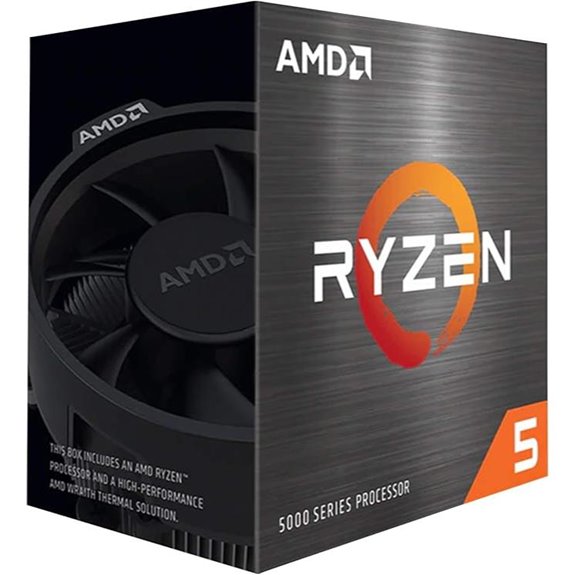 | Gaming Essential | Core Count: 6 cores | Thread Count: 12 threads | Overclockable: Yes | VIEW LATEST PRICE | See Our Full Breakdown |
| AMD Ryzen 9 9950X3D 16-Core Processor |  | Ultimate Gaming | Core Count: 16 cores | Thread Count: 32 threads | Overclockable: Yes | VIEW LATEST PRICE | See Our Full Breakdown |
More Details on Our Top Picks
AMD Ryzen 5 4500 6-Core Desktop Processor
If you’re looking for an affordable yet capable processor for VR gaming in 2026, the AMD Ryzen 5 4500 is an excellent choice. It features 6 cores and 12 threads, offering solid performance for gaming, productivity, and VR experiences. The open multiplier design lets you overclock for extra speed, and it comes with the Wraith Stealth Cooler, ensuring efficient thermal management. Plus, it supports fast storage expansion, helping you optimize your setup. With Ryzen VR-Ready Premium standards, it delivers smooth, immersive VR gameplay. Overall, the Ryzen 5 4500 strikes a great balance between cost and capability, making it a smart pick for budget-conscious gamers.
- Core Count:6 cores
- Thread Count:12 threads
- Overclockable:Yes
- Compatibility Platform:AMD AM4 socket
- Cache Size:Not specified
- Cooling Included:Wraith Stealth Cooler
- Additional Feature:Compatible with VR-Ready standards
- Additional Feature:Includes Wraith Stealth Cooler
- Additional Feature:Supports storage expansion
Intel Core i9-12900KF Gaming Processor 16 Cores
Looking for a processor that can handle immersive VR gaming with ease? The Intel Core i9-12900KF is a powerhouse with 16 cores—8 performance and 8 efficiency cores—that reach up to 5.2 GHz. Built on Intel’s 10 nm process and Intel 7 architecture, it offers excellent power efficiency and performance. It’s compatible with Intel 600 and 700 series motherboards and requires a discrete graphics card. With 30 MB of L3 cache and support for overclocking, this processor delivers fast, smooth gameplay and multitasking. Perfect for next-gen VR, it combines high performance with advanced features for an elevated gaming experience.
- Core Count:16 cores
- Thread Count:30 threads
- Overclockable:Yes
- Compatibility Platform:Intel LGA-1700 socket
- Cache Size:30 MB L3 cache
- Cooling Included:No (requires separate cooler)
- Additional Feature:16 cores with hybrid architecture
- Additional Feature:Supports Intel 600/700 series
- Additional Feature:30 MB L3 cache
Intel Core i9-14900KF Gaming Desktop Processor
The Intel Core i9-14900KF stands out as an ideal choice for serious gamers and content creators demanding top-tier performance. With 24 cores—8 Performance and 16 Efficient cores—and 32 threads, it’s built for demanding gaming and productivity. Its unlocked design allows overclocking, reaching speeds up to 6.0 GHz, ensuring rapid responsiveness and higher frame rates. Compatible with Intel 600- and 700-series motherboards supporting DDR4 and DDR5, it offers flexibility for high-performance setups. Whether gaming or tackling intensive tasks, this processor reduces load times and provides smooth gameplay, making it a powerful centerpiece for any VR gaming rig in 2026.
- Core Count:24 cores
- Thread Count:32 threads
- Overclockable:Yes
- Compatibility Platform:Intel LGA-1700 socket
- Cache Size:Not specified
- Cooling Included:No (requires separate cooler)
- Additional Feature:Supports DDR4 and DDR5
- Additional Feature:Designed for gaming and productivity
- Additional Feature:Reduced load times
AMD Ryzen 5 5600 6-Core Desktop Processor
For gamers seeking smooth and immersive VR experiences in 2026, the AMD Ryzen 5 5600 stands out as a top choice. This 6-core, 12-thread processor offers high-speed performance and is open for overclocking, giving you the flexibility to boost power when needed. It includes the Wraith Stealth Cooler, making it easy to set up without extra costs. Designed for VR-Ready Premium experiences, it guarantees optimal compatibility and performance. Whether you’re gaming or running demanding applications, the Ryzen 5 5600 delivers the speed and reliability needed for a seamless VR adventure, making it a smart pick for any gamer in 2026.
- Core Count:6 cores
- Thread Count:12 threads
- Overclockable:Yes
- Compatibility Platform:AMD AM4 socket
- Cache Size:Not specified
- Cooling Included:No (requires separate cooler)
- Additional Feature:VR-Ready Premium designation
- Additional Feature:Includes Wraith Stealth Cooler
- Additional Feature:Fastest cores for gaming
AMD Ryzen 9 9950X3D 16-Core Processor
If you’re aiming for top-tier VR gaming performance in 2026, the AMD Ryzen 9 9950X3D stands out with its impressive 16-core configuration and high boost clock of up to 5.7 GHz. Built on the Zen 5 architecture and compatible with the AM5 socket, this processor delivers exceptional speed for gaming and content creation. Its base clock of 4.3 GHz guarantees smooth multitasking, while the 16 cores handle demanding VR environments effortlessly. Whether you’re streaming, editing, or gaming, the Ryzen 9 9950X3D provides the power and efficiency needed to elevate your VR experience to new heights.
- Core Count:16 cores
- Thread Count:32 threads
- Overclockable:Yes
- Compatibility Platform:AMD AM5 socket
- Cache Size:Not specified
- Cooling Included:No (requires separate cooler)
- Additional Feature:Based on Zen 5 architecture
- Additional Feature:AM5 socket platform
- Additional Feature:High boost clock (up to 5.7 GHz)
Factors to Consider When Choosing a Processor for VR Gaming
When selecting a processor for VR gaming, I focus on processing power and how many cores and threads it offers to handle demanding applications smoothly. I also consider overclocking potential and compatibility with other components to make certain future upgrades are possible. Finally, I pay attention to cooling and thermal management to keep everything running efficiently during extended gaming sessions.
Processing Power Needs
Choosing the right processor for VR gaming hinges on understanding its processing power needs, which are critical for smooth, immersive experiences. VR demands high core counts and fast clock speeds to handle complex, real-time rendering without lag. A multi-threaded processor with at least 8 cores and 16 threads can markedly improve performance in demanding VR applications. Overclocking capabilities are also valuable, allowing you to boost performance for more seamless, lag-free gameplay. High processing power reduces latency, making interactions more responsive and helping to minimize motion sickness. Additionally, selecting a processor with adequate power ensures your system remains compatible with future VR titles and hardware upgrades. Prioritizing processing power is essential for a truly immersive, future-proof VR gaming experience.
Core and Thread Count
Core and thread count are essential factors that directly impact a processor’s ability to deliver smooth VR gaming experiences. A higher core count allows a processor to handle multiple tasks at once, reducing lag and stuttering during immersive gameplay. More threads enhance multitasking, ensuring demanding applications or background processes don’t disrupt the experience. For VR gaming, I recommend at least 6 cores and 12 threads to provide enough processing power for complex environments. Increasing core and thread counts helps manage the intensive graphics rendering and real-time interactions typical in VR. However, it’s vital to balance these with other factors like clock speed and architecture to maximize performance. Ultimately, a well-rounded processor with sufficient cores and threads is key to elevating your VR gaming experience in 2026.
Overclocking Potential
Overclocking potential can greatly boost your VR gaming performance, but it requires careful consideration of several factors. Processors with unlocked multipliers, like those labeled “K” or “KF,” are better suited for overclocking because they allow for easier speed adjustments. However, overclocking increases heat output and power consumption, so a robust cooling solution is essential to maintain stability and prevent damage. Your motherboard’s overclocking features and TDP limits also influence how far you can push your CPU. Keep in mind that pushing beyond stock speeds demands a balanced approach to avoid hardware stress. When done correctly, overclocking can squeeze extra performance out of your processor, leading to smoother, more immersive VR gaming experiences.
Compatibility Requirements
When selecting a processor for VR gaming, guaranteeing compatibility with your motherboard is essential; this means matching the processor socket type to prevent any installation issues. If the socket types don’t match, your CPU simply won’t fit or work properly. Additionally, check that your processor supports the necessary PCIe version and lanes, as high-speed data transfer with VR peripherals is critical for smooth performance. Don’t forget to confirm whether the CPU has integrated graphics capabilities or is compatible with a discrete graphics card, which are both necessary for VR visuals. Power and thermal requirements also matter — your cooling system and power supply need to handle the CPU’s demands to maintain stability. Ultimately, consider the architecture and core count to ensure it can handle the multitasking and demanding processing loads of VR gaming.
Cooling and Thermal Management
Effective cooling is essential for maintaining ideal processor performance during extended VR gaming sessions. Without proper thermal management, processors can overheat, leading to thermal throttling that reduces frame rates and causes lag—ruining the immersive experience. High-performance CPUs, especially when overclocked, generate more heat, so robust cooling solutions like heat sinks or liquid cooling are crucial. Good airflow within your PC case also plays a vital role in dissipating heat effectively. Monitoring CPU temperatures with software tools helps ensure you stay within safe thermal limits, protecting your hardware and maintaining consistent VR performance. Investing in advanced cooling methods not only prolongs your processor’s lifespan but also guarantees a smooth, lag-free VR experience, making it a key factor when selecting a processor for gaming in 2026.
VR-Ready Standards
Choosing a processor that meets VR-Ready standards is vital for delivering a seamless virtual reality experience. These standards ensure your system can handle demanding graphics and real-time data processing without hiccups. A VR-Ready processor typically features high clock speeds, multiple cores, and hyper-threading, all essential for smooth, responsive gameplay. Compatibility with VR peripherals and headsets hinges on the processor’s ability to maintain consistent frame rates and low latency, preventing motion sickness and lag. Processors meeting VR-Ready standards are optimized to work seamlessly with VR-compatible graphics cards and high-speed RAM, delivering peak performance. To verify VR-Readiness, look for specific certifications or standards set by VR hardware manufacturers, guaranteeing your system’s ability to handle immersive experiences without compromise.
Budget Considerations
Balancing budget constraints with the need for smooth VR gameplay requires careful consideration of processor options. Higher-priced CPUs typically deliver better performance, enhancing immersion and reducing lag, but they may be beyond some budgets. On the other hand, affordable processors often lack the core count and high clock speeds necessary for seamless VR experiences, risking stuttering or lag. A mid-range processor strikes a good balance, offering solid performance without overspending. Keep in mind, entry-level options might require future upgrades as VR titles become more demanding, increasing overall costs over time. Additionally, consider the total platform costs, including compatible motherboards and cooling solutions, which can profoundly impact your budget. Finding the right balance between cost and performance ensures a satisfying VR experience without breaking the bank.
Future Upgrade Paths
When selecting a processor for VR gaming, it’s essential to look at its upgradeability options to future-proof your system. Check if the processor supports newer socket types or chipsets, ensuring you can upgrade without replacing the entire motherboard. Opt for CPUs that support the latest memory technologies and high-speed RAM, as this keeps your system ready for future software updates and performance demands. Make sure the motherboard allows BIOS updates and compatibility with upcoming CPU generations for smoother upgrades. Choosing processors with unlocked multipliers and overclocking features can extend your system’s lifespan and performance potential. Additionally, consider integrated features like PCIe lane configurations and support for newer interfaces, which can facilitate hardware upgrades down the line, keeping your VR experience seamless and cutting-edge as technology evolves.
Frequently Asked Questions
How Does Processor Cache Size Affect VR Gaming Performance?
Processor cache size substantially impacts VR gaming performance by reducing data access times. When the cache is larger, my system can quickly retrieve essential data without constantly reaching out to the slower main memory. This results in smoother gameplay, lower latency, and fewer stutters during intense VR sessions. I’ve noticed that upgrading to a processor with a bigger cache makes my VR experience more seamless and immersive, especially in demanding virtual environments.
Are Integrated Graphics Sufficient for VR, or Is a Dedicated GPU Necessary?
Back in the days of the original Nintendo Virtual Boy, integrated graphics might’ve seemed enough, but today, they’re just not. For VR, I recommend a dedicated GPU—integrated graphics simply can’t handle the high frame rates and detailed visuals required. If you want smooth, immersive experiences, investing in a solid GPU is essential. Integrated graphics are tempting for budget builds, but for VR, they just don’t cut it anymore.
How Important Is Overclocking Capability in a VR Gaming Processor?
Overclocking capability is pretty important for a VR gaming processor because it can boost performance during demanding sessions. When I overclock, I notice smoother visuals and fewer lag spikes, which really enhances immersion. If you’re serious about VR, choosing a processor with solid overclocking options means you’re more likely to get the best experience. Just remember, it requires good cooling and some tech know-how to do safely.
What Is the Ideal Thermal Management for High-Performance VR Processors?
I believe ideal thermal management for high-performance VR processors involves a combination of effective cooling solutions, like advanced air or liquid cooling systems, and proper case airflow. I always make certain my setup has good ventilation to prevent overheating during intense gaming sessions. Regular cleaning and monitoring temperatures help maintain peak performance. Staying proactive with cooling ensures my VR experience stays smooth and immersive without thermal throttling.
How Does Processor Architecture Impact Latency in VR Experiences?
Think of processor architecture like the blueprint of a city—each design influences how smoothly traffic flows. A well-optimized architecture minimizes latency, acting like a well-paved road that keeps data zipping swiftly between components. When the architecture is efficient, VR experiences feel seamless, like stepping into another world without lag or stutter. So, the more refined the design, the more immersive and responsive your virtual adventures become.
Conclusion
Choosing the right processor is like picking the perfect engine for a high-speed race—it’s what makes your VR experience smooth and breathtaking. Whether you lean toward AMD’s power or Intel’s speed, these CPUs are your ticket to immersive worlds. Just remember, a great processor fuels your adventures, letting you plunge into virtual domains without missing a beat. So gear up, pick wisely, and let your gaming journey soar to new heights!