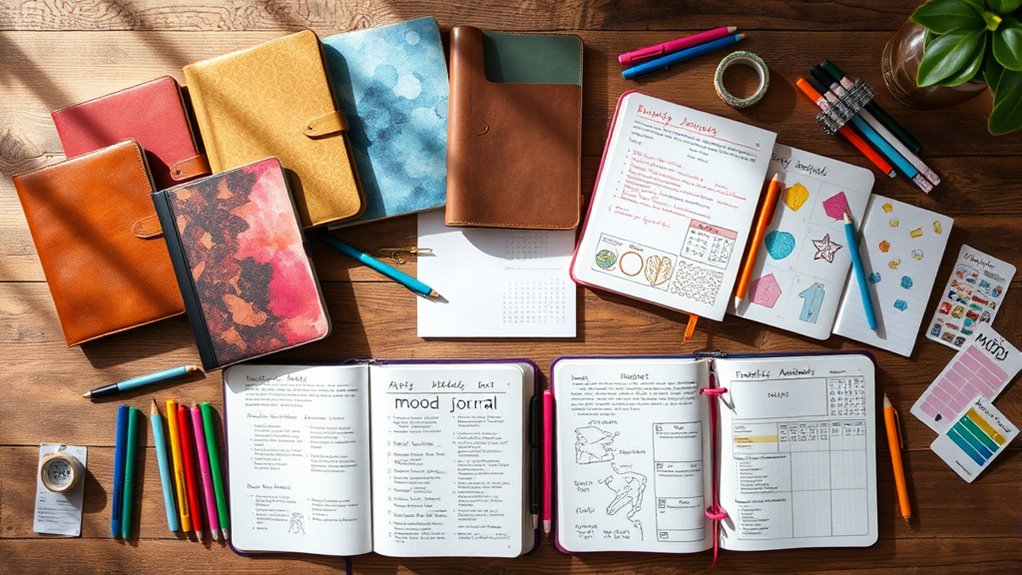

Searching for the best moodtracking bullet journals in 2026? These journals help you monitor emotional patterns, stress, and mental health through daily prompts and logs. The Daily Mood Tracker: Self-Care Journal stands out as the overall best for its comprehensive pages and user-friendly layout, while options like the Undated 6-Month Mood Log offer flexibility for long-term tracking. Choosing the right journal involves balancing features like prompts, layout, and customization against price and usability. Many options either focus on detailed daily entries or provide broader weekly overviews, making the decision a matter of personal preference. Keep reading to see how each journal stacks up and find the one that best fits your mental wellness journey.

Get the latest gadgets delivered free — and shop member deals
- Fast, free delivery on millions of items
- Access to Prime Big Deal Days deals on October 6–7
- Prime Video, Amazon Music and more included
Complete the kit



Key Takeaways
- The most effective moodtracking journals balance structured prompts with space for free reflection.
- Undated options provide flexibility for irregular tracking, but may lack the consistency of dated journals.
- Journals with integrated charts and visual data make tracking mood trends easier to interpret.
- Price varies widely; premium journals often include more prompts and higher-quality paper, but budget-friendly options remain effective.
- Customization features like stickers or modular layouts appeal to users who want a personalized experience.


More Details on Our Top Picks
Daily Mood Tracker: Self-Care Journal, 120 Pages
This undated self-care journal stands out for its comprehensive approach to tracking multiple aspects of well-being, including mood, stress, sleep, food, and habits. Compared with the Mood Tracker Journal, it offers a broader scope of metrics, encouraging users to view mental health within a holistic framework. The undated format provides flexibility to start at any time, making it suitable for those who prefer spontaneous journaling without strict timelines. The main tradeoff is that, without additional prompts or guided content, users may need to develop their own reflection routines. Its 120 pages strike a balance between portability and enough space for regular entries. This pick is ideal for individuals seeking a customizable, all-in-one wellness tracker.
Pros:- Tracks multiple wellness metrics including mood, sleep, and habits
- Undated format allows starting anytime without waiting for a new year or month
- Encourages daily self-reflection and holistic health monitoring
Cons:- Lacks built-in prompts or guidance for reflection
- No detailed product reviews or sample pages available for verification
Best for: Users who want a flexible, comprehensive daily self-care journal that allows for personalized tracking of multiple wellness factors
Not ideal for: Beginners or those preferring guided prompts, as it offers limited structure and no pre-designed questions
- Pages:120
- Format:Undated
- Tracks:Mood, Stress, Energy, Sleep, Food, Habits, Daily Reflection
- ASIN:B0FPB6QC7K
Our verdict“This journal is best suited for experienced journalers who want a customizable tool to monitor their mental and physical health daily.”
Mood Tracker Journal: Daily Mood Notebook & Wellness Diary with Prompts
Compared to the Mood Tracker Bullet Journal, this journal emphasizes guided reflection with prompts designed to deepen self-awareness and mental health insights. While it may lack the flexibility of a blank bullet journal, its focus on prompts makes it ideal for users new to mood tracking or those who benefit from structured thought exercises. The inclusion of prompts helps sustain daily engagement and encourages a routine of emotional check-ins. The absence of specific details about page count or layout means users should be comfortable with a potentially limited format. This journal is perfect for anyone who prefers guided reflection over freeform journaling and wants to connect daily moods with mental wellness insights.
Pros:- Helps track daily moods and emotional patterns
- Includes prompts that foster deeper self-awareness
- Supports mental health management through structured reflection
Cons:- Limited information on size, pages, or layout
- Lacks additional tools or features beyond prompts
Best for: Beginners and individuals seeking guided prompts to enhance their emotional awareness
Not ideal for: Advanced journalers who prefer a blank canvas for creative expression or detailed customization
Our verdict“This journal works best for users who need structured guidance to develop consistent mood and mental health awareness routines.”
Mood Tracker Bullet Journal
This mood tracker bullet journal appeals to dedicated bullet journal fans who want a straightforward, customizable format for recording daily emotions over time. Unlike the Mood Tracker Journal, which emphasizes prompts, this option emphasizes flexibility and personal system-building. Its simplicity allows users to design their own mood symbols, trackers, and layouts, making it ideal for those comfortable with bullet journaling conventions. The main tradeoff is that it offers no pre-designed prompts or guided content, which could be a drawback for beginners or those seeking more direction. This pick is best for experienced bullet journalers who want to incorporate mood tracking into their existing systems seamlessly.
Pros:- Highly customizable for personal tracking preferences
- Designed specifically for bullet journaling workflows
- Allows detailed, creative mood recording over time
Cons:- No pre-made prompts or structure for reflection
- Requires familiarity with bullet journaling to maximize utility
Best for: Bullet journal users who prefer a blank slate to create their own mood tracking system
Not ideal for: Beginners or those wanting a guided, prompt-based approach to mental health journaling
Our verdict“This journal suits experienced bullet journalers seeking full control over their mood tracking and mental wellness layout.”
Mood Tracker Journal: Daily Mental Health & Wellness Diary with Prompts for Stress, Anxiety and Self-Care
Compared with the Mental Health Mood Journal (Green), this journal centers on daily mental health and wellness, offering prompts aimed at managing stress and anxiety. Its focus on daily mood and emotional states makes it suitable for users who want targeted support for mental health challenges. The included prompts can guide users through stress reduction and self-care routines, but the lack of detailed specifications or user reviews makes it harder to gauge overall quality or usability. This journal is a good fit for those seeking a structured, prompt-driven approach to tracking mental health symptoms and practicing self-care routines daily.
Pros:- Helps monitor daily mood and mental health states
- Includes prompts for managing stress, anxiety, and self-care
- Supports emotional well-being through guided activities
Cons:- Lacks detailed product specifications or reviews
- Limited information on layout and content depth
Best for: Individuals managing stress, anxiety, or mental health issues who benefit from guided prompts and specific focus areas
Not ideal for: Users preferring open-ended journaling or those wanting a more comprehensive wellness tracker without specific focus
Our verdict“This journal is best for users who want focused, prompt-led support for stress and anxiety management on a daily basis.”
Mental Health Mood Journal (Green)
Compared to the Daily Mood Tracker, this guided journal offers a broad array of tracking options, including mood, gratitude, sleep, self-love, and water intake, making it a comprehensive tool for daily wellness. Its emphasis on gratitude and self-love promotes positive mental habits that can complement more traditional mood trackers. However, the lack of detailed product information or reviews makes it challenging to assess its usability or quality thoroughly. This journal is ideal for users who want an all-in-one tracker that encourages a holistic approach to mental health, especially if they value gratitude and self-care routines integrated into their daily entries.
Pros:- Tracks a wide range of wellness metrics in one journal
- Encourages daily gratitude and self-love practices
- Helps create a holistic view of mental health and daily habits
Cons:- Limited detailed product data or user feedback
- Could be overwhelming for users seeking a simple mood tracker
Best for: Users seeking a comprehensive, all-in-one mental health journal that promotes positive habits and self-reflection
Not ideal for: Minimalist journalers or those who prefer highly specialized, single-focus mood trackers without additional wellness metrics
- Color:Green
- Tracks:Mood, Gratitude, Sleep, Self-Love, Energy, Stress, Emotions, Water Intake, Goals
Our verdict“This journal suits those who want an extensive, all-inclusive approach to daily mental health and wellness tracking.”
Mood Tracker Journal: Daily Tracking for Mental Health and Wellness Diary with Prompts
This journal is ideal for those who prefer structured guidance in their mood tracking. Its daily prompts support consistent reflection, which makes it a strong choice for beginners or anyone seeking a routine. Compared with the undated options like B0H9XMQ921, this journal’s focus on daily entries encourages habitual use, but the lack of detailed product info leaves questions about durability and material quality. It’s especially suited for users who want a straightforward, guided approach to mental wellness without extra features. The absence of advanced tracking tools or customization options might limit those seeking more in-depth analysis.
Pros: Guided prompts foster daily reflection, structured format supports consistency, easy to incorporate into routines, designed for mental health focus.
Cons: No detailed product info available, limited customization, may feel restrictive for advanced users.
Verdict: This pick makes the most sense for beginners or those who want a simple, guided daily mood tracker focused on mental health.
Pros:- Guided prompts foster daily reflection
- Structured format supports consistency
- Supports mental health and wellness routines
Cons:- No detailed product info available
- Limited customization options
- Potentially restrictive for experienced mood trackers
Best for: Beginners seeking straightforward, guided daily mood tracking for mental wellness
Not ideal for: Advanced users wanting customizable or in-depth mood analysis features
- Format:Journal
- Use:Daily mood and mental health tracking
Our verdict“Ideal for newcomers needing a guided, daily mental health journal with straightforward prompts.”
Mood Tracker Journal: Undated Daily & Weekly Pages with Prompts for Mental Health, Stress, Anxiety, and Self-Care
This undated journal stands out for its flexible layout, allowing users to start anytime and skip days or weeks without feeling constrained. Its weekly and daily prompts support ongoing mental health and self-care routines, making it suitable for those who want a versatile, year-long view of their emotional trends. Compared with the more guided B0CM1MC2M5, this journal’s undated format offers greater freedom but may lack the immediate focus some users need to develop consistent habits, especially since no specific guidance or materials are listed. It’s well-suited for those comfortable with self-directed reflection and tracking over extended periods.
Pros: Undated format for flexibility, includes prompts for mental health and self-care, supports tracking over the entire year, adaptable to irregular schedules.
Cons: No detailed features or materials info, may lack guidance for new users, relies on user discipline for consistency.
Verdict: This journal is perfect for experienced trackers who value flexibility and long-term trend monitoring.
Pros:- Undated format allows flexible use anytime
- Includes prompts supporting mental health and self-care
- Yearly mood tracking helps identify emotional trends
- Suitable for irregular schedules
Cons:- Limited guidance or detailed features
- Requires user discipline for consistency
- No specific materials or durability info
Best for: Individuals comfortable with self-guided tracking and wanting a flexible, undated format
Not ideal for: Beginners or those needing detailed guidance and structured prompts for daily use
Our verdict“Ideal for seasoned mood trackers seeking flexibility and comprehensive yearly insights without strict structure.”
Mood Tracker Journal: For Daily Emotional Wellness, Self-Care & Personal Reflection
This guided journal emphasizes daily emotional wellness and encourages mindfulness through structured prompts. It’s designed for users who want to build consistent self-care and reflection habits, making it well-suited for beginners interested in emotional awareness. Compared with the more feature-rich B0HFTY7WM4, this journal focuses more on personal reflection than detailed tracking, which may be a limitation for those seeking data-driven insights. Its lack of detailed content description makes it harder to assess, but its clear focus on self-care makes it a good choice for those prioritizing emotional growth.
Pros: Supports daily emotional wellness and mindfulness, encourages consistent self-care, helps develop reflection habits, straightforward design.
Cons: No detailed description or reviews available, limited tracking features, may be too simple for advanced users.
Verdict: This journal suits beginners who want to foster mindfulness and emotional awareness daily.
Pros:- Supports daily emotional wellness and mindfulness
- Encourages consistent self-care and reflection
- Helps build emotional awareness habits
Cons:- No detailed content description
- Lacks advanced tracking features
- Potentially too basic for experienced users
Best for: Newcomers seeking a simple, guided approach to emotional wellness and mindfulness
Not ideal for: Advanced mood trackers or those wanting detailed quantitative data
- Type:Guided journal
- Use:Mood tracking, emotional wellness, self-care, personal reflection
Our verdict“Perfect for beginners aiming to develop mindfulness and emotional insight through guided prompts.”
Mood Journal Mental Health Tracker: Daily Mood and Wellness Journal
This journal’s strength lies in its wide-ranging tracking of mood, food, exercise, sleep, and activity, making it ideal for users who want a detailed picture of their mental health alongside daily habits. Its comprehensive approach exceeds basic mood tracking, supporting self-awareness and tailored self-care routines. Compared with the more feature-packed B0HFTY7WM4, this journal’s focus on daily habits makes it more accessible for beginners but less detailed in analysis or visual insights. Its limited details about features and size could be a drawback for those seeking a portable, in-depth tracker.
Pros: Tracks multiple aspects of daily life, promotes mental health awareness, supports personalized self-care, encourages reflection on daily habits.
Cons: Limited detail about features, no info on size or page count, may be overwhelming for some users.
Verdict: Well-suited for users wanting a broad, daily overview of mental health and routines, especially beginners or those with busy schedules.
Pros:- Tracks mood, food, exercise, sleep, and activity
- Supports mental health awareness
- Encourages self-care and daily reflection
- Holistic approach to wellness
Cons:- Limited details on features and size
- Potentially overwhelming for some users
- No visual or analytical tools included
Best for: Individuals interested in comprehensive daily tracking of mood and habits for mental wellness
Not ideal for: Those seeking a compact, highly detailed or data-driven tracker with extensive analytics
Our verdict“Ideal for users who want a broad, daily mental health overview integrated with lifestyle habits.”
Mood Tracker Journal: Undated 6-Month Daily Mood Log with Charts, Sleep, Anxiety, Medication Tracking, Thought Records, and Appointment Summaries
This undated journal offers extensive features, including mood, sleep, anxiety, medication, and appointment tracking, along with charts and thought records. Its size and number of pages make it suitable for long-term, detailed monitoring, especially for users managing complex mental health routines. Compared with the more straightforward B0CM1MC2M5, this journal’s depth supports users who want insights into correlations over six months, but its large size might hinder portability for everyday use. It’s best for dedicated self-trackers or those working with mental health professionals. Limited specific content details mean some users might want more clarity before committing.
Pros: Extensive tracking features, includes charts and thought records, covers a wide range of mental health aspects, undated for flexible start dates.
Cons: Size may limit portability, no detailed content info, potentially overwhelming for casual users.
Verdict: Best suited for committed self-trackers or those with complex mental health routines needing detailed, long-term data.
Pros:- Extensive tracking of mood, sleep, anxiety, medication, and appointments
- Includes charts and thought records for detailed insights
- Undated, allowing flexible start times
- Supports long-term mental health monitoring
Cons:- Large size may hinder portability
- Limited specific content details available
- Potentially too detailed for casual users
Best for: Users managing complex mental health needs or seeking comprehensive long-term data
Not ideal for: Casual users or those who prefer compact, simple journals for daily use
Our verdict“Ideal for dedicated mental health tracking over extended periods with a focus on detailed insights and correlations.”
How We Picked
These moodtracking bullet journals were selected based on several core criteria: the clarity and usability of the layout, the variety and quality of prompts, build quality, and overall value. We prioritized journals that facilitate consistent daily use, with prompts that support emotional insight without overwhelming the user. Additional factors included the flexibility of undated formats, the inclusion of visual tracking tools, and user feedback on durability and ease of use. The ranking reflects a balance between comprehensive features and affordability, aiming to recommend options that suit different needs—whether for beginners, advanced users, or those seeking detailed data analysis.Factors to Consider When Choosing Moodtracking Bullet Journals
Choosing a moodtracking bullet journal involves more than just selecting a stylish cover. Consider how you prefer to log your mood—do you want detailed daily prompts or broader weekly summaries? Think about whether you need an undated journal for flexibility or a dated one for consistency. The quality of paper and layout impacts your tracking experience, especially if you’re using pens or markers. Additionally, some journals include visual tools like charts, which can make noticing trends easier. Understanding these factors helps you pick a journal that supports your mental health goals without feeling like a chore.Layout and Format
Assess whether you prefer a structured layout with prompts or a more open format that encourages freeform reflection. Dated journals promote daily consistency, but undated options offer flexibility if your schedule varies. Consider how much space you need per day or week—compact formats are easier to carry but may limit entries, while larger pages allow for more detailed notes. The choice impacts how comfortable you feel maintaining regular entries and how well you can analyze long-term patterns.
Prompts and Guidance
Look for journals that include prompts aligned with your mental health focus, whether it’s stress management, emotional awareness, or self-care. Some journals feature detailed questions, while others provide quick check-ins or mood scales. Overly complex prompts might discourage regular use, so balance is key. A journal with varied prompts can keep tracking engaging and insightful, but excessive guidance may limit your spontaneity. Choosing the right level of prompting depends on your familiarity with self-reflection and your comfort with guided journaling.
Quality of Materials
The paper quality affects your writing experience, especially if you use markers or gel pens. Durable binding ensures your journal withstands daily handling, and a sturdy cover adds to longevity. Cheaper journals might skip on these details, leading to frustration over bleed-through or pages falling out. Investing in a well-made journal can make daily tracking more pleasant and sustainable, but be mindful of the higher cost versus the durability gains.
Visual Data and Tracking Features
Visual tools like charts, graphs, or color-coded sections help in recognizing patterns over time. These features are especially useful if you prefer data-driven insights into your mood trends. A journal with pre-designed charts saves time, but some users might prefer to create their own layouts for personalization. Consider whether your tracking style benefits from visual summaries or if straightforward entries meet your needs better.
Price and Customization Options
Budget-friendly journals can be effective, but they often lack some features like prompts or visual tools. Premium options usually include higher-quality paper, more detailed prompts, and aesthetic customization like stickers or modular pages. Think about your willingness to invest and whether added features will motivate consistent use. Sometimes, spending more upfront results in a more satisfying and durable tracking experience, especially for long-term users.
Frequently Asked Questions
Can I use any journal for mood tracking, or do I need a specialized one?
While you can technically use any notebook for mood tracking, specialized mood journals are designed to streamline the process. They often include prompts, mood scales, and visual tools that make tracking more intuitive and insightful. These features help you stay consistent and analyze your patterns more effectively. Using a dedicated mood journal can also motivate you to keep up with your mental health practice, as the layout is tailored for emotional reflection.Are undated journals better for irregular tracking?
Undated journals offer greater flexibility if your mood tracking isn’t daily or if your schedule varies. You can start at any time and skip days without feeling guilty about missing an entry. However, they may require more effort to maintain consistency, as you need to set your own structure. Dated journals can help establish a routine by providing a clear daily or weekly format. The best choice depends on your lifestyle and whether you prefer flexibility or a structured schedule.What features should I prioritize if I want detailed mood insights?
For detailed insights, look for journals with visual tracking tools like charts, color-coded moods, or graphs. Prompts that encourage reflection on triggers and causes also deepen understanding. Some journals include sections for medication, sleep, or stress factors, providing a comprehensive view. Keep in mind that more detailed features can increase complexity, so choose a journal that balances depth with ease of use to avoid feeling overwhelmed.Is higher-priced always better for moodtracking journals?
Not necessarily. Higher-priced journals often feature higher-quality paper, more prompts, and elegant designs, which can enhance your experience and durability. However, budget-friendly options can also be effective, especially if they include essential features like prompts and sufficient space. Consider your budget, how frequently you plan to use the journal, and which features will motivate you to stay consistent. Sometimes, a simpler, less expensive journal is just as effective for maintaining regular mood tracking.How important is paper quality if I use markers or pens?
Paper quality is quite important if you prefer using markers, gel pens, or high-ink pens, as cheaper paper may bleed through or tear over time. Good quality paper prevents frustration and allows for cleaner, more vivid entries. It also helps the journal stay intact longer, especially with frequent use. If you plan to use a variety of writing instruments, look for journals explicitly stating they have bleed-resistant, thick paper to ensure your mood tracking remains neat and enjoyable.Conclusion
For those new to mood tracking or seeking a straightforward daily journal, the Daily Mood Tracker: Self-Care Journal offers an excellent blend of prompts, usability, and value. If you prefer a flexible, long-term solution, the Undated 6-Month Mood Log provides room to grow without feeling restrictive. Budget-conscious buyers can opt for effective, no-frills options, while those seeking a premium feel will appreciate journals with high-quality materials and intricate visual tools. Ultimately, your choice depends on your familiarity, goals, and budget—select the journal that best supports your emotional health journey.
Fall Picks
fall essentials
As an affiliate, we earn on qualifying purchases.