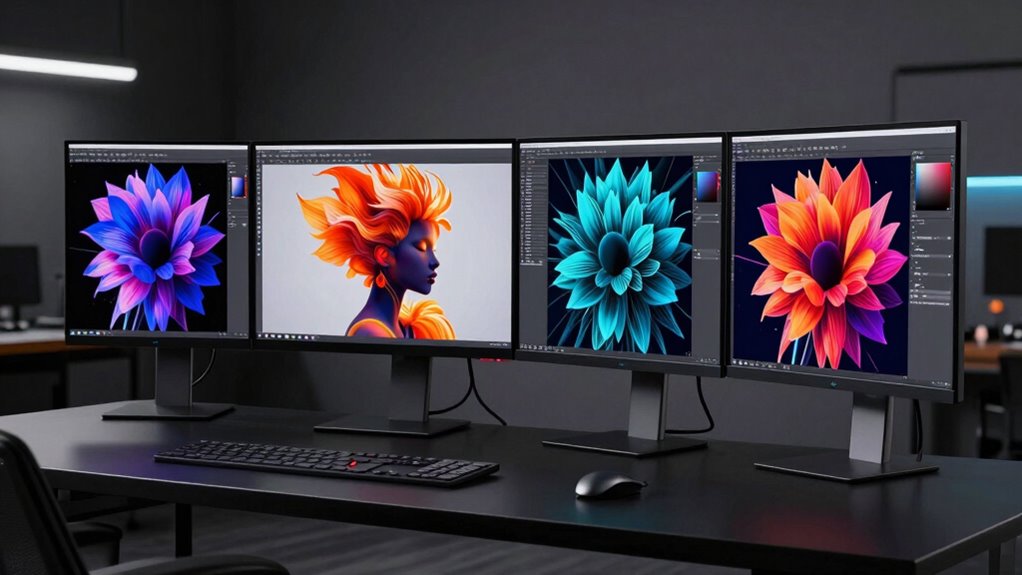
Choosing a monitor with hardware calibration capabilities is essential for professionals who demand precise color accuracy, especially in fields like photography, video editing, and design. The Calibrite Display Plus HL stands out with its ability to calibrate ultra-bright HDR displays up to 10,000 nits, making it ideal for high-end video production. Meanwhile, the Eizo ColorEdge CG319X offers a large, detailed 4K screen with a built-in calibration sensor for consistent color fidelity. ViewSonic VP2468a provides a versatile and ergonomic choice for detailed color work in a more compact form. Each of these options balances different priorities—professional-grade calibration, ease of use, or size—so your decision hinges on your specific needs and workflow.

Get the latest gadgets delivered free with Prime
- Fast, free delivery on millions of items
- Prime Video, Amazon Music and more included
- Member-only deals all year
Complete the kit


Key Takeaways
- Professional users should prioritize high-luminance and large-screen options like Calibrite Display Plus HL and Eizo CG319X for maximum color accuracy.
- Ease of use and quick workflows are better served by devices like Calibrite Display 123 and Datacolor SpyderPro, which cater to less technical users.
- Compact and ergonomic designs such as ViewSonic VP2468a are ideal for small workspaces but may lack some advanced calibration features found in high-end models.
- Some options, like the Calibrite Display Plus HL, are geared primarily toward high-end professional applications, which may be overkill for casual users.
- Price and complexity vary significantly; high-end monitors like Eizo come with a premium price but offer superior accuracy and build quality.
| Calibrite Display Plus HL Monitor Calibration Colorimeter for Mini LED OLED and Bright Displays |  | Best for Ultra-Bright HDR Display Calibration | Sensor: High luminance HL sensor | Max Nits: 10,000 nits | Display Compatibility: Mini LED, OLED, HDR monitors | VIEW ON AMAZON | See Our Full Breakdown |
| Datacolor SpyderPro Monitor Calibrator & Screen Color Calibration Tool |  | Best for Versatile, User-Friendly Calibration | Compatibility: Windows 10/11, macOS 10.14+ | Supported Devices: Unlimited displays, USB-C | Features: Gamma, whitepoint, brightness adjustments | VIEW ON AMAZON | See Our Full Breakdown |
| Calibrite Display 123 Monitor Calibration Colorimeter for Photo Editing and Color Accurate Viewing |  | Best for Beginners and Dual-Display Setups | Supports: Up to 2 displays | Connection: USB C | Workflow: Easy 1-2-3 software | VIEW ON AMAZON | See Our Full Breakdown |
| ViewSonic VP2468a ColorPro 24 inch 1080p IPS Monitor with USB-C, Color Blindness Mode, Hardware Calibration |  | Best for Compact Professional Use | Size: 24 inches | Resolution: 1920 x 1080 | Color Coverage: 100% sRGB, Rec.709 | VIEW ON AMAZON | See Our Full Breakdown |
| Eizo ColorEdge CG319X 31.1-Inch 4K IPS Monitor with Hardware Calibration |  | Best for High-End Professional Color Work | Display Size: 31.1 inches | Resolution: 4096 x 2160 (4K DCI) | Color Coverage: 99% Adobe RGB, 98% DCI-P3 | VIEW ON AMAZON | See Our Full Breakdown |
| monitor with hardware calibration | Connectivity |
|---|---|
| Calibrite Display Plus HL Moni | USB C with USB A adapter |
| Datacolor SpyderPro Monitor Ca | — |
| Calibrite Display 123 Monitor | — |
| ViewSonic VP2468a ColorPro 24 | USB-C, HDMI, DisplayPort |
| Eizo ColorEdge CG319X 31.1-Inc | HDMI, USB, DisplayPort |
More Details on Our Top Picks
Calibrite Display Plus HL Monitor Calibration Colorimeter for Mini LED OLED and Bright Displays
The Calibrite Display Plus HL is designed to handle the most demanding high-luminance displays, measuring up to 10,000 nits. Its high-luminance HL sensor makes it ideal for calibrating mini LED, OLED, and HDR monitors—key for professionals working in high-dynamic-range content creation. Compared with standard calibrators, it excels at ensuring accurate color and luminance in bright environments, supported by specialized PROFILER software. Its main tradeoff is complexity; it’s primarily suited for professionals familiar with calibration workflows, and overkill for casual users. This device fits best for high-end video editors and colorists needing precise HDR calibration, but less so for everyday desktop use.
Pros:- Handles ultra-bright displays up to 10,000 nits for accurate HDR calibration
- Includes advanced profiling and validation tools
- Supports multiple video standards including Rec.709 and BT.1886
Cons:- Complex setup and software may intimidate newcomers
- Limited to high-end professional use, not ideal for casual or office environments
Best for: Professional video editors and colorists working with HDR and high-brightness displays
Not ideal for: Casual users or those with standard SDR monitors
- Sensor:High luminance HL sensor
- Max Nits:10,000 nits
- Display Compatibility:Mini LED, OLED, HDR monitors
- Software:Calibrite PROFILER for Mac and Windows
- Connectivity:USB C with USB A adapter
- Display Size:75 inches
Our verdict“A specialized tool for professionals needing precise calibration of high-brightness, HDR displays.”
Datacolor SpyderPro Monitor Calibrator & Screen Color Calibration Tool
The Datacolor SpyderPro offers a flexible calibration solution supporting a wide range of displays, including multiple device types and operating systems. Its intuitive software simplifies the calibration process, making it accessible for photographers, designers, and video editors who need reliable color accuracy without extensive technical knowledge. It excels at gamma, white point, and brightness adjustments, with additional features like projector calibration and room light adaptation. Compared to more specialized high-end options, it strikes a balance between ease of use and professional results. The main drawback is its lack of advanced features found in high-end monitors, and the price can add up if you need multiple calibrations.
Pros:- Supports a wide range of display types and devices
- User-friendly interface with multi-language support
- Compatible with the latest Windows and macOS versions
Cons:- May be complex for absolute beginners without calibration experience
- Price not specified, potentially costly for multiple licenses
Best for: Photographers, designers, and creative professionals seeking straightforward calibration
Not ideal for: Users requiring ultra-high luminance calibration or professional-grade HDR support
- Compatibility:Windows 10/11, macOS 10.14+
- Supported Devices:Unlimited displays, USB-C
- Features:Gamma, whitepoint, brightness adjustments
Our verdict“A versatile and accessible calibration tool suitable for most creative workflows.”
Calibrite Display 123 Monitor Calibration Colorimeter for Photo Editing and Color Accurate Viewing
The Calibrite Display 123 is aimed at photographers and creators who need a straightforward calibration process. Its simple 1-2-3 workflow makes it accessible for users who want reliable color matching across up to two displays. It supports native and photo brightness targets, with a built-in comparison view to verify calibration accuracy visually. While it’s easy to set up, it’s limited to only two monitors, which might be a drawback for those with larger or more complex setups. Also, some users report moderate accuracy, suggesting it’s better suited for hobbyists or less critical applications rather than professional-grade work.
Pros:- Supports calibration of up to two monitors
- Easy workflow with built-in comparison view
- Compact and portable design
Cons:- Limited to two displays, not suitable for multi-monitor workflows
- May have moderate accuracy for critical color work
Best for: Photographers and content creators with up to two displays
Not ideal for: Large multi-monitor setups or high-end color grading
- Supports:Up to 2 displays
- Connection:USB C
- Workflow:Easy 1-2-3 software
Our verdict“A user-friendly, affordable choice for dual-monitor calibration, best suited for hobbyists and casual creators.”
ViewSonic VP2468a ColorPro 24 inch 1080p IPS Monitor with USB-C, Color Blindness Mode, Hardware Calibration
The ViewSonic VP2468a offers a compact, ergonomic design with factory calibration supporting 100% sRGB and Rec.709, plus hardware calibration capabilities. Its 24-inch IPS panel delivers accurate color and wide viewing angles, making it suitable for graphic design and content creation in limited space. While it boasts factory color accuracy and a dedicated calibration mode, its resolution is modest for a 24-inch display, and the hardware calibration options are less advanced than those found in higher-end models. Still, it’s a practical choice for professionals needing reliable color in a smaller form factor.
Pros:- High factory calibration and Pantone validation
- Hardware calibration support built-in
- Ergonomic stand with tilt, swivel, and height adjustments
Cons:- Limited resolution for detailed editing
- Complex calibration setup may require technical knowledge
Best for: Graphic designers and content creators in tight spaces
Not ideal for: High-end color grading or HDR workflows
- Size:24 inches
- Resolution:1920 x 1080
- Color Coverage:100% sRGB, Rec.709
- Features:Hardware calibration, Color Blindness Mode
- Connectivity:USB-C, HDMI, DisplayPort
Our verdict“A compact, calibrated monitor ideal for space-constrained creative professionals.”
Eizo ColorEdge CG319X 31.1-Inch 4K IPS Monitor with Hardware Calibration
The Eizo ColorEdge CG319X elevates professional creative work with its large 31.1-inch 4K display, offering exceptional color coverage—99% Adobe RGB and 98% DCI-P3—and a built-in calibration sensor. This monitor is designed for color-critical workflows like high-end video editing and print production, where long-term consistency is vital. The integrated calibration sensor simplifies maintaining accuracy without external tools, but the size and high price make it less suitable for casual or small-space setups. Its extensive feature set justifies the cost for studios and professionals demanding the highest color fidelity and reliability.
Pros:- Exceptional color accuracy with 99% Adobe RGB and DCI-P3 coverage
- Built-in calibration sensor for consistent, maintenance-free calibration
- Large 4K display for detailed visuals
Cons:- High price point limits accessibility
- Size and weight require substantial desk space
- Response time may not suit fast-paced gaming
Best for: High-end video editing, color grading, and professional content creation
Not ideal for: Budget-conscious users or casual desktop use
- Display Size:31.1 inches
- Resolution:4096 x 2160 (4K DCI)
- Color Coverage:99% Adobe RGB, 98% DCI-P3
- Brightness:350 cd/m²
- Connectivity:HDMI, USB, DisplayPort
Our verdict“A top-tier choice for professionals who need ultimate color precision and a large, detailed display.”
How We Picked
To compile this list, I evaluated monitors based on their hardware calibration capabilities, relevance for professional workflows, and user-friendly features. Priority was given to models supporting hardware calibration via built-in sensors or advanced calibration tools, with a focus on how well they serve creative professionals and serious enthusiasts. I compared their specs, ease of setup, connectivity options, and overall value to ensure a range of options across different budgets and skill levels. Market reputation, software support, and customer feedback also influenced the rankings, ensuring each pick offers distinct benefits and fits specific user needs.
| monitor with hardware calibration | Connectivity |
|---|---|
| Calibrite Display Plus HL Moni | USB C with USB A adapter |
| Datacolor SpyderPro Monitor Ca | — |
| Calibrite Display 123 Monitor | — |
| ViewSonic VP2468a ColorPro 24 | USB-C, HDMI, DisplayPort |
| Eizo ColorEdge CG319X 31.1-Inc | HDMI, USB, DisplayPort |
Factors to Consider When Choosing Monitor With Hardware Calibration
When selecting a monitor with hardware calibration, the main considerations include the level of color accuracy required, the type of displays you work with, and your workflow complexity. The right model should align with your professional needs, whether that’s high-brightness HDR content, precise color matching across multiple screens, or simple setup for photographers. Understanding key features like built-in sensors, software support, and connectivity options helps ensure you choose a monitor that simplifies calibration without sacrificing quality.
Understanding Hardware Calibration
Hardware calibration involves directly adjusting the monitor’s internal color processing hardware via built-in sensors or calibration tools, resulting in more accurate and consistent colors. Unlike software calibration, which relies on adjustments through the graphics card, hardware calibration maintains its accuracy over time and under various lighting conditions, making it essential for professional color workflows. When evaluating monitors, check whether they include built-in calibration sensors or support external calibration devices for ongoing color fidelity.
Key Features to Consider
Look for monitors with factory calibration and support for hardware calibration, especially if your work depends on precise colors. Consider display size, resolution, and coverage of color gamuts like Adobe RGB or DCI-P3, depending on your application. Connectivity options such as USB-C with power delivery can streamline your setup. Ergonomic adjustments enhance comfort for long hours of work. For high-end workflows, built-in calibration sensors and software compatibility are non-negotiable features.
Budget vs. Professional-Grade
High-end monitors like the Eizo ColorEdge series come with significant investment but provide unparalleled accuracy, built-in calibration, and durability. Mid-range options such as ViewSonic or Calibrite models offer excellent calibration support at a more accessible price point, suitable for serious enthusiasts and semi-professionals. Casual users or hobbyists may find software calibration tools sufficient, but for critical work, investing in hardware calibration-capable monitors is worthwhile.
Frequently Asked Questions
What is hardware calibration and how does it differ from software calibration?
Hardware calibration involves adjusting the monitor’s internal color processing hardware directly, often through built-in sensors, to achieve precise and consistent color accuracy. Software calibration, on the other hand, relies on adjusting color profiles via graphics card settings or calibration software without modifying the monitor’s internal hardware. Hardware calibration generally provides more stable, long-term accuracy, making it essential for professional workflows requiring exact color reproduction.
Do all high-end monitors support hardware calibration?
Not all high-end monitors support hardware calibration—only those explicitly designed with this feature, often including built-in sensors or hardware calibration ports. Monitors like the Eizo ColorEdge series and certain ViewSonic models are equipped for hardware calibration, whereas many consumer-grade displays only support software calibration. Always verify a product’s specifications to confirm hardware calibration support before purchasing.
Is a built-in calibration sensor necessary for professional work?
For professional color-critical work, a built-in calibration sensor significantly simplifies maintaining accurate colors over time, reducing the need for external devices and manual adjustments. It ensures consistent results, especially in environments with changing lighting conditions. While not strictly necessary—external calibration tools can suffice—built-in sensors offer greater convenience and reliability for demanding workflows.
Can I calibrate multiple monitors with one device?
This depends on the calibration device. Devices like the Calibrite Display 123 support calibration for up to two monitors, making them suitable for dual setups. Larger, more advanced monitors or professional calibration systems can handle multiple screens, but ensure your specific model supports multi-monitor calibration if that’s a requirement. For extensive multi-monitor setups, dedicated professional calibration tools are recommended.
How often should I calibrate my monitor?
Professional monitors with hardware calibration sensors can maintain accuracy for several months, but most experts recommend recalibrating every 4 to 6 weeks to account for color drift and environmental changes. Monitors without built-in sensors may require more frequent external calibration to ensure consistent color fidelity, especially in critical workflows.
Conclusion
For professionals working in high-end video, photography, or print production, the Eizo ColorEdge CG319X is the clear choice, offering unmatched accuracy and convenience. Creative users with smaller budgets or less demanding needs might prefer the ViewSonic VP2468a or Calibrite Display 123 for reliable calibration in a compact form. Those who require ultra-bright HDR calibration should consider the Calibrite Display Plus HL, especially if working with HDR content. Casual users and hobbyists can often suffice with software tools, but serious creators should invest in hardware calibration monitors to ensure their work remains consistent and professional.
Halloween Picks
halloween
As an affiliate, we earn on qualifying purchases.