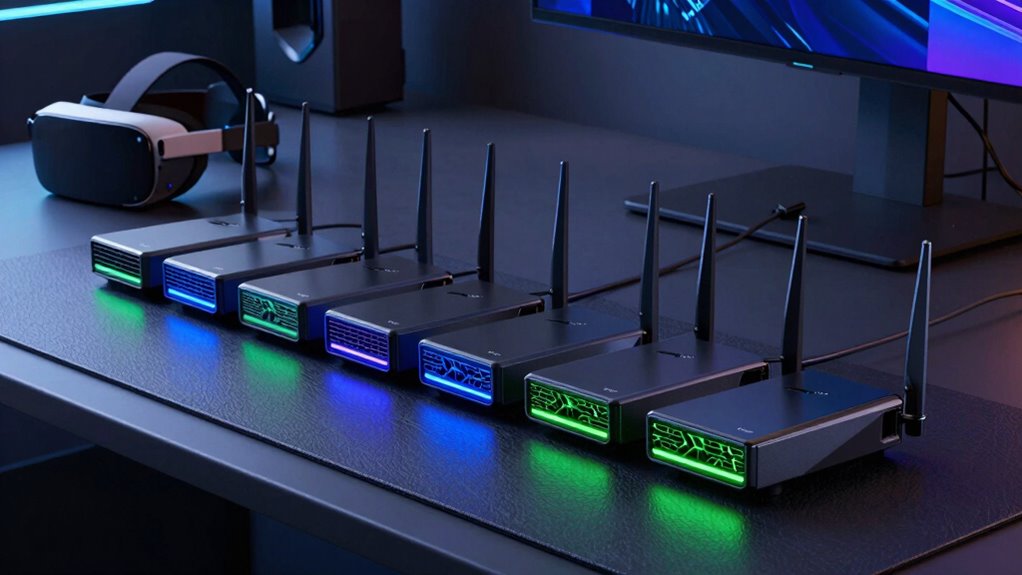

If you’re looking for the best low-latency routers for wireless PCVR in 2026, I recommend considering models supporting Wi-Fi 6 and Wi-Fi 6E, like the Air Link VR Router, TP-Link AXE5400, and ASUS RT-AX1800S, which offer high speeds, stable signals, and advanced interference management. Features like MU-MIMO, OFDMA, and beamforming help diminish lag and ensure smooth streaming. Keep reading to find out which one fits your setup and needs best.
Key Takeaways
- Prioritize Wi-Fi 6/6E routers with advanced beamforming, MU-MIMO, and OFDMA for reduced lag and stable connections.
- Look for routers supporting at least 1200 Mbps on the 5GHz band to ensure smooth high-quality VR streaming.
- Choose models with dedicated low-latency features like PrismPulse Mode and VR-specific optimizations.
- Ensure the router offers strong interference management, extended coverage, and dual/triple band support for reliable multi-room VR setups.
- Opt for routers with built-in security, QoS, and future-proof features like multi-gig ports and mesh compatibility.
| Air Link VR Router for Meta Quest 3/2/3 WiFi6 (Puppis S1) | 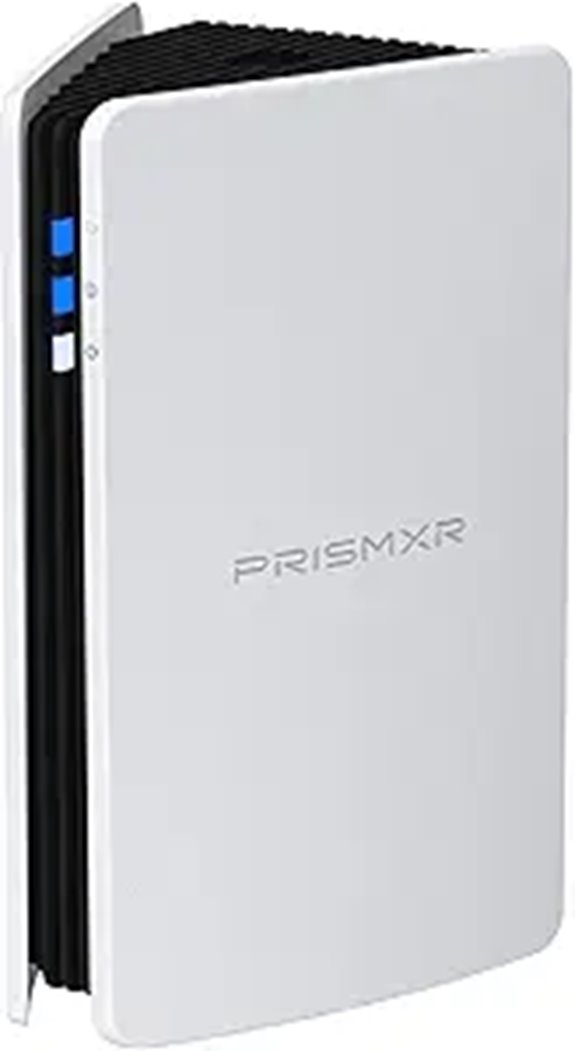 | Seamless VR Streaming | Wi-Fi Standard: WiFi 6 (802.11ax) | Dual-Band Support: Yes | Maximum Speed: 3000 Mbps | VIEW LATEST PRICE | See Our Full Breakdown |
| TP-Link AC1200 Dual Band WiFi Router | 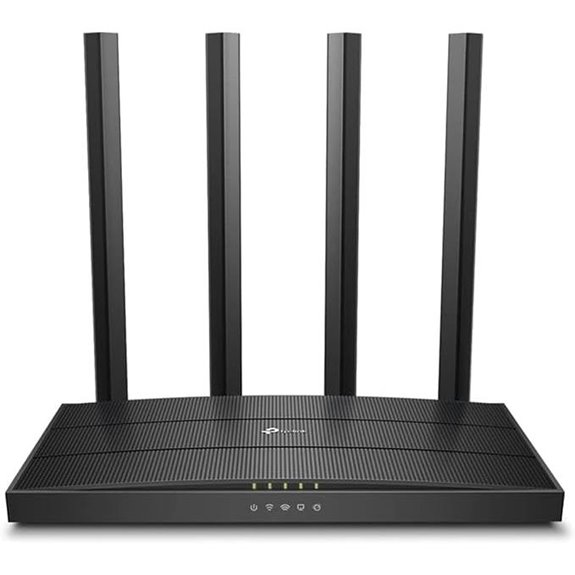 | Reliable Home Network | Wi-Fi Standard: Dual Band WiFi 5 (802.11ac) | Dual-Band Support: Yes | Maximum Speed: 1200 Mbps | VIEW LATEST PRICE | See Our Full Breakdown |
| VR Router for Meta Quest 2/3/Pro & PC VR Streaming | 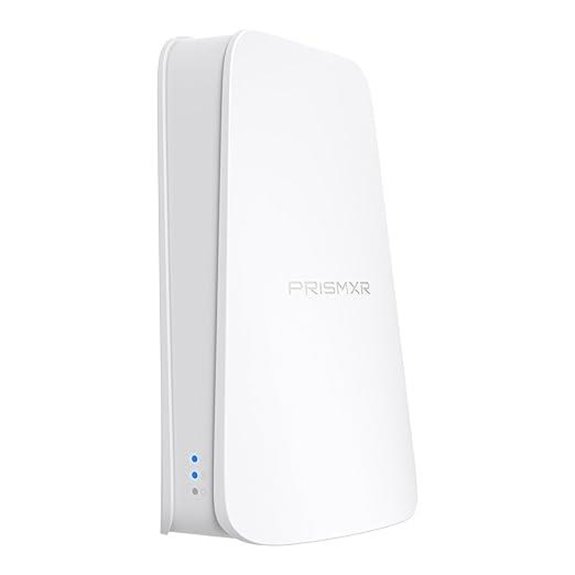 | High-Performance PC-VR | Wi-Fi Standard: Wi-Fi 6 (802.11ax) | Dual-Band Support: Yes | Maximum Speed: 1500 Mbps | VIEW LATEST PRICE | See Our Full Breakdown |
| DrayTek Vigor 2135 AX WiFi 6 Router with Load Balancing | 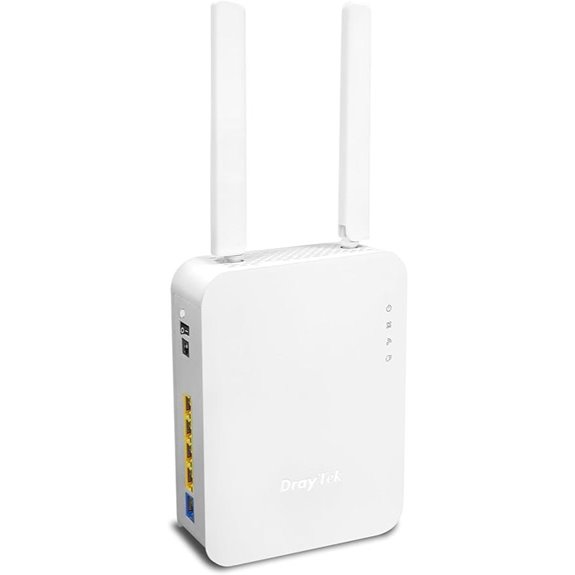 | Business-Ready Connectivity | Wi-Fi Standard: Wi-Fi 6 (AX3000) | Dual-Band Support: Yes | Maximum Speed: 3 Gbps | VIEW LATEST PRICE | See Our Full Breakdown |
| TP-Link AXE5400 WiFi 6E Router with 6GHz Band | 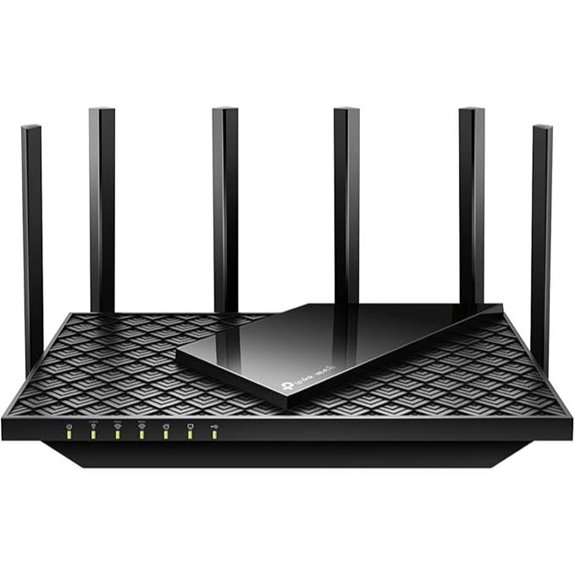 | Cutting-Edge WiFi 6E | Wi-Fi Standard: WiFi 6E (802.11ax) | Dual-Band Support: Yes | Maximum Speed: 5400 Mbps | VIEW LATEST PRICE | See Our Full Breakdown |
| Gaming Router WiFi Booster AX3000 Dual Band 6 | 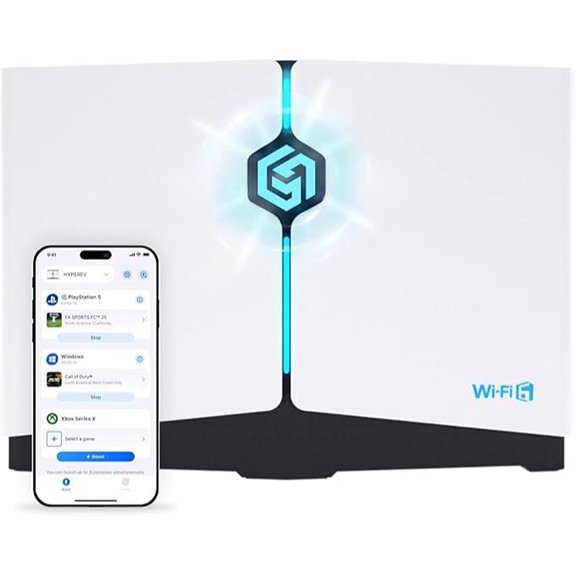 | Gaming Optimization | Wi-Fi Standard: Wi-Fi 6 (802.11ax) | Dual-Band Support: Yes | Maximum Speed: Up to 2402 Mbps | VIEW LATEST PRICE | See Our Full Breakdown |
| TP-Link AX3000 Wi-Fi 6 Router with USB 3.0 | 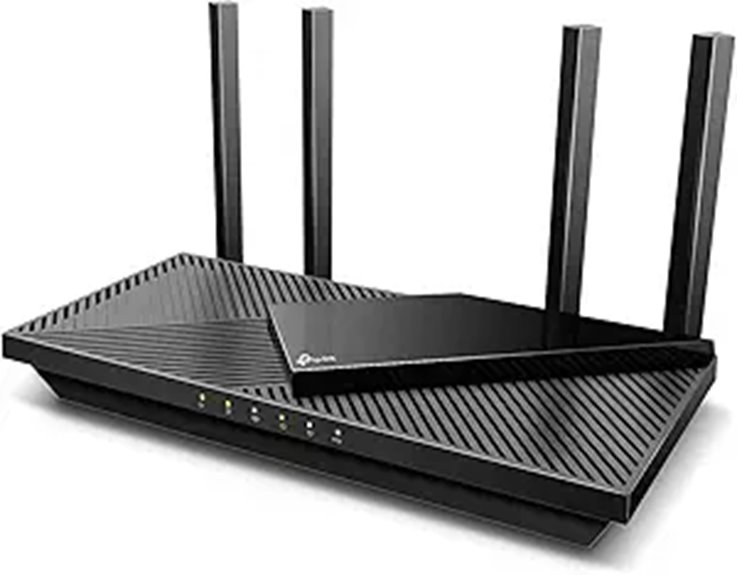 | Advanced Security | Wi-Fi Standard: Wi-Fi 6 (802.11ax) | Dual-Band Support: Yes | Maximum Speed: 2402 Mbps | VIEW LATEST PRICE | See Our Full Breakdown |
| GL.iNet Flint 2 WiFi 6 Gaming Router with Ethernet |  | High-Speed Gaming | Wi-Fi Standard: Wi-Fi 6 (802.11ax) | Dual-Band Support: Yes | Maximum Speed: 6 Gbps (wireless) | VIEW LATEST PRICE | See Our Full Breakdown |
| ASUS RT-AX1800S WiFi 6 Router with Security | 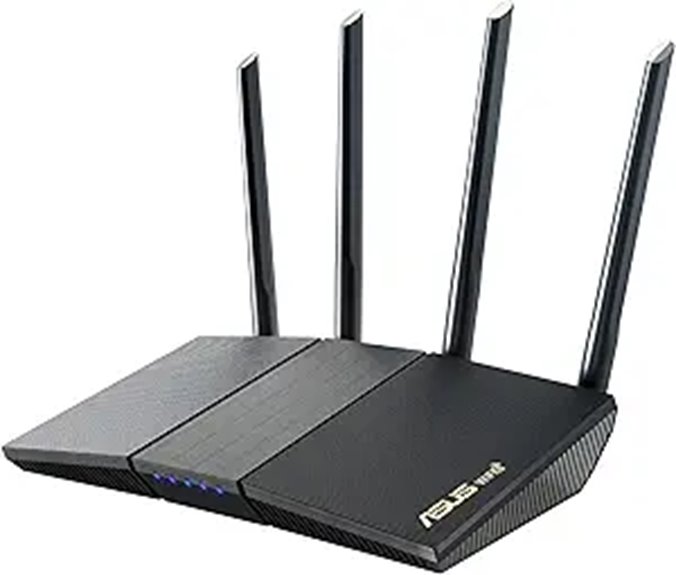 | Mesh Whole-Home | Wi-Fi Standard: Wi-Fi 6 (802.11ax) | Dual-Band Support: Yes | Maximum Speed: Up to 2402 Mbps | VIEW LATEST PRICE | See Our Full Breakdown |
| NETGEAR Nighthawk Pro Gaming WiFi 6 Router |  | Pro-Gaming Performance | Wi-Fi Standard: Wi-Fi 6 (802.11ax) | Dual-Band Support: Yes | Maximum Speed: 5.4 Gbps | VIEW LATEST PRICE | See Our Full Breakdown |
More Details on Our Top Picks
Air Link VR Router for Meta Quest 3/2/3 WiFi6 (Puppis S1)
If you’re serious about low-latency wireless PCVR, the Air Link VR Router for Meta Quest 3/2/3 is a top choice. It supports WiFi6 with 2×2 MIMO 160MHz bandwidth and 1024-QAM, delivering speeds up to 3000 Mbps—2402 Mbps on 5GHz and 575 Mbps on 2.4GHz. Powered by a 1.3GHz dual-core chipset, it guarantees a stable, low-latency connection through PrismPulse Mode. The device is compatible with Meta Quest 3S/3/2, Quest Pro, Pico 4, and Pico 4 Ultra, and requires no driver installation. Its advanced beamforming minimizes interference, providing a seamless, immersive VR experience.
- Wi-Fi Standard:WiFi 6 (802.11ax)
- Dual-Band Support:Yes
- Maximum Speed:3000 Mbps
- Security Features:WPA3, Secure connection
- Compatibility with Devices:PC, VR headsets, mobile
- Extra Features:Easy setup, beamforming
- Additional Feature:PrismXR Desktop App Optimization
- Additional Feature:Bluetooth-based EaseLink Setup
- Additional Feature:Supports Multiple Operation Modes
TP-Link AC1200 Dual Band WiFi Router
The TP-Link AC1200 Dual Band WiFi Router stands out for its dual-band capability and high-speed performance, making it an excellent choice for wireless PCVR enthusiasts who demand low latency and reliable connections. With a total speed of 1200 Mbps—300 Mbps on 2.4GHz and 900 Mbps on 5GHz—it handles multiple devices smoothly, thanks to MU-MIMO technology. Its four external antennas with Beamforming extend coverage and focus signals where needed. Plus, support for TP-Link OneMesh allows seamless whole-home coverage. Security isn’t overlooked either, with WPA3 encryption protecting your network. Overall, it offers a balanced mix of speed, coverage, and security ideal for low-latency VR experiences.
- Wi-Fi Standard:Dual Band WiFi 5 (802.11ac)
- Dual-Band Support:Yes
- Maximum Speed:1200 Mbps
- Security Features:WPA3, Security protocols
- Compatibility with Devices:All major ISPs, devices
- Extra Features:Mesh support, high coverage
- Additional Feature:Four Gigabit LAN Ports
- Additional Feature:MU-MIMO Technology Support
- Additional Feature:Compatible with Major ISPs
VR Router for Meta Quest 2/3/Pro & PC VR Streaming
Designed specifically for Meta Quest 2, Quest 3, Quest Pro, Pico4, and PC VR streaming, these routers deliver ultra-low latency connections that guarantee smooth, immersive gameplay. They support Wi-Fi 6 dual-band, providing up to 1500 Mbps combined speed—1200 Mbps on 5GHz and 300 Mbps on 2.4GHz—ensuring cable-free, high-speed streaming. With a simple plug-and-play setup, you can connect via Ethernet and immediately start streaming without extra configuration. Features like PrismPulse Mode create a dedicated, stable link, while the PrismXR app’s one-click scan and Game Boost Mode optimize performance and troubleshoot issues, making these routers ideal for seamless PCVR experiences.
- Wi-Fi Standard:Wi-Fi 6 (802.11ax)
- Dual-Band Support:Yes
- Maximum Speed:1500 Mbps
- Security Features:Basic security, network monitoring
- Compatibility with Devices:PC, VR, streaming devices
- Extra Features:Plug-and-play, optimization
- Additional Feature:One-Click Game Boost
- Additional Feature:Real-time Streaming Monitoring
- Additional Feature:Dedicated PC-VR Link
DrayTek Vigor 2135 AX WiFi 6 Router with Load Balancing
For gamers seeking a reliable, high-speed connection, the DrayTek Vigor 2135 AX WiFi 6 Router with Load Balancing stands out with its advanced dual-band Wi-Fi 6 technology offering up to 3 Gbps speeds. It supports full fiber Ethernet with failover backup, ensuring seamless connectivity even during outages. Its four Gigabit LAN ports support VLANs and multiple subnets for secure network segmentation. The router also features robust security with a built-in firewall, app enforcement, and web filtering. Plus, its VPN capabilities and USB ports allow flexible remote access and device connections, making it an excellent choice for high-performance, low-latency gaming setups.
- Wi-Fi Standard:Wi-Fi 6 (AX3000)
- Dual-Band Support:Yes
- Maximum Speed:3 Gbps
- Security Features:Firewall, VPN support
- Compatibility with Devices:Wired, wireless devices, VPN
- Extra Features:Load balancing, VLAN
- Additional Feature:Failover Backup WAN
- Additional Feature:VLAN and Subnet Support
- Additional Feature:Built-in Firewall Security
TP-Link AXE5400 WiFi 6E Router with 6GHz Band
If you’re serious about minimizing latency for wireless PCVR, the TP-Link AXE5400 WiFi 6E Router with the 6 GHz band stands out thanks to its tri-band setup and advanced technology. It delivers up to 5400 Mbps combined speed, with the new 6 GHz band offering increased bandwidth and near-zero latency, perfect for gaming and streaming. Its OFDMA technology boosts capacity, allowing multiple devices to connect simultaneously without lag. The router’s 1.7 GHz quad-core CPU and 512 MB memory guarantee smooth processing and multitasking. Plus, it supports seamless whole-home coverage with OneMesh, making it an excellent choice for high-performance, low-latency wireless PCVR setups.
- Wi-Fi Standard:WiFi 6E (802.11ax)
- Dual-Band Support:Yes
- Maximum Speed:5400 Mbps
- Security Features:Security Shield, VPN functions
- Compatibility with Devices:Smart home, gaming devices
- Extra Features:OFDMA, multi-user support
- Additional Feature:512 MB High-Speed Memory
- Additional Feature:Recognized PCMag Editors’ Choice
- Additional Feature:Supports Multiple Devices
Gaming Router WiFi Booster AX3000 Dual Band 6
The Gaming Router WiFi Booster AX3000 Dual Band 6 stands out for its ability to markedly reduce ping and eliminate packet loss, making it an excellent choice for gamers seeking a stable, low-latency connection. It easily connects to your existing network with a simple plug-and-play setup, supporting over 1000 games and multiple devices like PS5, Switch, and PC. With WiFi 6 speeds up to 2402Mbps on dual bands, it enhances gaming performance instantly. The device also offers game-specific optimization, VIP acceleration, and a free 90-day booster subscription, ensuring smooth, responsive gameplay without needing to replace your current router.
- Wi-Fi Standard:Wi-Fi 6 (802.11ax)
- Dual-Band Support:Yes
- Maximum Speed:Up to 2402 Mbps
- Security Features:AdGuard Home, Blocking features
- Compatibility with Devices:Consoles, PC, mobile
- Extra Features:Gaming optimization, high storage
- Additional Feature:Instant Gaming Acceleration
- Additional Feature:3-Month VIP Core Plan
- Additional Feature:Supports Over 1000 Games
TP-Link AX3000 Wi-Fi 6 Router with USB 3.0
High-speed Wi-Fi 6 technology makes the TP-Link AX3000 Router with USB 3.0 an excellent choice for wireless PCVR enthusiasts seeking low latency and smooth performance. With gigabit speeds of up to 2402 Mbps on 5 GHz and 574 Mbps on 2.4 GHz, it handles multiple devices efficiently thanks to OFDMA and MU-MIMO. Four high-gain antennas and Beamforming guarantee strong, reliable coverage across your space. Security features like TP-Link HomeShield protect your network, while compatibility with major ISPs makes setup straightforward. Plus, its support for SmartMesh, voice control, and VPN options adds versatility, making it a solid low-latency router for demanding VR experiences.
- Wi-Fi Standard:Wi-Fi 6 (802.11ax)
- Dual-Band Support:Yes
- Maximum Speed:2402 Mbps
- Security Features:TP-Link HomeShield, VPN support
- Compatibility with Devices:All major ISPs, smart devices
- Extra Features:Mesh support, parental controls
- Additional Feature:Support for Smart Voice Control
- Additional Feature:Wi-Fi 6 with OFDMA
- Additional Feature:Supports EasyMesh Expansion
GL.iNet Flint 2 WiFi 6 Gaming Router with Ethernet
For gamers and VR enthusiasts seeking ultra-reliable connections, the GL.iNet Flint 2 WiFi 6 Gaming Router stands out with its support for Wi-Fi 6 and 2.5G Ethernet ports, ensuring minimal latency and stable wired or wireless performance. It delivers speeds up to 6 Gbps, making it ideal for high-bandwidth VR streaming and gaming. Its 8-stream Wi-Fi 6 technology minimizes lag, while the dual Ethernet ports connect directly to fiber modems for stable wired links. With high storage capacity and easy setup, it’s perfect for demanding digital environments. The Flint 2 offers a powerful, flexible solution for smooth, low-latency PCVR experiences.
- Wi-Fi Standard:Wi-Fi 6 (802.11ax)
- Dual-Band Support:Yes
- Maximum Speed:6 Gbps (wireless)
- Security Features:Built-in security, VPN options
- Compatibility with Devices:Gaming, smart home, VPN
- Extra Features:VPN, ad blocking
- Additional Feature:2.5G Ethernet Ports
- Additional Feature:High Storage Capacity
- Additional Feature:Supports Wireguard VPN
ASUS RT-AX1800S WiFi 6 Router with Security
If you’re looking for a router that can handle multiple devices simultaneously without sacrificing speed, the ASUS RT-AX1800S WiFi 6 Router with Security is an excellent choice. It supports WiFi 6 with MU-MIMO and OFDMA technology, improving efficiency and throughput for gaming, streaming, and smart home devices. Its four external antennas boost coverage, while a dual-core processor ensures smooth performance. It offers gigabit wired ports for fast, reliable connections and includes AiProtection security powered by Trend Micro. Plus, ASUS Instant Guard provides easy, subscription-free VPN access when you’re away. This router combines high speed, security, and expandability for a seamless PCVR experience.
- Wi-Fi Standard:Wi-Fi 6 (802.11ax)
- Dual-Band Support:Yes
- Maximum Speed:Up to 2402 Mbps
- Security Features:AiProtection, VPN support
- Compatibility with Devices:Gaming consoles, PCs
- Extra Features:AiMesh, parental controls
- Additional Feature:ASUS Instant Guard VPN
- Additional Feature:Extendable via AiMesh
- Additional Feature:Commercial-Grade Security
NETGEAR Nighthawk Pro Gaming WiFi 6 Router
The NETGEAR Nighthawk Pro Gaming WiFi 6 Router stands out as a top choice for wireless PCVR setups that demand ultra-low latency and reliable connections. Its AX5400 dual-band WiFi 6 speed reaches up to 5.4Gbps, ensuring smooth streaming and gaming. The DumaOS 3.0 optimizes server connections, reducing ping rates by up to 93%. With four gigabit Ethernet ports and support for multiple devices, it handles heavy loads effortlessly. Designed for gamers, it’s compatible with PCs, consoles, and streaming devices. Plus, its built-in security features, including Armor software, keep your network protected. This router is a solid pick for any high-performance PCVR setup.
- Wi-Fi Standard:Wi-Fi 6 (802.11ax)
- Dual-Band Support:Yes
- Maximum Speed:5.4 Gbps
- Security Features:Armor security, VPN integration
- Compatibility with Devices:Gaming devices, PCs
- Extra Features:Lag reduction, security suite
- Additional Feature:DumaOS 3.0 Optimization
- Additional Feature:Industry-Leading Security
- Additional Feature:Supports Wired and Wireless Devices
Factors to Consider When Choosing a Low-Latency Router for Wireless PCVR

When selecting a low-latency router for wireless PCVR, I focus on several key factors. I look at wireless speed capabilities, latency reduction features, and signal stability to guarantee smooth gameplay. Additionally, I consider interference management and compatibility with VR software to find the best fit for my setup.
Wireless Speed Capabilities
Choosing a low-latency router for wireless PCVR hinges on its wireless speed capabilities, as these directly impact streaming smoothness and responsiveness. A router should support at least 1200 Mbps on the 5GHz band to handle high-quality VR streams without lag. Wi-Fi 6 and Wi-Fi 6E standards provide faster data transfer rates and lower latency, which are essential for immersive experiences. Technologies like OFDMA and MU-MIMO improve network efficiency, allowing multiple devices to operate smoothly during VR sessions. Dual-band and tri-band routers help distribute traffic, reducing congestion and ensuring consistent performance. Keep in mind, actual speeds depend on your router’s capabilities and your environment, including interference levels and distance from the device. Prioritizing high wireless speeds guarantees a seamless and responsive PCVR experience.
Latency Reduction Features
To reduce latency in wireless PCVR, look for routers equipped with advanced beamforming technology, which directs signals precisely to minimize lag and interference. This focus guarantees a steady, responsive connection critical for immersive VR experiences. Support for WiFi 6 and WiFi 6E standards is also essential, as they enable higher data transfer rates and lower latency, reducing lag during intense VR sessions. Features like Quality of Service (QoS) prioritize VR data packets, further minimizing delays and smoothing gameplay. Dual-band and tri-band configurations help distribute network traffic effectively, avoiding congestion that can cause latency spikes. Additionally, dedicated processing hardware, such as high-speed CPUs and ample memory, allows the router to handle data quickly, ensuring minimal delay in transmitting VR streams.
Signal Stability and Range
A stable and wide-ranging Wi-Fi signal is essential for low-latency wireless PCVR, especially in larger or multi-room setups. Advanced beamforming technology helps focus signals directly toward devices, boosting stability and reducing lag. Extended coverage ensures consistent performance across multiple rooms, preventing drops that can disrupt immersion. Dual-band or tri-band routers distribute devices across different frequencies, minimizing interference and enhancing overall stability. Stronger signal strength correlates with fewer disconnections and smoother streaming. Proper placement is key—ideally central and elevated—to maximize range and signal quality. By prioritizing these factors, you can maintain a reliable connection that supports the low latency needed for an optimal PCVR experience. This foundation minimizes latency issues caused by signal instability or insufficient coverage, ensuring seamless gameplay.
Interference Management Tools
Interference management tools are essential for maintaining low-latency connections in wireless PCVR setups, especially in environments crowded with other wireless networks. Beamforming directs Wi-Fi signals straight to your device, reducing lag and signal loss. MIMO technology allows routers to handle multiple data streams simultaneously, minimizing congestion and delays. Advanced beamforming and spatial filtering help eliminate interference from nearby networks, ensuring stable, low-latency connections. Features like dynamic frequency selection (DFS) automatically switch your router to less crowded channels, reducing interference from other devices. Additionally, Quality of Service (QoS) settings prioritize VR data traffic, ensuring minimal latency even in congested environments. These tools collectively help provide a smoother, more responsive VR experience by actively managing and reducing sources of wireless interference.
Compatibility With VR Software
Choosing a low-latency router for wireless PCVR starts with ensuring it supports the latest wireless standards like Wi-Fi 6 or Wi-Fi 6E, which are essential for high-bandwidth, stable VR streaming. Compatibility with VR streaming apps like Virtual Desktop, Steam Link, or Oculus Link is vital, as these require a reliable, high-bandwidth connection to prevent lag. It’s also important that the router can establish a dedicated, low-latency link, using features like PrismPulse Mode or similar tech designed for PC-VR. Additionally, routers that support modes such as Access Point or Hotspot make it easier to create interference-free, direct connections with VR headsets and PCs. Dual-band or tri-band configurations help balance bandwidth, reducing lag and interference during immersive VR experiences.
Network Security Measures
Ensuring your wireless PCVR setup remains secure is just as important as maintaining low latency. Strong network security measures protect your devices and data from unauthorized access and malware. I recommend using WPA3 encryption, which offers better password protection and individualized data encryption. Setting up a guest network isolates your VR devices from your main network, reducing potential security risks. Regular firmware updates are vital—they patch vulnerabilities and defend against emerging threats. Adding a VPN like OpenVPN or L2TP can further safeguard your streams from interception. Finally, configuring access controls and filtering limits device connectivity to trusted sources, minimizing breaches during your VR sessions. Prioritizing these security measures ensures your immersive experience stays safe and uninterrupted.
Ease of Setup
When selecting a low-latency router for wireless PCVR, ease of setup is a crucial factor that can save you time and frustration. A straightforward, plug-and-play process minimizes technical barriers, making installation quick and hassle-free. Devices supporting one-click or automatic network configuration help reduce the effort involved, allowing you to get everything running swiftly. Compatibility with your existing hardware and streaming platforms like Virtual Desktop further simplifies the connection process, preventing compatibility issues. Features like Bluetooth-based EaseLink technology enable driver-free, quick device management, streamlining setup even more. Clear, step-by-step instructions and minimal configuration requirements ensure a smooth experience from the start. Ultimately, a router with intuitive setup features lets you focus on your VR experience rather than troubleshooting.
Future-Proof Technology
Since VR gaming demands the latest in network technology, investing in a future-proof router means you’re prepared for upcoming bandwidth needs and device growth. Look for routers supporting Wi-Fi 6 or Wi-Fi 6E, which offer higher speeds and lower latency essential for smooth VR experiences. Multi-gigabit ports and advanced beamforming ensure compatibility with future high-bandwidth devices. Support for protocols like WPA3 and OFDMA enhances security and manages multiple devices efficiently as your network expands. Including multi-band frequencies, especially the 6GHz band in Wi-Fi 6E routers, prepares your setup for increasing device density and bandwidth demands. Additionally, features like upgradable firmware and mesh networking support ensure your router can adapt to future standards and seamlessly integrate with new devices, making it a long-term investment for your wireless PCVR setup.
Frequently Asked Questions
How Does Router Placement Affect VR Latency and Connection Stability?
Router placement is vital for VR latency and connection stability. I always position my router in a central, open location away from walls and interference sources like microwaves. This minimizes signal loss and reduces lag. Keeping it elevated, like on a shelf, helps guarantee a strong, consistent connection. Proper placement directly impacts how smoothly my VR experience runs, making gameplay more immersive and less frustrating.
Can Mesh Wifi Systems Improve Low-Latency VR Streaming?
Absolutely, mesh WiFi systems can enhance low-latency VR streaming. They create a seamless network, reducing dead zones and ensuring a consistent connection. With multiple nodes working together, you get better coverage and less interference, which is vital for immersive VR experiences. I’ve found that upgrading to a mesh system often results in smoother, more reliable VR sessions, making your virtual adventures more enjoyable and hassle-free.
What Firmware Features Enhance VR Performance on These Routers?
Firmware features like Quality of Service (QoS), MU-MIMO, and beamforming really boost VR performance. I always look for routers that prioritize VR traffic with QoS, ensuring minimal lag. MU-MIMO helps multiple devices connect smoothly, and beamforming focuses signals directly to my headset. These features work together to lower latency, stabilize connections, and give me a seamless VR experience, even in busy environments.
How Do Different Wifi Bands Impact VR Latency and Bandwidth?
Think of Wi-Fi bands as different lanes on a highway. The 5 GHz band offers more bandwidth, reducing lag and supporting smoother VR experiences, but has a shorter range. The 2.4 GHz band covers more ground but can get congested, causing higher latency. For VR, I recommend prioritizing the 5 GHz band for its speed and low latency, ensuring your experience stays seamless and immersive.
Are There Specific Security Settings Recommended for VR Data Protection?
I recommend enabling WPA3 encryption, which offers the strongest security for VR data. Also, set a strong, unique password to prevent unauthorized access. Keep your firmware updated regularly, as manufacturers patch security vulnerabilities. Disable WPS and UPnP to minimize potential attack vectors. Use a separate guest network for visitors, and enable network encryption. These steps help guarantee your VR data stays protected while enjoying seamless, low-latency wireless experiences.
Conclusion
Choosing the right router feels like tuning a finely crafted instrument, each component harmonizing to deliver seamless virtual domains. With the right low-latency router, you’ll glide through digital worlds like a whisper on the wind, frames flowing smoothly as if time itself bends around your every move. When you prioritize speed and stability, gaming becomes an immersive dance—where latency fades into the background, leaving only pure, uninterrupted adventure.