For photographers, choosing the right iMac means balancing powerful performance with stunning display quality. The Apple 2024 iMac with M4 chip stands out as the best overall choice, offering cutting-edge speed and a vibrant 24-inch Retina display. The 2021 Apple iMac with M1 chip remains a solid budget-friendly alternative, especially for those new to professional editing. Meanwhile, the Apple iMac 27-inch with Retina 5K provides an expansive, high-resolution canvas for detailed work. The main tradeoffs involve balancing screen size, processing power, and budget. Continue reading for a detailed breakdown of each option and how to select the perfect iMac for your photography needs.

Get the latest gadgets delivered free with Prime
- Fast, free delivery on millions of items
- Prime Video, Amazon Music and more included
- Member-only deals all year
Complete the kit



Key Takeaways
- The 2024 M4 chip models offer the latest processing power, ideal for demanding photo editing workflows.
- Display size and resolution are critical; the 27-inch Retina 5K provides more workspace but comes at a higher price.
- Memory and storage options vary significantly, impacting performance and future-proofing for large files.
- Refurbished and renewed models can provide significant savings but might lack the latest features or warranty coverage.
- Choosing between the 24-inch and 27-inch models depends on your workspace and need for screen real estate.
| Apple 2024 iMac All-in-One Desktop Computer with M4 Chip, 24-inch Retina Display, 24GB Memory, 512GB SSD – Silver | 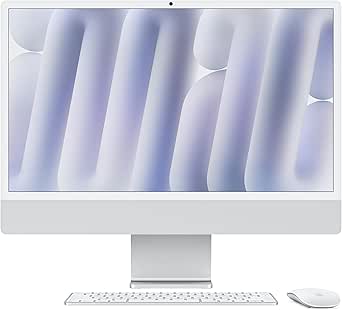 | Best Overall for Power and Future-Proofing | Processor: M4 chip with 10-core CPU and 10-core GPU | Display: 24-inch Retina 4.5K | Memory: 24GB Unified Memory | VIEW ON AMAZON | See Our Full Breakdown |
| Apple 2023 iMac with M3 Chip, 8-core CPU, 24-inch, 8GB RAM, 512GB SSD – Silver (Renewed) |  | Best Value for Up-to-Date Performance | Processor: Apple M3 chip with 8-core CPU | Display: 24-inch 4.5K Retina, 500 nits | Memory: 8GB | VIEW ON AMAZON | See Our Full Breakdown |
| 2021 Apple iMac 24-inch with M1 Chip (8GB RAM, 512GB SSD) – Pink (Renewed) |  | Best for Style and Performance at a Budget | Display Size: 24 inches | Display Resolution: 4.5K Retina | Processor: Apple M1 chip, 8-core CPU | VIEW ON AMAZON | See Our Full Breakdown |
| Apple 2024 iMac Air with M4 Chip, 24-inch, 16GB RAM, 256GB SSD, Silver (Renewed) |  | Best Compact Power for Space-Conscious Photographers | Processor: Apple M4, 8-core | Display: 24-inch Retina | Memory: 16GB SDRAM | VIEW ON AMAZON | See Our Full Breakdown |
| Apple iMac 27-inch with Retina 5K Display (2020 Model) |  | Best for Large Display and High-Resolution Work | Display Size: 27 inches | Display Resolution: 5120 x 2880 | Processor: Intel Core i5 3.3GHz 6-core | VIEW ON AMAZON | See Our Full Breakdown |
| Apple 2024 iMac All-in-One Desktop Computer with M4 Chip, 24-inch Retina Display, 16GB RAM, 256GB SSD, Silver |  | Best Compact Powerhouse for Creatives on a Budget | Processor: M4 chip with 8-core CPU and 8-core GPU | Display: 24-inch Retina 4.5K | Memory: 16GB Unified Memory | VIEW ON AMAZON | See Our Full Breakdown |
| imac for photographer | Processor | Storage | Memory | Color |
|---|---|---|---|---|
| Apple 2024 iMac All-in-One Des | M4 chip with 10-core CPU and 10-core GPU | 512GB SSD | 24GB Unified Memory | Silver |
| Apple 2023 iMac with M3 Chip | Apple M3 chip with 8-core CPU | 512GB SSD | 8GB | Silver |
| 2021 Apple iMac 24-inch with M | Apple M1 chip, 8-core CPU | 512GB SSD | — | Pink |
| Apple 2024 iMac Air with M4 Ch | Apple M4, 8-core | 256GB SSD | 16GB SDRAM | Silver |
| Apple iMac 27-inch with Retina | Intel Core i5 3.3GHz 6-core | 512GB SSD | 8GB DDR4 | — |
| Apple 2024 iMac All-in-One Des | M4 chip with 8-core CPU and 8-core GPU | 256GB SSD | 16GB Unified Memory | Silver |
More Details on Our Top Picks
Apple 2024 iMac All-in-One Desktop Computer with M4 Chip, 24-inch Retina Display, 24GB Memory, 512GB SSD – Silver
This 2024 iMac stands out for its powerful M4 chip, which offers faster performance and better future-proofing compared to the M3-powered 2023 model. Its vibrant 24-inch Retina display with high brightness and color accuracy makes it ideal for detailed photo editing. The sleek, colorful design fits seamlessly into any workspace, while the extensive connectivity options—including four Thunderbolt 4 ports and Wi-Fi 6E—support multiple peripherals and external displays. However, the premium price and limited 512GB storage can be drawbacks for heavy users needing more space or budget-conscious buyers. Compared with the M3 model, this iMac’s performance and display quality justify the higher cost, but it’s less suitable for those needing expandable storage or GPU options.
Pros:- Powerful M4 chip with 10-core CPU and GPU ensures fast editing and multitasking
- Bright 24-inch Retina display with high color accuracy supports detailed photo work
- Excellent connectivity including Thunderbolt 4 and Wi-Fi 6E for external peripherals
Cons:- Premium price may be prohibitive for casual or hobbyist users
- Limited to 512GB SSD which may require external storage for large photo libraries
- No dedicated GPU options for graphic-intensive tasks
Best for: Professional photographers needing a high-performance all-in-one with future-ready specs and excellent display quality.
Not ideal for: Budget-conscious hobbyists or users with heavy storage needs who prefer more affordable options or upgrade flexibility.
- Processor:M4 chip with 10-core CPU and 10-core GPU
- Display:24-inch Retina 4.5K
- Memory:24GB Unified Memory
- Storage:512GB SSD
- Color:Silver
- Connectivity:Wi-Fi 6E, Bluetooth 5.3, four Thunderbolt 4 ports
Our verdict“This iMac makes the most sense for photographers who want a future-proof, powerful all-in-one with a stunning display and are willing to invest for top-tier performance.”
Apple 2023 iMac with M3 Chip, 8-core CPU, 24-inch, 8GB RAM, 512GB SSD – Silver (Renewed)
The 2023 M3 iMac offers a strong balance of performance and affordability, making it a compelling option over the older M1 model like the 2021 iMac in pink. Its next-generation M3 chip delivers noticeably faster performance for editing workflows and casual gaming. The vivid 4.5K Retina display with 500 nits brightness and one billion colors ensures accurate color reproduction for photo editing. The thin, elegant design fits well into tight spaces, and the integrated high-quality camera and audio support remote work. The key tradeoff involves its renewed condition, which might lack some original accessories and could have less longevity, and the 8GB RAM may become limiting with multitasking or large files. Compared to the 2021 model, the M3 chip provides a significant performance boost, but it doesn’t yet match the future-proof capabilities of the M4-powered models.
Pros:- Next-gen M3 chip delivers fast performance for editing and multitasking
- Vivid 4.5K Retina display with high brightness and color depth
- Thin, stylish design that easily fits in any workspace
- Includes high-quality camera and Spatial Audio microphones
Cons:- Renewed condition may lack some original accessories and durability
- Only 8GB RAM may limit heavy multitasking or large photo editing projects
- Limited storage at 512GB SSD could require external drives
Best for: Photographers seeking a recent, powerful Mac with excellent display quality at a more accessible price point.
Not ideal for: Heavy multitaskers or those with large photo libraries who need extensive RAM or storage flexibility, or users who prefer brand-new units.
- Processor:Apple M3 chip with 8-core CPU
- Display:24-inch 4.5K Retina, 500 nits
- Memory:8GB
- Storage:512GB SSD
- Color:Silver
- Condition:Renewed
Our verdict“This renewed M3 iMac offers excellent performance and display quality for photographers on a budget or seeking a recent model, but may fall short for heavy multitasking or future-proofing needs.”
2021 Apple iMac 24-inch with M1 Chip (8GB RAM, 512GB SSD) – Pink (Renewed)
The 2021 M1 iMac in pink offers a vibrant, ultra-thin design with a 24-inch 4.5K Retina display that rivals newer models in visual quality. Its M1 chip provides solid performance for photo editing and general use, though it trails behind the M3 and M4 chips in raw speed. The colorful aesthetic makes it a standout in creative spaces, while the 1080p FaceTime HD camera and studio-quality microphones support remote workflows. Its main tradeoff lies in the refurbished condition, which may affect longevity, and the 8GB RAM could limit multitasking with large files. Compared to the newer M3 and M4 models, this iMac still holds up visually and performance-wise but is less future-proof and may lack some speed and connectivity features.
Pros:- Stunning 4.5K Retina display with P3 wide color
- Strong performance from the M1 chip for editing and multitasking
- Vibrant, stylish design in pink
- High-quality camera and microphone setup
Cons:- Refurbished condition may impact long-term durability
- Only 8GB RAM limits multitasking with large files
- Older chip architecture compared to M3 and M4 models
Best for: Budget-conscious photographers who value style and solid performance in a vibrant design.
Not ideal for: Heavy multitaskers or professionals needing extensive RAM or the latest processing power, who should opt for newer or higher-end models.
- Display Size:24 inches
- Display Resolution:4.5K Retina
- Processor:Apple M1 chip, 8-core CPU
- Graphics:8-core GPU
- RAM:8GB
- Storage:512GB SSD
- Color:Pink
Our verdict“This refreshed M1 iMac offers excellent visual quality and performance for those on a budget who prioritize design and color, but is less suited for demanding workflows or future upgrades.”
Apple 2024 iMac Air with M4 Chip, 24-inch, 16GB RAM, 256GB SSD, Silver (Renewed)
The 2024 iMac Air in its renewed form offers powerful performance with the M4 chip’s 8 cores, making it ideal for photographers who need speed in a compact, lightweight design. Its 24-inch Retina display with support for a billion colors ensures vibrant, accurate image editing. The 16GB RAM provides enough headroom for multitasking, while the 256GB SSD may be limiting for large photo libraries, pushing users toward external storage. Its sleek, colorful, and lightweight build makes it a versatile choice for those with limited desk space or who prefer a more portable setup. The primary tradeoff involves the smaller SSD, which might require additional external drives, and the renewed status that could impact longevity. Compared with the 2024 all-in-one, this model prioritizes space-saving design over maximum internal storage.
Pros:- Powerful M4 chip with 8 cores delivers fast processing
- Vivid 24-inch Retina display with broad color support
- Lightweight, space-efficient design
- 16GB RAM supports multitasking
Cons:- Limited to 256GB SSD, requiring external storage for large files
- Renewed condition might impact long-term durability
- Higher price compared to similarly specced desktops without the sleek design
Best for: Photographers needing a powerful yet compact desktop that fits in tight spaces and supports demanding workflows.
Not ideal for: Users with large photo collections or those seeking maximum internal storage and future expandability.
- Processor:Apple M4, 8-core
- Display:24-inch Retina
- Memory:16GB SDRAM
- Storage:256GB SSD
- Color:Silver
- Features:Microphone, Speakers, Webcam
Our verdict“This iMac Air combines strong performance with a compact form factor, making it ideal for space-limited photographers who don’t mind external storage solutions.”
Apple iMac 27-inch with Retina 5K Display (2020 Model)
The 2020 27-inch iMac offers an expansive Retina 5K display that exceeds the size options of the 24-inch models, making it especially appealing for photographers who work with high-resolution images. Its 6-core 10th-gen Intel processor provides solid performance, though it lags behind the Apple Silicon chips in raw speed and power efficiency. The AMD Radeon Pro 5300 GPU offers decent graphic performance but may be limiting for intensive editing or 3D work. Its upgradable RAM—up to 128GB—gives it an edge for future-proofing, but the fixed storage of 512GB SSD can be a bottleneck for large photo libraries. Its classic all-in-one design remains a reliable choice for those who prioritize a large, detailed display over the latest chipsets or portability.
Pros:- Massive 27-inch Retina 5K display ideal for detailed editing
- Upgradable RAM up to 128GB for future-proofing
- Solid performance with 10th-gen Intel processor
- Multiple connectivity options including Thunderbolt 3
Cons:- Older Intel CPU compared to Apple Silicon models
- Limited to 8GB RAM in base configuration, needing upgrade for heavy multitasking
- Fixed 512GB SSD storage, potentially restrictive for large photo libraries
Best for: Photographers needing a large, high-resolution display with upgradeability and robust performance for detailed editing.
Not ideal for: Those seeking the latest chip technology or a more portable setup; users with tight budgets will find newer models more cost-effective.
- Display Size:27 inches
- Display Resolution:5120 x 2880
- Processor:Intel Core i5 3.3GHz 6-core
- Graphics:AMD Radeon Pro 5300
- Memory:8GB DDR4
- Storage:512GB SSD
- Connectivity:Thunderbolt 3, USB-C, Ethernet
Our verdict“This large, high-resolution iMac suits photographers who need expansive detail and upgrade options but can accept older hardware and fixed storage limitations.”
Apple 2024 iMac All-in-One Desktop Computer with M4 Chip, 24-inch Retina Display, 16GB RAM, 256GB SSD, Silver
This 2024 iMac with M4 chip stands out through its impressive combination of power and form factor, making it an excellent choice for photographers who value a stunning Retina display without the bulk of larger models. Compared to the 2024 iMac with 24GB RAM and 512GB SSD, this version is more budget-friendly but sacrifices storage and memory capacity, which can be limiting for large photo libraries or editing workflows. The powerful M4 chip ensures smooth multitasking and fast rendering, but the limited SSD storage may require external drives sooner for extensive projects. Its vibrant 24-inch display offers beautiful color accuracy, though it lacks a dedicated GPU, which could impact GPU-intensive editing tasks. This pick makes the most sense for photographers who need a capable, space-saving machine for everyday editing and display, with the understanding that expanding storage or performance may require external solutions.
Pros:- Powerful M4 chip delivers fast, responsive performance
- Vivid 24-inch Retina 4.5K display with accurate colors
- Sleek, colorful design fits well in creative workspaces
- Seamless integration within the Apple ecosystem
Cons:- Limited to 256GB SSD storage, may necessitate external drives quickly
- No dedicated GPU, which could limit GPU-dependent editing tasks
- Premium price for a relatively mid-range internal storage capacity
Best for: Photographers who prioritize a compact, all-in-one design with excellent display quality, and who mainly work with moderate file sizes or external storage.
Not ideal for: Professional photographers with large catalogs or high-resolution workflows requiring extensive internal storage and GPU power, who should consider larger or more expandable systems.
- Processor:M4 chip with 8-core CPU and 8-core GPU
- Display:24-inch Retina 4.5K
- Memory:16GB Unified Memory
- Storage:256GB SSD
- Color:Silver
- Dimensions:21.54 x 5.79 x 18.15 inches
- Weight:9.72 pounds
- Ports:Up to four Thunderbolt 4 ports
- Connectivity:Wi-Fi 6E, Bluetooth 5.3
Our verdict“This iMac is ideal for photographers seeking a stylish, capable machine for everyday editing and display, provided their storage needs are modest or supplemented externally.”

How We Picked
These iMacs were selected based on their performance capabilities, display quality, build reliability, and value for photographers. Priority was given to models with high-resolution screens, ample RAM, and fast storage options, which are essential for editing high-resolution images efficiently. We also considered the relevance of the processor, especially the transition from M1 to M4 chips, and how future-proof each system is for demanding creative workflows. The ranking reflects a balance between cutting-edge features and accessibility, aiming to recommend options suitable for a range of skill levels and budgets.| imac for photographer | Processor | Color | Connectivity |
|---|---|---|---|
| Apple 2024 iMac All-in-One Des | M4 chip with 10-core CPU and 10-core GPU | Silver | Wi-Fi 6E, Bluetooth 5.3, four Thunderbolt 4 ports |
| Apple 2023 iMac with M3 Chip | Apple M3 chip with 8-core CPU | Silver | — |
| 2021 Apple iMac 24-inch with M | Apple M1 chip, 8-core CPU | Pink | — |
| Apple 2024 iMac Air with M4 Ch | Apple M4, 8-core | Silver | — |
| Apple iMac 27-inch with Retina | Intel Core i5 3.3GHz 6-core | — | Thunderbolt 3, USB-C, Ethernet |
| Apple 2024 iMac All-in-One Des | M4 chip with 8-core CPU and 8-core GPU | Silver | Wi-Fi 6E, Bluetooth 5.3 |
Factors to Consider When Choosing Imac For Photographers
When choosing an iMac for photography, understanding key factors like display quality, processing power, memory, and expandability helps you make an informed decision. Photographers need a system that can handle large files smoothly and display colors accurately. Considering your workflow and workspace constraints ensures you select a model that fits both your needs and your environment. Avoiding common pitfalls, such as underestimating memory needs or choosing a screen size that hampers productivity, can save you from costly upgrades later.Display Quality and Size
The display is arguably the most critical feature for photographers. Retina or 5K screens with high color accuracy and wide color gamuts (such as P3) ensure your edits look consistent across devices. Larger screens, like the 27-inch models, provide more workspace but may require more desk space and higher costs. When evaluating options, prioritize color calibration and resolution over size alone, especially if your work demands fine detail and accurate color representation.
Processing Power
Photo editing software like Adobe Photoshop and Lightroom benefit from faster processors. The transition from M1 to M4 chips introduces notable performance improvements, especially for batch processing and applying complex filters. For most professional workflows, a newer M4 chip will provide smoother operation and better future-proofing. However, for lighter editing tasks, an M1 or even Renewed models might suffice, allowing savings without significantly impacting performance.
Memory and Storage
Ample RAM is vital for multitasking and handling large RAW files. At least 16GB is recommended for professional editing, though 24GB or more offers additional headroom. Storage speed and capacity influence how quickly files load and save; SSDs are essential. Consider your current and future storage needs—external drives can supplement internal options, but built-in SSDs offer faster workflows. Skimping on RAM or storage can lead to sluggish performance and increased frustration.
Build Quality and Connectivity
The overall build quality impacts durability and usability over years of intensive use. A stable stand, quality screen glass, and reliable ports matter. Look for models with multiple Thunderbolt/USB-C ports, SD card slots, and headphone jacks—these facilitate efficient workflows. Wireless connectivity, like Wi-Fi 6, can improve transfer speeds and network stability, saving time when managing large files or uploading images.
Budget and Future-Proofing
Balancing your current budget with future needs is key. Investing in the latest M4 models offers more longevity but at a higher price point. Refurbished or renewed models can reduce costs but may lack the newest features or warranties. Consider whether your workflow might expand or require more power down the line; choosing slightly higher specs now can save money on upgrades later. Avoiding overly minimal configurations ensures your system remains capable as software demands increase.
Frequently Asked Questions
Is it worth upgrading to the latest M4 iMac for photography?
Upgrading to the latest M4 iMac can significantly improve performance, especially with larger files and more demanding editing tasks. The M4 chip offers better processing speeds, improved energy efficiency, and future-proofing, which makes it a worthwhile investment for professional photographers. However, if your current workflow is manageable with an older model, and budget is a concern, an M1 or renewed model can still deliver excellent results without the latest hardware.
Should I prioritize screen size or color accuracy in an iMac for photography?
Color accuracy and resolution should take precedence over size because they directly impact the quality of your edits. A 24-inch Retina or P3 color gamut display can serve most photographers well, but if you work on very detailed projects or prefer a larger workspace, a 27-inch Retina 5K display offers more room for multitasking and viewing fine details. Remember, a larger screen with poor color calibration won’t be as useful as a smaller, highly accurate display.
Are refurbished iMacs suitable for professional photography?
Refurbished iMacs can be a practical choice for photographers on a budget, provided they come from reputable sources and include warranties. They often feature recent hardware similar to new models, but may lack the latest chips or features. For critical or high-volume editing, ensure the refurbished unit has sufficient RAM, SSD storage, and a color-accurate display. This way, you can balance cost savings with reliable performance.
How much RAM do I need for high-resolution photo editing?
For high-resolution images, a minimum of 16GB of RAM is advisable to ensure smooth multitasking and editing. Photographers working with RAW files or multitasking with other demanding software should consider 24GB or more to prevent lag or crashes. Insufficient RAM can lead to slow rendering times and hinder productivity, especially when working with large datasets or multiple layers.
Can I upgrade the storage or RAM on an iMac after purchase?
Most modern iMacs, especially those with M-series chips, do not allow for user upgrades of RAM or storage after purchase due to integrated design. It’s essential to select a configuration that meets your current and future needs at the time of buying. External drives and cloud storage can supplement internal capacity, but for optimal performance, choosing the right specs upfront is recommended.