
If you want the best GPUs for wireless PCVR streaming in 2026, I’d suggest the ASUS GeForce RTX 3050 OC, GIGABYTE RTX 3060 Gaming OC, and ASUS Radeon RX 7600 EVO OC. These cards offer high VRAM, strong processing power, and support for HDMI 2.1 and DisplayPort 1.4a—key for low latency and high-quality visuals. Keep following, and I’ll explain how to choose the perfect GPU for your setup.

Get the latest gadgets delivered free — and shop member deals
- Fast, free delivery on millions of items
- Access to Prime Big Deal Days deals on October 6–7
- Prime Video, Amazon Music and more included
Key Takeaways
- Prioritize GPUs with at least 8GB VRAM, high processing power, and support for HDMI 2.1 or DisplayPort 1.4a for optimal wireless VR streaming.
- Consider models with advanced cooling, low noise, and durability to ensure sustained performance during extended VR sessions.
- Look for GPUs equipped with ray tracing and AI acceleration to enhance visual quality and reduce latency in wireless VR experiences.
- Ensure compatibility with current and upcoming VR hardware, including multiple high-quality outputs for seamless multi-device connectivity.
- Opt for future-proof GPUs like the ASUS Radeon RX 7600 EVO OC, GIGABYTE RTX 3060 Gaming OC, or ASUS GeForce RTX 3050 OC for longevity and evolving VR tech.
| ASUS GeForce RTX 3050 OC Gaming Graphics Card | 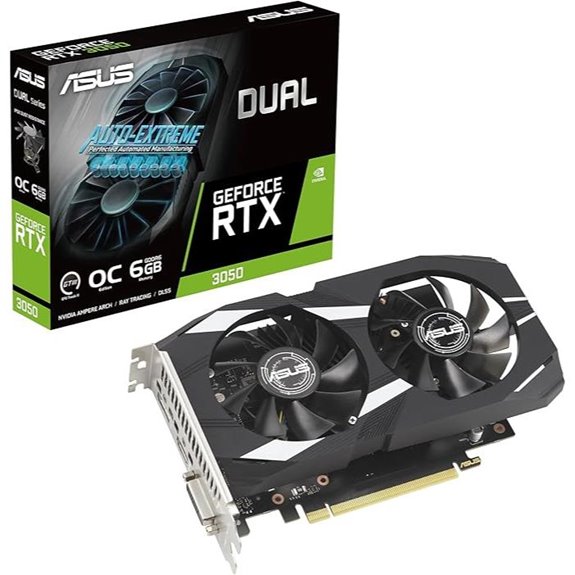 | Compact Powerhouse | Memory Size: 6GB GDDR6 | Connectivity Options: HDMI 2.1, DisplayPort 1.4a | Cooling System: Axial-tech fan with barrier rings | VIEW LATEST PRICE | See Our Full Breakdown |
| GIGABYTE RTX 3060 Gaming OC 12G Graphics Card | 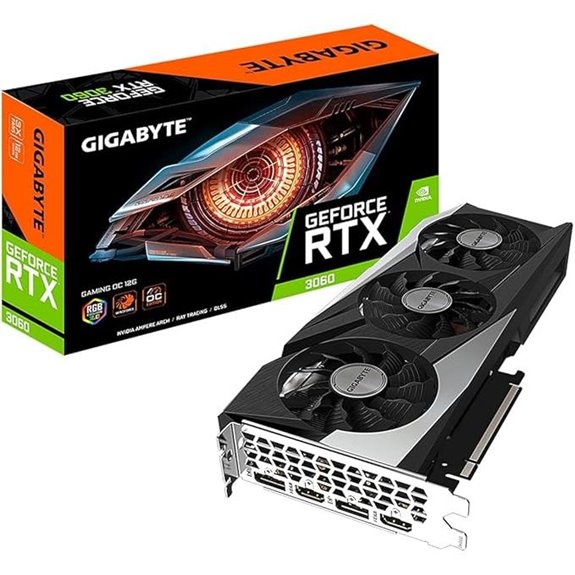 | High-Performance Choice | Memory Size: 12GB GDDR6 | Connectivity Options: 2x HDMI 2.1, 2x DisplayPort 1.4 | Cooling System: WINDFORCE 3X cooling with alternate spinning fans | VIEW LATEST PRICE | See Our Full Breakdown |
| ASUS Radeon RX 7600 EVO OC 8GB Graphics Card |  | Budget Gaming Excellence | Memory Size: 8GB GDDR6 | Connectivity Options: HDMI 2.1, DisplayPort 1.4a | Cooling System: Axial-tech fan with dual ball bearings | VIEW LATEST PRICE | See Our Full Breakdown |
More Details on Our Top Picks
ASUS GeForce RTX 3050 OC Gaming Graphics Card
If you’re looking for a compact yet powerful GPU for wireless PCVR streaming in 2026, the ASUS GeForce RTX 3050 OC Gaming Graphics Card is an excellent choice. It features 6GB GDDR6 memory and PCIe 4.0 support, ensuring fast data transfer. Powered by NVIDIA Ampere architecture, it offers double the ray-tracing throughput and AI capabilities with 2nd and 3rd Gen cores. Its Axial-tech cooling keeps temperatures down in small chassis, and the 2-slot design maximizes compatibility. With HDMI 2.1 and DisplayPort 1.4a outputs, it handles high-res displays smoothly. Plus, the steel bracket adds durability, making it ideal for compact gaming setups.
- Memory Size:6GB GDDR6
- Connectivity Options:HDMI 2.1, DisplayPort 1.4a
- Cooling System:Axial-tech fan with barrier rings
- Power Interface:Not specified
- PCIe Interface:PCIe 4.0
- Build Durability:Steel bracket
- Additional Feature:Axial-tech fan design
- Additional Feature:0dB noise technology
- Additional Feature:Steel bracket for durability
GIGABYTE RTX 3060 Gaming OC 12G Graphics Card
The GIGABYTE RTX 3060 Gaming OC 12G is an excellent choice for gamers and streamers seeking high-performance wireless PCVR streaming in 2026. Its NVIDIA Ampere architecture, with second-generation Streaming Multiprocessors, RT Cores, and Tensor Cores, assures smooth, high-quality visuals. With 12GB of GDDR6 memory and a 192-bit interface, it handles demanding VR workloads effortlessly. The WINDFORCE 3X cooling system keeps temperatures in check during intense sessions, while connectivity options like HDMI 2.1 and DisplayPort 1.4 support high resolutions up to 7680×4320. Core clock speed of 1837 MHz guarantees responsive performance, making this card ideal for immersive wireless VR experiences.
- Memory Size:12GB GDDR6
- Connectivity Options:2x HDMI 2.1, 2x DisplayPort 1.4
- Cooling System:WINDFORCE 3X cooling with alternate spinning fans
- Power Interface:Not specified
- PCIe Interface:PCIe 4.0
- Build Durability:Metal backplate
- Additional Feature:RGB Fusion 2.0 lighting
- Additional Feature:WINDFORCE 3X cooling system
- Additional Feature:Metal backplate protection
ASUS Radeon RX 7600 EVO OC 8GB Graphics Card
Gamers seeking a reliable GPU for wireless PCVR streaming in 2026 will find the ASUS Radeon RX 7600 EVO OC 8GB to be an excellent choice, thanks to its powerful boost clock of up to 2715 MHz in OC mode. It features 8GB of GDDR6 memory and supports PCIe 4.0 for fast data transfer. The dual-display outputs include HDMI 2.1 and DisplayPort 1.4a, ensuring compatibility with modern VR headsets. Its axial-tech fan design and dual ball bearings provide efficient cooling and durability, while zero dB technology keeps noise minimal during light use. Overall, this card combines performance, reliability, and quiet operation ideal for wireless VR gaming in 2026.
- Memory Size:8GB GDDR6
- Connectivity Options:HDMI 2.1, DisplayPort 1.4a
- Cooling System:Axial-tech fan with dual ball bearings
- Power Interface:Not specified
- PCIe Interface:PCIe 4.0
- Build Durability:Stainless-steel bracket
- Additional Feature:Auto-Extreme manufacturing
- Additional Feature:Dual ball fan bearings
- Additional Feature:GPU Tweak III software
Factors to Consider When Choosing a GPU for Wireless PCVR Streaming
When choosing a GPU for wireless PCVR streaming, I focus on power needs, compatibility, and performance. You want a card that can handle high frame rates with low latency while working smoothly with your VR hardware. Don’t forget to check video outputs and cooling to keep everything running quietly and efficiently.
GPU Power Requirements
Choosing the right GPU for wireless PCVR streaming requires paying close attention to its power requirements, as these directly impact performance and system stability. A GPU with sufficient VRAM—at least 8GB—is essential for handling high-resolution rendering smoothly. Strong processing power, like higher CUDA cores or stream units, guarantees real-time encoding and decoding, which is critical for seamless wireless streaming. Additionally, support for modern video standards such as HDMI 2.1 or DisplayPort 1.4a is necessary for high-bandwidth data transfer. Advanced features like ray tracing and AI acceleration can enhance visual quality and reduce latency. However, it’s equally important to take into account power consumption and thermal output, ensuring your power supply and cooling system can sustain extended VR sessions without risking overheating or performance drops.
Compatibility With VR Hardware
Ensuring your GPU is compatible with your VR hardware is essential for a smooth wireless PCVR experience. First, check that your GPU supports HDMI 2.1 or DisplayPort 1.4a, as these high-bandwidth outputs are necessary for handling the demanding video streams in VR. You also need to verify the number and type of video output ports to match your headset’s connection requirements. Compatibility isn’t just about ports; the GPU’s video output standards must align with your VR hardware’s specs to guarantee maximum performance. Additionally, driver support is critical—your GPU drivers should be compatible with your VR headset’s firmware and software. Finally, consider whether the GPU’s overall performance capabilities can handle wireless streaming smoothly without introducing latency or stutter.
Frame Rate and Latency
A key factor in delivering a seamless wireless PCVR experience is how well your GPU maintains high frame rates and low latency. Higher frame rates, ideally 90 FPS or above, help reduce motion blur and keep the visual experience smooth, which is essential for immersion. Low latency minimizes input delay, ensuring your actions are reflected instantly in the headset, critical for responsiveness. Consistent frame timing, measured by frame time variance, helps prevent judder and motion sickness, making sessions more comfortable. The efficiency of the GPU’s rendering pipeline also plays a role, as more advanced architectures can lower input-to-image delay. In essence, choosing a GPU that can sustain high frame rates with minimal latency is vital for a satisfying wireless PCVR experience, especially during fast-paced or intense gameplay.
Video Output Options
When selecting a GPU for wireless PCVR streaming, paying attention to its video output options is essential. Look for multiple high-quality ports like HDMI 2.1 and DisplayPort 1.4a, which support high resolutions and refresh rates necessary for smooth VR experiences. HDMI 2.1 offers higher bandwidth and refresh rates, making it perfect for 4K or higher streaming. DisplayPort 1.4a supports HDR and fast refresh rates, enhancing immersion. It’s important to verify that the GPU’s outputs match your VR headset’s input requirements to avoid compatibility issues. Additionally, consider the number of available outputs if you plan to connect multiple displays or headsets simultaneously, providing greater flexibility for your setup. Clear, reliable connections are key to an ideal wireless PCVR experience.
Cooling and Noise Levels
Effective cooling and low noise levels are crucial factors when choosing a GPU for wireless PCVR streaming, as they directly impact performance and immersion. Advanced cooling solutions like axial-tech fans and multiple heat dissipation slots help prevent thermal throttling during intense VR sessions. Lower noise levels are achieved through technologies such as 0dB fan modes and optimized fan blade designs, reducing distractions and preserving immersion. A quiet GPU minimizes background noise that could interfere with VR audio or microphone input. Proper airflow management and efficient cooling systems ensure stable operation during extended use, preventing overheating and excessive noise. Selecting a GPU with these features guarantees smooth performance and a more comfortable, immersive VR experience, especially during long or demanding streaming sessions.
Future-Proofing Capabilities
Choosing a GPU that will remain relevant for wireless PCVR streaming requires careful attention to its architecture and features. I look for models with the latest architecture and ample VRAM to handle rising graphical demands. Support for advanced connectivity options like HDMI 2.1 and DisplayPort 1.4a is essential for future compatibility with high-resolution headsets. Robust ray-tracing and AI acceleration features not only improve visual fidelity but also guarantee system responsiveness as VR software evolves. Power efficiency and effective cooling are indispensable for maintaining consistent performance over time, especially as demands increase. Additionally, supporting current and upcoming standards—like higher refresh rates and bandwidth—is critical to fully leverage future wireless PCVR streaming technologies. These factors help guarantee my GPU stays relevant in the rapidly advancing VR landscape.
Frequently Asked Questions
How Do GPUS Impact Wireless Streaming Latency in PCVR?
GPUs substantially impact wireless PCVR streaming latency because they handle the rendering and encoding of game visuals. A powerful GPU processes frames quickly, reducing lag and ensuring smooth, real-time transmission. When the GPU is efficient, it minimizes delays between your actions and what you see in VR, creating a more immersive experience. I always recommend choosing a high-performance GPU to keep latency low and gameplay fluid.
Are Certain GPU Brands Better for Wireless VR Performance?
I’ve found that certain GPU brands do seem to offer better wireless VR performance. After testing various options, I believe NVIDIA’s high-end cards, like the RTX series, tend to deliver more stable and lower latency streams compared to some AMD counterparts. This might be due to better driver optimization and hardware reliability. So, if you want smoother wireless VR, I’d recommend sticking with trusted brands like NVIDIA for the best experience.
How Does GPU Cooling Affect Wireless Streaming Stability?
GPU cooling directly impacts wireless streaming stability by keeping the GPU running at ideal temperatures. When my GPU overheats, I notice lag, stuttering, and even disconnections. Proper cooling guarantees consistent performance, preventing thermal throttling that can disrupt high-quality VR streams. So, I always prioritize well-cooled GPUs, whether through aftermarket cooling solutions or good airflow, to enjoy smooth, uninterrupted wireless PCVR experiences.
Can Older GPUS Still Support Wireless PCVR Effectively?
Older GPUs can still support wireless PCVR effectively, but it depends on their specs. If your GPU has decent processing power and supports modern outputs, you’ll likely have a smooth experience. However, as VR technology advances, newer GPUs offer better compression, lower latency, and improved stability. If you’re using an older GPU, just make certain it meets the minimum requirements and consider upgrading if you encounter performance issues.
What GPU Features Optimize for Wireless VR Bandwidth?
To optimize for wireless VR bandwidth, I look for GPUs with high data transfer rates, ample VRAM, and robust NVLink or PCIe lanes. Features like enhanced memory bandwidth and fast GPU clock speeds help guarantee smooth streaming. I also prioritize GPUs with advanced encoders and decoders, as they efficiently handle large data streams. These features work together to deliver seamless, immersive wireless VR experiences.
Conclusion
Choosing the right GPU is like selecting the key to open limitless virtual worlds. The cards I’ve highlighted are your trusted guides through this digital landscape, each holding the power to turn dreams into reality. As you venture into wireless PCVR streaming, remember that the GPU’s strength is the bridge between imagination and experience. Embrace it, and let your virtual journey begin—because in this domain, your choice defines your adventure.
Fall Picks
fall essentials
As an affiliate, we earn on qualifying purchases.