If you’re looking for the top VR GPUs with AV1 encoding in 2026, I recommend the GUNNIR Intel Arc A770 16GB, ASUS Dual RTX 4060 OC White, and ZOTAC GeForce RTX 4060 8GB. These cards deliver high performance, support hardware-accelerated AV1 encoding, and are designed for immersive VR experiences and efficient streaming. They also offer reliable compatibility with future tech standards. Stay with me to uncover more details about each option.
Key Takeaways
- Look for GPUs with dedicated hardware-accelerated AV1 encoding and decoding support to ensure efficient streaming and recording.
- Prioritize high VRAM (16GB+) and bandwidth (PCIe 4.0+) to handle demanding VR workloads and high-bitrate AV1 streams.
- Ensure compatibility with major VR platforms and high-resolution headsets via DisplayPort 1.4/2.0 and HDMI 2.1 outputs.
- Select GPUs with robust cooling solutions to maintain performance during intensive VR and AV1 encoding tasks.
- Opt for models with scalable architecture and ongoing software updates for future-proof VR and AV1 performance.
| GUNNIR Intel Arc A770 16GB Graphics Card | 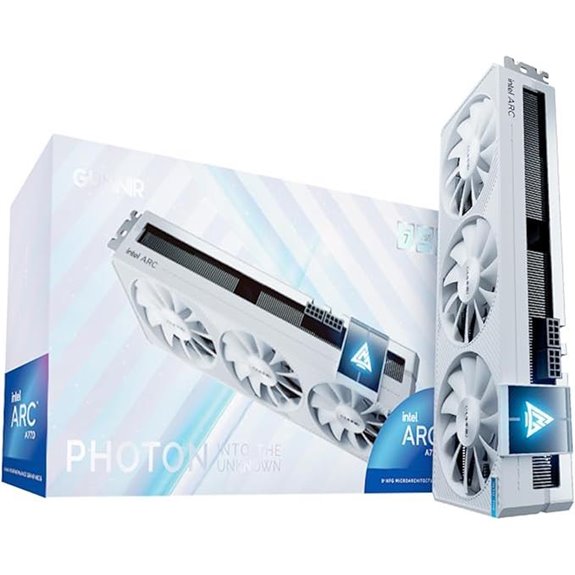 | Creative Powerhouse | Memory Capacity: 16GB GDDR6 | PCIe Interface: PCIe 4.0 | Display Outputs: 3 x DisplayPort 2.0, 1 x HDMI 2.0 | VIEW LATEST PRICE | See Our Full Breakdown |
| ASUS Dual RTX 4060 OC White Graphics Card | 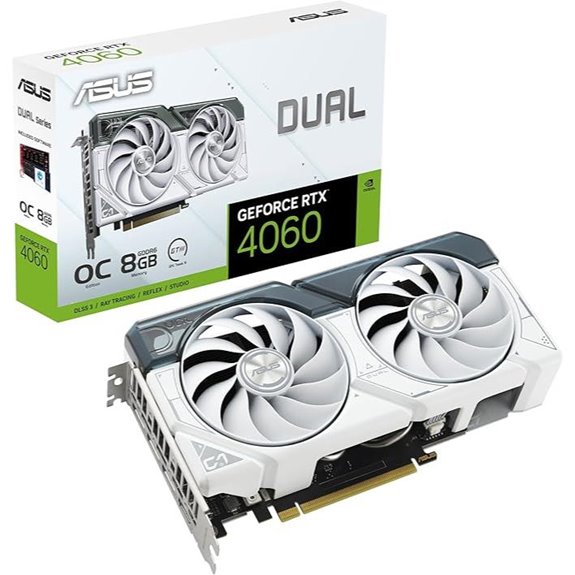 | Compact Performance | Memory Capacity: 8GB GDDR6 | PCIe Interface: PCIe 4.0 | Display Outputs: HDMI 2.1a, DisplayPort 1.4a | VIEW LATEST PRICE | See Our Full Breakdown |
| ZOTAC GeForce RTX 4060 8GB Gaming Graphics Card | 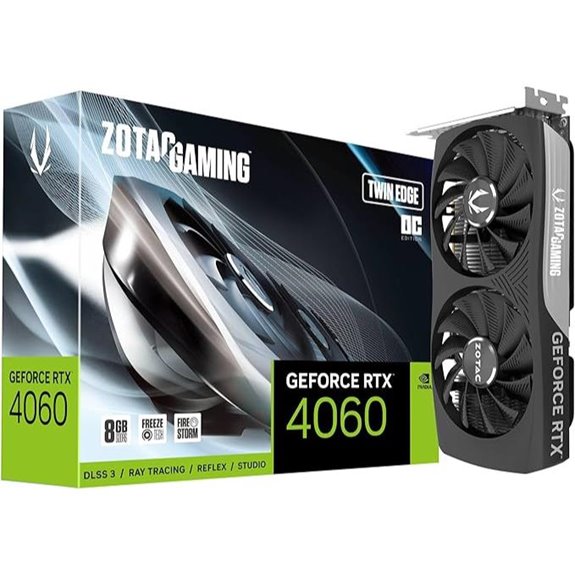 | Budget Gaming | Memory Capacity: 8GB GDDR6 | PCIe Interface: PCIe 4.0 | Display Outputs: 3 x DisplayPort 1.4a, 1 x HDMI 2.1a | VIEW LATEST PRICE | See Our Full Breakdown |
More Details on Our Top Picks
GUNNIR Intel Arc A770 16GB Graphics Card
If you’re looking for a high-performance GPU that excels in VR and content creation, the GUNNIR Intel Arc A770 16GB stands out thanks to its powerful Xe cores and ample VRAM. With 32 Xe cores and 16GB of GDDR6 memory, it handles demanding workloads smoothly. Its advanced triple-fan cooling system and premium build guarantee reliable thermal performance during intensive tasks. Supporting PCIe 4.0 and multiple high-resolution outputs, it’s perfect for multi-monitor setups. Plus, features like Intel Deep Link, XeSS AI super sampling, and AI acceleration make it ideal for immersive VR experiences, streaming, and professional content creation.
- Memory Capacity:16GB GDDR6
- PCIe Interface:PCIe 4.0
- Display Outputs:3 x DisplayPort 2.0, 1 x HDMI 2.0
- Ray Tracing Support:Yes
- VR Ready:Yes
- AI Technologies:XeSS AI super sampling, Deep Link, Stream Assist
- Additional Feature:RGB lighting and aesthetic design
- Additional Feature:Intel Deep Link synergy
- Additional Feature:Creator-ready professional features
ASUS Dual RTX 4060 OC White Graphics Card
The ASUS Dual RTX 4060 OC White Graphics Card stands out as an excellent choice for gamers and content creators seeking high-performance VR experiences with efficient AV1 encoding. Its NVIDIA Ada Lovelace architecture delivers up to twice the performance and efficiency, making it perfect for demanding VR applications. The card features a compact 2.5-slot design, ideal for smaller chassis, and uses Axial-tech fans for enhanced airflow and quiet operation. With DLSS 3 and 4th Gen Tensor Cores, it offers superior visuals and AI-powered rendering. The dual BIOS switch allows customization between Quiet and Performance modes, ensuring versatile performance tailored to your needs.
- Memory Capacity:8GB GDDR6
- PCIe Interface:PCIe 4.0
- Display Outputs:HDMI 2.1a, DisplayPort 1.4a
- Ray Tracing Support:Yes
- VR Ready:Yes
- AI Technologies:DLSS 3, AI cores, performance boost
- Additional Feature:Dual BIOS switch for profiles
- Additional Feature:0dB silent operation mode
- Additional Feature:White aesthetic for custom builds
ZOTAC GeForce RTX 4060 8GB Gaming Graphics Card
For gamers and content creators seeking a compact yet powerful GPU with advanced encoding capabilities, the ZOTAC GeForce RTX 4060 8GB stands out. This card features a sleek Twin Edge OC design with dual 90mm fans and a metal backplate, ensuring efficient cooling in a small form factor. Powered by NVIDIA’s Ada Lovelace architecture and DLSS 3, it delivers a boost clock of 2475 MHz and supports 8K resolution, VR, and DirectX 12 Ultimate. With PCIe 4.0, multiple display outputs, and full ray tracing, it’s ideal for high-quality gaming and demanding multimedia tasks, all packed into a compact, reliable package.
- Memory Capacity:8GB GDDR6
- PCIe Interface:PCIe 4.0
- Display Outputs:3 x DisplayPort 1.4a, 1 x HDMI 2.1a
- Ray Tracing Support:Yes
- VR Ready:Yes
- AI Technologies:DLSS 3, ray tracing, AI acceleration
- Additional Feature:Metal backplate for durability
- Additional Feature:Freeze Fan Stop technology
- Additional Feature:Supports HDCP 2.3 content protection
Factors to Consider When Choosing a GPU for VR With AV1 Encoding
When selecting a GPU for VR with AV1 encoding, I focus on performance capabilities that guarantee smooth gameplay and streaming. I also check for hardware support of AV1, sufficient memory, and cooling efficiency to prevent overheating. Additionally, I consider video output options to match my setup and maximize compatibility.
VR Performance Capabilities
Choosing a GPU for VR with AV1 encoding hinges on its ability to deliver smooth, immersive experiences, which means maintaining high frame rates and low latency. A powerful GPU should have ample CUDA, RT, or Xe cores to optimize real-time rendering, ensuring smooth gameplay without lag. High bandwidth memory, like GDDR6 or better, is essential to handle large textures and complex scenes seamlessly. Compatibility with VR headsets, especially regarding resolution and refresh rate requirements, directly impacts performance; the GPU must support these specs effectively. Additionally, features like hardware-accelerated ray tracing and AI-enhanced rendering can elevate visual realism and boost overall performance. Prioritizing these capabilities helps create an immersive VR environment that feels fluid, responsive, and visually stunning.
AV1 Hardware Support
Selecting a GPU that supports AV1 hardware encoding is essential to optimizing VR experiences with high-quality video streaming and recording. Not all modern GPUs, even some high-end models, include dedicated AV1 encode/decode blocks, so it’s important to verify this feature. Hardware support means faster, more efficient video encoding with lower power consumption compared to software solutions, which is indispensable for VR applications. Many GPUs also support hardware-accelerated decoding, enhancing playback performance for AV1-encoded media. To guarantee your GPU has this capability, consult the latest specifications and manufacturer documentation. Proper AV1 support ensures smoother streaming, better recording quality, and improved overall VR performance. Confirming hardware support now saves you from compatibility issues later, making it a critical factor in your GPU selection process.
GPU Memory Size
A GPU’s memory size plays a crucial role in delivering smooth VR experiences, especially when working with AV1 encoding. Larger memory, like 16GB or more, allows me to handle high-resolution textures and complex scenes without performance dips. Sufficient VRAM is essential for smooth AV1 encoding during live streaming or recording, preventing bottlenecks that could ruin immersion. I find that at least 8GB of memory is recommended to easily multitask between VR rendering and encoding tasks. Increasing VRAM also means I can reduce reliance on system RAM, boosting overall performance during demanding workloads. Plus, more memory supports multiple high-resolution displays and advanced VR features simultaneously, ensuring a seamless, high-quality experience. Choosing a GPU with ample memory helps future-proof my setup for the evolving demands of VR and AV1 encoding.
Cooling Efficiency
Efficient cooling systems are essential for maintaining ideal GPU performance during demanding VR sessions with AV1 encoding. Effective cooling, like advanced fans and heat pipes, helps keep temperatures in check, preventing thermal throttling that can cause frame drops and encoding hiccups. GPUs with larger heatsinks and multiple heat dissipation components typically offer better cooling efficiency, ensuring consistent performance. Proper airflow within the PC case is also vital; it reduces heat buildup and extends hardware lifespan. Monitoring GPU temperature and adjusting fan speeds can optimize cooling during intense VR and AV1 encoding tasks. Ultimately, a well-designed cooling system not only keeps your GPU running smoothly but also safeguards your investment by avoiding overheating-related damage.
Video Output Options
When choosing a GPU for VR with AV1 encoding, it’s essential to pay attention to the video output options it offers. I look for GPUs with multiple high-resolution outputs like DisplayPort 1.4/2.0 and HDMI 2.1, which support VR headsets and 4K displays simultaneously. Ensuring the GPU supports the latest standards is vital for high-bandwidth video transfer, providing smooth VR experiences. Compatibility with AV1-encoded streams may depend on specific hardware decoding capabilities, so I verify these features are integrated. I also consider the maximum resolution and refresh rate supported, matching my VR setup and high-resolution monitors. Finally, I check the number of outputs and their configurations to avoid needing adapters or splitters, ensuring seamless multi-monitor or multi-device connections.
Power Consumption Needs
Since VR sessions combined with AV1 encoding can substantially boost GPU power consumption, choosing a GPU with ample thermal and power headroom is vital. High-performance GPUs with advanced cooling solutions are recommended to handle the increased energy demands during intensive VR and encoding tasks. It’s important to guarantee your power supply can deliver consistent, ample wattage to prevent bottlenecks and maintain stability. Power efficiency features like DLSS or XeSS can help reduce overall energy use while preserving performance. Monitoring GPU power draw and thermal performance is essential to avoid overheating and ensure smooth operation. Selecting a GPU with these considerations in mind will help you achieve peak performance without risking hardware stability or longevity during demanding VR and AV1 encoding workflows.
Compatibility With Software
Choosing the right GPU for VR with AV1 encoding requires guaranteeing compatibility with your software ecosystem. First, verify that the GPU supports AV1 encoding through dedicated hardware or software acceleration for maximum performance. Next, check that it’s compatible with your VR platforms like SteamVR, Oculus, or proprietary SDKs to secure smooth experiences. Driver support is essential; look for regular updates from the manufacturer to keep up with software advancements. Additionally, confirm that the GPU’s video output options, such as DisplayPort 1.4 or HDMI 2.1, support high-resolution VR headsets and AV1 streaming. Finally, guarantee the GPU’s software ecosystem includes compatible encoding tools and APIs that facilitate AV1 encoding in VR applications, avoiding potential compatibility issues down the line.
Future Scalability
Future scalability of a GPU hinges on its support for emerging video codecs like AV1, which offers greater efficiency than older standards such as H.264 and H.265. Choosing a GPU with dedicated hardware acceleration for AV1 encoding ensures it remains relevant as content creators adopt new compression standards. Compatibility with PCIe 4.0 or higher allows faster data transfer, vital for smooth high-resolution VR and AV1 streams. Additionally, a scalable architecture with ample VRAM (16GB or more) provides headroom for future high-bitrate AV1 encoding and complex VR workloads. Support for ongoing software and firmware updates is essential, as they enable continuous improvements in AV1 encoding performance. Considering these factors helps future-proof your setup for evolving VR and streaming demands.
Frequently Asked Questions
How Does AV1 Encoding Impact VR Streaming Quality?
AV1 encoding considerably boosts VR streaming quality by providing higher compression efficiency and better image clarity at lower bitrates. I’ve noticed sharper visuals and smoother experiences, even with limited bandwidth. It reduces lag and buffering, making immersive VR sessions more enjoyable. Overall, AV1 makes streaming more reliable and visually impressive, ensuring I get the best possible quality without sacrificing performance or causing latency issues.
Are There Any Upcoming GPUS Expected to Outperform Current Models in VR?
Yes, I believe upcoming GPUs will outperform current models in VR. Manufacturers are investing heavily in next-gen tech, focusing on higher frame rates, better latency, and enhanced AV1 encoding capabilities. I expect new releases from Nvidia and AMD to include more powerful VR-specific features, making experiences smoother and more immersive. Staying updated on their announcements will help you choose the best GPU for future VR needs.
What Is the Role of Vr-Specific Features in GPU Performance?
VR-specific features are absolutely game-changers in GPU performance. They optimize latency, ensuring your experience feels seamless and incredibly immersive—like stepping into another world. These features handle motion smoothing, eye tracking, and low latency rendering, which are vital for comfort and realism. Without them, VR would be clunky and less responsive. So, I believe they’re essential for pushing VR to its full potential, creating smoother, more natural experiences.
How Future-Proof Are Current GPUS for Upcoming VR Technologies?
I believe current GPUs are fairly future-proof for upcoming VR tech, especially with ongoing updates and support for new codecs like AV1. I stay optimistic because manufacturers continually improve hardware capabilities and software compatibility. However, as VR evolves rapidly, I’d recommend keeping an eye on upcoming models and features, because sooner or later, the latest advancements will require newer hardware to fully enjoy the latest immersive experiences.
Do VR GPUS Support Hardware AV1 Encoding for Real-Time Streaming?
Did you know that AV1 encoding can reduce streaming bandwidth by up to 30%? Currently, many high-end VR GPUs support hardware AV1 encoding, enabling real-time streaming with better efficiency. I’ve found that GPUs like the RTX 40 series and AMD’s latest models include AV1 hardware support, making them future-proof for VR streaming needs. If you want smooth, high-quality experiences, choosing a GPU with AV1 support is definitely the way to go.
Conclusion
Choosing the right GPU for VR with AV1 encoding feels a bit like wielding Excalibur—powerful yet precise. The GUNNIR Intel Arc A770, ASUS Dual RTX 4060 OC, and ZOTAC RTX 4060 each bring unique strengths, making them top contenders in 2026. As with legendary heroes, your choice depends on your quest—whether it’s raw power, efficiency, or versatility. Equip yourself wisely, and the virtual worlds will be yours to conquer.