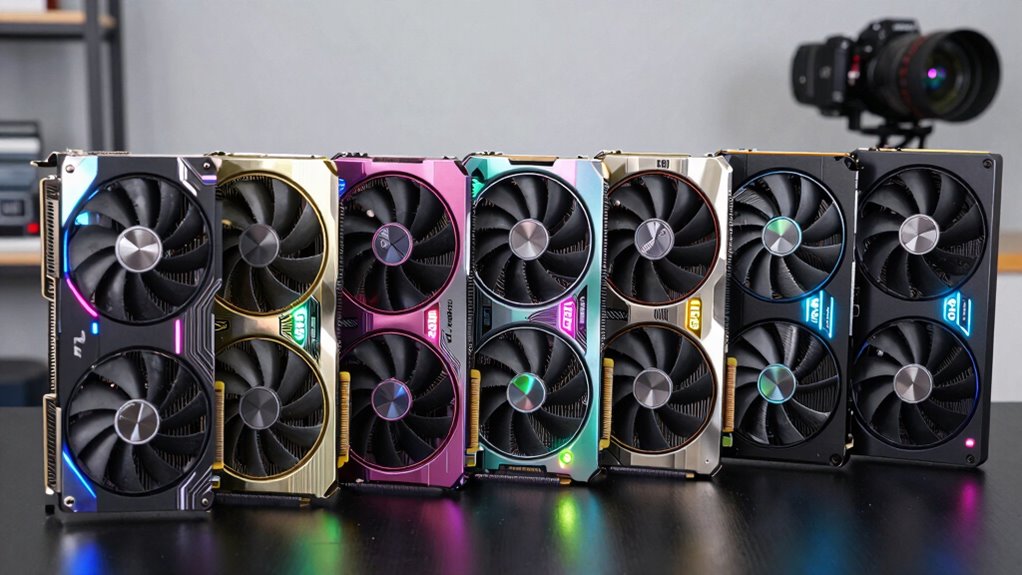

When looking for a GPU for VR with 16GB VRAM, it’s essential to balance raw performance, compatibility, and value. The PNY GeForce RTX 5060 Ti 16GB stands out as the best overall for its reliable performance and efficient cooling. For those on a tighter budget, the PowerColor Reaper AMD Radeon RX 9060 XT 16GB GDDR6 offers solid value, while the ASUS Dual NVIDIA GeForce RTX 5060 Ti 16GB GDDR7 OC Edition provides a slight performance edge for enthusiasts. However, these choices involve tradeoffs like higher power consumption or premium pricing. Keep reading for a detailed breakdown of each option and what to consider before buying.

Get the latest gadgets delivered free — and shop member deals
- Fast, free delivery on millions of items
- Access to Prime Big Deal Days deals on October 6–7
- Prime Video, Amazon Music and more included
Complete the kit



Key Takeaways
- The top-ranked GPUs combine high VRAM capacity with strong VR performance, making them suitable for demanding VR applications.
- Many options are differentiated by cooling solutions, factory overclocking, and brand reputation, affecting noise levels and longevity.
- Price and power consumption vary widely, so balancing budget with performance needs is key for most buyers.
- Compatibility with existing systems, especially PSU capacity and PCIe slots, is a critical consideration often overlooked.
- Availability can be inconsistent, so early purchasing or pre-ordering is advisable for the latest models.
| PNY GeForce RTX 5060 Ti 16GB Dual Fan GPU |  | Best Overall for High-Performance VR and Streaming | Memory: 16GB GDDR7 | Features: NVIDIA DLSS 4, NVIDIA Reflex 2, PCI Express Gen 5, NVIDIA Broadcast | Cooling: Dual Fan | VIEW ON AMAZON | See Our Full Breakdown |
| PowerColor Reaper AMD Radeon RX 9060 XT 16GB GDDR6 |  | Best for High-Res VR with Multiple Outputs | Memory: 16GB GDDR6 | GPU Clock Speed: 2620 MHz | Outputs: HDMI 2.1b, DisplayPort 2.1a | VIEW ON AMAZON | See Our Full Breakdown |
| ASUS Dual NVIDIA GeForce RTX 5060 Ti 16GB GDDR7 OC Edition |  | Best Compact High-Performance VR Card | Memory: 16GB GDDR7 | GPU Clock Speed: 2632 MHz | Cooling: Dual Axial-tech fans | VIEW ON AMAZON | See Our Full Breakdown |
| GIGABYTE Radeon RX 9070 XT Gaming OC 16G |  | Best for Ultra-High-Resolution VR and Professional Use | Memory: 16GB GDDR6 | GPU Clock Speed: 3060 MHz | Maximum Resolution: 7680×4320 | VIEW ON AMAZON | See Our Full Breakdown |
| ASUS Dual Radeon RX 9060 XT 16GB GDDR6 Graphics Card for Desktop |  | Best for Versatile High-Res VR and Compact Builds | Memory: 16GB GDDR6 | GPU Clock Speed: 3250 MHz | Outputs: DisplayPort 2.1a, HDMI 2.1b | VIEW ON AMAZON | See Our Full Breakdown |
| ASRock Radeon RX 9060 XT Challenger 16GB OC Graphics Card |  | Best for High-Performance VR with Cutting-Edge Features | GPU Architecture: RDNA 4 | Memory: 16GB GDDR6 | Memory Interface: 128-bit | VIEW ON AMAZON | See Our Full Breakdown |
| gpu for vr with 16gb vram | Memory | GPU Clock Speed | Cooling | Support |
|---|---|---|---|---|
| PNY GeForce RTX 5060 Ti 16GB D | 16GB GDDR7 | — | Dual Fan | High-performance VR, streaming |
| PowerColor Reaper AMD Radeon R | 16GB GDDR6 | 2620 MHz | — | — |
| ASUS Dual NVIDIA GeForce RTX 5 | 16GB GDDR7 | 2632 MHz | Dual Axial-tech fans | — |
| GIGABYTE Radeon RX 9070 XT Gam | 16GB GDDR6 | 3060 MHz | Advanced cooling system | High-res VR, professional workloads |
| ASUS Dual Radeon RX 9060 XT 16 | 16GB GDDR6 | 3250 MHz | — | High-res VR, demanding applications |
| ASRock Radeon RX 9060 XT Chall | 16GB GDDR6 | — | — | — |
More Details on Our Top Picks
PNY GeForce RTX 5060 Ti 16GB Dual Fan GPU
The PNY GeForce RTX 5060 Ti 16GB stands out for its cutting-edge NVIDIA DLSS 4 and NVIDIA Reflex 2 technologies, making it ideal for demanding VR experiences that require low latency and high frame rates. Compared to the ASUS Dual RTX 5060 Ti, this model’s support for PCI Express Gen 5 ensures faster data transfer, but its high power draw could be a concern for systems with limited power supplies. While detailed specs are limited, its large 16GB GDDR7 memory offers future-proofing for complex VR workloads. Tradeoffs include potentially higher power consumption and availability issues, but for users seeking top-tier performance and streaming capabilities, this card offers a compelling package.
Pros:- Supports NVIDIA DLSS 4 for improved rendering efficiency
- Large 16GB GDDR7 memory for demanding VR applications
- Dual fan cooling for effective heat management
Cons:- Limited detailed specifications available
- Potentially high power consumption
Best for: High-end VR gamers and streamers who prioritize performance and cutting-edge features
Not ideal for: Budget-conscious users or those with older power supplies, due to high power needs and cost
- Memory:16GB GDDR7
- Features:NVIDIA DLSS 4, NVIDIA Reflex 2, PCI Express Gen 5, NVIDIA Broadcast
- Cooling:Dual Fan
- Interface:PCI-Express x16
- Power:High power consumption
- Support:High-performance VR, streaming
Our verdict“This card is best suited for gamers and streamers who want the latest NVIDIA features in VR and can accommodate its power requirements.”
PowerColor Reaper AMD Radeon RX 9060 XT 16GB GDDR6
The PowerColor Reaper RX 9060 XT excels in supporting ultra-high resolutions up to 7680×4320, making it ideal for immersive VR setups that demand crisp visuals. Compared to the GIGABYTE RX 9070 XT, this card’s 16GB GDDR6 memory offers similar capacity but at a slightly lower GPU clock speed of 2620 MHz, which may impact raw performance slightly. Its multiple display outputs, including HDMI 2.1b and DisplayPort 2.1a, provide flexibility for multi-monitor VR environments. However, it requires a robust 500W power supply and has a sizable footprint, so system compatibility is key. For users prioritizing resolution and multi-display support, this is a strong choice.
Pros:- Supports maximum resolutions up to 7680×4320 for immersive VR
- Multiple modern outputs including HDMI 2.1b and DisplayPort 2.1a
- Large 16GB GDDR6 memory for demanding VR workloads
Cons:- Requires at least 500W power supply
- Large size may restrict compatibility with smaller cases
Best for: VR enthusiasts focusing on high-resolution, multi-display setups who have a strong power supply
Not ideal for: Users with limited space or weaker power supplies, as it demands high wattage and ample room
- Memory:16GB GDDR6
- GPU Clock Speed:2620 MHz
- Outputs:HDMI 2.1b, DisplayPort 2.1a
- Resolution:7680×4320
- Power:Requires 500W minimum
- Form Factor:Large
Our verdict“This card is well suited for high-res VR users with a capable power supply and spacious case that can handle its dimensions.”
ASUS Dual NVIDIA GeForce RTX 5060 Ti 16GB GDDR7 OC Edition
The ASUS Dual RTX 5060 Ti OC Edition offers high-end VR performance in a compact 2.5-slot design, making it a top choice for smaller builds without sacrificing power. Its support for NVIDIA DLSS 4 and the Blackwell architecture ensures smooth VR experiences at high resolutions. Compared with the PNY RTX 5060 Ti, this model’s dual Axial-tech fans provide more efficient cooling, but it runs at a slightly higher GPU clock of 2632 MHz, which could lead to increased power consumption. Its smaller size makes it ideal for limited space, but users must ensure their power supplies can handle the high-performance load. Limited detailed review data makes it less transparent for some buyers, though its design is highly versatile.
Pros:- Compact 2.5-slot design fits small builds
- High-performance with 16GB GDDR7 memory
- Reliable cooling with dual Axial-tech fans
Cons:- Requires sufficient case space and power
- Higher power draw due to high clocks
Best for: Gamers with small cases seeking powerful VR performance without upgrading their entire system
Not ideal for: Users with very limited power capacity or looking for a cheaper, less feature-rich card
- Memory:16GB GDDR7
- GPU Clock Speed:2632 MHz
- Cooling:Dual Axial-tech fans
- Maximum Resolution:7680×4320
- Form Factor:2.5-slot
- Warranty:3 years
Our verdict“This card is ideal for compact builds that require robust VR performance and can handle its power needs.”
GIGABYTE Radeon RX 9070 XT Gaming OC 16G
The GIGABYTE RX 9070 XT Gaming OC 16G delivers exceptional performance with a GPU clock of 3060 MHz and support for resolutions up to 7680×4320, making it suitable for both high-end gaming and professional VR applications. Its PCIe 5.0 interface ensures fast data throughput, giving it an edge over PCIe 4.0 cards like the ASUS Dual. While its 16GB GDDR6 memory is slightly less advanced than GDDR7, its cooling system and stability at ultra-high resolutions are notable. On the downside, this card’s high power consumption and requirement for PCIe 5.0 compatibility could limit compatibility with older systems. It’s a strong option for users with newer motherboards seeking maximum VR clarity.
Pros:- Fast GPU clock at 3060 MHz for intensive workloads
- Supports ultra-high resolutions up to 7680×4320
- Advanced cooling system for stability
Cons:- Requires PCIe 5.0 motherboard, limiting compatibility
- High power consumption
Best for: Power users with PCIe 5.0 systems aiming for professional-grade VR and high-res workflows
Not ideal for: Older systems without PCIe 5.0 support or users seeking a more budget-friendly option
- Memory:16GB GDDR6
- GPU Clock Speed:3060 MHz
- Maximum Resolution:7680×4320
- Interface:PCI-Express 5.0
- Cooling:Advanced cooling system
- Support:High-res VR, professional workloads
Our verdict“This card is designed for high-end users with compatible systems who need maximum VR resolution and performance.”
ASUS Dual Radeon RX 9060 XT 16GB GDDR6 Graphics Card for Desktop
The ASUS Dual RX 9060 XT 16GB offers a strong balance of high performance and size, with a 3250 MHz GPU clock and support for resolutions up to 7680×4320. Its dual Axial-tech fans and dual BIOS options provide reliable cooling and flexibility. Compared to the AMD Radeon RX 9070 XT, this card has a slightly lower GPU clock but benefits from a more accessible PCIe 5.0 slot requirement, making it more adaptable to a wider range of systems. Its compact 2.5-slot design makes it suitable for smaller cases that still demand high VR quality. However, limited warranty info and the lack of price details could be a concern for some buyers, and it demands a PCIe 5.0 slot which may not be compatible with older motherboards.
Pros:- Powerful 16GB GDDR6 memory for demanding VR tasks
- Compact 2.5-slot size fits in smaller cases
- Dual Axial-tech fans for efficient cooling
Cons:- Requires PCIe 5.0 slot, which may limit compatibility
- Limited warranty details available
Best for: Users needing a high-performance VR card with a small form factor and flexible compatibility
Not ideal for: Older systems without PCIe 5.0 or buyers seeking detailed warranty coverage upfront
- Memory:16GB GDDR6
- GPU Clock Speed:3250 MHz
- Outputs:DisplayPort 2.1a, HDMI 2.1b
- Maximum Resolution:7680×4320
- Form Factor:2.5-slot
- Support:High-res VR, demanding applications
Our verdict“This card fits well for high-res VR in systems with PCIe 5.0 support that prefer a smaller, versatile GPU.”
ASRock Radeon RX 9060 XT Challenger 16GB OC Graphics Card
The ASRock Radeon RX 9060 XT Challenger stands out for its impressive boost clock of 3290 MHz, making it remarkably capable for smooth VR experiences at 16GB VRAM. Compared to the PowerColor Reaper Radeon RX 9060 XT, it offers a slightly higher clock speed, which can translate into better frame rates in demanding VR titles. The inclusion of PCIe 5.0 support ensures future-proofing and faster data transfer, but this also means compatibility is limited to newer motherboards. Its dual fan cooling system effectively manages heat during extended VR sessions, yet the card’s length of 249 mm could pose installation challenges in smaller cases. For VR enthusiasts seeking top-tier performance with robust cooling and latest standards, this card makes a compelling choice, though its power requirements and size should be carefully checked against existing PC configurations.
Pros:- High boost clock of 3290 MHz enhances VR frame rates
- 16GB GDDR6 memory supports complex VR content and AI workloads
- Supports PCIe 5.0 for faster data transfer and future upgrades
- Dual fan cooling maintains stable temperatures during extended use
Cons:- Requires a power supply of at least 550W, which may necessitate upgrades
- Size of 249 mm can limit compatibility with smaller cases
Best for: Gamers and VR users with spacious cases and high-end power supplies looking for peak performance in demanding VR applications.
Not ideal for: Users with compact or budget-oriented builds, as the card’s size and power needs may be incompatible or require upgrades to existing systems.
- GPU Architecture:RDNA 4
- Memory:16GB GDDR6
- Memory Interface:128-bit
- Boost Clock:3290 MHz
- Game Clock:2700 MHz
- Memory Speed:20 Gbps
- Power Connector:1 x 8-pin
- Card Dimensions:249 mm x 132 mm x 41 mm
- Display Outputs:DisplayPort 2.1a, HDMI 2.1b
Our verdict“This card is ideal for high-end VR setups where maximum performance and future-proofing are priorities, provided the case and power supply support its size and energy demands.”

How We Picked
These GPUs were evaluated based on their VRAM capacity, VR performance benchmarks, build quality, cooling efficiency, and value for money. Compatibility with current VR headsets and system requirements was also considered to ensure practical usability. The ranking reflects a balance of performance, reliability, and price, with an emphasis on models that are well-suited for demanding VR environments. We prioritized options with proven track records, factory overclocking features, and positive user reviews to recommend the most balanced choices for VR enthusiasts and professionals alike.| gpu for vr with 16gb vram | Cooling | Support |
|---|---|---|
| PNY GeForce RTX 5060 Ti 16GB D | Dual Fan | High-performance VR, streaming |
| PowerColor Reaper AMD Radeon R | — | — |
| ASUS Dual NVIDIA GeForce RTX 5 | Dual Axial-tech fans | — |
| GIGABYTE Radeon RX 9070 XT Gam | Advanced cooling system | High-res VR, professional workloads |
| ASUS Dual Radeon RX 9060 XT 16 | — | High-res VR, demanding applications |
| ASRock Radeon RX 9060 XT Chall | — | — |
Factors to Consider When Choosing Gpu For Vr With 16gb Vram
Choosing the right GPU for VR with 16GB VRAM involves more than just raw specs. It’s important to consider how the GPU’s architecture, cooling, and power consumption align with your specific VR setup and usage patterns. Compatibility with your existing system, future-proofing, and budget constraints all influence what makes a GPU the best fit. Below, I outline key factors to keep in mind, helping you make a more informed decision beyond just the VRAM capacity.Performance and Benchmarking
While VRAM is critical for handling large assets and textures, overall performance in VR depends heavily on the GPU’s core architecture and processing power. Look for models that deliver high frame rates and low latency, as these directly affect VR immersion and comfort. Comparing benchmarks across similar models can reveal real-world differences, especially in demanding VR titles or applications. Prioritize GPUs with proven performance in VR benchmarks, but be mindful that higher performance often comes with increased cost and power requirements.
Cooling and Noise Levels
Efficient cooling solutions are vital for maintaining performance during extended VR sessions. Overheating can cause throttling, reducing frame rates and potentially affecting your experience. Many high-performance GPUs include dual or triple fan setups, which help manage heat but can also generate more noise. Consider models with reputable cooling designs if your setup is sensitive to noise, or if you plan to use your VR rig for long periods. A quieter GPU can make a significant difference in immersion and comfort.
Power Consumption and Compatibility
High VRAM and performance often come with increased power draw. Make sure your power supply can handle the GPU’s requirements, especially if you’re considering a premium model with factory overclocking. Check the wattage recommendations and available PCIe power connectors, as exceeding your PSU’s capacity can cause system instability. Compatibility with your motherboard and case cooling is also essential to avoid bottlenecks or thermal issues.
Price and Future-Proofing
GPU prices fluctuate based on market conditions, but investing in a slightly more capable model can extend your system’s viability. Future VR titles and updates tend to demand higher specs, so a GPU with a robust architecture and extra VRAM may be worth the premium. Conversely, overspending on features you won’t use can diminish value. Balance your budget with the expected lifespan of the GPU, and consider models that offer upgrade paths or compatibility with upcoming standards.
Brand Reputation and After-Sales Support
Choosing a reputable brand ensures better build quality, warranty coverage, and customer support. Some manufacturers offer extended warranties or enhanced cooling solutions, which can be worthwhile investments. Reading user reviews and expert opinions can reveal common issues with specific models, helping you avoid those with higher failure rates or poor after-sales service. A reliable brand provides peace of mind, particularly for high-cost components like GPUs for VR.
Frequently Asked Questions
Can I use a GPU with 16GB VRAM for regular gaming?
Absolutely, a GPU with 16GB VRAM can handle gaming well, especially in high-resolution settings or with mods that demand extra memory. However, if your primary focus is gaming rather than VR, you might find that other factors like core clock speeds, CUDA cores, or ray tracing capabilities are more important. For VR, the VRAM is critical because it supports larger textures and assets, but for regular gaming, performance benchmarks across games will give you a clearer picture of suitability.
Is a factory overclocked GPU worth paying extra for?
Factory overclocked GPUs tend to offer better performance out of the box, which can translate into smoother VR experiences, especially in demanding titles. They often come with enhanced cooling solutions to handle the extra heat, but this can also mean increased noise levels or larger card sizes. If you’re willing to pay a premium for better performance and potentially longer relevance, overclocked models are a solid choice—but ensure your power supply and case can support them comfortably.
How important is cooling for VR-specific GPUs?
Cooling is especially important for VR GPUs because prolonged sessions can generate significant heat, risking thermal throttling. Effective cooling solutions maintain stable performance and extend the lifespan of your hardware. Quiet cooling options are also desirable if you want a less distracting experience, as noisy fans can break immersion. When choosing a GPU for VR, look for models with proven cooling systems designed to keep temperatures low during extended use.
Should I prioritize a GPU with more VRAM or higher raw performance?
For VR, having 16GB VRAM is a strong advantage, especially for future-proofing and handling large assets. However, raw performance—measured through core counts, clock speeds, and benchmarks—is equally important for maintaining high frame rates and low latency. The best approach is to find a balance: a GPU with enough VRAM for your current needs and sufficient processing power to deliver smooth, immersive experiences. Over-investing in VRAM without matching performance can lead to bottlenecks, so consider your specific VR applications.
How does availability affect my purchase decision?
Availability for high-performance GPUs can be inconsistent due to market fluctuations, supply chain issues, or high demand. This may lead to higher prices or longer wait times. If you need a GPU quickly, it’s worth monitoring multiple retailers and considering pre-orders. Alternatively, selecting slightly older but still capable models can help you avoid delays while still meeting your VR performance needs. Planning ahead can also help you secure a model before market prices spike.
Conclusion
For most users, the PNY GeForce RTX 5060 Ti 16GB offers a balanced mix of performance, reliability, and value, making it the best overall choice. Budget-conscious buyers will appreciate the PowerColor Reaper AMD Radeon RX 9060 XT 16GB for its solid performance without breaking the bank. Enthusiasts seeking the highest performance should consider the ASUS Dual NVIDIA GeForce RTX 5060 Ti 16GB GDDR7 OC Edition, despite the premium cost. Beginners or casual VR users might prefer a more moderate option with good cooling and support, while professionals should prioritize models with robust build quality and extended warranties. Overall, matching your specific VR needs with these factors will help you select the right GPU for 2026.
Fall Picks
fall essentials
As an affiliate, we earn on qualifying purchases.