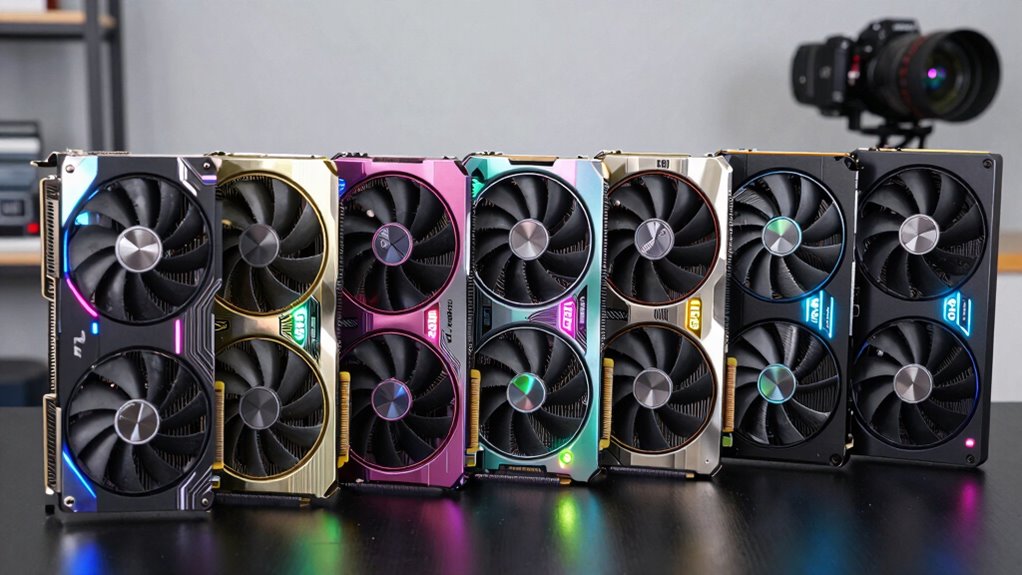

If you’re looking for the best GPUs for VR in 2026 with 16GB VRAM, I recommend considering models like the ASUS Radeon RX 9060 XT, GIGABYTE Radeon RX 9060 XT Gaming, ASUS TUF Radeon RX 9070 XT OC, GUNNIR Intel Arc A770 Photon, and Sapphire Nitro+ RX 9070 XT. These GPUs offer top-tier performance, advanced cooling, and compatibility features essential for immersive VR. Keep watching if you want to get the complete picture and make an informed choice.
Key Takeaways
- Top VR GPUs in 2026 feature 16GB GDDR6 VRAM, supporting high-resolution textures and complex rendering.
- Notable models include ASUS Radeon RX 9060 XT, ASUS TUF Radeon RX 9070 XT OC, and Sapphire Nitro+ RX 9070 XT.
- Connectivity with HDMI 2.1b and DisplayPort 2.1a ensures compatibility with modern VR headsets and high-bandwidth transfers.
- Advanced cooling systems with axial-tech fans and heat pipes maintain thermal stability during intensive VR use.
- Recommended power supplies are 650W–750W with high efficiency, supporting multiple power connectors for high-performance GPUs.
| ASUS Radeon RX 9060 XT 16GB Graphics Card | 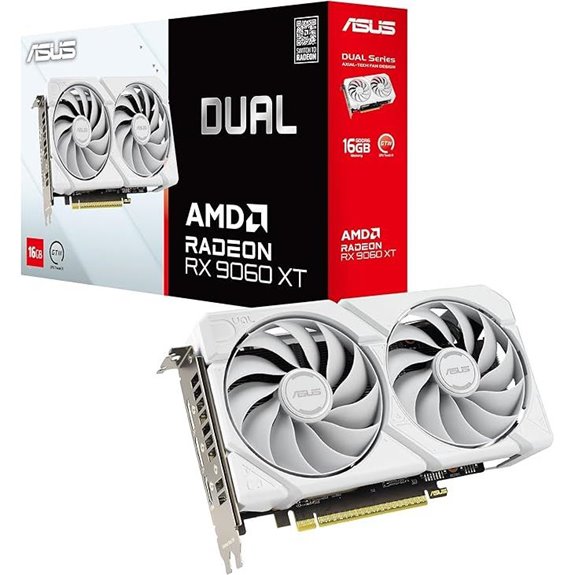 | High-Performance Gaming | VRAM: 16GB GDDR6 | Interface: PCIe 5.0 | Display Outputs: HDMI 2.1b, DisplayPort 2.1a | VIEW LATEST PRICE | See Our Full Breakdown |
| ASUS Radeon RX 9060 XT 16GB Graphics Card | 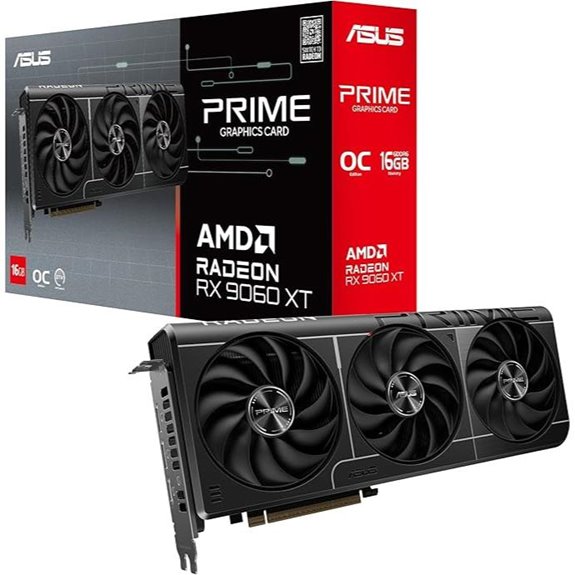 | Reliable Powerhouse | VRAM: 16GB GDDR6 | Interface: PCIe 5.0 | Display Outputs: HDMI 2.1, DisplayPort 2.1 | VIEW LATEST PRICE | See Our Full Breakdown |
| GIGABYTE Radeon RX 9060 XT Gaming Graphics Card | 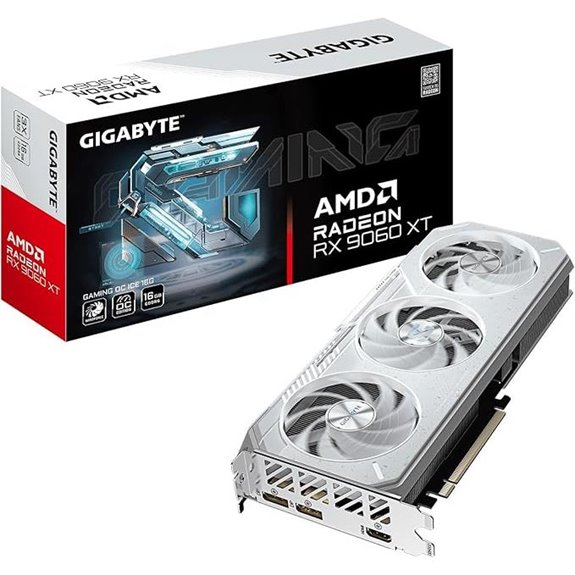 | Premium Cooling | VRAM: 16GB GDDR6 | Interface: PCIe 5.0 | Display Outputs: HDMI 2.1a, DisplayPort 2.1a | VIEW LATEST PRICE | See Our Full Breakdown |
| ASUS TUF Radeon RX 9070 XT OC Graphics Card | 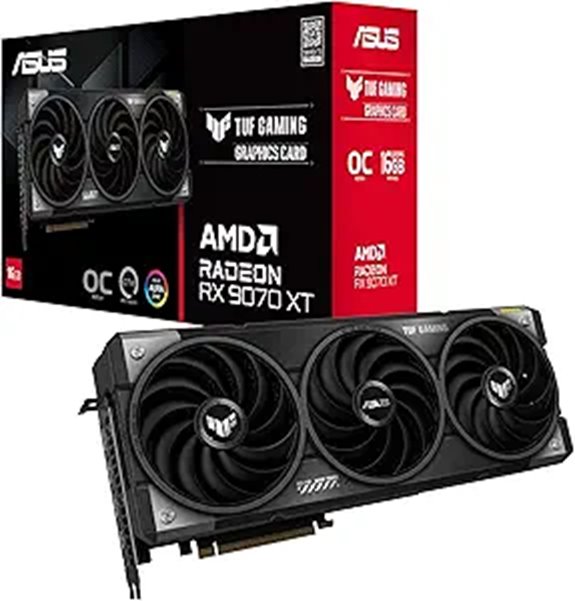 | Durability & Overclocking | VRAM: 16GB GDDR6 | Interface: PCIe 5.0 | Display Outputs: HDMI 2.1, DisplayPort 2.1 | VIEW LATEST PRICE | See Our Full Breakdown |
| GUNNIR Intel Arc A770 Photon 16GB Graphics Card | 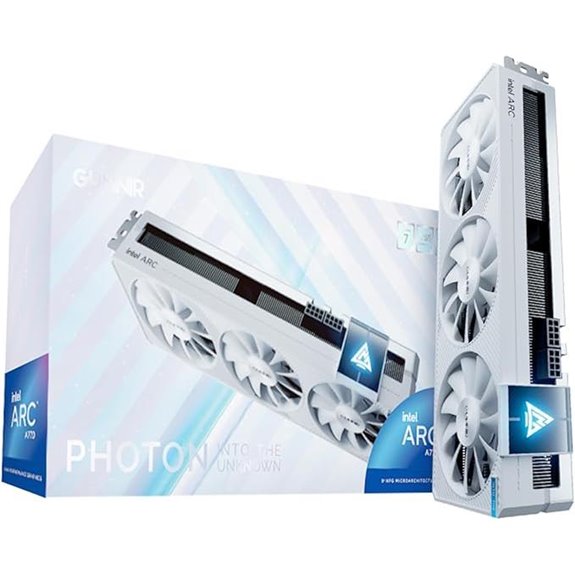 | Creative Powerhouse | VRAM: 16GB GDDR6 | Interface: PCIe 4.0 | Display Outputs: HDMI 2.0, DisplayPort 2.0 | VIEW LATEST PRICE | See Our Full Breakdown |
| Sapphire Nitro+ RX 9070 XT 16GB Gaming Graphics Card | 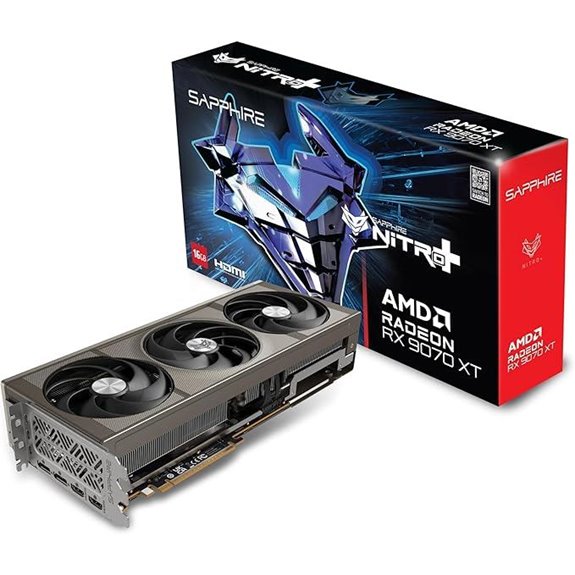 | Gamer’s Choice | VRAM: 16GB GDDR6 | Interface: PCIe 4.0 | Display Outputs: HDMI, DisplayPort (version varies) | VIEW LATEST PRICE | See Our Full Breakdown |
More Details on Our Top Picks
ASUS Radeon RX 9060 XT 16GB Graphics Card
The ASUS Radeon RX 9060 XT 16GB Graphics Card is an excellent choice for serious gamers and VR enthusiasts who need powerful performance combined with quiet operation. Its PCIe 5.0 interface and 16GB GDDR6 memory assure smooth, high-quality visuals, even in demanding VR environments. The dual axial-tech fans with barrier rings deliver efficient cooling while maintaining low noise levels, thanks to 0dB technology. You can easily switch between Quiet and Performance modes with the dual BIOS. Its 2.5-slot design provides flexibility for builds, and the long-lasting bearings reduce maintenance, making it a reliable, high-performance option for immersive gaming.
- VRAM:16GB GDDR6
- Interface:PCIe 5.0
- Display Outputs:HDMI 2.1b, DisplayPort 2.1a
- Cooling System:Axial-tech fans, dual ball bearings
- Performance Mode:OC Mode up to 3250 MHz
- Additional Features:Dual BIOS, Silent tech
- Additional Feature:Dual BIOS switch
- Additional Feature:0dB silent tech
- Additional Feature:2.5-slot design
ASUS Radeon RX 9060 XT 16GB Graphics Card
For gamers and VR enthusiasts seeking a high-performance graphics card in 2026, the ASUS Radeon RX 9060 XT 16GB stands out with its advanced PCIe 5.0 interface and ample 16GB GDDR6 memory. Its robust design features a 2.5-slot layout for better compatibility and efficient cooling, thanks to axial-tech fans with barrier rings and longer blades. The dual-ball bearings guarantee durability and quiet operation, especially with 0dB technology during light gaming. Plus, the Dual BIOS switch lets you toggle between Quiet and Performance modes. Built using Auto-Extreme manufacturing, it offers reliable, consistent quality, complemented by GPU Tweak III for easy customization.
- VRAM:16GB GDDR6
- Interface:PCIe 5.0
- Display Outputs:HDMI 2.1, DisplayPort 2.1
- Cooling System:Axial-tech fans, dual ball bearings
- Performance Mode:Dual BIOS (Quiet/Performance)
- Additional Features:Auto-Extreme manufacturing, Tweak software
- Additional Feature:Auto-Extreme manufacturing
- Additional Feature:GPU Tweak III software
- Additional Feature:Dual ball fan bearings
GIGABYTE Radeon RX 9060 XT Gaming Graphics Card
If you’re seeking a high-performance GPU that combines cutting-edge features with reliable durability, the GIGABYTE Radeon RX 9060 XT Gaming Graphics Card stands out. It boasts 16GB of GDDR6 VRAM, a 256-bit memory interface, and PCIe 5.0 support, ensuring fast, seamless performance for VR and gaming. The updated Radiance Display Engine supports DisplayPort 2.1a and HDMI 2.1b, delivering ultra-high refresh rates and crisp visuals. Its WINDFORCE cooling system with server-grade thermal gel and advanced fans keeps temperatures in check during intense sessions. Plus, customizable RGB lighting, dual BIOS modes, and a reinforced metal backplate make it a durable, versatile choice for demanding users.
- VRAM:16GB GDDR6
- Interface:PCIe 5.0
- Display Outputs:HDMI 2.1a, DisplayPort 2.1a
- Cooling System:Windforce cooling, active fans
- Performance Mode:Performance and Silent BIOS
- Additional Features:RGB lighting, Metal backplate
- Additional Feature:RGB lighting customization
- Additional Feature:Reinforced metal backplate
- Additional Feature:AMD Smart Access Memory
ASUS TUF Radeon RX 9070 XT OC Graphics Card
Gamers demanding top-tier durability and thermal performance will find the ASUS TUF Radeon RX 9070 XT OC Graphics Card an excellent choice, thanks to its military-grade components and advanced cooling system. Its robust build includes a protective PCB coating that resists moisture, dust, and debris, ensuring longevity. The dual Axial-tech fans with phase-change thermal pads deliver superior airflow and sustained cooling under heavy loads. The 3.125-slot design, large fin array, and high-quality components make this card reliable and durable. With 16GB GDDR6 memory and PCIe 5.0 support, it offers high performance for demanding VR experiences and future-proof gaming.
- VRAM:16GB GDDR6
- Interface:PCIe 5.0
- Display Outputs:HDMI 2.1, DisplayPort 2.1
- Cooling System:Axial-tech fans, dual ball bearings
- Performance Mode:Overclocked OC version
- Additional Features:Heavy-duty components, durability
- Additional Feature:Military-grade components
- Additional Feature:Phase-change thermal pad
- Additional Feature:Heavy-duty component coating
GUNNIR Intel Arc A770 Photon 16GB Graphics Card
The GUNNIR Intel Arc A770 Photon 16GB Graphics Card stands out as an excellent choice for professionals and enthusiasts seeking high-performance VR experiences, thanks to its robust 16GB GDDR6 VRAM and advanced cooling system. With 32 Xe cores, it delivers solid performance for 4K gaming, content creation, and demanding applications. Its triple-fan cooling with nickel-plated heat pipes ensures thermal efficiency under heavy loads. Connectivity options include PCIe 4.0, three DisplayPort 2.0, and HDMI 2.0, supporting high-resolution displays and multi-monitor setups. Features like XeSS AI super sampling, AI acceleration, and Creator Mode make this GPU adaptable for both gaming and professional workflows.
- VRAM:16GB GDDR6
- Interface:PCIe 4.0
- Display Outputs:HDMI 2.0, DisplayPort 2.0
- Cooling System:Triple-fan cooling, high-density fins
- Performance Mode:3.06 GHz GPU clock
- Additional Features:AI features, Creator tools
- Additional Feature:Intel Deep Link tech
- Additional Feature:RGB lighting accents
- Additional Feature:Multi-monitor support
Sapphire Nitro+ RX 9070 XT 16GB Gaming Graphics Card
The Sapphire Nitro+ RX 9070 XT 16GB Gaming Graphics Card stands out as one of the top choices for VR enthusiasts seeking high performance in 2026. It features 16GB of GDDR6 memory with a 20 GHz speed and a 3.06 GHz GPU clock, ensuring smooth 4K gameplay and demanding rendering tasks. Built on AMD’s RDNA 4 architecture, it offers a reliable and efficient experience. Its compact size, with multiple HDMI and DisplayPort outputs, makes it versatile for different setups. With a strong 4.6-star rating and solid market presence, this card combines power, reliability, and advanced features perfect for serious gamers and professionals alike.
- VRAM:16GB GDDR6
- Interface:PCIe 4.0
- Display Outputs:HDMI, DisplayPort (version varies)
- Cooling System:Multiple fans, advanced heat pipes
- Performance Mode:Factory overclocked (speed specified as 3.06 GHz)
- Additional Features:High-resolution support, Warranty info
- Additional Feature:Supports 4K resolution
- Additional Feature:High memory speed 20 GHz
- Additional Feature:Nitro+ series branding
Factors to Consider When Choosing a GPU for VR With 16GB VRAM

When choosing a GPU for VR with 16GB VRAM, I focus on several key factors. The VRAM capacity is vital for handling demanding textures, but compatibility with your headset and overall performance matter too. Additionally, cooling, thermal management, and the right connectivity options ensure smooth, immersive experiences.
VRAM Capacity Importance
VRAM capacity plays a vital role in delivering smooth and detailed VR experiences, especially with 16GB offering ample memory for high-resolution textures and complex assets. When VRAM is sufficient, the GPU can load more detailed environments, reducing stuttering and texture pop-in, which are common issues in immersive VR. With 16GB, you get the headroom needed for rendering rich textures and intricate scenes without bottlenecks, even in demanding applications. It also future-proofs your setup, ensuring compatibility with upcoming releases and multi-monitor VR setups that demand large data throughput. In contrast, insufficient VRAM can lead to performance drops, lower frame rates, and a less immersive experience. As a result, investing in a GPU with ample VRAM, like 16GB, is essential for high-quality, immersive VR gaming and professional workloads.
Compatibility With VR Headsets
Choosing a GPU for VR isn’t just about raw power; ensuring compatibility with your headset is vital for a seamless experience. First, check that the GPU supports HDMI 2.1 or DisplayPort 2.1, as most VR headsets require these standards for ideal video transmission. Next, verify that your GPU has enough PCIe 4.0 or 5.0 bandwidth to handle the high data transfer rates needed for smooth VR performance. It’s also essential to confirm that the GPU’s video output ports match your headset’s input connectors, such as HDMI or DisplayPort, for a straightforward connection. Additionally, consider whether the GPU can support multi-monitor setups if you plan to use other displays alongside your VR headset. Ensuring these compatibility factors prevents connectivity issues and guarantees a better VR experience.
GPU Performance Power
A powerful GPU with high core counts and fast clock speeds is essential for delivering smooth, immersive VR experiences. These specs ensure the GPU can handle complex scenes and high frame rates, reducing latency and motion sickness. For VR, maintaining frame rates of 90Hz or higher is critical for visual fluidity, which depends on the GPU’s processing power. With 16GB of VRAM, the GPU can store large textures and complex scenes without bottlenecks, enhancing realism. Features like ray tracing and DLSS boost visual quality and performance, making environments more lifelike. Equally important is the overall architecture and driver optimization—these guarantee stable, high-performance operation during demanding VR workloads. In short, GPU performance power directly impacts your VR experience’s quality and smoothness.
Cooling and Thermal Management
Effective cooling solutions are crucial to keep your GPU running smoothly during intense VR sessions. High-performance VR demands efficient thermal management to prevent overheating and maintain ideal performance. Features like axial-tech fans and heat pipes help disperse heat quickly, ensuring the GPU stays within safe temperature ranges. Advanced thermal management elements such as barrier rings and thermal pads improve heat dissipation and increase downward air pressure, boosting cooling efficiency. Proper airflow design, with multiple fans and strategic vent placement, ensures consistent cooling even under heavy workloads. Longer-lasting fan bearings, like dual ball bearings, reduce maintenance and enhance thermal stability over time. Additionally, customizable thermal profiles enable you to optimize heat management based on your specific VR setup, ensuring a cool, quiet, and reliable experience.
Connectivity Options Needed
When selecting a GPU for VR with 16GB VRAM, paying close attention to connectivity options is crucial to guarantee seamless performance. I always check that the GPU offers multiple HDMI 2.1b or DisplayPort 2.1a outputs, as these support high-resolution VR headsets and ensure smooth visuals. It’s also important to verify that the number of outputs matches your setup, especially if you’re planning multi-monitor configurations for extended VR experiences. Compatibility with your VR headset’s connection type—whether HDMI or DisplayPort—is necessary to prevent any input issues. Additionally, I look for GPUs supporting the latest standards, which maximize data transfer speeds and minimize latency. Ultimately, if your headset’s input differs from the GPU’s outputs, having adapters or converters readily available is a smart move.
Future-Proofing Capabilities
To guarantee your VR setup remains relevant as technology advances, it is vital to select a GPU that supports the latest standards like PCIe 5.0 and DisplayPort 2.1. These assure compatibility with future hardware and high-resolution displays. A 16GB VRAM capacity is necessary for handling larger textures and data loads in upcoming VR applications. Additionally, choosing a GPU with advanced features such as AI acceleration and support for next-generation rendering techniques can extend its usefulness. Sufficient headroom in clock speeds and performance benchmarks guarantees it can manage future software updates and more demanding titles. Supporting emerging technologies like XR-specific enhancements and higher refresh rates further solidifies the GPU’s long-term viability, preparing you for the evolving landscape of VR.
Power Supply Requirements
Choosing the right power supply is vital to guarantee your high-end GPU with 16GB VRAM performs reliably during intense VR sessions. I recommend a high-quality PSU with at least 650W to 750W to handle peak loads efficiently. Make sure it has the necessary PCIe 8-pin or 6+2-pin connectors to support your GPU’s power needs. An 80 Plus Gold or higher efficiency rating is ideal, as it reduces heat and enhances system stability. It’s also wise to have some wattage headroom to accommodate future upgrades or unexpected power spikes. Most importantly, verify that the PSU provides sufficient power on the 12V rail(s), since the GPU’s power draw primarily depends on this. This ensures smooth performance without risking crashes or instability during demanding VR experiences.
Price-to-Performance Ratio
A high price-to-performance ratio is essential because it helps you get the most out of your investment in a VR-ready GPU. It guarantees you’re getting strong VR rendering capabilities without overspending on features you don’t need. By comparing benchmark scores with prices, I can identify GPUs that deliver peak performance for my budget in VR applications. GPUs with 16GB VRAM that strike a good balance between cost and power often provide smoother VR experiences at a lower overall investment. Investing in a GPU with a solid performance-to-price ratio also helps future-proof my setup for upcoming VR titles and tech updates. Overpaying for top-tier GPUs with marginal gains reduces overall value, so choosing a balanced option makes more economical sense for long-term VR use.
Frequently Asked Questions
How Does VRAM Size Impact VR Performance in 2026?
Higher VRAM size in VR gaming means better performance and smoother visuals, especially with demanding games or high-resolution settings. With 16GB VRAM, I notice fewer lag issues and more detailed graphics, even in complex virtual environments. It also helps future-proof my setup, as VR content keeps evolving. So, I believe having ample VRAM is essential for an immersive, seamless VR experience now and in the years ahead.
Are There Specific GPU Architectures Optimized for VR in 2026?
In 2026, GPU architectures like NVIDIA’s Ada Lovelace and AMD’s RDNA 3 are optimized for VR, delivering up to 50% better performance than previous generations. I find it exciting how these architectures prioritize low latency and high frame rates, essential for immersive experiences. If you’re into VR, you’ll want a GPU that’s specifically designed to handle these demanding workloads, and these architectures do exactly that.
What Are the Power Requirements for High-Vram GPUS Used in VR?
High-VRAM GPUs used in VR typically require substantial power, often around 250 to 350 watts, depending on the model and workload. I recommend checking the specific GPU’s power supply requirements to guarantee your system can handle it safely. Upgrading to a robust power supply, usually 650 watts or more, is a good idea to support peak performance and avoid stability issues during intensive VR sessions.
How Do Future VR Resolutions Influence GPU Selection?
Future VR resolutions will totally revolutionize GPU choices! I believe higher resolutions demand insanely powerful GPUs with massive VRAM, like 16GB or more, to deliver smooth, ultra-detailed experiences. You’ll need cutting-edge graphics cards that can handle those pixel-packed worlds without breaking a sweat. So, when selecting a GPU for 2026, I look for top-tier models with extreme VRAM and processing power to future-proof my virtual adventures.
Are Software Updates Enhancing VR Performance on 16GB VRAM GPUS?
Yes, software updates are definitely boosting VR performance on 16GB VRAM GPUs. Developers optimize drivers and game code regularly, which helps improve frame rates, reduce latency, and enhance graphics quality. I’ve noticed smoother experiences and better stability after updates. Keeping your GPU drivers current is essential to fully harness your hardware’s potential, especially as VR demands grow with higher resolutions and more complex visuals.
Conclusion
Choosing the right GPU for VR in 2026 is like finding the perfect key to open a seamless virtual world. With these top 6 options, you’ll have the power and VRAM to explore immersive experiences without a hitch. Just remember, the best GPU is the one that fits your needs and budget. So, gear up and get ready to step into worlds where the only limit is your imagination!